
New Jersey Car Accident Reporting: A Practical Legal Guide
Understand when and how New Jersey law requires drivers to report crashes, file written reports, and protect their legal and insurance rights.
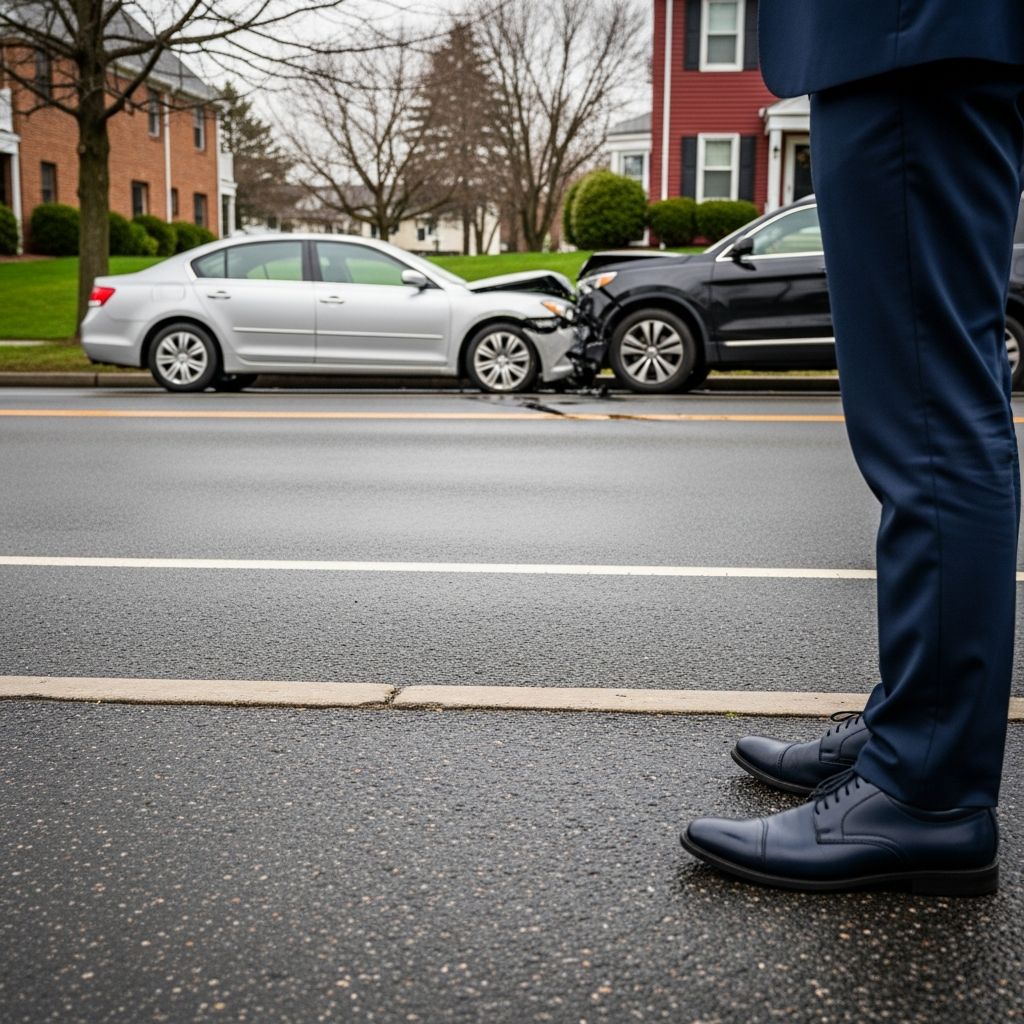
New Jersey law imposes specific duties on drivers after a motor vehicle crash, including when you must notify police, when a written report is required, and how those reports are used. Understanding these rules can help you avoid penalties, support an insurance claim, and preserve your legal rights.
When New Jersey Law Requires You to Report a Crash
New Jersey’s reporting rule is set out in N.J. Stat. § 39:4-130, which applies to drivers of motor vehicles and streetcars involved in qualifying crashes. Under this statute, a crash becomes legally “reportable” when any of the following occurs:
- Any person is injured (even if the injury appears minor).
- Any person is killed in the crash.
- Property damage to any one person exceeds $500 (for example, damage to a vehicle, building, or other property).
If a crash meets any of these thresholds, the driver must take two steps:
- Immediate notice to the local police, county police, or New Jersey State Police by the “quickest means of communication.”
- Written report to the New Jersey Motor Vehicle Commission (MVC) within 10 days, using forms provided by the agency.
If the driver is physically incapable of reporting and there is another capable occupant in the vehicle, that occupant must make the report instead.
Immediate Notification: Contacting Law Enforcement
New Jersey law expects drivers to notify law enforcement as quickly as reasonably possible once they know a crash meets the statutory criteria. In practice, that usually means calling 911 or the local police non-emergency number from the scene.
Key points about immediate notice:
- Who to contact: Local municipal police, county police, or New Jersey State Police (for crashes on highways or areas they patrol).
- How to contact: Phone call is the standard method, but any communication that reaches law enforcement quickly can satisfy the statute.
- If you cannot call: Another occupant or bystander can contact police; the law specifically shifts the duty to an able occupant when the driver is physically unable.
Police officers who investigate a reportable crash must then submit a formal crash report to the MVC within five days under a separate statute, N.J. Stat. § 39:4-131. That obligation applies to the officer, not the driver.
The 10-Day Written Accident Report Requirement
In addition to contacting law enforcement, certain drivers must file a written report of the accident within 10 days of the crash. This duty exists even if the police respond, although in most serious cases the investigating officer’s report will satisfy the written-report requirement.
According to New Jersey law and state guidance:
- The written report must be on forms furnished by the MVC.
- Drivers use a self-reporting crash form (often referred to as SR-1 or similar) when police do not prepare a crash report.
- The 10-day period begins on the date of the crash, not when you obtain the form.
Police agencies are instructed to provide a self-report form to individuals who come in to report a qualifying crash that was not previously documented. You can also obtain the appropriate forms directly from the MVC or state transportation resources.
What Information the Written Report Typically Includes
State law requires that written accident reports contain enough detail about the crash, its causes, and conditions to allow officials to analyze traffic safety issues. The standard New Jersey crash form typically asks for:
- Date, time, and precise location of the crash
- Names, addresses, and driver’s license numbers of all drivers
- Vehicle information (make, model, registration number, VIN)
- Insurance company and policy details
- Description of injuries and property damage
- Roadway conditions, weather, and lighting
- Diagrams or narrative explaining how the crash occurred
Police officers preparing reports follow a detailed state-issued guide, the Police Guide for Preparing Reports of Motor Vehicle Crashes, which standardizes how information is recorded.
Minor Fenders vs. Reportable Crashes
Not every minor bump in a parking lot triggers the state reporting requirement. The key question is whether the crash involves:
- Any bodily injury, even if it appears minor at first; or
- Property damage over $500 to any one person.
Because modern vehicle repairs are expensive, even seemingly small damage — such as dented bumpers, damaged sensors, or broken lights — can easily exceed $500. Many attorneys and safety professionals therefore recommend contacting law enforcement after any crash where damage or injuries are uncertain, to avoid accidentally failing to report a legally reportable incident.
How Crash Reports Are Used (and Not Used) in Court
New Jersey law restricts how written accident reports required under § 39:4-130 can be used in legal proceedings. The statute provides that:
- The fact that a report was filed is admissible only to prove that the driver complied with the reporting requirement.
- The report itself, and statements contained in it, generally cannot be used as evidence for any other purpose in actions arising out of the accident.
This rule is designed to encourage honest reporting without forcing drivers to choose between legal compliance and self-incrimination. However, separate police investigative materials (such as officer narratives, measurements, or photographs) may be treated differently under the rules of evidence.
Accessing New Jersey Police Crash Reports
After a qualifying crash, you or your attorney may need a copy of the police crash report. New Jersey provides a centralized portal where crash reports handled by the State Police can be requested online. Municipal police departments may have their own procedures for obtaining reports.
The state crash report portal notes that:
- Standard crash reports can be ordered directly through the online system.
- Access to broader investigative materials (digital media, photographs, statements) for serious or fatal crashes may require a subpoena.
Timely requesting the crash report is important because it contains key factual details that insurance companies and courts rely on, such as documented injuries, visible damage, and officer observations.
Insurance Implications of Reporting a Crash
In addition to statutory reporting duties, most auto insurance policies in New Jersey require policyholders to give prompt notice of any accident, even if it appears minor. Failing to notify your insurer can lead to serious coverage issues, including denial of a claim.
Typical policy requirements include:
- Prompt notice of any crash that could give rise to a claim, sometimes specified as “as soon as practicable” or within a set number of days.
- Cooperation with the insurer’s investigation, including providing relevant documents and information.
- Forwarding any legal papers (such as lawsuits) to the insurer immediately.
While New Jersey statutes do not require drivers to report accidents directly to their insurers, courts often enforce contractual notice provisions in insurance policies. Missing an insurer’s internal deadline can jeopardize your ability to recover for property damage, medical bills, or liability claims.
Legal Consequences for Failing to Report
New Jersey law authorizes penalties for drivers who fail to report a qualifying crash as required by § 39:4-130. While the exact fines can change based on legislative updates and court practices, legal guides note that failure to report can result in monetary penalties and potential administrative consequences.
Possible outcomes include:
- Traffic fines for noncompliance with accident reporting laws.
- Court costs associated with the violation.
- Temporary suspension of your driver’s license or vehicle registration in some circumstances.
On top of statutory penalties, not having a proper crash report can weaken an insurance or personal injury claim by making it harder to prove how the crash occurred, who was involved, and what damage was caused.
Driver vs. Police Duties: Who Files What?
| Task | Who Is Responsible? | Deadline | Legal Basis |
|---|---|---|---|
| Immediate notification of reportable crash | Driver (or capable occupant if driver is incapacitated) | As soon as possible by quickest means of communication | N.J. Stat. § 39:4-130 |
| Written accident report (when required) | Driver, using MVC forms; often satisfied by police report | Within 10 days of crash | N.J. Stat. § 39:4-130 |
| Official police crash report | Investigating law enforcement officer | Within 5 days after investigation | N.J. Stat. § 39:4-131; NJTR-1 Guide |
| Requesting a copy of the crash report | Driver, attorney, or insurer | No fixed statutory deadline, but earlier is better | Crash report portal and local department policies |
Practical Steps After a New Jersey Car Accident
Fulfilling your legal obligations is easier if you approach the aftermath of a crash in a systematic way. The following steps combine statutory requirements with practical guidance drawn from legal and safety resources.
- Check for injuries and call 911 if anyone may be hurt.
- Move to safety if vehicles can be safely moved out of traffic.
- Notify law enforcement if there are any injuries, potential injuries, or significant property damage.
- Exchange information (names, contact details, driver’s licenses, registrations, insurance) with all involved drivers.
- Document the scene with photos of vehicles, roadway, visible injuries, and any relevant traffic signals or signs.
- Identify witnesses and record their contact information.
- Cooperate with the officer who responds, while avoiding speculation or admissions of fault.
- Request the report number so you can later obtain a copy of the official crash report.
- Notify your insurer promptly and provide basic facts, but consider obtaining legal advice before giving recorded statements.
- File any required written report with the MVC within 10 days if no police report was completed.
Frequently Asked Questions (FAQs)
Do I have to report every car accident in New Jersey?
No. New Jersey’s statutory reporting requirement applies when there is any injury, any death, or property damage to any one person exceeding $500. However, because repair costs add up quickly, many drivers choose to contact police after almost any collision to avoid missing a legally reportable incident.
What if I discover injuries or higher damage after leaving the scene?
If you later realize that someone was injured or that property damage likely exceeds $500, you should contact law enforcement and, if necessary, complete a written report as soon as possible. The 10-day deadline still applies, so act quickly once you become aware of qualifying injuries or damage.
Does a police crash report automatically go to my insurance company?
No. Police transmit reports to the MVC and maintain their own records. Insurers usually learn of the crash when you or another involved party files a claim and provides the report number or a copy of the report.
Can I be sued if I do not file the required accident report?
Failing to report a qualifying crash can lead to fines and administrative penalties under traffic law. It can also weaken your defense or claim in a civil lawsuit because you may lack official documentation of the incident, but the failure to report itself does not automatically determine fault in the crash.
How do I get a copy of my New Jersey crash report?
If the crash was investigated by the New Jersey State Police, you can request the report through the state’s online crash report portal. For crashes handled by municipal police, contact the local department’s records unit; procedures and fees may vary by municipality.
References
- New Jersey Revised Statutes § 39:4-130 — State of New Jersey / Justia (codified law). 2024. https://law.justia.com/codes/new-jersey/title-39/section-39-4-130/
- Reporting an Accident to the New Jersey DMV — Moon & Associates, LLC. 2023-02-10 (approx.). https://jemoonlaw.com/blog/do-you-have-to-report-an-accident-to-the-new-jersey-dmv/
- Reporting Minor Car Accidents in NJ: Comprehensive Guide — Stoloff Injury Law. 2023-08-15 (approx.). https://www.stoloffinjurylaw.com/blog/minor-vehicle-accidents-new-jersey-need-reported/
- What to Do After a Car Accident in New Jersey: Step-by-Step Legal Guide — Bramnick, Rodriguez, Grabas, Arnold & Mangan LLC. 2022-11-03 (approx.). https://www.jonbramnick.com/blog/what-to-do-after-a-car-accident-in-new-jersey-step-by-step-legal-guide/
- How Long After a Car Accident Can You File a Police Report in New Jersey? — Morelli Law Firm. 2023-05-01 (approx.). https://www.morellilaw.com/faq/how-long-after-a-car-accident-can-you-file-a-police-report-in-new-jersey/
- Police Guide for Preparing Reports of Motor Vehicle Crashes (NJTR-1) — New Jersey Department of Transportation. 2017-01-01. https://www.nj.gov/transportation/refdata/accident/pdf/NJTR1-Police_Guide.pdf
- Crash Report Requests — New Jersey State Police (Official Portal). 2024-01-15 (approx.). https://www.njportal.com/njsp/crashreports/
Similar Articles








Read full bio of medha deb


