
New Hampshire Assistance Animal Rights Guide
Comprehensive guide to New Hampshire laws protecting service dogs and emotional support animals in housing, public access, and workplaces.
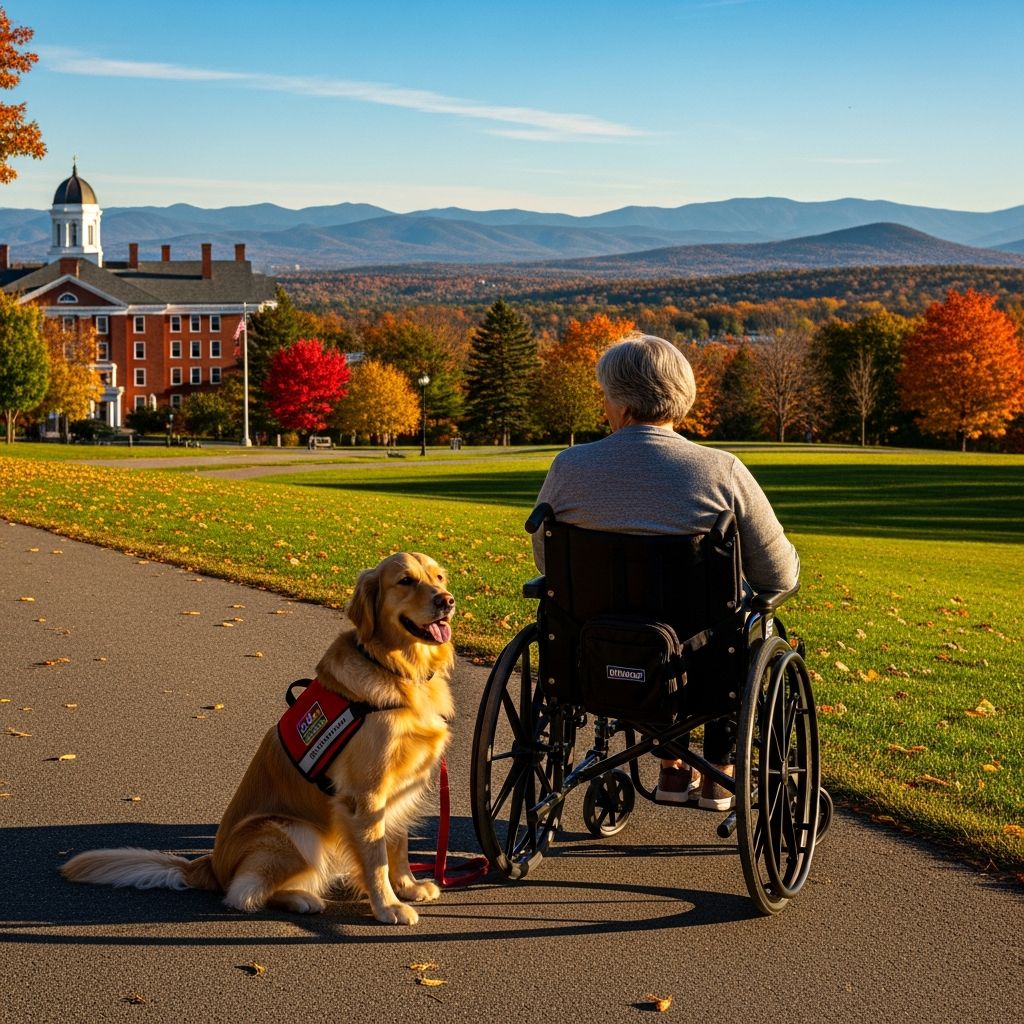
Individuals with disabilities in New Hampshire rely on service dogs and emotional support animals (ESAs) for essential daily support. Federal laws like the Americans with Disabilities Act (ADA) and Fair Housing Act (FHA) provide robust protections, supplemented by state-specific rules that define access rights, housing accommodations, and animal qualifications.
Defining Service Animals Under Federal and State Law
Service animals are individually trained dogs—or in limited cases, miniature horses—that perform specific tasks to mitigate a person’s disability. These tasks might include guiding the visually impaired, alerting to seizures, or retrieving items for those with mobility challenges. The ADA strictly limits service animals to these categories, excluding emotional support or therapy animals, which do not qualify for public access rights.
In New Hampshire, state law aligns closely with federal definitions but emphasizes dogs only for service roles. Local ordinances, such as those in Exeter and Portsmouth, reinforce that animals must demonstrate task-specific training and appropriate public behavior. For instance, a service dog must remain under control and not pose a direct threat to safety.
- Key Qualifications: Trained to perform disability-related tasks; no certification or vest required under ADA.
- Exclusions: Pets, therapy dogs, or comfort animals do not qualify as service animals.
- Miniature Horses: Allowed in some cases if they meet training standards and facility requirements.
Public Access Protections for Service Dogs
Service dogs in New Hampshire can accompany handlers into public facilities, including restaurants, stores, hotels, medical offices, and municipal buildings, where the public is allowed. Businesses must permit entry unless the animal’s presence fundamentally alters services or creates an undue burden.
Staff may ask only two questions to verify: (1) Is the dog required because of a disability? (2) What tasks is it trained to perform? No proof of training, licensing, or identification is permitted. New Hampshire municipalities like Portsmouth provide ‘Service Animals Welcome’ decals to educate businesses and deter misrepresentation of pets as service animals.
| Public Venue | Service Dog Access | Exceptions |
|---|---|---|
| Restaurants & Stores | Allowed (indoor areas) | Outdoor seating may vary; owner’s companion dog exception under RSA 466:44 |
| Hotels & Taxis | Full access | Direct safety threat |
| Hospitals & Theaters | Permitted where public goes | Sterile environments if risk proven |
| Municipal Offices | Guaranteed | None under ADA Title II |
Violations can lead to complaints via the Governor’s Commission on Disability, which handles inquiries and promotes education. Fake service dogs undermine trust, prompting state penalties under RSA 167-D:8.
Housing Accommodations for Assistance Animals
The Fair Housing Act mandates reasonable accommodations for service dogs and ESAs in rental housing, overriding no-pet policies and pet fees. Landlords must allow these animals even for breeds typically restricted, provided they do not pose a direct threat.
ESAs, unlike service dogs, require no task training but need documentation from a healthcare provider confirming necessity for emotional disabilities like PTSD or anxiety. Requests should be in writing, including disability details (without specifics) and animal needs.
Steps to Request Housing Accommodation
- Submit written request to landlord with ESA letter or service dog description.
- Provide healthcare professional verification for ESAs.
- Landlord verifies without invasive inquiries.
- Approval typically required unless undue burden (rare for single animals).
Exemptions include owner-occupied buildings with four or fewer units, private single-family homes (up to three, without brokers), and some government housing. Under ADA Title II, evictions due to service dogs may be challenged in public or certain private housing.
Local Registration and Training Standards
New Hampshire towns like Exeter require specific documentation for service dog licensing: an ID from a recognized trainer or proof of meeting International Association of Assistance Dog Partners standards, plus a healthcare letter. This facilitates fee exemptions but is not federally mandated.
Owners training their own dogs must demonstrate public access readiness. State law supports these processes to ensure well-behaved animals. Recent legislative efforts, like HB 1281 (2026 session), address standards for comfort dogs in facilities, requiring Canine Good Citizen certification.
Workplace Considerations and Other Rights
Under ADA Title I, employers must consider service dogs as reasonable accommodations unless they cause undue hardship. ESAs have limited workplace protections, typically not extending to public access equivalency. Transportation via taxis or shuttles follows ADA rules, allowing service dogs without fees.
- Air Travel: Service dogs fly free in cabin; ESAs lost DOT protections in 2021 but may qualify under airlines’ policies.
- Retail & Services: No surcharges or deposits for service animals.
Common Challenges and How to Address Them
Landlords may request excessive documentation or deny based on breed—both violations. Businesses excluding trained dogs without valid reason face ADA complaints. Handler responsibilities include cleanup, control, and excluding disruptive animals.
For disputes, contact HUD for housing (FHA), DOJ for public access (ADA), or New Hampshire’s Governor’s Commission on Disability. Legal aid organizations assist low-income residents.
Frequently Asked Questions (FAQs)
Can landlords charge pet fees for my service dog?
No, under FHA and ADA, no pet fees, deposits, or breed restrictions apply to verified assistance animals.
Do ESAs get public access like service dogs?
No, ESAs are limited to housing and certain air travel; they lack ADA public rights.
Is certification required for service dogs in NH?
No federally, but local licensing may need trainer ID or standards proof.
What if my service dog is excluded from a store?
Staff can only ask two questions; improper exclusion warrants ADA complaint.
Can I register my ESA as a service dog?
No, ESAs aren’t task-trained; misrepresentation is illegal.
Are there penalties for fake service dogs in NH?
Yes, under RSA 167-D:8, misrepresenting pets as service animals is penalized.
This guide empowers New Hampshire residents to advocate for their rights while ensuring animals meet legal standards. Always consult professionals for personalized advice.
References
- ESA Laws New Hampshire (2026): Housing, Letters, Rights — Pettable. 2026. https://pettable.com/blog/new-hampshire-esa-laws
- Does Your Dog Qualify As A Service Dog — Town of Exeter, NH. Accessed 2026. https://www.exeternh.gov/townclerk/does-your-dog-qualify-service-dog
- What You Need to Know About Service Animals — New Hampshire Municipal Association. 2018-07-01. https://www.nhmunicipal.org/town-city-magazine/julyaugust-2018/what-you-need-know-about-service-animals
- Service Animals — City of Portsmouth, NH. Accessed 2026. https://www.portsmouthnh.gov/health/service-animals
- Bill Text: NH HB1281 | 2026 — LegiScan. 2026. https://legiscan.com/NH/text/HB1281/id/3286969
Similar Articles








Read full bio of Sneha Tete


