
New Hampshire Burial and Cremation Regulations
Comprehensive guide to New Hampshire's rules on burials, cremations, private interments, and end-of-life dispositions.
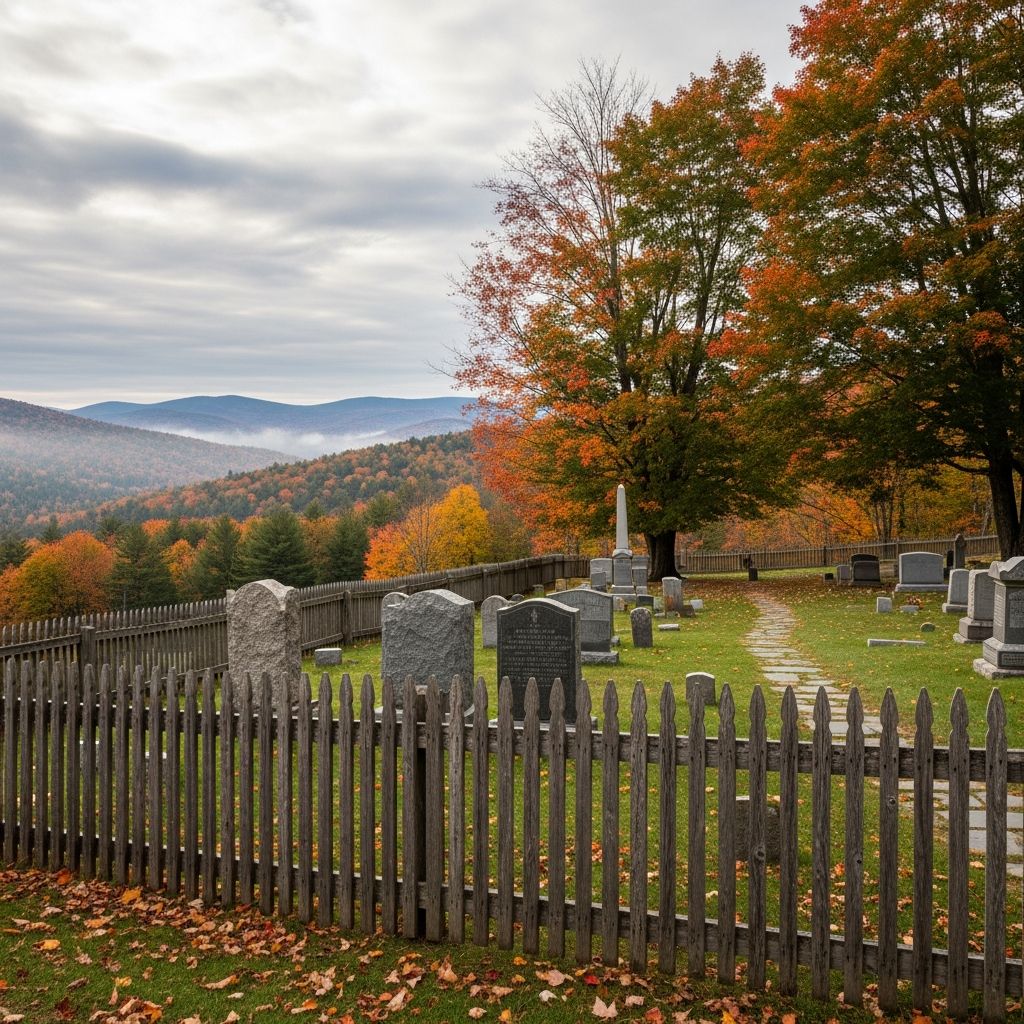
New Hampshire maintains a structured legal framework governing the respectful handling of human remains through burial and cremation processes. These regulations balance public health, property rights, and familial preferences while ensuring environmental protections. This article delves into key aspects, from establishing burial sites to managing cremated remains, drawing on state statutes to provide clarity for residents planning end-of-life arrangements.
Establishing and Locating Cemeteries and Burial Grounds
State law outlines precise requirements for the placement of cemeteries and burial grounds to safeguard nearby properties, water sources, and public infrastructure. Cemeteries must adhere to setback distances designed to prevent disturbances and health risks.
- No cemetery can be established within
100 feet
of residential homes, schools, school lots, stores, or other businesses unless the property owner provides explicit consent. - A minimum
50-foot buffer
is required from known water sources and any state highway right-of-way, regardless of classification. - Existing non-compliant cemeteries may expand, but new sections cannot encroach closer to protected areas than current boundaries, and expansions must still respect the 50-foot highway setback.
These rules promote harmonious land use. For private property burials outside formal cemeteries, local zoning ordinances take precedence. Without such rules, the same 100-foot and 50-foot setbacks apply. Crucially, the burial location must be noted in the property deed before any sale or transfer to alert future owners.
Construction near burial sites faces restrictions too. Absent local regulations, no building, excavation, or new development may occur within
25 feet
of a known grave or cemetery boundary. Exceptions require approval from municipal authorities and cemetery trustees for essential services, or the Department of Transportation commissioner for highways.Private Property Interments: Rules and Considerations
Conducting a burial on private land offers a personal alternative to public cemeteries, but it demands careful compliance. Homeowners must first verify local zoning laws, which can differ significantly by municipality. In rural areas with minimal oversight, state defaults apply, including deed notation.
Practical steps include:
- Obtaining a burial permit from the Division of Vital Records Administration after certifying the death record.
- Ensuring the site meets setback requirements to avoid future legal disputes.
- Recording the exact interment coordinates in the deed via the county register of deeds office.
Failure to document properly can lead to complications during property sales or developments. Families should also consider casket choices; while no state mandate requires one, cemeteries may impose container rules.
| Aspect | State Default Requirement | Local Override |
|---|---|---|
| Setbacks from Dwellings/Businesses | 100 feet (with consent) | Zoning laws prevail |
| Water Sources/Highways | 50 feet | Zoning laws prevail |
| Construction Buffer | 25 feet from graves/boundaries | Zoning laws prevail |
| Deed Notation | Required for private burials | Mandatory statewide |
This table summarizes core private burial guidelines, emphasizing the interplay between state and local authority.
Permits and Vital Records for Burials and Cremations
A burial or cremation cannot proceed without proper documentation. Funeral directors, next-of-kin, or designated agents must update the death record with burial details and secure a permit from the Division of Vital Records Administration. Death records must be filed electronically within
36 hours
of death, prior to any disposition.Next-of-kin is defined under RSA 290:16, IV, encompassing spouses, adult children, parents, and siblings in priority order. Designated agents under RSA 290:17 can also handle this. The process ensures accurate tracking for public health and legal purposes.
Cremation Procedures and Waiting Periods
New Hampshire imposes a
48-hour waiting period
from the time of death before cremation, allowing for review by the Medical Examiner’s office on cause and manner of death. This applies statewide, with exceptions possibly for contagious diseases.Cremation requires a suitable solid container, but no casket is mandated federally or by state law. Alternative containers like cardboard or fiberboard are permissible and often more affordable; providers must inform consumers of options. Post-cremation, ashes handling is flexible: no state restrictions on keeping urns at home, in niches, crypts, or graves.
For scattering:
- On private land, obtain owner permission.
- In public areas, check local rules.
- At sea, follow federal Clean Water Act: at least three nautical miles offshore, notify EPA within 30 days, and dispose of non-decomposable containers separately.
- Inland waters may need state permits from managing agencies.
Grave liners or vaults are not state-required but may be mandated by individual cemeteries for caskets or urns.
Managing and Discontinuing Public Cemeteries
Municipal cemeteries can be discontinued for public necessity via a 3/4 vote at a town meeting or by city councils. Remains are then disinterred at municipal expense and reinterred in another local cemetery site, prioritizing nearest surviving relatives’ input or cemetery trustees’ decision.
Abandoned burial grounds follow a structured process: publish notice of intent, read it at a selectmen’s or council meeting 60-90 days later, hold a public hearing, and declare abandonment by majority vote if no descendants object. Such sites then become municipal cemeteries managed by trustees, who assume descendants’ rights.
Prohibitions and Protections in Cemeteries
To preserve cemetery integrity, certain activities are restricted. Gravestone rubbings require written permission from town selectmen, city mayor, or designee, who verifies the requester’s knowledge of safe methods. Violations constitute misdemeanors, and trustees are notified.
Embalming is optional unless public viewing occurs after 24 hours post-death or burial is delayed. Prepaid funeral funds must be deposited in a New Hampshire bank or licensed insurance/trust company.
Prepaid Funeral Arrangements and Consumer Protections
Planning ahead financially is safeguarded. Providers must place prepaid funds in secure local institutions, protecting consumers from loss. Embalming and casket mandates are minimal, empowering choices.
Frequently Asked Questions
Can I bury someone on my private property in New Hampshire?
Yes, subject to local zoning or state setbacks (100 feet from dwellings/businesses, 50 feet from water/highways). Record the site in the deed.
What is the cremation waiting period in New Hampshire?
A 48-hour wait from death, plus Medical Examiner review.
Are caskets or vaults required by state law?
No for caskets; vaults/liners per cemetery rules only.
How do I scatter ashes legally?
Get permissions for land; follow EPA rules for sea (3+ miles offshore); check permits for inland waters.
Who authorizes burial or cremation permits?
Funeral directors, next-of-kin, or designated agents via Vital Records.
Can cemeteries be closed and remains moved?
Yes, by 3/4 vote for public need; remains reinterred locally.
This guide equips individuals with essential knowledge for compliant, dignified dispositions. Consult local authorities or legal experts for case-specific advice, as laws evolve.
References
- NH Law | NHCA – NH Cemetery Association — NH Cemetery Association. 1994-08-07 (eff. date). https://www.nhcemetery.org/nh-state-law
- New Hampshire Revised Statutes Section 289:3 — Justia Law. 2025. https://law.justia.com/codes/new-hampshire/title-xxvi/chapter-289/section-289-3/
- Questions? – Armstrong-Charron Funeral Home — Armstrong-Charron Funeral Home. Accessed 2026. https://www.armstrongcharronfuneralhome.com/questions
- Burial and Cremation Laws in New Hampshire – Nolo — Nolo. 2024. https://www.nolo.com/legal-encyclopedia/burial-cremation-laws-new-hampshire.html
- New Hampshire Funeral Statutes & Regulations — NH Funeral Directors Association. Accessed 2026. https://www.nhfda.org/new-hampshire-funeral-statutes-regulations
Similar Articles








Read full bio of Sneha Tete


