
Nevada Marital Property Rules: A Practical Guide
Understand how Nevada’s community property system defines, manages, and divides marital assets and debts before divorce or death.
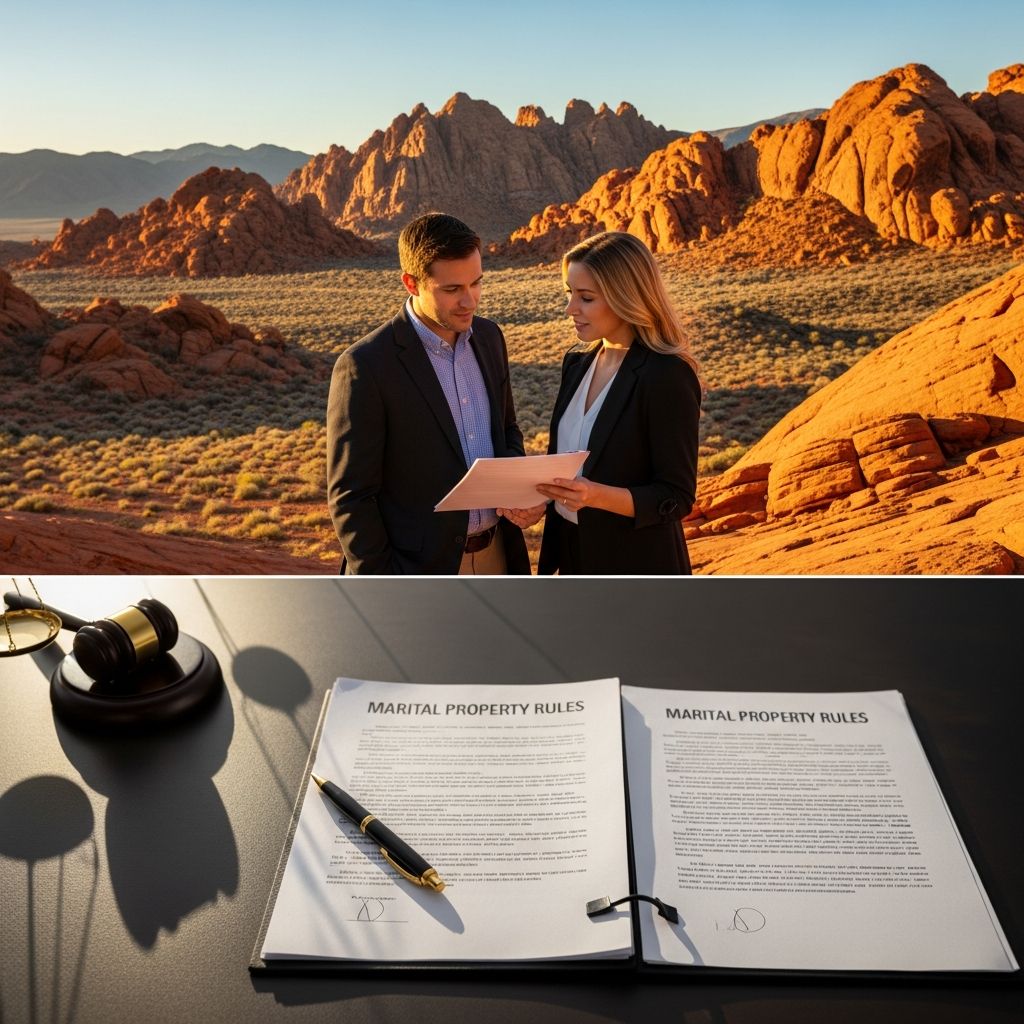
Nevada is one of a handful of states that follow a community property system, which significantly shapes how a married couple’s assets and debts are owned, controlled, and divided. Understanding these rules before problems arise can prevent costly disputes during divorce, separation, or after a spouse’s death.
Big Picture: How Nevada Treats Property in Marriage
Under Nevada law, most property and debts acquired by either spouse during the marriage are presumed to be community property that belongs equally to both spouses. In contrast, certain categories of assets remain a spouse’s separate property and are not automatically shared.
This basic framework affects:
- Who owns real estate, bank accounts, and investments acquired during the marriage
- Responsibility for credit cards, loans, and other debts
- How a court divides assets and debts if the parties divorce
- What passes to a surviving spouse at death, regardless of what a will says
Community Property vs. Separate Property
Nevada law draws a key distinction between what the couple jointly owns and what each spouse owns individually.
What Counts as Community Property?
Unless a legal exception applies, the following are typically treated as community property:
- Wages, salaries, bonuses, and tips earned by either spouse during the marriage
- Real estate purchased after the wedding with income earned during the marriage
- Retirement contributions made during the marriage (401(k), pensions, IRAs) and the growth on those contributions
- Vehicles, furniture, and household items bought with marital funds
- Debts such as credit cards, car loans, and personal loans incurred by either spouse during the marriage for the benefit of the community
It does not matter which spouse’s name appears on a deed, title, or account; ownership is determined by when and how the property was acquired, not just by whose name is listed.
What Qualifies as Separate Property?
Separate property generally belongs to one spouse alone and is not automatically divided at divorce.
- Assets owned by a spouse before the marriage
- Property acquired by a spouse during marriage by gift or inheritance specifically to that spouse
- Damages awarded personally for certain types of personal injury claims (depending on the nature of the claim)
- Property that spouses agree in writing will remain separate (for example, under a valid premarital or postmarital agreement)
However, separate property can become partially or entirely community property if it is mixed with marital funds or managed in a way that blurs ownership, which is called commingling or transmutation.
How Married Couples Can Hold Title in Nevada
Nevada law allows married couples to hold real or personal property under several recognized forms of title.
| Form of Ownership | Key Features | Effect at Death or Divorce |
|---|---|---|
| Community Property | Owned equally by both spouses as part of the marital community, regardless of whose name is on title. | At divorce, typically divided equally; at death, each spouse can dispose of only their half, and the surviving spouse keeps their share. |
| Joint Tenancy | Both spouses hold equal interests with right of survivorship; when one spouse dies, the other automatically owns the entire property. | At divorce, treated as jointly owned but may be divided according to community property principles; at death, passes outside probate to the surviving joint tenant. |
| Tenancy in Common | Each spouse holds a separate fractional interest, which can be equal or unequal. | At death, each spouse’s share passes under a will or by intestate succession; at divorce, the court can divide each spouse’s share, often in line with community rules. |
Managing and Controlling Community Property
Nevada statutes give each spouse broad authority to manage community assets but place important limits on unilateral decisions.
Everyday Management
Either spouse may generally manage or control most community property, including bank accounts and movable items, with the same power of disposition that spouse has over their separate property, unless a specific restriction applies.
This everyday control typically includes:
- Using community funds to pay routine household expenses
- Moving money between community accounts
- Selling or purchasing ordinary household goods
Key Legal Limits on One-Spouse Decisions
Nevada law restricts certain high-impact transactions unless both spouses participate or consent.
- Gifts of community property: One spouse cannot give away community assets without the other spouse’s express or implied consent.
- Real estate transactions: Both spouses must sign documents to sell, mortgage, or otherwise encumber community real property, and both signatures must be properly acknowledged.
- Buying community real property: Both spouses must join in purchasing or contracting to purchase community real estate.
- Household goods and furnishings: A spouse cannot unilaterally create a security interest in, or sell, community household goods, furnishings, or appliances without the other spouse signing the agreement.
- Estate planning restrictions: Neither spouse can dispose of more than one-half of the community property by will or other testamentary instrument.
Spouses can also grant written powers of attorney allowing one spouse to act with full authority on behalf of the other regarding community assets, which is common in estate planning and long-term deployments.
Documenting and Protecting Separate Property
Nevada statutes provide methods for a married person to identify, record, and protect their separate property. Proper record-keeping can be crucial if a dispute later arises over whether an asset is separate or community.
Inventories and Recordation
Under Nevada law, a married person may create a detailed inventory of their separate property (excluding money) and record it with the appropriate county recorder.
- If the spouse is a Nevada resident, the inventory is recorded in the county where they live, and, for real estate, also in any county where the property is located.
- For non-residents, the inventory is recorded in each Nevada county where any part of the separate property is located or used.
Recording such an inventory serves as public notice of the spouse’s separate ownership, which helps protect them against good-faith purchasers dealing with the other spouse.
Consequences of Not Recording
If no inventory is recorded, or specific items are omitted, Nevada law may treat that failure as prima facie evidence, between spouses and certain third parties, that the property is not separate. This can weaken a spouse’s claim when third parties relied on records suggesting the asset was community property.
Division of Property at Divorce
When a marriage ends, Nevada courts must classify property as either community or separate, and then divide community property between the spouses.
Presumption of Equal Division
As a community property state, Nevada generally presumes that community assets and debts should be split equally at divorce. This often results in a roughly 50/50 division of the net community estate.
Community property commonly divided includes:
- Bank and investment accounts funded during the marriage
- Marital homes and vacation properties
- Vehicles and major household items
- Retirement accounts and pensions to the extent accrued while married
- Community debts such as mortgages, car loans, and credit cards
When Courts May Deviate from 50/50
Although equal division is the starting point, Nevada courts have limited authority to deviate where an equal split would be clearly unfair, considering factors such as:
- Marital misconduct that involves waste or concealment of community assets
- Substantial differences in each spouse’s post-divorce earning capacity
- One spouse’s extraordinary economic or non-economic contributions to acquiring or preserving community property
- Very short marriages where a strict 50/50 split would create an unjust windfall
In practice, meaningful deviations from equal division usually require strong evidence and specific findings by the court.
Community Property and Death of a Spouse
Nevada’s community property rules also shape what happens when one spouse dies. These rules interact with probate law, homestead protections, and a surviving spouse’s rights.
Surviving Spouse’s Share
Because each spouse owns an undivided one-half interest in the community, a deceased spouse can only transfer their half through a will or similar instrument. The surviving spouse automatically keeps their half of the community regardless of what the decedent’s will says.
Set-Aside and Homestead Rights
Nevada statutes provide additional protections for surviving spouses:
- Set-aside of estate: In certain smaller or uncomplicated estates, a court may (and sometimes must) set aside the deceased spouse’s estate for the benefit of the surviving spouse and minor children, often ahead of most creditors.
- Probate homestead: Courts can grant a probate homestead that allows the surviving spouse to continue living in the marital home even if other heirs or creditors have claims.
These protections work alongside community property law to help prevent a surviving spouse from being displaced or left destitute when the other spouse dies.
Practical Tips for Nevada Couples
Couples living in Nevada can significantly reduce future conflict by planning ahead and maintaining good records.
Keep Careful Documentation
- Retain deeds, titles, and account statements showing when and how key assets were acquired.
- Store documentation of inheritances or gifts received individually to prove they are separate property.
- Consider formal inventories and, where appropriate, record them with the county recorder as allowed by statute.
Avoid Unintentional Commingling
- Think carefully before adding a spouse’s name to accounts that started as separate property.
- Keep separate-property funds in clearly segregated accounts and avoid mixing them with community funds.
- Use written agreements or clear records whenever separate funds are contributed to community purchases, such as buying a house.
Use Agreements and Estate Planning
- Premarital and postmarital agreements can define which assets will remain separate and how property will be divided.
- Comprehensive estate planning can coordinate wills, trusts, and beneficiary designations with community property rules.
- Powers of attorney and community property agreements can clarify management and survivorship expectations.
Frequently Asked Questions (FAQs)
Q: Does it matter whose name is on the title for community property?
No. In Nevada, if property is acquired during marriage with community funds, it is generally presumed to be community property even if only one spouse’s name appears on the deed, title, or account.
Q: Are my premarital assets always safe from division?
Property owned before marriage starts out as separate, but it can be partly or fully converted to community property if you commingle it with marital funds or change title in a way that shows an intent to share ownership. Careful record-keeping and, where appropriate, legal agreements help preserve separate status.
Q: How are retirement accounts divided at divorce?
The portion of a retirement account earned during marriage is generally treated as community property, while contributions and growth from before marriage may remain separate. Courts often require a Qualified Domestic Relations Order (QDRO) or similar order to divide these accounts without triggering taxes or penalties.
Q: Can my spouse disinherit me from community property?
No. Each spouse owns one-half of the community property by law and cannot give away or will more than their half. When one spouse dies, the surviving spouse retains their one-half interest regardless of what the deceased spouse’s will says.
Q: Are all debts taken out during marriage shared?
Most debts incurred during the marriage for the benefit of the marital community are presumed to be community obligations. However, debts clearly incurred for one spouse’s separate purposes may be treated differently. Courts examine the timing, purpose, and use of the borrowed funds.
References
- Nevada Revised Statutes, Chapter 123 – Rights of Married Persons — Nevada Legislature. 2017-06-12. https://www.leg.state.nv.us/NRS/NRS-123.html
- Nevada Divorce Law (2024) — Nellis Air Force Base Legal Office. 2024-01-01. https://www.nellis.af.mil/Portals/104/Documents/Legal%20handouts%202025/Nevada%20Divorce%20Law%20(2024)%20pdf.pdf
- Overview of Divorce – Self-Help Center — Nevada Judiciary. 2023-05-01. https://selfhelp.nvcourts.gov/self-help/divorce/overview
- Community Property Laws in Nevada: Key to Estate Planning — Drizin Law. 2022-10-14. https://drizinlaw.com/blog/community-property-laws/
- Protecting & Maximizing the Rights of Surviving Spouses in Nevada Estate Administration — Clark County Bar Association. 2021-07-01. https://clarkcountybar.org/protecting-maximizing-the-rights-of-surviving-spouses-in-nevada-estate-administration/
- Community Property vs. Equitable Distribution in Property Division at Divorce — Justia. 2020-03-10. https://www.justia.com/family/divorce/dividing-money-and-property/community-property-vs-equitable-distribution-divorce/
- How to Determine Marital Property in Nevada — Kelleher & Kelleher, LLC. 2023-08-01. https://kelleherandkelleher.com/how-to-determine-marital-property-in-nevada/
Similar Articles








Read full bio of Sneha Tete


