
Handling Neighbor’s Poison Ivy: Legal and Practical Guide
Discover safe, legal ways to address your neighbor's poison ivy invading your property and causing harm.
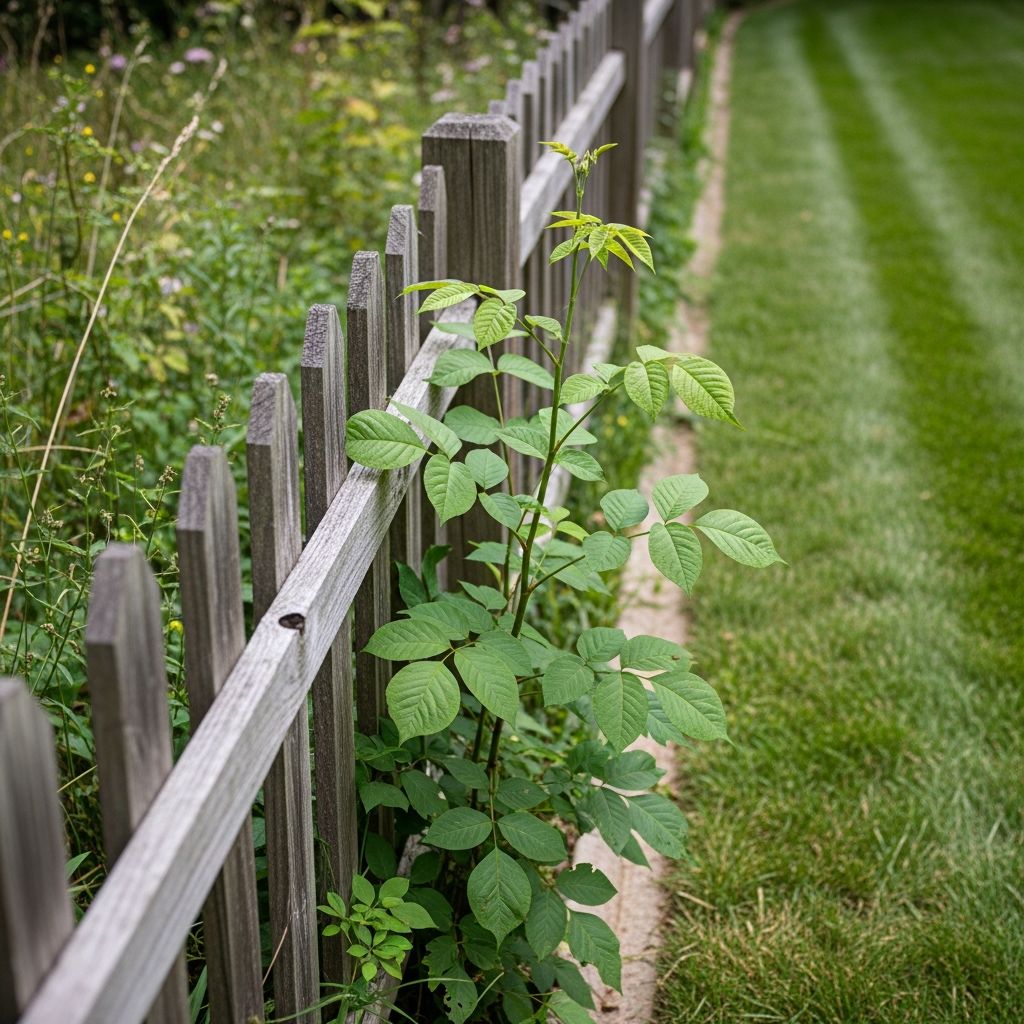
Poison ivy poses significant challenges for homeowners when it encroaches from neighboring properties, potentially causing painful rashes and property damage. This guide explores identification, safe management, health responses, and legal pathways to resolve disputes effectively.
Recognizing Poison Ivy in Your Yard
Accurate identification is the first step in managing poison ivy, especially when it spreads from adjacent lots. The plant typically features clusters of three leaflets, often remembered by the rhyme “leaves of three, let it be.” Leaflets are pointed with toothed or lobed edges, measuring 1-4 inches long, and may display reddish tinges in spring or fall, turning vibrant red or orange.
Poison ivy grows as a low shrub, up to 4 feet tall, or as a vine climbing trees or fences, sometimes reaching 50-70 feet. In summer, leaves are glossy green; berries are white and waxy. It thrives in sunny edges, fences, woods, and disturbed soil, spreading via roots, seeds from birds, or vines creeping underground.
- Spring: New leaves emerge reddish, smooth-edged.
- Summer: Green leaflets, possible black spots from urushiol oxidation.
- Fall: Red, yellow, orange hues; white berries.
- Winter: Bare vines with aerial rootlets resembling hairy ropes.
Distinguish from look-alikes like boxelder or Virginia creeper (five leaflets). Use apps or extensions for confirmation before action.
Preventing Exposure and Rash Development
Proactive measures minimize contact with urushiol, the oily resin in all plant parts causing allergic reactions in 85% of people. Wear long sleeves, pants, gloves, boots, eye protection, and hats during yard work.
Barrier creams with bentoquatam create a shield against urushiol; apply before exposure. Avoid burning, as smoke carries irritants to lungs. Educate family and pets—wash pets promptly to prevent transfer.
| Prevention Method | Details | Effectiveness |
|---|---|---|
| Protective Clothing | Long sleeves, pants, gloves | High |
| Barrier Lotions | Ivy blockers like bentoquatam | Moderate-High |
| Avoidance | Steer clear of infested areas | Highest |
| Pet Washing | Soap and water post-outdoors | High for transfer prevention |
Safe Removal Techniques for Encroaching Plants
DIY removal requires caution to avoid spreading urushiol. For small patches, dig out roots with gloved hands using grease-cutting soap like dish detergent immediately after.
- Manual Pulling: Best in spring with moist soil; bag and dispose in trash, not compost.
- Smothering: Cover with cardboard, newspaper, mulch for months; monitor for regrowth.
- Herbicides: Glyphosate or triclopyr in late summer/fall; apply to leaves for root kill. Use wick applicators to spare desired plants. Avoid near water.
Professionals use targeted sprays or goats for larger infestations. Repeat treatments annually as seeds persist.
Immediate Response to Potential Exposure
If contact occurs, act fast—urushiol penetrates skin in minutes but washes off easily. Rinse with lukewarm water and dish soap (e.g., Dawn) for 15-20 minutes; scrub under nails. Launder clothes separately in hot water with detergent. Clean tools, toys, pets with soap.
Avoid hot water, which opens pores, spreading oil. Do not scratch or pop blisters, risking infection.
Treating the Rash and Symptoms
Rash appears 12-48 hours post-exposure: red lines, itching, bumps, blisters lasting 1-3 weeks. Most cases self-resolve without scarring.
- Cool Compresses: 15-30 minutes several times daily.
- Baths: Oatmeal (colloidal, in sock to avoid drain clogs) or baking soda.
- Topicals: Calamine lotion, 1% hydrocortisone ointment (not cream on open skin), zinc oxide.
- Oral: Antihistamines like diphenhydramine (Benadryl) or cetirizine for itch/sleep.
- Cold Packs: Wrapped ice 20 minutes on/off.
Avoid bleach, alcohol, peroxide—they worsen irritation.
When to Consult a Healthcare Professional
Seek care if rash covers >25% body, affects eyes/genitals/mouth, causes fever >100°F, breathing issues, swelling, pus, or persists >10 days. Oral steroids or antibiotics may be needed for severe cases.
Addressing the Issue with Neighbors Amicably
Start with polite conversation: share identification info, health risks, and offer joint removal. Suggest professionals if needed. Document discussions.
If uncooperative, send certified letter detailing concerns, photos, rash evidence, requesting action within 14-30 days.
Legal Options for Persistent Problems
Encroaching vines may constitute private nuisance or trespass under property law. Check local ordinances on hazardous vegetation—many require abatement[original inspiration].
- Local Codes: Cite weed/nuisance laws for enforcement.
- HOA Rules: Enforce covenants on property maintenance.
- Civil Suit: For damages (medical, lost wages) if injured; seek injunction for removal.
- Self-Help: Trim to property line (not roots) in some jurisdictions.
Consult attorney for demand letters or filings. Evidence: photos, medical records, witness statements.
Long-Term Property Protection Strategies
Install barriers like metal flashing 6-12 inches underground along boundaries. Maintain clear fence lines, mow regularly, plant dense groundcovers. Monitor bird roosts dropping seeds.
Frequently Asked Questions (FAQs)
Can I remove poison ivy from my neighbor’s side of the fence?
Generally, no—stick to your property. Cutting vines at the line is often allowed, but avoid root damage to prevent disputes.
How long does urushiol stay active?
Years on surfaces; viable through winter.
Is poison ivy contagious?
No, only via unwashed urushiol transfer.
What if my child gets a severe rash?
Seek pediatric care for widespread symptoms or fever.
Are herbicides safe near pets/kids?
Use per label; keep areas off-limits until dry.
References
- Rules-of-Thumb for Poison Ivy Identification by the ITCHY Project — Virginia Master Naturalist. Accessed 2026. https://www.virginiamasternaturalist.org/blog/rules-of-thumb-for-poison-ivy-identification-by-the-itchy-project/
- Identifying and Taming Poison Ivy — University of Kentucky Franklin County Extension. Accessed 2026. https://franklin.mgcafe.uky.edu/identifying-and-taming-poison-ivy
- A Parent’s Guide to Poison Ivy: Prevention, Identification, and Treatment — Miller Children’s & Women’s Hospital. 2023. https://www.millerchildrens.memorialcare.org/blog/parents-guide-poison-ivy-prevention-identification-and-treatment
- 6 Ways to Prevent and Treat Poison Ivy — Carilion Clinic. Accessed 2026. https://www.carilionclinic.org/health-and-wellness/article/6-ways-prevent-and-treat-poison-ivy
- Identification of Poison Ivy is Key in Preventing Exposures — OU Health. 2022-05. https://www.ouhealth.com/blog/2022/may/identification-of-poison-ivy-is-key-in-preventin/
- How to Identify, Avoid and Treat Poison Ivy — Children’s Hospital of Philadelphia. Accessed 2026. https://www.chop.edu/news/health-tip/how-identify-avoid-and-treat-poison-ivy
- Outsmarting Poison Ivy and Other Poisonous Plants — U.S. Food and Drug Administration. Accessed 2026. https://www.fda.gov/consumers/consumer-updates/outsmarting-poison-ivy-and-other-poisonous-plants
Similar Articles








Read full bio of medha deb


