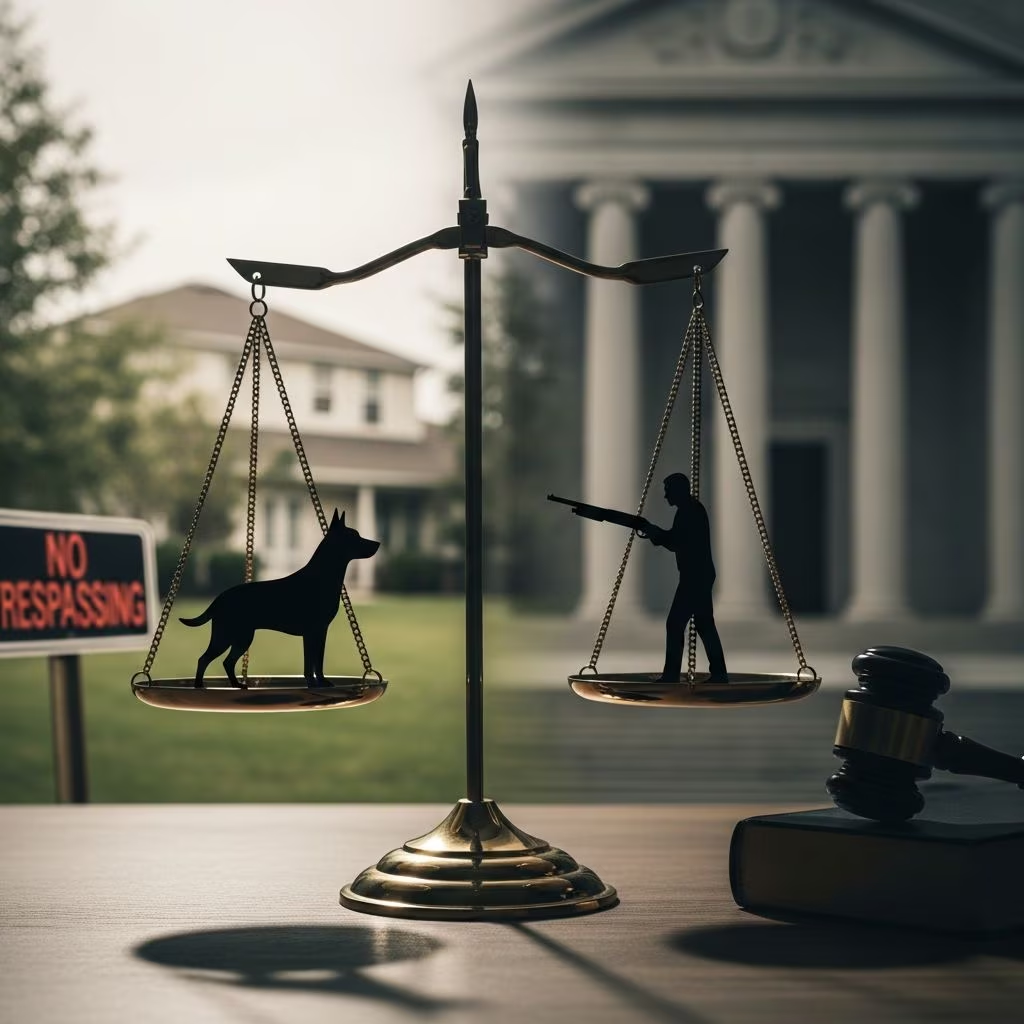
When a neighbor takes the drastic step of shooting your dog for simply wandering onto their property, it raises serious questions about property rights, animal welfare, and potential legal recourse. Pet owners often feel devastated, but understanding the nuances of state laws, defenses available to property owners, and viable claims can help navigate this distressing situation effectively.
Core Legal Principles in Dog Trespassing Incidents
Dogs are classified as personal property in most jurisdictions, meaning harming or killing one without justification can constitute interference with the owner’s possessions. However, property owners have rights to protect their land, livestock, and safety. The key factor is whether the dog posed an immediate threat—such as attacking people, other animals, or damaging crops—before lethal force was used.
Without such a threat, shooting a trespassing dog is often deemed excessive. Courts typically rule that reasonable alternatives, like calling animal control or using non-lethal deterrence, must be exhausted first. This balance prevents vigilantism while safeguarding legitimate defenses.
State Variations in Laws Permitting Use of Force Against Trespassing Dogs
Laws differ significantly across the U.S., with some states offering broad protections for property owners and others imposing strict limits. Below is a comparative overview:
| State | Key Provisions | Conditions for Shooting | Source |
|---|---|---|---|
| California | Landowners generally cannot kill trespassing dogs absent threats; felony for malicious killing. | Only if dog threatens livestock in enclosures (Food & Ag § 3110). | |
| Ohio | Owners may kill or injure dogs trespassing or chasing livestock, but must compensate owner minus damages (OH ST § 959.04). | Trespassing with prior damage or livestock threat. | |
| Illinois | Owners may kill dogs injuring livestock or poultry if unsupervised. | Caught in act of harming animals. | |
| Iowa | Permissible to kill collared dogs chasing or attacking domestic animals or people. | In the act of chasing/maiming/killing. | |
| Nebraska | Right to kill dogs killing, wounding, or chasing people/sheep/domestic animals. | Found in the act. | |
| Maine | No shooting allowed; owners must remove pet after notification or face civil violation. | Trespassing only—not permitted. |
These examples illustrate how statutes prioritize livestock protection in rural areas but restrict force in urban settings. Always check local ordinances, as cities like Grand Forks, ND, allow restraint or impoundment but limit to ‘reasonable force’ against trespassers.
Potential Civil Claims for Dog Owners
If the shooting appears unjustified, dog owners have several avenues for recourse:
- Trespass to Chattels: Since pets are chattel (movable property), unauthorized shooting interferes with the owner’s use, entitling recovery of fair market value plus related costs.
- Veterinary and Emotional Damages: In states like California (CA CIVIL § 3340), owners can claim vet bills, replacement value, and sometimes emotional distress if negligence is proven. Cases like Harrington v. Hovanec awarded damages for excessive force (13 shots).
- Negligence or Intentional Infliction: Prove the neighbor failed to use reasonable care, such as notifying the owner first.
- Animal Cruelty Violations: Many states criminalize unnecessary harm, leading to fines or jail time.
Small claims court is ideal for claims under $5,000–$10,000 (varies by state), as it avoids attorney fees. Success hinges on evidence like witness statements, vet reports, and proof the dog was non-aggressive.
Defenses Available to Property Owners
Neighbors aren’t defenseless. Common justifications include:
- Self-Defense or Imminent Harm: Lethal force is lawful if the dog attacks people, children, or livestock.
- Statutory Authority: Explicit permissions for protecting enclosed crops or animals.
- Prior Trespasses: In Alabama, repeated trespasses on fenced crops can mitigate liability.
- Law Enforcement Exceptions: Officers may enter property to seize loose dogs, but excessive force (e.g., shooting fleeing animals) can lead to liability.
Cases like Brown v. Muhlenberg Township denied immunity because no immediate danger existed and the owner was present. Conversely, Wisconsin courts upheld police actions under loose-dog statutes.
Criminal Consequences for Unauthorized Shootings
Shooting without legal basis often triggers criminal charges:
- Felony Cruelty: California’s law punishes malicious killing as a felony.
- Misdemeanor in Others: South Carolina imposes up to 10 years for malicious wounding.
- Defenses in Court: Self-defense can mitigate, but juries scrutinize if alternatives existed.
Even if acquitted criminally, civil suits can proceed separately.
Prevention Strategies for Pet Owners
To avoid confrontations:
- Secure your yard with fences meeting local codes.
- Use GPS trackers and train recall commands.
- Comply with leash laws; supervise closely.
- Build neighborly relations—discuss boundaries early.
- Install cameras for evidence in disputes.
Local animal control can mediate recurring trespasses without escalation.
Steps to Take Immediately After an Incident
- Document Everything: Photos of the dog, scene, wounds; vet records; witness contacts.
- Report to Authorities: File police and animal control reports for official record.
- Seek Medical Care: Prioritize vet treatment for survival chances.
- Consult Professionals: Animal law attorney or small claims advisor.
- Avoid Confrontation: Let legal processes handle resolution.
Frequently Asked Questions (FAQs)
Is it ever legal for a neighbor to shoot my trespassing dog?
Yes, if the dog poses an immediate threat to people, livestock, or property under state law. Mere trespassing usually isn’t enough.
What if my dog has trespassed before?
Prior incidents may justify defenses in some states (e.g., crop damage), but not automatic shooting rights.
Can I sue for emotional distress?
Possible in limited cases with negligence proof, but rare for pets as property.
Do police have more leeway to shoot dogs?
Yes, for public safety or loose-dog seizures, but excessive force can lead to lawsuits.
How much can I recover in small claims?
Typically dog’s market value, vet bills, and incidental costs—up to state limits without a lawyer.
Navigating Disputes Amicably
While legal action is an option, mediation through community services or HOAs often resolves issues faster. Emphasizing mutual respect for pets and property fosters better outcomes than court battles.
References
- What Claims Can be Brought When a Pet Has Been Shot Unlawfully? — Animal Legal & Historical Center. Accessed 2026. https://www.animallaw.info/article/what-claims-can-be-brought-when-pet-has-been-shot-unlawfully
- Dog Law In California: Protecting The Dog and Protecting People/Animals from Dog — Stimmel Law. Accessed 2026. https://www.stimmel-law.com/en/articles/dog-law-california-protecting-dog-and-protecting-peopleanimals-dog
- Pet Trespassing Laws by State — Dr. Jeff Werber. Accessed 2026. https://drjeff.com/blogs/blog/pet-trespassing-laws-by-state
- Neighbor Shot My Dog for Trespassing: What Can I Do? — Nolo. Accessed 2026. https://www.nolo.com/legal-encyclopedia/question-neighbor-shot-dog-trespassing-what-28257.html
- Can I Kill My Neighbor’s Dog If It Trespasses On My Property? — LawInfo. Accessed 2026. https://www.lawinfo.com/resources/insurance/pet-law/new-york/can-i-kill-my-neighbors-dog-if-it-trespasses.html
- What Happens if You Shoot a Dog (Legally)? — YouTube (Legal Commentary). Accessed 2026. https://www.youtube.com/watch?v=POfAv9R0s0U