
Neighbor Fence Damage: Who Pays and Legal Rights
Uncover who must cover costs for damaged shared fences, from storms to negligence, and protect your property rights effectively.
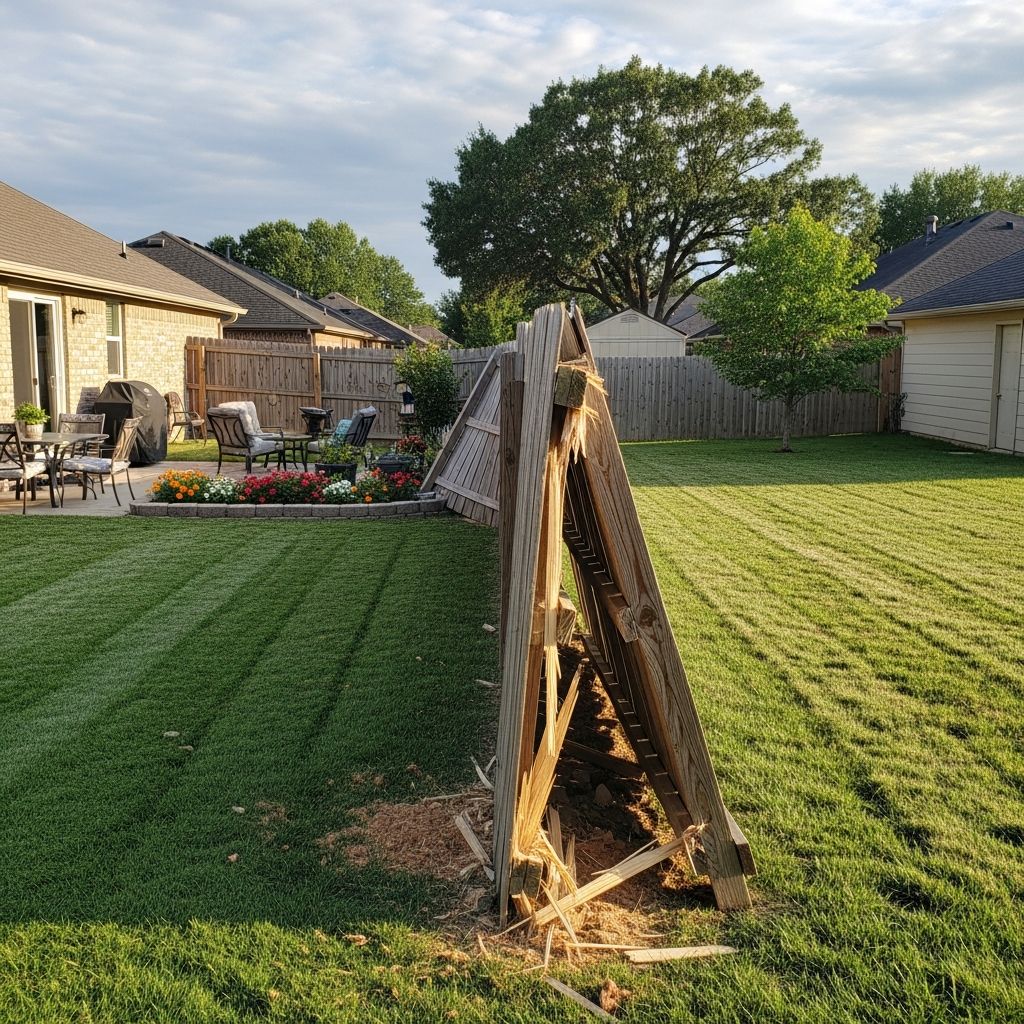
Disputes over damaged fences between neighboring properties arise frequently, often due to storms, falling trees, or everyday wear. Determining responsibility hinges on factors like fence location, cause of damage, local regulations, and insurance coverage. Homeowners must navigate property boundaries, shared obligations, and potential legal claims to resolve these issues fairly and efficiently.
Understanding Property Boundaries and Fence Ownership
The first step in assigning repair responsibility is verifying where the fence stands relative to property lines. A professional survey may be necessary if boundaries are unclear, as this defines ownership and maintenance duties.
- Fence fully on one property: The owner of that land bears full responsibility for repairs, regardless of who benefits from it.
- Fence on the boundary line: Both adjacent owners typically share costs equally, unless a prior agreement states otherwise.
- Fence built by one neighbor for their use: If the other neighbor later relies on it without contributing, the original builder remains primarily responsible.
Historical use can complicate matters; long-standing fences might imply joint ownership through concepts like adverse possession, though this varies by jurisdiction. Always consult county records or hire a surveyor to confirm lines before repairs begin.
Common Causes of Fence Damage and Liability Rules
Fence damage stems from diverse sources, each carrying distinct liability implications. Homeowners should document the cause with photos, videos, and witness statements to support insurance claims or disputes.
| Cause of Damage | Typical Responsibility | Key Considerations |
|---|---|---|
| Storms or natural events (e.g., wind, lightning) | Property owner where fence is located; insurance often covers | Considered ‘act of God’ unless negligence proven |
| Falling tree or branch | Tree owner’s insurance or out-of-pocket if negligent (e.g., dead tree ignored) | No liability for healthy trees in storms; prior knowledge of decay shifts blame |
| Neighbor’s pet or child | Pet/child owner’s liability | Direct negligence makes them responsible for repairs |
| Third-party contractor (e.g., landscaper) | Homeowner who hired them | Contractor’s insurance may apply; hiring party ultimately liable |
| Vandalism or fire set by neighbor | Responsible party’s liability coverage | Full replacement cost claimable, even if depreciated |
For incidental damage like storm debris, the fence’s property owner handles repairs but can file insurance claims. Negligence, such as ignoring a hazardous tree, exposes the tree owner to lawsuits.
Role of Homeowners Insurance in Fence Repairs
Most standard homeowners policies include fence coverage under dwelling or other structures, typically up to 10% of the home’s insured value. Liability sections cover damage your property causes to neighbors.
- Comprehensive coverage: Handles perils like fire, theft, or falling objects (excludes floods/earthquakes).
- Liability protection: Pays for neighbor claims if your tree or pet damages their fence.
- Deductibles and limits: Expect $500–$2,000 deductibles; depreciation may reduce payouts for older fences.
Review your policy declarations page and contact your agent promptly. Coordinate with neighbors to file joint claims if shared. Insurers often settle minor disputes to avoid litigation.
Local Laws and Regulations Governing Shared Fences
Fence rules differ by city, county, and state. Many areas mandate shared maintenance for boundary fences and limit heights/materials.
- Check municipal zoning offices for setback rules (e.g., fences can’t encroach property lines).
- Homeowners associations (HOAs) often dictate repair protocols, materials, and cost-sharing.
- Some states require written ‘fence agreements’ for boundary structures to clarify duties.
In areas like Fort Worth, TX, laws promote neighbor cooperation and specify upkeep for each side of shared fences. Violating codes can lead to fines, so obtain permits for major repairs.
Steps to Resolve Fence Damage Disputes Amicably
Prevent escalation by following a structured approach:
- Inspect and document: Photograph damage, note cause, and get repair estimates from 2–3 contractors.
- Communicate openly: Discuss findings with your neighbor; propose cost-sharing if applicable.
- Review agreements: Check deeds, prior contracts, or HOA docs for predefined responsibilities.
- File insurance claims: Submit jointly if possible; provide all evidence.
- Mediate if needed: Use free community mediation services before lawyers.
Friendly dialogue resolves 80% of cases without courts. Written emails create a paper trail if tensions rise.
When to Involve Lawyers or Pursue Legal Action
Legal intervention becomes necessary for high-stakes disputes, boundary fights, or non-responsive neighbors.
- Boundary surveys: Lawyers interpret deeds and coordinate professional surveys ($500–$1,500 cost).
- Ideal for damages under $5,000–$10,000 (varies by state); no attorney needed.
- Lawsuits: For negligence (e.g., known hazardous tree), seek full replacement costs plus pain.
Statutes of limitations (2–6 years) apply; act quickly. Lawyers can negotiate settlements, often cheaper than trials.
Preventing Future Fence Damage and Disputes
Proactive measures save time and money:
- Trim trees overhanging fences annually.
- Sign a shared fence maintenance agreement.
- Install impact-resistant materials like vinyl or steel.
- Join or form a neighborhood fence pact.
Regular inspections catch issues early. Weatherproofing extends fence life by years.
Frequently Asked Questions (FAQs)
Does my homeowners insurance cover neighbor fence damage from my tree?
Yes, if the tree was healthy and fell in a storm (act of God). Liability coverage applies; negligence voids it.
Can I make my neighbor pay for half the repairs on a shared fence?
Typically yes for boundary fences, per local laws or agreements. Document everything.
What if a contractor hired by my neighbor damages my fence?
The hiring neighbor is liable; their insurance should cover it.
Is a fence on my side but used by both neighbors my sole responsibility?
Yes, unless proven otherwise via survey or agreement.
How do HOAs affect fence repair responsibility?
HOAs often mandate shared costs and approved materials; check covenants.
References
- Who Is Responsible for Fence Damage? — AVO Fence & Supply. 2023-05-15. https://marketing.avofenceandsupply.com/blog/who-is-responsible-for-fence-damage
- My neighbor started a fire that damaged my house and fence. — Avvo Legal Answers. 2011-07-20. https://www.avvo.com/legal-answers/my-neighbor-started-a-fire-that-damaged-my-house-a-71891.html
- Fence Between Neighbors: Who Is Responsible for Repairs? — Magnolia Fence & Patio. 2024-02-10. https://magnoliafenceandpatio.com/knowledge/responsible-for-fence-repair-between-neighbors/
- Can my neighbor sue me for fence damage caused by my tree? — Justia Answers. 2025-07-20. https://answers.justia.com/question/2025/07/20/can-my-neighbor-sue-me-for-fence-damage-1068952
- Who Is Responsible For Fence Repair Between Neighbors — Veterans Fence. 2023-11-08. https://www.veteransfences.com/knowledge-library/who-is-responsible-for-fence-repair-between-neighbors/
Similar Articles








Read full bio of Sneha Tete


