
Nebraska Car Crash Regulations: Complete Guide For Drivers
Essential guide to Nebraska's car accident rules, insurance mandates, fault determination, and steps for victims seeking justice.
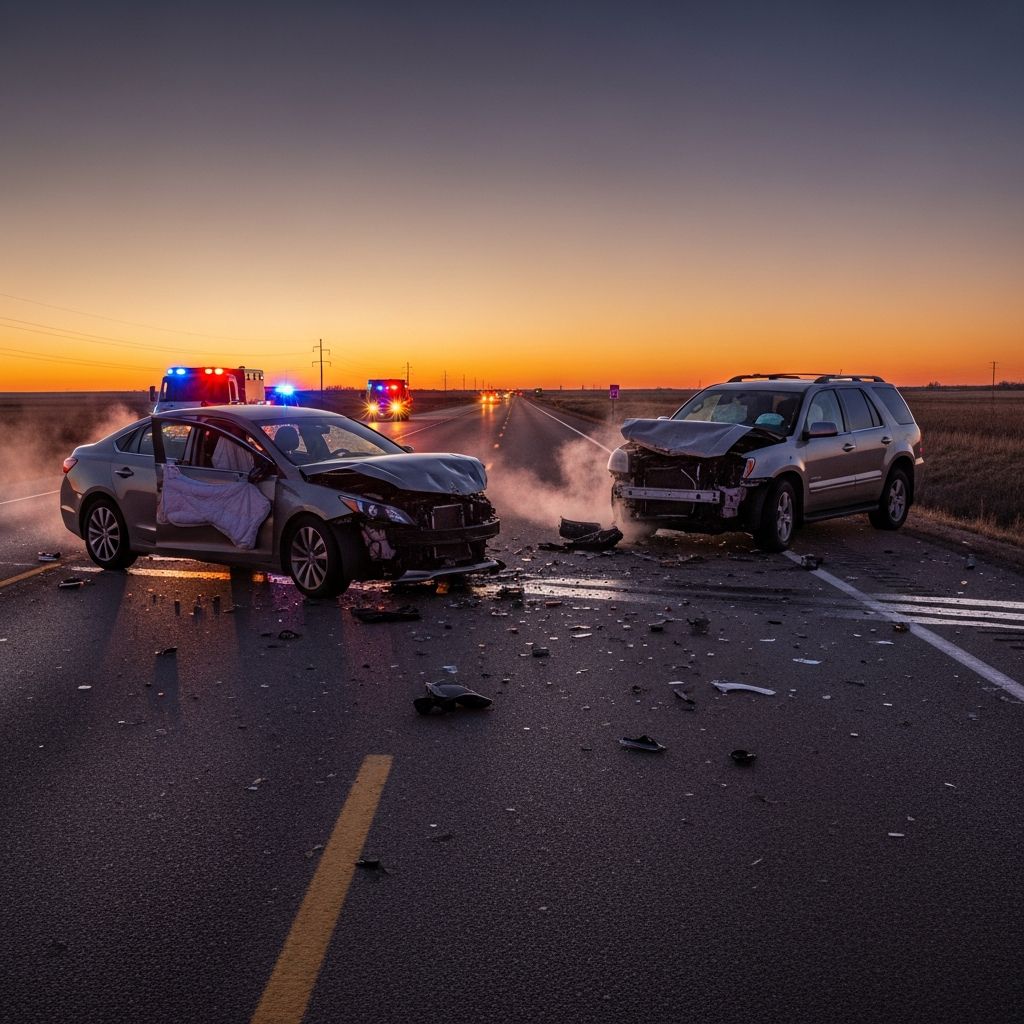
Car accidents disrupt lives across Nebraska’s highways and city streets. Understanding state-specific rules empowers drivers and victims to protect their interests effectively. This guide breaks down key aspects of Nebraska’s legal framework for vehicle collisions, from immediate response protocols to long-term compensation strategies.
Immediate Response Protocols After a Collision
When a crash occurs, swift and correct actions set the foundation for legal and financial recovery. Nebraska mandates that drivers involved in incidents remain at the scene, particularly if injuries or significant damage result.
- Stop your vehicle immediately upon impact, especially on public roads, private drives, or highways.
- Exchange essential information with other parties, including names, contact details, driver’s license numbers, vehicle registration, and insurance provider details.
- Render reasonable assistance to injured individuals, such as calling emergency services or providing first aid if qualified.
Failure to comply with these duties constitutes a serious violation under Nebraska Revised Statute section 60-697, potentially leading to criminal charges alongside civil liabilities.
Official Reporting Obligations for Crashes
Beyond staying at the scene, Nebraska law requires formal documentation of qualifying accidents to authorities. This ensures proper investigation and insurance processing.
| Crash Criteria | Reporting Deadline | Where to Report |
|---|---|---|
| Injury or death to any person | Within 10 days | Nebraska Department of Transportation |
| Property damage ≥ $1,500 to any one person’s property | Within 10 days | Local law enforcement and DMV |
| Fatal accidents | Immediately | Police and emergency services |
Drivers must submit a Driver’s Motor Vehicle Crash Report detailing the incident. Neglecting this step, as outlined in Nebraska Revised Statute section 60-699, can trigger license suspension or other penalties from the Department of Motor Vehicles.
Mandatory Insurance Coverage in Nebraska
Nebraska operates as a fault-based insurance state, meaning the at-fault driver’s policy primarily covers damages. All motorists must maintain minimum liability coverage to operate legally.
- Bodily Injury Liability: $25,000 per person / $50,000 per accident.
- Property Damage Liability: $20,000 minimum.
- Uninsured/Underinsured Motorist: Matching minimums of 25/50/20 recommended and often required.
These thresholds, current as of 2026, provide baseline protection but frequently prove inadequate for severe crashes involving medical bills or total vehicle loss. Driving without proof of financial responsibility results in a Class II misdemeanor, license plate impoundment, and a mandatory SR-22 filing for three years.
Determining Fault: Modified Comparative Negligence Rules
Nebraska employs a modified comparative negligence system under Nebraska Revised Statutes section 25-21,185.09. This apportions damages based on each party’s degree of fault.
- Parties with less than 50% fault can recover damages, reduced proportionally to their negligence percentage.
- If a claimant’s fault equals or exceeds 50%, recovery is completely barred.
For instance, if Driver A is 40% at fault and suffers $100,000 in damages, recovery drops to $60,000. This balanced approach encourages accountability while allowing partial recovery for most victims. Common fault factors include speeding, failure to yield, distracted driving, or traffic signal violations like improper right turns on red arrows.
Time Limits for Filing Injury Claims
The statute of limitations defines the window for pursuing legal action. Nebraska Revised Statute 25-207 grants four years from the accident date for personal injury and property damage claims arising from car crashes.
- Minors under 21 or legally incapacitated individuals receive tolling extensions until competency is restored.
- Government entity claims shorten to two years, demanding prompt action.
Missing these deadlines forfeits all rights to compensation, underscoring the need for timely consultation with legal experts post-accident.
Potential Consequences for Violations and At-Fault Drivers
Legal repercussions extend beyond civil suits. At-fault drivers face multifaceted penalties tailored to crash severity.
| Violation Type | Possible Penalties |
|---|---|
| Hit-and-Run (Injury/Death) | Fines up to $10,000, jail time, license revocation |
| No Insurance | License suspension, SR-22 requirement, misdemeanor charges |
| DUI-Related Crash | Enhanced jail sentences, mandatory ignition interlocks |
| Failure to Report | Administrative suspensions, fines |
Insurance premiums surge post-incident, often doubling or tripling based on claims history and fault attribution.
Compensation Available to Crash Victims
Successful claims encompass economic and non-economic losses. Victims may pursue:
- Economic Damages: Medical expenses, lost wages, property repairs, future care costs.
- Non-Economic Damages: Pain and suffering, emotional distress, reduced quality of life.
- Punitive Damages: Rare, applied in cases of gross negligence like reckless driving.
Multiple-party crashes complicate apportionment but do not preclude recovery if your fault remains under 50%.
Special Considerations: Pedestrians, Cyclists, and Trucks
Vulnerable road users receive heightened protections. Failure-to-yield violations at intersections or crosswalks often establish clear negligence, simplifying victim claims. Truck collisions invoke federal regulations alongside state laws, potentially increasing liability caps and involving multiple insurers.
Steps to Strengthen Your Claim Post-Accident
- Document the scene thoroughly: photos, witness contacts, police reports.
- Seek immediate medical evaluation, even for minor symptoms.
- Notify your insurer promptly without admitting fault.
- Consult an attorney before settling to evaluate full damages.
- Avoid social media discussions of the incident.
Frequently Asked Questions About Nebraska Car Accidents
What should I do right after a crash in Nebraska?
Stop safely, check for injuries, call 911 if needed, exchange info, and document everything. Report to police if damage exceeds $1,500 or injuries occur.
How much insurance do Nebraska drivers need?
Minimum 25/50/20 liability coverage: $25,000 bodily injury per person, $50,000 per accident, $20,000 property damage.
Does Nebraska use no-fault insurance?
No, it’s a fault state where the at-fault driver’s insurance covers damages.
Can I sue if I’m partially at fault?
Yes, if your fault is under 50%; damages reduce by your percentage of blame.
What is the deadline to file a lawsuit?
Four years for personal injury claims, with exceptions for minors or incapacitated persons.
References
- Navigating the Legal Implications of Car Accidents in Nebraska — Hastings Law. 2023. https://www.hastingslawne.com/navigating-the-legal-implications-of-car-accidents-in-nebraska/
- Nebraska Car Accident Laws — JS Berry Law. 2024. https://jsberrylaw.com/nebraska-car-accident-laws/
- Car Accidents — Harris & Associates, P.C., L.L.O. 2024. https://www.harrislawomaha.com/truck-and-semitruck-collisions/car-accidents
- Nebraska Car Insurance Laws (2026) — Insurify. 2026-01-15. https://insurify.com/car-insurance/nebraska/minimum-requirements/
- Accident Suspensions — Nebraska Department of Motor Vehicles. 2025. https://dmv.nebraska.gov/fr/accident-suspensions
- Nebraska car insurance laws and requirements: What is changing in 2026 — Insurance.com. 2026. https://www.insurance.com/auto-insurance/nebraska-car-insurance-laws/
Similar Articles








Read full bio of Sneha Tete


