
Navigating Modern Court Rules: A Practical Guide for Legal Professionals
Understand evolving court rules, avoid costly mistakes, and streamline litigation with practical, tech-aware strategies.
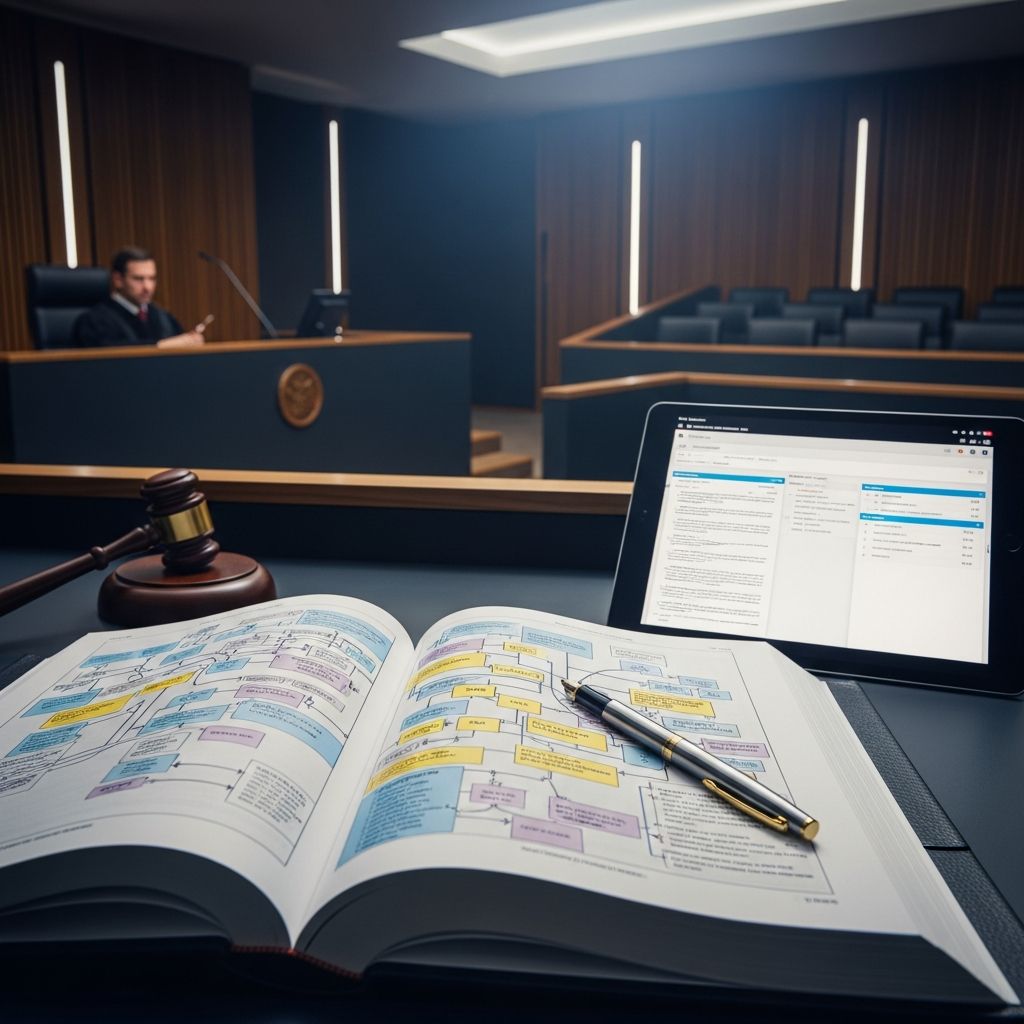
Court rules have always shaped how cases move from filing to final judgment, but in the last decade they have changed faster than many practitioners can track. Remote hearings, mandatory electronic filing, and evolving local procedures now sit alongside traditional civil procedure, creating a dense web of requirements that can make or break a case.
This guide explains how modern court rules work in practice, highlights common pitfalls, and offers strategies for staying compliant and efficient across jurisdictions.
Why Court Rules Matter More Than Ever
Court rules define the “operating system” of litigation. They govern deadlines, formatting, filing methods, motion practice, discovery obligations, and courtroom conduct. Failure to comply can lead to severe consequences:
- Rejection of filings or delayed docketing
- Waiver of claims or defenses
- Monetary sanctions and fee awards
- Issue or evidence preclusion
- Case-dispositive rulings, including dismissal or default
Appellate courts across the United States routinely affirm sanctions and adverse outcomes where attorneys have ignored or misunderstood procedural rules, underscoring that rule compliance is not a technicality but a core professional duty.
The Multi-Layered Architecture of Court Rules
Modern practitioners must navigate multiple layers of authority, often simultaneously. A single filing may be governed by:
| Level | Examples | What They Typically Cover |
|---|---|---|
| Constitutional | U.S. Constitution; state constitutions | Jurisdiction, due process, right to counsel, open courts |
| Statutory | Federal & state statutes | Subject-matter jurisdiction, filing fees, special proceedings |
| Rules of Court | Federal Rules of Civil Procedure; state rules | Pleadings, motions, discovery, judgments, appeals |
| Local Rules | District, circuit, county, or division rules | Page limits, hearing procedures, local deadlines |
| Standing Orders | Individual judge practices | Preferred formats, courtesy copies, scheduling preferences |
| Administrative Orders | Chief judge or presiding judge directives | Emergency procedures, pilot programs, pandemic rules |
Effective advocacy requires reading these sources together, resolving conflicts, and identifying which rules are mandatory, which are waivable, and which leave room for judicial discretion.
How Procedural Rules Are Created and Changed
Court rules do not change at random. Most jurisdictions use a structured process that provides notice and opportunities for comment:
- Rulemaking committees draft proposals, often composed of judges, practitioners, and academics.
- Public comment periods allow bar associations and litigants to raise concerns or suggest revisions.
- Judicial or legislative approval is required before rules take effect, sometimes with a delayed implementation date.
- Publication occurs via official court websites, reporters, or administrative orders, sometimes accompanied by explanatory notes.
At the federal level, rule amendments follow a formal process involving advisory committees, the Judicial Conference, the Supreme Court, and Congress. State systems vary but increasingly mirror this transparent, consultative model.
Electronic Filing and Digital Courtrooms
Electronic filing (eFiling) and electronic case management systems have transformed court practice. Most federal courts and many state courts now require lawyers to file documents electronically, relying on systems such as CM/ECF at the federal level.
Core eFiling Requirements
While specifics differ by jurisdiction, eFiling rules often address:
- Registration and user credentials for attorneys and sometimes self-represented litigants
- Accepted formats (commonly searchable PDF) and technical specifications (file size, bookmarks, hyperlinks)
- Signatures, including electronic or /s/ signatures, and any requirements for retaining original signed documents
- Filing deadlines, often tied to the system’s timestamp rather than clerk’s office hours
- Service of documents via the electronic system, including who receives automatic notice
Noncompliance with eFiling rules can result in rejected submissions or contested filing dates, impacting jurisdictional deadlines such as notices of appeal.
Remote Hearings and Virtual Proceedings
Emergency conditions, including the COVID-19 pandemic, accelerated the adoption of remote hearings. Many courts have retained some form of virtual or hybrid proceedings, prompting new rules on:
- Technology requirements and minimum connection standards
- Procedures for presenting exhibits and witness testimony remotely
- Public access and transparency, including livestreams or dial-in numbers
- Confidentiality and protection of privileged communications during remote appearances
Federal and state judicial administrators emphasize that remote proceedings must still comply with due process and open courts requirements, even while leveraging technology for efficiency.
Deadlines, Extensions, and Service: The Time Rules That Matter
Many of the harshest outcomes in litigation arise from missed deadlines. Modern rules are detailed about how time is calculated and when courts may extend it.
Calculating Time
Court rules typically specify:
- Whether the day of the triggering event is counted
- How weekends and court holidays are treated for short vs. long deadlines
- Cutoff times for same-day filing (e.g., 11:59 p.m. in the court’s time zone for eFiling)
Federal Rule of Civil Procedure 6 and comparable state rules provide detailed guidance on time computation and extensions, and failure to apply these correctly can render a filing untimely.
Service and Notice in the Digital Age
Service rules now integrate electronic methods alongside traditional personal and mail service. Courts often permit or require service via:
- Electronic filing systems (with automatic notices to registered users)
- Email for certain documents, with prior consent or court order
- Alternative digital methods in hard-to-serve cases, sometimes including social media or text messaging with court approval
Despite new technologies, due process remains the standard: methods must be reasonably calculated to provide actual notice and an opportunity to be heard.
Local Rules and Judge-Specific Practices
Even where statewide or nationwide rules are uniform, local variation is substantial. Many courts implement local rules under authority granted by higher-level procedural codes.
Examples of Local Variations
- Different page limits or word counts for briefs
- Unique requirements for pre-motion conferences
- Mandatory meet-and-confer steps before discovery motions
- Specific formatting for proposed orders or judgments
- Preferences regarding oral argument and tentative rulings
Individual judges often publish standing orders or practice guidelines that further shape how rules apply in their courtrooms—sometimes more strictly than the baseline rules require.
Technology, Privacy, and Confidentiality in Court Filings
As more documents become accessible online, courts have adopted rules to protect sensitive information and comply with privacy laws.
Redaction and Restricted Information
Rules now commonly require parties to redact or omit certain data from publicly filed documents, such as:
- Social Security and taxpayer identification numbers
- Financial account numbers
- Exact dates of birth (often limited to year)
- Names of minor children (using initials instead)
- Home addresses, particularly in sensitive matters
Federal privacy rules, judicial policies, and state equivalents guide these redaction standards to balance transparency with security.
Sealed Filings and Protective Orders
When redaction is insufficient, many jurisdictions allow parties to seek:
- Sealing orders that restrict public access to entire documents or cases
- Protective orders governing the handling of confidential discovery materials
- In camera review of especially sensitive information, such as trade secrets or privileged records
Courts must balance the presumption of public access to judicial records against privacy, safety, and proprietary interests, often under standards articulated in case law and administrative policies.
Common Pitfalls and How to Avoid Them
Across jurisdictions, certain mistakes recur frequently. Identifying and proactively avoiding them can reduce risk and cost.
- Relying on outdated forms or templates
Using old pleading formats or citation styles can cause noncompliance with updated rules or local requirements. - Assuming rules are the same across courts
Moving from federal to state court, or between counties, often reveals unexpected differences in deadlines and formatting. - Ignoring judge-specific orders
Even perfect compliance with statewide rules may fail if standing orders require additional steps. - Misunderstanding eFiling cutoffs
Believing that “end of business day” governs when the rule uses a system-generated timestamp. - Neglecting service on self-represented parties
Electronic notice through a court system may not suffice where a litigant is not registered for e-service.
Building a Court-Rule Compliance System in Your Practice
Rather than treating court rules as an afterthought, effective firms and legal departments build them into daily workflows.
Practical Steps for Law Firms and Legal Teams
- Create jurisdictional playbooks summarizing key rules, local variations, and standing orders for each court where you regularly appear.
- Use calendaring tools that calculate deadlines using jurisdiction-specific rules and court holidays, with automated reminders.
- Assign responsibility for tracking rule changes to a designated attorney or paralegal who monitors court announcements.
- Integrate checklists into filing workflows, including formatting, signatures, exhibits, and service.
- Train new team members on rules before they draft or file documents, emphasizing that procedures differ by court.
Leveraging Technology Wisely
Technology can reduce error rates and speed up compliance, but only if configured accurately:
- Adopt document-assembly tools that enforce court-specific formatting and caption requirements.
- Use secure file-sharing for exhibits and large attachments, consistent with court rules on electronic evidence.
- Maintain encrypted storage and access controls for sealed or confidential documents, complying with professional responsibility and data protection standards.
Ethical and Professional Responsibility Dimensions
Compliance with court rules is not just a technical requirement; it is an ethical obligation. Professional conduct rules in many jurisdictions require lawyers to provide competent representation and to act with diligence, which includes understanding and following procedural rules.
Failure to comply can trigger:
- Judicial sanctions under procedural rules
- Client complaints and malpractice exposure
- Disciplinary action by bar authorities in severe or repeated cases
Courts and regulators increasingly expect attorneys to be competent in technology, including electronic filing and data security, as part of their professional obligations.
FAQs About Court Rules and Modern Practice
Q: How often do court rules change?
A: Many appellate and high courts update their rules annually or every few years, while trial courts may issue local rule amendments or administrative orders more frequently. Practitioners should review relevant court websites regularly and subscribe to rule-change alerts when available.
Q: If local rules conflict with higher-level rules, which controls?
A: Generally, constitutions and statutes override rules of court, and statewide or national rules override inconsistent local rules. However, some higher-level rules expressly authorize local variations in specific areas, so attorneys must read them together and, when necessary, seek clarification from the court.
Q: Are self-represented litigants held to the same court rules as lawyers?
A: Courts often provide additional guidance and resources to self-represented litigants, but they are typically required to follow the same procedural rules as attorneys. Judges may exercise some leniency, but failure to comply can still lead to adverse outcomes.
Q: What should I do if I discover a rule violation after filing?
A: Promptly identify the nature and impact of the error, notify supervising counsel or the client, and consider filing a corrective document or motion seeking leave to amend or refile. Courts are more likely to excuse inadvertent, promptly corrected errors that do not prejudice other parties.
Q: How can I keep up with rule changes across multiple jurisdictions?
A: Combine several methods: subscribe to court email updates, monitor high courts and judicial councils, use reputable legal research platforms with rule-tracking features, and maintain internal jurisdictional guides that are reviewed and updated on a fixed schedule.
References
- Guide to Judiciary Policy, Vol. 1: Governance and the Rulemaking Process — Administrative Office of the U.S. Courts. 2023-07-01. https://www.uscourts.gov/rules-policies/about-rulemaking-process
- Federal Rules of Civil Procedure — Legal Information Institute, Cornell Law School. 2024-12-01. https://www.law.cornell.edu/rules/frcp
- Managing Discovery of Electronic Information: A Pocket Guide for Judges (3rd ed.) — Federal Judicial Center, Shira A. Scheindlin & Barbara J. Rothstein. 2021-01-01. https://www.fjc.gov/content/managing-discovery-electronic-information-pocket-guide-judges-third-edition-0
Similar Articles








Read full bio of medha deb


