
Navigating First Amendment Rights During Public Protests
Empower yourself with the knowledge to legally protest.
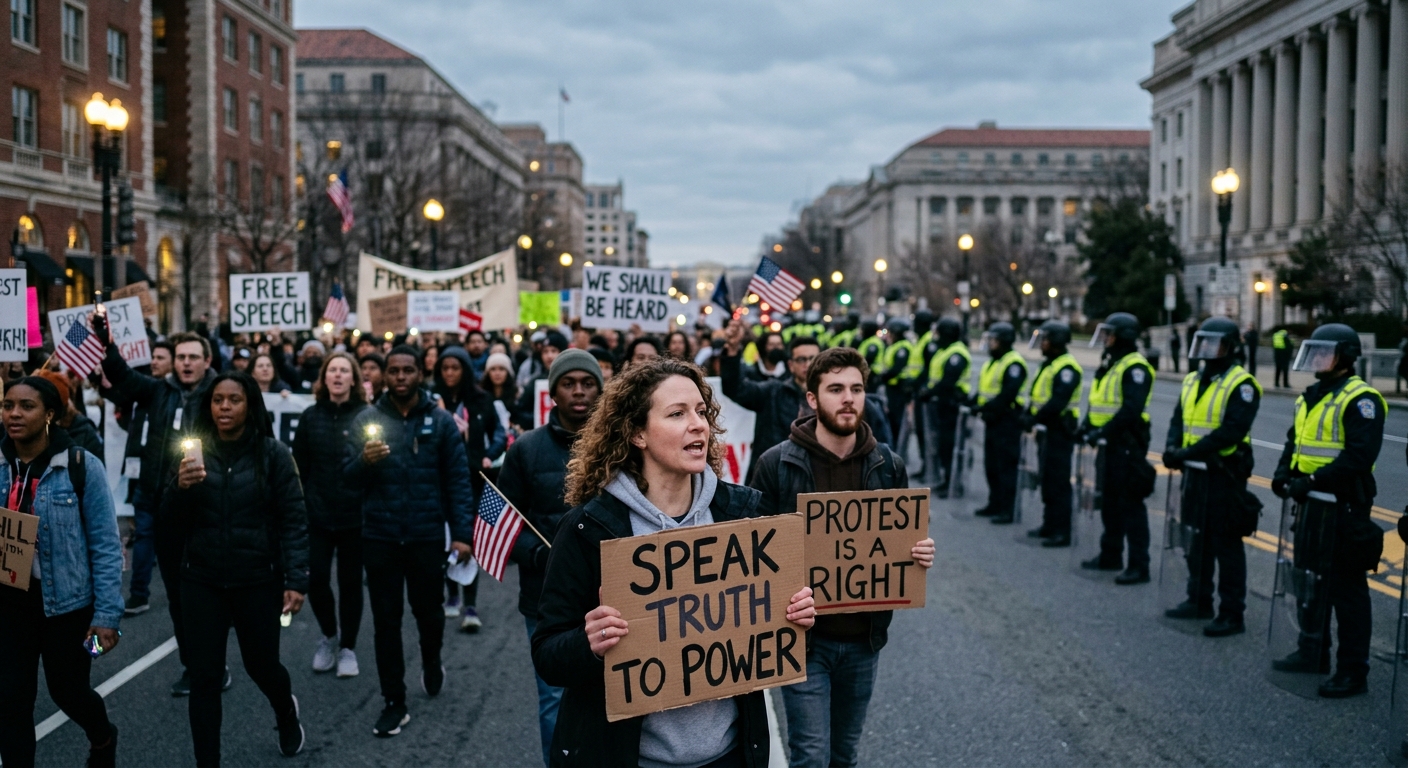
The right to assemble peaceably and petition the government for a redress of grievances is a bedrock principle of American democracy. From the suffrage movement to the civil rights struggles of the 1960s, and into the modern era of digital activism, public demonstrations have served as a powerful catalyst for social and political change. However, stepping out into the streets to amplify your voice requires more than just passion and a megaphone; it demands a comprehensive understanding of the legal landscape that governs public expression.
Navigating civil liberties, law enforcement protocols, and municipal regulations is complex. When adrenaline runs high and crowds swell, the line between protected speech and unlawful conduct can sometimes blur. Therefore, arming yourself with a thorough knowledge of your constitutional rights is just as critical as the cause you are championing. This guide explores the intricate details of what the Constitution protects, how municipal laws can legally regulate protests, the evolving jurisprudence surrounding the recording of law enforcement, and practical strategies for safely interacting with authorities during a rally.
The Anatomy of Protest Rights: What the Constitution Guarantees
To fully grasp your civil liberties during a public demonstration, it is essential to understand the scope and limitations of the First Amendment. The United States Constitution provides robust protections for ‘pure speech’—such as chanting, giving speeches, and distributing literature—as well as ‘expressive conduct,’ which includes symbolic actions like holding vigils or wearing armbands. These foundational rights apply to all individuals within the borders of the United States, irrespective of their citizenship status.
However, a fundamental rule of constitutional law is that the First Amendment does not grant citizens a limitless shield to engage in any behavior they choose under the guise of protesting. The Constitution protects your right to express your views, but it does not protect actions that inherently violate established criminal laws. For example, acts of civil disobedience—a long-standing tradition of intentionally breaking laws to highlight an injustice—are not legally protected by the First Amendment. If you choose to engage in civil disobedience by trespassing on private property, blocking a major interstate highway, or resisting arrest, you will be subject to the legal consequences of those actions, regardless of the righteousness of your underlying message.
Furthermore, the First Amendment does not protect speech that incites imminent lawless action, genuine threats of violence, or obscenity. Understanding this distinction is the first step in ensuring that your participation in a demonstration remains safely within the bounds of legal protection.
| Protest Action / Location | Generally Protected? | Key Legal Caveats |
|---|---|---|
| Marching on a public sidewalk | Yes | Must not permanently obstruct pedestrian traffic or block building entrances. |
| Holding signs and chanting | Yes | Cannot involve ‘fighting words’ or incite imminent lawless violence. |
| Blocking traffic or intersections | No | Unless a specific street-closure permit has been granted by the municipality. |
| Protesting on private property | No | Requires explicit permission from the property owner; otherwise, it constitutes trespassing. |
Understanding ‘Time, Place, and Manner’ Restrictions
A pervasive misconception regarding the First Amendment is that it provides an absolute right to protest anywhere, at any time, and in any way. In reality, the Supreme Court has consistently held that government entities can impose reasonable ‘time, place, and manner’ restrictions on expressive activity. These regulations are designed to balance the public’s right to free expression with the government’s responsibility to maintain public order, ensure traffic safety, and protect communal property.
Your rights are most strongly protected in ‘traditional public forums.’ These include public streets, sidewalks, and community parks—spaces that have historically been dedicated to public assembly and debate. In these areas, you generally do not need a permit to gather, march, or distribute literature, provided you do not obstruct pedestrian traffic, block the entrances to buildings, or physically harass passersby.
However, local governments can legally require permits for specific types of demonstrations. If your protest involves a large group that requires the closure of streets, the use of heavy sound amplification equipment (like concert-grade speakers), or the erection of stages and structures, a permit is typically required. The critical constitutional safeguard here is that the government must evaluate permit applications in a strictly ‘content-neutral’ manner. Authorities cannot deny a permit or impose exorbitant security fees simply because they disagree with the message of the protest, find the topic controversial, or fear that the protesters’ viewpoints might offend the community.
Conversely, ‘non-public forums’—such as the interior lobbies of government buildings, military bases, or the immediate grounds of certain federal courthouses—are subject to much stricter regulations. The government can legally restrict or entirely prohibit protests in these areas to ensure that the primary function of the facility is not disrupted by expressive conduct.
The Evolving Right to Record Law Enforcement
In the modern digital age, smartphones have transformed ordinary citizens into independent documentarians, fundamentally changing the dynamics of public demonstrations. The ability to instantly record and broadcast police interactions has become a crucial tool for civil rights accountability and transparency. But does the First Amendment explicitly protect your right to film the police?
While the United States Supreme Court has yet to issue a definitive, blanket ruling on the specific right to record law enforcement nationwide, a strong consensus has emerged among the U.S. Circuit Courts of Appeals. The First, Third, Fifth, Seventh, Ninth, and Eleventh Circuits have all explicitly recognized that recording law enforcement officers engaged in their official duties in a public place is a form of newsgathering protected by the First Amendment. The underlying legal rationale is that the act of filming is an essential precursor to speech; you cannot disseminate a video documenting public government conduct if you are legally barred from recording it in the first place.
However, this right is not absolute and is subject to reasonable limitations. You have the right to record, but you do not have the right to physically interfere with law enforcement operations. If an officer is attempting to subdue a suspect, secure a crime scene, or direct emergency vehicles, you cannot physically insert yourself into the middle of the activity under the claim of First Amendment protection. If an officer commands you to step back to maintain a safe perimeter, you must comply. The best practice is to film from a safe, reasonable distance, keeping your hands and device entirely visible, and avoiding any sudden movements that could be misinterpreted as a threat or intentional interference.
Best Practices: How to Interact with Law Enforcement During a Rally
Even the most peaceful demonstrations can attract a heavy police presence, and the sheer volume of attendees can lead to tense, chaotic encounters. Knowing how to assert your rights calmly and effectively during an interaction with law enforcement can prevent a situation from escalating into an unlawful arrest or physical confrontation.
- Understanding Consensual Encounters vs. Detentions: If a police officer approaches you to ask questions, you are not immediately obligated to answer. You have the right to politely ask, ‘Officer, am I free to leave?’ If the answer is yes, you are involved in a consensual encounter and may slowly and calmly walk away. If the officer says no, you are being legally detained.
- Handling Investigatory Detentions (Terry Stops): To detain you, an officer must have a reasonable, articulable suspicion that you have committed, are committing, or are about to commit a crime. During a lawful detention, you may be required to provide your name and identification, depending on the specific ‘Stop and Identify’ laws of the state you are in. However, you are not required to answer any other questions regarding your political affiliations, your protest organizers, or your personal plans. You can firmly state, ‘I am exercising my right to remain silent.’
- Navigating an Arrest: If a detention escalates into a formal arrest, the most crucial advice is to never physically resist, even if you firmly believe the arrest is entirely unjustified or unconstitutional. Physical resistance or touching an officer can result in severe felony charges, such as battery on a law enforcement officer, which will heavily overshadow the initial constitutional violation. Clearly state that you wish to invoke your right to remain silent and that you immediately want to speak with an attorney. Do not make any explanatory statements without legal counsel present.
- Dealing with Police Searches: During a detention, an officer may pat down the outside of your clothing if they have a reasonable suspicion that you are armed and dangerous. Beyond that, officers generally need a warrant or your consent to search your pockets, bags, or digital devices. You should never physically obstruct a search, but you should unequivocally state, ‘I do not consent to this search.’ This verbal declaration preserves your rights and can be critical for an attorney attempting to suppress illegally obtained evidence in court later.
Special Considerations for Non-Citizens and Vulnerable Groups
While the First Amendment protects everyone on U.S. soil, the practical legal consequences of a protest-related arrest can vary drastically depending on a person’s citizenship status. For United States citizens, an arrest for a minor protest infraction—such as a noise violation, failure to disperse, or trespassing—often results in a misdemeanor charge, a fine, or eventual case dismissal.
For non-citizens, including international students on F-1 visas, lawful permanent residents (green card holders), and undocumented immigrants, the stakes are exponentially higher. An arrest, even if criminal charges are ultimately dropped, can trigger immediate and severe immigration consequences. It can lead to the revocation of a current visa, rendering the individual out of status, or initiate formal deportation proceedings. Certain convictions, particularly those related to resisting arrest or property damage, can permanently bar an individual from naturalization.
Immigration experts generally advise non-citizens to exercise extreme caution when participating in public demonstrations. If you choose to participate, it is advisable to remain on the periphery of the crowd, avoid areas where civil disobedience is planned, and carry the contact information of a qualified immigration attorney. Furthermore, under no circumstances should you lie about your immigration status to an officer or carry fraudulent documents.
Frequently Asked Questions (FAQs)
Can the government or local police ban my protest based on its specific topic?
No. One of the core tenets of First Amendment jurisprudence is the strict prohibition against ‘viewpoint discrimination.’ The government cannot ban a protest, deny a permit, or impose stricter regulations simply because the message of the demonstration is controversial, unpopular, or highly critical of the government itself.
What happens if the police declare a protest an ‘unlawful assembly’?
An unlawful assembly is a legal designation applied when a previously peaceful gathering turns violent, poses a clear and present danger to public safety, or results in widespread property destruction. When an order to disperse is given by law enforcement, the First Amendment no longer protects your right to remain in that specific area. You must leave immediately through the designated exit routes. Failing to disperse after a lawful order is a common ground for mass arrests during protests.
Do police have the right to confiscate or delete my photos and videos of a protest?
Generally, no. Law enforcement officers cannot confiscate your smartphone or camera without a legally executed warrant, except in very narrow emergency circumstances where they have probable cause to believe the device contains evidence of a serious crime that is about to be destroyed. Even with a warrant, police are strictly prohibited from deleting your photographs or video files. Doing so constitutes destruction of evidence and a severe violation of your constitutional rights.
Conclusion
Public demonstrations remain one of the most vital mechanisms for civic engagement and societal progress in a functioning democracy. However, exercising these rights safely requires proactive education and keen situational awareness. By understanding the critical distinction between protected speech and unlawful conduct, familiarizing yourself with local permit requirements, and knowing how to assert your rights calmly during police interactions, you can ensure that your voice is heard without unnecessarily jeopardizing your personal freedom. Remember, your ultimate shield against legal overreach is being a well-informed and prepared citizen.
References
Note: Some older academic sources are included as they outline the foundational constitutional jurisprudence that remains the bedrock of First Amendment law.
- Attorney General Schwalb Issues Guidance on Your Right to Protest in the District Of Columbia — Office of the Attorney General for the District of Columbia. 2025-10-17. https://oag.dc.gov/release/attorney-general-schwalb-issues-guidance-your
- Responding to First Amendment Audits: Is Filming Protected by the First Amendment? — Coates’ Canons, University of North Carolina at Chapel Hill. 2022-11-14. https://canons.sog.unc.edu/2022/11/responding-to-first-amendment-audits-is-filming-protected-by-the-first-amendment/
- Filming the Police — The First Amendment Encyclopedia, Free Speech Center at Middle Tennessee State University. 2020-01-01. https://firstamendment.mtsu.edu/article/filming-the-police/
- Controlling Public Protest: First Amendment Implications — Office of Justice Programs. 2007-05-15. https://www.ojp.gov/ncjrs/virtual-library/abstracts/controlling-public-protest-first-amendment-implications
Similar Articles








Read full bio of Sneha Tete


