
Navigating DuPage County’s Mandatory eFiling System
A practical guide to DuPage County’s transition to statewide eFileIL, new rules, and how attorneys and self-represented litigants can adapt.
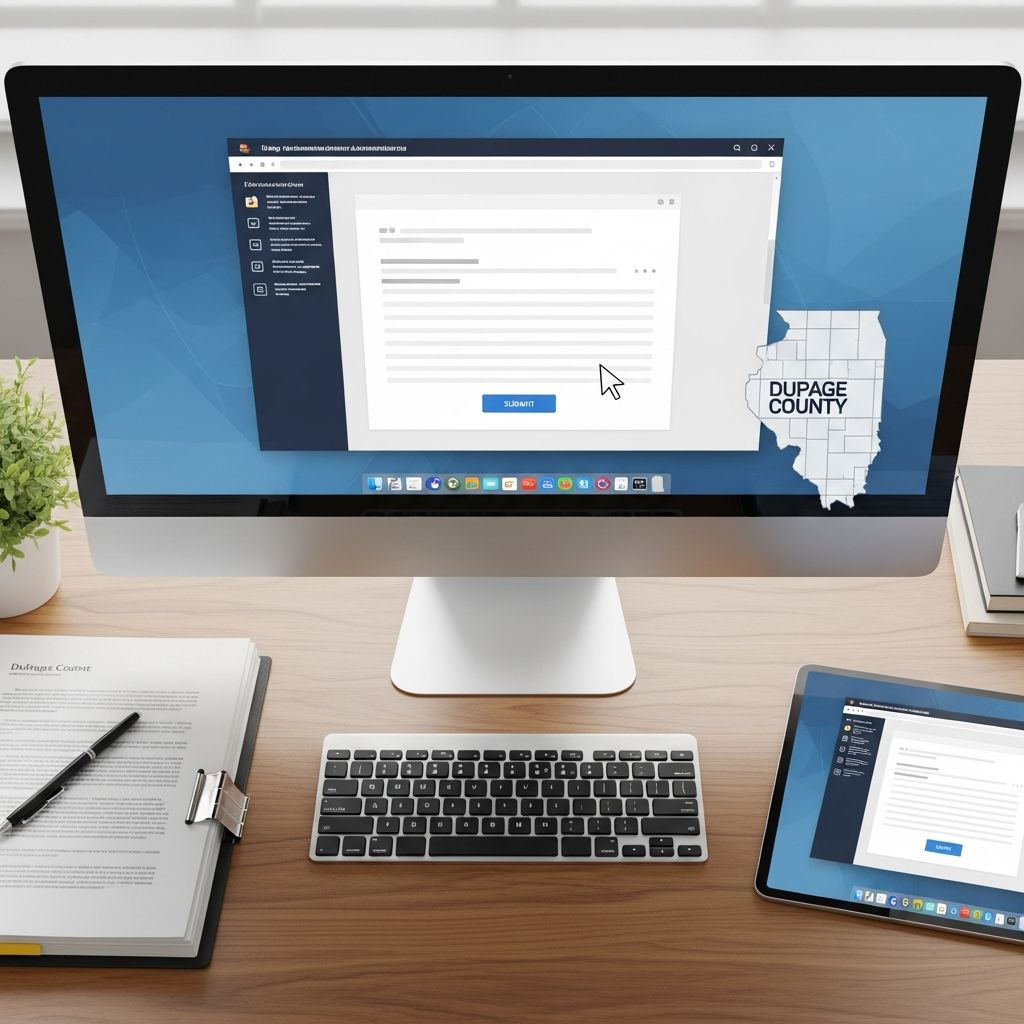
DuPage County’s civil courts are now fully connected to eFileIL, Illinois’ centralized electronic filing platform for civil cases. As a result, every civil filer in DuPage County must submit their documents through an approved eFiling service provider (EFSP) rather than filing directly at the clerk’s counter, with limited exceptions for approved exemptions.
This change brings DuPage in line with the statewide mandate, but also requires attorneys, legal staff, and self-represented litigants to adjust their filing habits, understand new workflows, and become familiar with both eFileIL and DuPage-specific rules.
From Local System to Statewide Platform
For years, DuPage County relied on a locally tailored eFiling solution that tightly integrated with the county’s case management system. With the move to Odyssey eFileIL, developed and operated under contract with the Illinois courts, DuPage now participates in a uniform eFiling framework used across all 102 counties and the Illinois Supreme and Appellate Courts.
| Feature | Previous DuPage System | Current eFileIL-Based System |
|---|---|---|
| Platform Control | Locally built and customized | Statewide platform managed by vendor |
| Scope | DuPage County only | All Illinois civil courts and higher courts |
| Customization | High, tailored to DuPage workflows | Limited, with only selected local variations |
| EFSP Choice | Primarily one or few options | Multiple certified EFSPs statewide |
Under this “open” eFiling model, Tyler Technologies provides the central eFiling manager (eFileIL), while various private vendors operate EFSP websites that users log into to submit their filings. Each EFSP must comply with statewide rules, but they may differ in interface, support, and added features.
Key Players in the DuPage eFiling Environment
To navigate eFiling in DuPage County effectively, it helps to understand the main components of the ecosystem.
- eFileIL (Electronic Filing Manager)
The statewide hub that receives filings from EFSPs, enforces technical and procedural rules, and routes accepted filings into local court case management systems. - EFSPs (eFiling Service Providers)
Web-based services approved by the Illinois courts that provide user-facing portals where filers upload documents, enter case information, pay fees, and submit filings to eFileIL. - DuPage County Circuit Clerk
The office that reviews filings for compliance, dockets accepted documents to the appropriate cases, and manages case information, calendars, and public access within the 18th Judicial Circuit. - DuPage County Court Websites
Local sites, including the clerk’s web pages and the 18th Judicial Circuit pages, which provide court forms, scheduling tools, and county-specific guidance on eFiling.
Choosing and Using an EFSP for DuPage Filings
Anyone filing a civil case in DuPage County must use a certified EFSP that connects to eFileIL. The Illinois courts maintain a list of approved EFSPs; DuPage also notes specific providers, including options that are widely used for civil filings.
Core steps to begin eFiling
- Create an account with a certified EFSP that supports filings in DuPage County.
- Prepare court forms in PDF format, following statewide and local formatting rules.
- Enter case details, including case category and type, party information, and filing codes.
- Upload lead documents and, when allowed, associated attachments.
- Pay filing and service fees electronically, unless you have an approved fee waiver.
- Submit the filing and monitor status notifications from your EFSP and the clerk.
What to look for in an EFSP
Because the underlying eFileIL rules are the same statewide, the differences between EFSPs are primarily in user experience and added tools. When selecting an EFSP for DuPage work, consider:
- User interface and workflow – Is it intuitive for your office staff or for self-represented use?
- Cost structure – Some EFSPs charge additional convenience or service fees, while others rely solely on court filing fees.
- Support and training – Look for tutorials, live support, and knowledge bases tailored to Illinois workflows.
- Integration with your practice – For law firms, compatibility with existing case management or document systems can be important.
- DuPage-specific familiarity – Providers that document DuPage’s unique requirements (such as attorney code usage) can reduce errors.
New Realities of a Less-Customized Local Workflow
DuPage’s previous system contained numerous county-specific automations that simplified processing once a filing reached the clerk’s office. The standardized eFileIL framework now limits how much local custom programming can exist within the EFSP layer, which has several consequences for filers.
1. Fewer automated local shortcuts
Tasks that may once have been largely automated behind the scenes—such as certain docketing steps or case updates—now follow a more uniform statewide process. Filers may notice that:
- Case information updates do not appear as instantly as before in some situations.
- Clerk review can be more visible and may result in more returned filings when data is incomplete or miscoded.
- Less of the workflow is hidden; filers must be more attentive to selecting correct case types and filing codes.
2. County-specific features move to local websites
Because eFileIL emphasizes consistent workflows, some activities are handled outside the EFSPs via DuPage’s own online tools. Examples include:
- Scheduling certain hearings and return dates using forms and instructions on the 18th Judicial Circuit and clerk websites, rather than through the EFSP interface.
- Accessing case-specific information, such as court dates or limited case details, through DuPage’s case lookup and restricted information systems, where available.
- Using fillable PDF forms or local form generators hosted on DuPage sites, then uploading the resulting documents into your EFSP as part of an eFiling.
Attorney Codes and Access Requirements
DuPage County requires attorneys to obtain a DuPage County attorney number for filing in the 18th Judicial Circuit. This local identifier is separate from an attorney’s Illinois ARDC number and is used by the clerk’s office for internal tracking and case assignment.
How attorneys obtain a DuPage number
- Download and complete the attorney information form provided by the DuPage County Circuit Clerk.
- Submit the form according to the clerk’s instructions, typically by email or mail to the clerk’s office.
- Wait for confirmation of your assigned attorney number before filing cases that require it.
Non-attorney filers who must enter an attorney number in certain EFSP fields may be directed to use a generic DuPage attorney number specifically designated for self-represented litigants, as noted by the clerk.
Filing Types, Fees, and Payment Options
Illinois courts permit clerks to charge filing fees depending on case type and county, and EFSPs may add their own transaction charges. DuPage County publishes fee schedules on or through the clerk’s website, and filers should consult these charts whenever starting a new matter or adding parties.
Acceptable payment methods
- Credit and debit cards – Most EFSPs support standard cards for filing and service fees.
- eCheck (bank account) – Many systems allow ACH payments from a checking account.
- Cash at courthouse – In some situations, you may be allowed to pay cash at the clerk’s office while still eFiling; always confirm locally before relying on this option.
Filers who cannot afford fees may qualify for a fee waiver, using Illinois-approved forms and following the court’s review process. A granted waiver typically applies to court-related filing fees, but may not cover EFSP-convenience fees in all systems, so filers should review EFSP terms carefully.
Scheduling Hearings and Return Dates in DuPage
One of the most significant practice changes with DuPage’s eFileIL connection concerns scheduling. Earlier rollouts in other Illinois counties revealed that relying entirely on the eFiling system for hearing scheduling could cause confusion and delay. DuPage has responded by handling key scheduling tasks through its own web tools and clerk procedures rather than fully within the EFSP interface.
Implications for filers
- Documents that require specific hearing or return dates often must be filed as subsequent filings after the case is opened and a courtroom is assigned, rather than with the initial complaint.
- Filers may need to obtain dates and times using DuPage scheduling resources, then reflect those dates in notices or motions generated locally and filed via the EFSP.
- The clerk’s website and 18th Judicial Circuit pages provide guidance on available dates and courtroom procedures for different case types.
This separation between eFiling and scheduling requires closer coordination: you may prepare a notice of motion or similar document with a selected date, download it from a local tool, and then upload the resulting PDF as part of your EFSP filing package.
Accessing Case Information After eFiling
Once a document is eFiled and accepted, case information flows into DuPage’s case management system. Filers can then view limited or extended information through several channels.
Public and attorney access tools
- Online case lookup – The DuPage County Circuit Clerk provides online tools for searching cases by number or party name, giving general case status information and some docket entries.
- Attorney access systems – Attorneys may qualify for additional online access to case documents and restricted information, subject to county rules and registration processes.
- Statewide guidance – The Illinois courts’ eFiling and self-help pages explain how filers can locate case numbers, verify case types, and track existing cases in different counties.
It is crucial for filers to maintain their own records of submission receipts, acceptance notifications, and file-stamped copies, as those are often needed to prove timely filing or service.
Practical Tips to Avoid Common eFiling Pitfalls
Because eFiling blends technology, procedure, and local policy, avoidable missteps can delay acceptance or even jeopardize deadlines. The following practices can help minimize risk when filing in DuPage through eFileIL.
- Verify the correct venue and case type before starting a new case. Using the wrong county or misclassifying the case type can lead to rejections or later transfer issues.
- Use official forms whenever available. Illinois provides standardized civil, appellate, and Supreme Court forms; DuPage adds local forms for specific case types.
- Check format requirements for PDFs, including page orientation, size, and any restrictions on multiple documents per filing code, in both statewide and local instructions.
- Observe deadlines in advance of cutoff times. Network delays, payment issues, or EFSP disruptions shortly before a statute or court-ordered deadline can be costly.
- Confirm acceptance rather than assuming submission equals filing. A timestamped “accepted” notice from the clerk via your EFSP is the crucial record of completion.
- Coordinate service on other parties. Starting a case usually requires proper service of summons, often by sheriff or special process server; eFiling alone does not satisfy service requirements.
Frequently Asked Questions About DuPage eFiling
Q: Is eFiling mandatory for all civil cases in DuPage County?
A: Yes. Illinois has made eFiling mandatory for most civil cases in circuit courts, including DuPage County, with limited exceptions for approved exemptions such as certain self-represented litigants or parties with disabilities that prevent electronic filing.
Q: How do I know which EFSPs I can use for DuPage filings?
A: The Illinois courts publish a list of certified EFSPs that connect to eFileIL. DuPage County’s clerk website also points users to acceptable options for civil eFiling and, in some instances, highlights commonly used providers.
Q: Do I still go to the courthouse to get a hearing date?
A: In many situations, DuPage directs filers to obtain dates using online tools, written instructions, or the clerk’s office rather than through the EFSP interface. Check DuPage’s official website and, if necessary, contact the clerk to confirm the correct procedure for your case type.
Q: What if I cannot afford the eFiling and court fees?
A: You may qualify for a fee waiver, which can reduce or eliminate court filing fees if you meet income or hardship criteria. Use the Illinois-approved fee waiver forms and file them electronically or as directed by the court. Some EFSP-related convenience fees may still apply, so review each provider’s terms.
Q: How do I file if I am exempt from eFiling?
A: Individuals who receive an exemption, or who are automatically excused from eFiling under Illinois Supreme Court rules, can typically file by mail, in person, through commercial carriers, or by other methods allowed by local rules. Always verify accepted methods with the DuPage County Circuit Clerk before submitting paper filings.
Q: Where can I find official forms and instructions?
A: Statewide forms are available through Illinois courts and legal aid resources, while DuPage County and the 18th Judicial Circuit provide county-specific forms and instructions for local procedures. Always use the most recent version of each form.
References
- eFiling in DuPage County: What to expect when the new court filing system goes live — One Legal. 2018-06-27. https://www.onelegal.com/blog/efiling-in-dupage-county-what-to-expect-when-the-new-court-filing-system-goes-live/
- E-filing common questions — Illinois Legal Aid Online. 2023-05-15. https://www.illinoislegalaid.org/legal-information/e-filing-common-questions
- E-filing Information — DuPage County Circuit Clerk. 2024-01-10. https://dupagecircuitclerk.gov/efiling.html
- Court Form Instructions — 18th Judicial Circuit Court of Illinois (DuPage County). 2024-01-05. https://dupagecircuitclerk.gov/18thJudicial/court-forms
- eFileIL | Court E-Filing Solution for Illinois — Illinois Courts / Tyler Technologies. 2023-11-01. https://efile.illinoiscourts.gov
- 18th Judicial Circuit Court Clerk DuPage County — DuPage County Circuit Clerk. 2024-02-20. https://dupagecircuitclerk.gov
- DuPage County Legal System Overview — DuPage County Bar Association. 2022-09-30. https://www.dcba.org/page/18thCircuit
Similar Articles








Read full bio of medha deb


