
National Security and Civil Liberties: Are We Safe and Free?
Balancing mass surveillance, national security, and civil liberties.
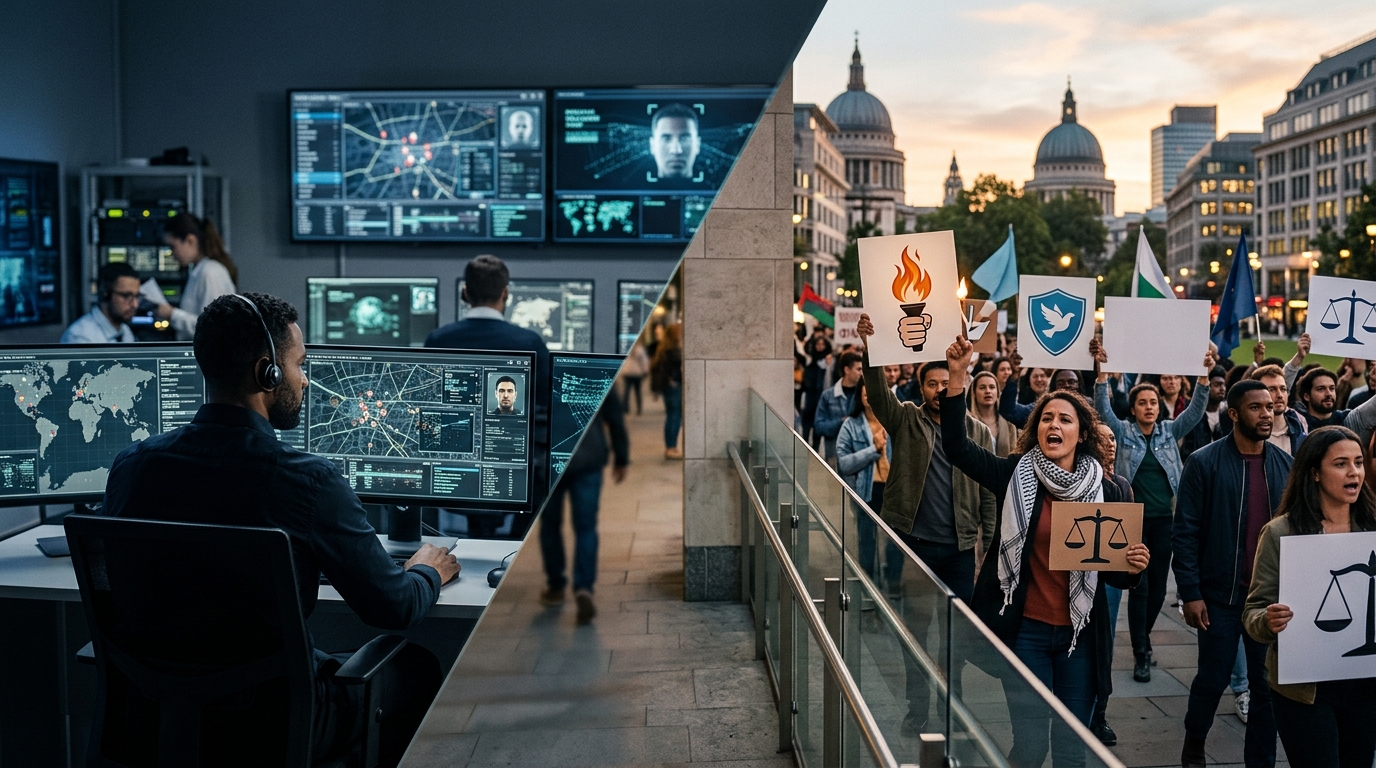
National Security and Civil Liberties: Finding the Balance Between Safety and Freedom
The philosophical and practical tension between protecting the state and preserving individual freedoms is arguably the defining conflict of the modern democratic era. In the immediate aftermath of major global conflicts and catastrophic terrorist attacks, governments worldwide have historically responded by rapidly expanding their national security apparatuses. The overarching narrative presented to the public is often one of pure necessity: in order to remain safe from unprecedented external and internal threats, citizens must be willing to sacrifice a certain degree of their personal privacy. Yet, as the years progress and the immediate panic of a crisis subsides, society is frequently left grappling with the vast, entrenched surveillance architecture that remains firmly in place, often operating in the shadows.
We are consistently forced to ask ourselves a vital question: Have these expansive security measures actually made us fundamentally safer, or have they simply eroded the civil liberties that define a free society? The dynamic interplay between government intelligence agencies, law enforcement, and the public is constantly shifting, primarily driven by the ongoing debate over what constitutes an “unreasonable search” in the digital age. When our entire lives our communications, our locations, our financial transactions, and our personal associations are continuously transmitted through vulnerable digital networks, the potential for government overreach is not merely a hypothetical concern, but a documented reality. The search for a sustainable balance between safety and freedom requires robust oversight, unyielding judicial scrutiny, and an informed public that refuses to accept omnipresent surveillance as a default condition of modern life.
The Legacy of Whistleblowers and Journalistic Revelations
How “Scoops” Shaped Modern Policy
How do citizens learn about the secretive activities their government conducts in the name of national security? More often than not, the answer lies not in voluntary government transparency, but in the courage of whistleblowers and the tenacity of a free press. Journalistic “scoops” have historically served as the primary catalyst for public awareness and subsequent legislative reform. Without the unauthorized disclosure of classified information to dedicated investigative reporters, some of the most profound civil rights violations of the past century would have remained buried in classified vaults forever.
The modern debate over mass digital surveillance was fundamentally altered in 2013 when former National Security Agency (NSA) contractor Edward Snowden leaked a massive trove of classified documents to journalists. These explosive revelations demonstrated to the world that the U.S. government was engaged in the bulk collection of domestic telecommunications metadata, sweeping up the phone records of millions of Americans without any individualized suspicion of wrongdoing. The resulting global shockwave proved that the government’s surveillance capabilities had far outpaced the legal frameworks designed to regulate them. By turning to the press, whistleblowers willingly risk their liberty and frequently face severe espionage charges to expose practices they believe undermine constitutional rights.
These monumental journalistic scoops force the public, the courts, and lawmakers to confront uncomfortable truths about state power. They shatter the illusion that domestic surveillance programs are narrowly tailored and force a democratic reckoning over whether the intelligence community’s actions truly align with the constitutional values they are sworn to protect and uphold.
The Mechanics of Modern Surveillance
AI, Stingrays, and Mass Data Collection
To fully grasp the current state of our civil liberties, one must examine the specific mechanics and technologies that enable modern government surveillance. Gone are the days when surveillance strictly required physical wiretaps or a team of agents manually trailing a suspect down a city street. Today, the intelligence and local law enforcement communities utilize a wide array of technological tools that inherently challenge traditional notions of privacy, often bypassing the need for human intervention entirely.
One of the most controversial technologies currently deployed by both federal and local law enforcement is the cell-site simulator, commonly referred to as a “Stingray.” These sophisticated devices operate by mimicking the signal of a legitimate cellular tower, effectively tricking nearby mobile devices into connecting to them instead of the actual network. When a device connects, the Stingray captures its unique identifying information and real-time location data. The fundamental civil liberties issue with cell-site simulators is their dragnet nature; they do not selectively target a single suspect’s phone. Instead, they indiscriminately scoop up the data of potentially hundreds or thousands of innocent third parties who happen to be in the device’s operational radius. Following intense journalistic scrutiny and pressure from civil liberties organizations, the Department of Justice (DOJ) issued new policy guidance in 2015 requiring federal law enforcement agents to obtain a search warrant supported by probable cause before deploying cell-site simulators in domestic criminal investigations. While this was a celebrated step forward for digital rights, privacy advocates argue that the inherent collateral data collection of the technology remains a persistent threat.
- Cell-Site Simulators (Stingrays): Devices that mimic cell towers to intercept location and identity data from all mobile phones in a specific geographic radius, often capturing data of non-targets.
- Facial Recognition and Biometrics: AI-driven systems that scan public crowds, comparing live video feeds to vast databases of driver’s licenses and mugshots. These systems frequently lack standardized federal oversight and suffer from well-documented algorithmic bias, leading to false arrests disproportionately affecting people of color.
- Automatic License Plate Readers (ALPRs): High-speed cameras mounted on police vehicles or stationary poles that capture and permanently store the movements of millions of vehicles, allowing agencies to retroactively map a person’s historical travel patterns without a warrant.
- Commercially Procured Data: The growing trend of government agencies bypassing traditional legal hurdles by simply purchasing vast datasets of mobile location data and internet histories directly from third-party commercial data brokers.
Furthermore, the intelligence community relies heavily on Section 702 of the Foreign Intelligence Surveillance Act (FISA). Enacted to streamline the monitoring of overseas threats, Section 702 permits the U.S. government to target the electronic communications of non-U.S. persons located outside the country for foreign intelligence purposes. However, because these foreign targets frequently communicate with American citizens, a massive volume of U.S. citizen data is routinely swept up in what is termed “incidental collection.” This process creates a colossal, searchable database of American communications that domestic law enforcement agencies have historically queried without first obtaining a warrant, a highly controversial practice critics refer to as a “backdoor search.”
The Illusion of “Safe vs. Free”
Challenging the Zero-Sum Game
A pervasive and stubbornly resilient narrative within national security circles is that privacy and security exist on a strict zero-sum seesaw: to dramatically increase one, society must inevitably decrease the other. This binary thinking suggests that mass surveillance is simply a necessary evil, an unavoidable cost of doing business in a dangerous world to prevent catastrophic attacks. Proponents of this view often fall back on the classic, yet deeply flawed refrain: “If you have nothing to hide, you have nothing to fear.”
However, legal scholars, privacy experts, and civil rights groups have repeatedly dismantled this paradigm. The “nothing to hide” argument fundamentally misunderstands the core nature of privacy. Privacy is not merely about concealing illicit wrongdoing, but about preserving individual autonomy, human dignity, and the freedom to associate, speak, and think without the chilling psychological effect of perpetual state observation. Moreover, the assertion that mass surveillance automatically equates to better security is empirically flawed.
When intelligence agencies collect billions of data points every single day, they actively create a “needle in a haystack” problem. Analysts become overwhelmingly inundated by an ocean of irrelevant information, significantly increasing the likelihood that they will miss actual, credible threats buried deeply within the noise. Effective security and law enforcement are consistently best achieved through highly targeted, suspicion-based investigations the exact standard established by the Fourth Amendment rather than sweeping digital dragnets. Liberty and security are, in fact, mutually reinforcing concepts. A society that fails to protect its citizens from unreasonable government intrusions ultimately degrades the very democratic institutions, economic innovation, and cultural values it claims to be defending against foreign adversaries.
Reforming Surveillance and Protecting Whistleblowers
Legislative Pushback and Legal Battles
The ongoing legal and legislative battles surrounding these advanced surveillance technologies underscore a critical inflection point in the fight for digital rights. In the halls of Congress, the periodic reauthorization of statutes like FISA Section 702 continually sparks fierce, bipartisan debate regarding the absolute necessity of implementing strict warrant requirements before government agencies can search incidentally collected U.S. person data. Lawmakers are increasingly caught in the crossfire between the intelligence community’s dire warnings of operational blindness and the public’s growing, vocal demand for constitutional safeguards.
| Legislation / Authority | Primary Function | Civil Liberties Concern |
|---|---|---|
| FISA Section 702 | Authorizes warrantless surveillance of non-U.S. persons located abroad for intelligence gathering. | “Incidental collection” heavily sweeps up massive amounts of U.S. citizen communications, enabling warrantless domestic queries. |
| USA PATRIOT Act | Greatly expanded domestic law enforcement and intelligence gathering powers immediately post-9/11. | Enabled the bulk collection of phone metadata and lowered the legal threshold for obtaining financial and business records. |
| Electronic Communications Privacy Act (ECPA) | Sets legal standards for law enforcement access to digital and electronic communications. | Severely outdated (passed in 1986), technically allowing warrantless access to certain data and emails stored longer than 180 days. |
Simultaneously, advocacy organizations are relentlessly filing strategic lawsuits to challenge the constitutionality of warrantless data sweeps in federal courts. They argue convincingly that our modern digital footprints which can instantly reveal incredibly intimate details of a person’s medical history, religious beliefs, political affiliations, and personal relationships deserve robust, updated Fourth Amendment protections that accurately reflect the technological realities of the 21st century. Furthermore, there is a growing legal consensus that robust whistleblower protection laws are absolutely essential. If we are to rely on courageous individuals to risk their livelihoods and freedom to expose illegal or wildly unconstitutional surveillance programs, the legal system must provide them with a viable public-interest defense to protect them from draconian, life-ending espionage charges.
Are We Truly Safe and Free Today?
The Road Ahead for Digital Rights
So, we return to the titular, overarching question: Are we truly safe, and are we truly free? The answer is far from absolute and remains entirely dependent on continued civic engagement. Since the major journalistic scoops of the early 2010s, significant progress has undeniably been made. We have witnessed the implementation of stricter DOJ policies regarding cell-site simulators, the passage of the USA FREEDOM Act (which successfully ended the NSA’s bulk telephony metadata collection program by shifting data retention to the telecom providers), and a massive, foundational cultural shift toward the widespread adoption of end-to-end encryption by tech companies and everyday users alike.
However, the overarching threat to civil liberties is constantly evolving. As older surveillance programs are reined in by the courts or Congress, new, far more powerful technologies are rapidly deployed in the dark. The unchecked rise of artificial intelligence, predictive policing algorithms, mass biometric databases, and the unchecked purchasing of commercially available location data represent the dangerous new frontier of the surveillance state. These novel methods frequently allow the government to bypass constitutional warrant requirements by simply pulling out its wallet. To ensure that we are both deeply safe and undeniably free, we must remain perpetually vigilant. Digital rights are not permanently won in a single legislative session or a single Supreme Court ruling; they require a continuous, aggressive defense by an informed populace that understands that true security can never be bought at the expense of fundamental freedom.
Frequently Asked Questions (FAQs)
What is the balance between national security and civil liberties?
The balance refers to the ongoing legal, political, and ethical struggle to implement necessary security measures to protect the public from severe threats (like terrorism or cyberattacks) without violating the fundamental rights and freedoms guaranteed by the Constitution, such as the right to privacy, freedom of speech, and protection from unreasonable search and seizure.
How do whistleblowers impact national security?
While whistleblowers can sometimes temporarily disrupt intelligence operations by revealing classified information, they play a crucial, long-term role in maintaining democratic integrity. By exposing illegal, unethical, or unconstitutional programs, they force governments to operate within the strict bounds of the law, ensuring accountability and necessary systemic reforms.
What is a Stingray device in surveillance?
A Stingray, officially known as a cell-site simulator, is a sophisticated surveillance tool that mimics a legitimate cell phone tower. It forces all nearby mobile phones to unknowingly connect to it, allowing the operator to silently capture the identifying data and precise physical location of the devices in the targeted area, often sweeping up the data of innocent bystanders in the process.
Why is FISA Section 702 considered highly controversial?
While FISA Section 702 is specifically intended to target foreign entities located outside the United States, it routinely captures the communications of innocent Americans who happen to interact with those foreign targets. The controversy primarily stems from U.S. law enforcement agencies actively searching this massive database for American citizens’ data without first obtaining a traditional probable cause warrant.
Does mass surveillance actually prevent terrorism?
Many intelligence experts, legal scholars, and civil rights groups argue that mass, untargeted surveillance is not only a profound invasion of privacy but also practically ineffective. Collecting an excessive amount of data creates a “needle in a haystack” scenario, which can distract analysts and drain resources from highly actionable intelligence generated by targeted, suspicion-based investigative work.
References
- Costs of Snowden leak still mounting 5 years later
- Department of Justice Policy Guidance: Use of Cell-Site Simulator Technology
- FISA Section 702 Resources
Similar Articles








Read full bio of Sneha Tete


