
The Imperative of Dissent: When National Security and Civil Liberties Collide
How the courage of insiders and advocates to speak truth to power is essential for protecting civil liberties and ensuring government accountability.
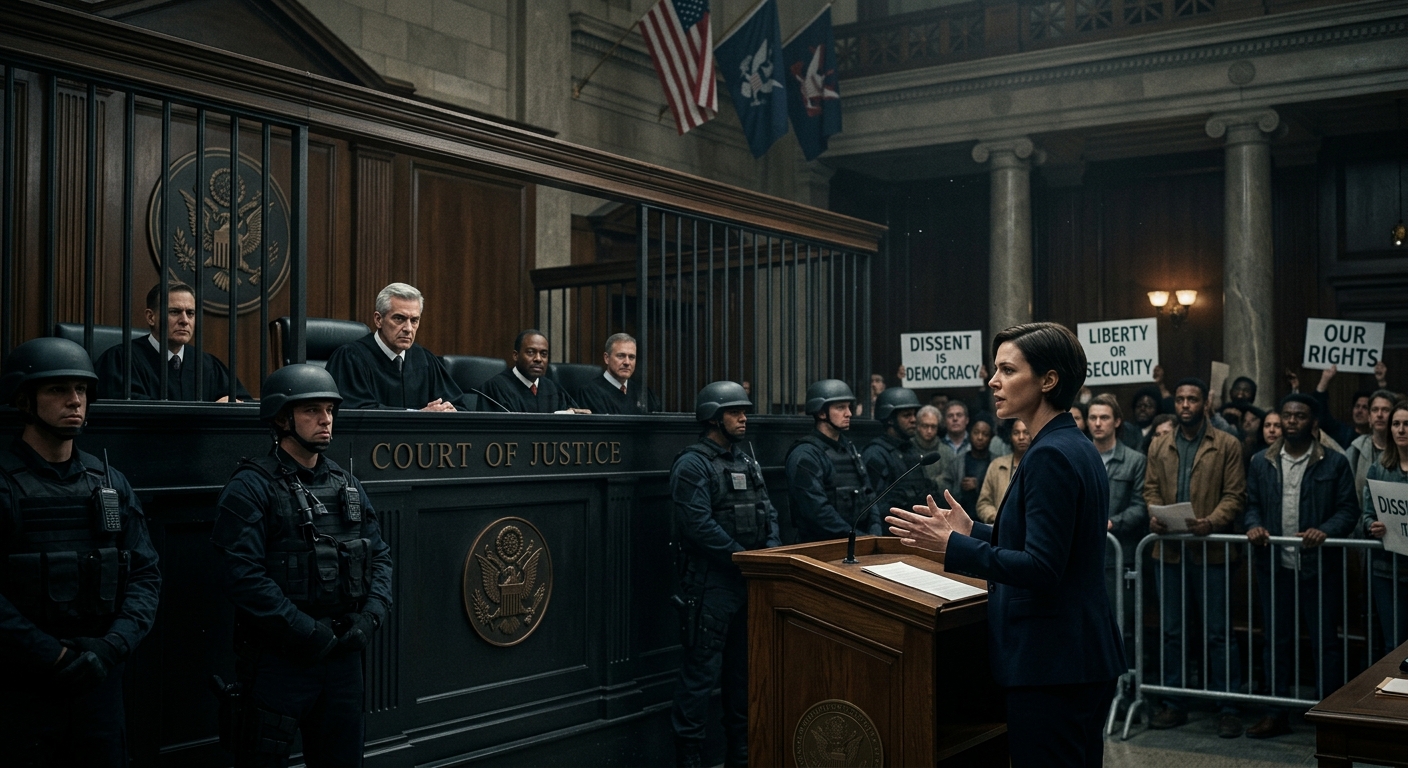
Introduction to National Security and Civil Liberties
National security has long been considered the paramount responsibility of any sovereign state. Yet, the relentless pursuit of this security frequently brings the government into direct tension with the civil liberties of the populace it aims to protect. In the United States, the constitutional framework was explicitly designed to balance these competing interests, ensuring that the drive to protect the nation does not completely erode the foundational rights of its citizens. Historically, when national crises strike, the pendulum inevitably swings heavily toward security, often resulting in a vast veil of secrecy that obscures government actions from any meaningful public scrutiny.
It is precisely during these high-stakes moments that the voices of those working inside the system become indispensable. The individuals willing to tell us how they really feel about the ethical and legal compromises being made act as a crucial check on unchecked executive power. These insiders, ranging from intelligence analysts to military lawyers, remind us that the rule of law must not be indefinitely suspended in the name of safety. Their willingness to bring classified abuses to light forces a democratic reckoning, demanding that the public evaluate whether the price of security has become too high.
The Post-9/11 Security Paradigm and the Era of Secrecy
The aftermath of the September 11 attacks marked a profound and lasting shift in American national security policy. In the immediate wake of the tragedy, an entirely new paradigm was constructed by the executive branch. This new framework authorized expansive mass surveillance programs, the use of controversial enhanced interrogation techniques, and the indefinite detention of suspected combatants. At the core of this shift was an underlying belief that traditional legal frameworks, including the criminal justice system and established military law, were entirely insufficient to combat borderless, non-state actors operating in the shadows.
Consequently, vast amounts of intelligence gathering and counterterrorism operations were moved behind an impenetrable wall of classification. While the classification of information is undeniably a necessary tool for protecting sensitive sources and methods, its overapplication inevitably creates a dangerous information vacuum. In this void, public accountability rapidly diminishes, and the potential for institutional abuse grows exponentially. The executive branch operated with near-total autonomy, leading to decisions that reshaped the global legal landscape while keeping the American public largely in the dark regarding the specific tactics being deployed in their name.
The Danger of the Information Vacuum
A defining characteristic of sweeping, unilateral national security initiatives is their inherent lack of transparency. When operations are conducted entirely in secret, the standard mechanisms of democratic oversight—such as congressional inquiries, investigative journalism, and robust public debate—are severely handicapped. The electorate is forced to rely entirely on the government’s assurances that its actions are both lawful and strictly necessary. This dynamic effectively neutralizes the checks and balances that form the bedrock of the American political system, consolidating an unhealthy amount of power within the executive branch.
The danger of this information vacuum is not merely theoretical; it has devastating practical consequences. Without external scrutiny, internal groupthink can easily take hold, leading agencies to adopt extreme policies that they would struggle to defend in a public forum. Furthermore, the absence of transparency breeds deep public distrust. When individuals feel that their government is operating exclusively in the shadows, the social contract begins to fray. When the official narrative is tightly controlled, it is often only through the raw courage of whistleblowers, resigning public officials, or dissenting military personnel that the public learns the true extent of government activities. Their willingness to break ranks and share their genuine, unvarnished assessments is frequently the primary catalyst for legislative and judicial reform.
Guantánamo Bay: A Case Study in the Need for Dissent
The detention facility at Naval Station Guantánamo Bay serves as a stark historical case study of what happens when security imperatives are allowed to operate in total isolation from legal and ethical scrutiny. Initially framed to the public as a necessary, secure measure to hold the most dangerous terrorists, the operational reality of the facility proved to be far more complex and legally dubious. Over the years, unclassified summaries and leaked intelligence reports revealed that a significant number of individuals detained at the offshore facility were actually low-level combatants, or in some tragic cases, victims of mistaken identity who posed no credible threat to the United States .
The intention behind selecting Guantánamo Bay was to place detainees beyond the jurisdictional reach of the U.S. federal court system, theoretically bypassing fundamental constitutional guarantees such as due process and the writ of habeas corpus. However, the most potent pushback against this indefinite detention framework did not originate solely from external civil liberties organizations. Some of the fiercest criticism came from within the military establishment itself. Military defense counsels assigned to represent detainees often found themselves battling an ad hoc judicial system—the military commissions—which they firmly believed fell far short of American military justice standards. By speaking out and telling the courts how fundamentally flawed the system was, these officers fulfilled their ultimate oath to uphold the Constitution. The prolonged existence of the facility, which successive administrations have acknowledged drains financial resources and harms international diplomatic partnerships, underscores the immense difficulty of rolling back entrenched national security policies once they are established .
The Vital Role of Whistleblowers and Legal Protections
The individuals who courageously step forward to expose government overreach are frequently labeled as dissidents, malcontents, or even traitors by those in power. However, from a strictly democratic standpoint, their role is akin to an essential pressure valve, releasing the dangerous build-up of unchecked, secretive authority. By telling the public the reality of highly classified, unconstitutional programs, these whistleblowers provide the critical information necessary for informed consent—a fundamental, non-negotiable requirement of democratic governance.
Recognizing the absolute necessity of internal reporting mechanisms, the legislative branch has made attempts to provide avenues for lawful, protected disclosure. The Intelligence Community Whistleblower Protection Act (ICWPA) of 1998 was explicitly established to give intelligence professionals a formal means to report “urgent concerns.” These concerns include serious violations of law, gross mismanagement, or abuses of authority, which can be reported to Congress without the threat of professional retaliation . While this legal framework is essential in theory, its practical application frequently falls short of its promises. Many who attempt to use the proper internal channels find themselves stonewalled, investigated, or facing subtle but destructive forms of career reprisal. When these internal avenues decisively fail, some individuals feel morally compelled to go directly to the public or the press, instantly sparking fierce legal and ethical debates regarding the fine line between patriotic duty and unlawful espionage.
The Crucial Role of Civil Rights Organizations
While whistleblowers undoubtedly provide the initial spark of truth, it is almost always civil rights organizations that fan that spark into a sustainable flame of public accountability. Organizations dedicated entirely to the preservation of constitutional rights serve as the vital connective tissue between isolated government insiders and the broader, powerful judicial system. When an intelligence professional or a high-ranking military officer discloses classified overreach, civil liberties advocacy groups are frequently the ones who mobilize the vast legal expertise necessary to formally challenge these hidden practices in federal court.
Through strategic and aggressive litigation, relentless Freedom of Information Act (FOIA) requests, and highly visible public advocacy campaigns, these entities force the government to justify its shadowy actions on the public record. Without this robust, well-funded ecosystem of legal advocacy, the startling disclosures of brave insiders might quickly fade from the fast-paced news cycle without ever achieving any substantive, long-lasting policy reform. The strategic partnership between the dissenting insider who possesses the facts and the civil rights litigator who possesses the legal tools is perhaps the single most effective mechanism for dismantling entrenched, unconstitutional national security programs.
Surveillance, Civil Liberties, and the Modern Era
While the detention center at Guantánamo Bay represents the physical, geographical manifestation of post-9/11 security excesses, the massive expansion of electronic surveillance represents its pervasive digital counterpart. Programs initially designed to intercept targeted foreign intelligence quickly and quietly expanded to encompass the sweeping, indiscriminate collection of domestic metadata, raising profound and unprecedented Fourth Amendment concerns. The ongoing legal debate over whether the federal government can legally possess the private communications data of millions of citizens without any individualized suspicion remains one of the defining constitutional battles of the twenty-first century .
As advanced artificial intelligence and machine learning technologies become deeply integrated into the daily operations of the national security apparatus, the potential for severe civil liberties violations only increases. Algorithmic profiling, predictive policing models, and ubiquitous mass facial recognition all present entirely novel challenges to fundamental privacy and equal protection rights. In this rapidly evolving, highly complex technological landscape, the urgent need for internal voices of dissent is more critical than it has ever been in modern history. Society must rely heavily on the software engineers, data analysts, and policy-makers designing these powerful systems to forcefully alert the public when technological capabilities begin to outpace established ethical guidelines or strict constitutional boundaries.
Conclusion
The inherent tension between securing the physical safety of the nation and preserving the foundational civil liberties of its people is not a temporary problem to be solved, but rather a permanent dynamic to be continuously and carefully managed. A truly healthy democracy does not demand absolute, unquestioning consensus, nor does it thrive on absolute, impenetrable secrecy. Instead, it requires a vigorous, ongoing public debate that is thoroughly informed by transparency and truth.
When insiders choose to step forward and tell us how they really feel—exposing the systemic flaws, the quiet ethical breaches, and the dangerous legal shortcuts of classified national security programs—they are not weakening the nation. On the contrary, they are reinforcing its most critical, enduring defenses: the strict adherence to the rule of law, the supremacy of the Constitution, and the enduring, undeniable power of democratic accountability. True, lasting security is never successfully achieved by discarding the very democratic values we are actively attempting to protect.
Frequently Asked Questions (FAQs)
- What is the Intelligence Community Whistleblower Protection Act (ICWPA)?
The ICWPA of 1998 provides a specific statutory framework for employees and contractors of U.S. intelligence agencies to report alleged wrongdoing or “urgent concerns” directly to Congress. An urgent concern typically involves a serious or flagrant problem, a severe abuse of authority, or a direct violation of law relating to intelligence activities. While it establishes a legally recognized channel for protected disclosure, critics argue it lacks robust, enforceable protections against internal retaliation, leaving many potential whistleblowers highly vulnerable to career destruction .
- How does the Fourth Amendment apply to mass surveillance programs?
The Fourth Amendment explicitly protects American citizens against unreasonable searches and seizures conducted by the government. In the modern context of national security and mass digital surveillance, a significant and ongoing legal debate exists over whether the bulk collection of digital metadata constitutes a constitutional “search.” Civil liberties advocates strongly argue that collecting vast amounts of personal data without individualized warrants or probable cause is a direct, flagrant violation of constitutional privacy protections, whereas intelligence agencies frequently claim it is a strictly necessary procedure for proactively identifying foreign threats .
- Why was the Guantánamo Bay detention camp established, and why does it remain controversial?
Guantánamo Bay was established shortly following the September 11 attacks to hold individuals suspected of international terrorism completely outside of U.S. sovereign territory. The primary legal intention was to actively prevent these detainees from accessing the U.S. federal court system and the fundamental rights afforded by the Constitution, such as habeas corpus. The facility became globally controversial due to the indefinite detention of individuals without a fair trial, widespread reports of enhanced interrogation techniques that many classify as torture, and the total lack of standard, recognized judicial due process .
- What happens when internal oversight mechanisms fail in the realm of national security?
When designated internal checks, such as agency Inspectors General or closed congressional oversight committees, fail to effectively address unconstitutional or deeply unethical behavior, the systemic risk of unchecked abuse rises dramatically. In these dangerous scenarios, the general public is left entirely uninformed about what extreme measures are being executed in their name. This institutional failure frequently forces individuals of deep conscience within the system to become public whistleblowers, deliberately circumventing broken internal reporting channels to directly inform the public and the free press.
- Can aggressive national security operations and civil liberties truly coexist?
Yes, but their coexistence requires constant, unyielding public vigilance. The U.S. Constitution was brilliantly designed with a system of checks and balances specifically intended to allow the federal government to aggressively protect the nation while simultaneously, fiercely guarding the intrinsic rights of private individuals. Successful coexistence demands mandatory transparency, aggressive judicial oversight, and an unwavering public commitment to the principle that extreme emergency measures must never be allowed to become permanent, normalized fixtures of the American legal landscape.
References
- Intelligence Community Whistleblower Protection — Office of the Director of National Intelligence. 2014-03-20. https://www.dni.gov/files/documents/ICD/ICD_120.pdf
- Summary of the Reengagement of Detainees Formerly Held at Guantanamo Bay, Cuba — Office of the Director of National Intelligence. 2025-07-24. https://www.dni.gov/files/ODNI/documents/assessments/Summary_of_the_Reengagement_of_Detainees_Formerly_Held_at_Guantanamo_Bay_Cuba.pdf
- National Security. Civil Liberties. Can We Have Both? — Judicature (Duke University). 2021-03-01. https://judicature.duke.edu/articles/national-security-civil-liberties-can-we-have-both/
- Remarks by the President on Plan to Close the Prison at Guantanamo Bay — White House Archives. 2016-02-23. https://obamawhitehouse.archives.gov/the-press-office/2016/02/23/remarks-president-plan-close-prison-guantanamo-bay
Similar Articles








Read full bio of Sneha Tete


