
Protect Yourself from Mystery Shopper Check and Gift Card Scams
Learn how fake mystery shopping offers use bogus checks and gift card demands to steal your money before your bank spots the fraud.
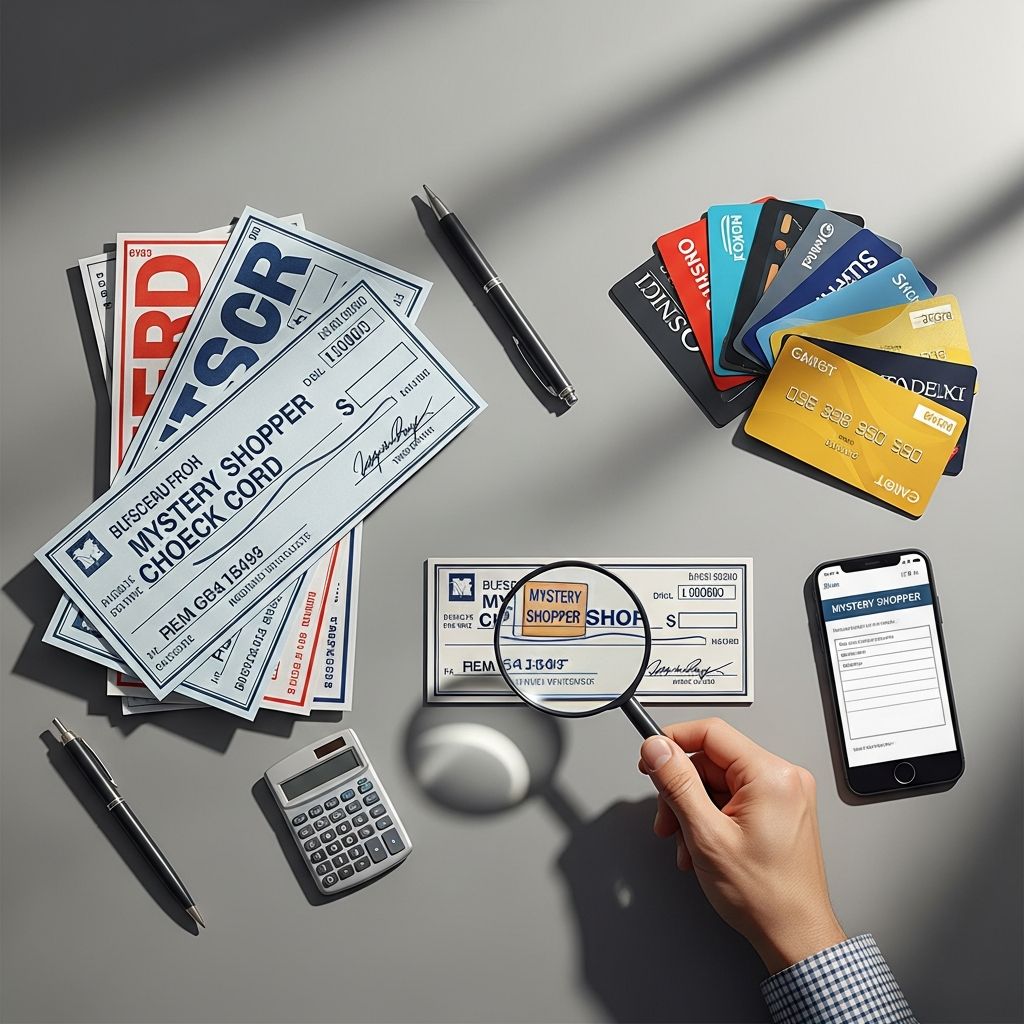
Mystery shopping can be a legitimate way to earn extra income by evaluating stores, restaurants, or services. But scammers also use the idea of mystery shopping to run sophisticated schemes that revolve around counterfeit checks and gift cards. These frauds are designed to move your real money into a criminal’s hands before your bank discovers the check is fake.
This guide explains how these scams operate, the warning signs to look for, how to respond if you are targeted, and where to report suspicious offers so you can help stop future victims.
What Real Mystery Shopping Looks Like
Understanding how legitimate mystery shopping works makes it easier to spot a fraud. Authentic opportunities usually:
- Come from established companies that clearly identify themselves and provide a website you can independently verify.
- Require you to apply or register first rather than being selected out of the blue.
- Pay modest amounts per assignment, not large lump-sum checks.
- Pay after you submit your report, usually via direct deposit or standard payment platforms.
- Never send you money and ask you to forward a portion to someone else.
Legitimate programs focus on evaluating customer service, cleanliness, and compliance with company policies. They do not require you to test money transfer services or buy large amounts of gift cards as your primary task.
How the Fake Mystery Shopper Scam Typically Unfolds
Although details vary, most fake mystery shopper cons follow a predictable pattern built around a counterfeit cashier’s check or money order and a request to move money quickly.
Step-by-Step Breakdown of the Scam
- Unsolicited contact: You receive a postal mailing, email, text, or social media message inviting you to be a secret or mystery shopper. The message may use the name or logo of a real retailer, research firm, or mystery shopping association to look more convincing.
- A big check arrives: The scammer sends what appears to be a cashier’s check or money order, often for thousands of dollars. The letter claims it covers your pay and the money you will need for the assignment.
- Pressure to deposit immediately: Instructions often urge you to deposit the check right away and complete the assignment within a short time. The urgency is intentional, so the check has not yet been fully verified by your bank when you send money out.
- Shopping assignment with a twist: You may be told to spend a small fraction of the money on everyday purchases at well-known stores or restaurants to make the offer feel real.
- Gift cards or money transfers: The bulk of the supposed assignment is to buy gift cards or send money using a transfer service (such as Western Union or MoneyGram) and then provide the card numbers, PINs, or transfer details to your supposed supervisor.
- The check bounces days later: After the bank processes the deposit and later discovers the check is counterfeit, it reverses the funds and holds you responsible for the full amount. By then, the gift card balances have been drained or the transfer has been collected, and the scammer has disappeared.
The key is timing: the scam exploits the fact that initial availability of funds from a deposited check does not mean the check has cleared or is genuine.
Why Banks Initially Release Money from a Fake Check
Many victims believe that once their bank shows the funds as available, the check must be legitimate. That is not true. Under U.S. banking rules, banks often make some or all of a deposit available within a short period, but final verification can take days or even weeks.
If the check later turns out to be counterfeit, the bank reverses the deposit and you are liable for money you have already spent or sent onward. U.S. postal and banking authorities repeatedly warn that consumers are responsible for the checks they deposit, including bounced counterfeit items.
Red Flags That Point to a Mystery Shopper Scam
Legitimate mystery shopping does not require you to put your own money or bank account at risk. The following warning signs indicate a likely scam:
- You are paid before doing any work – Receiving a large check up front with instructions to keep a portion and send back the rest is a classic fake check con.
- Requests to buy gift cards and share the codes – Real employers and retailers do not pay for services by having you purchase gift cards and send the numbers by email, text, or photo.
- Pressure to act quickly – Short deadlines to deposit the check and complete the assignment are designed to keep you from asking questions or waiting for the check to fully clear.
- Unsolicited selection – Being told you were chosen randomly or out of the blue to be a secret shopper, especially if you never applied anywhere, is suspicious.
- Demands to send money to a third party – Any instruction to wire funds, use person-to-person transfers, or forward money to another individual or “trainer” is a major red flag.
- Huge pay for simple tasks – Promises of hundreds or thousands of dollars for very basic assignments or surveys are unrealistic and commonly used to lure victims.
- Fees to get started – Legitimate mystery shopping companies do not charge you for access to assignments, certification lists, or mandatory training kits.
Fake Check and Gift Card Scams: How They Drain Your Money
Although the story is dressed up as mystery shopping, underneath it is a straightforward fake check and gift card scam. Fraudsters favor gift cards and wire transfers because they are fast, hard to reverse, and often anonymous.
| Scam Element | Why Scammers Use It | What You Should Know |
|---|---|---|
| Counterfeit cashier’s check | Appears official and large amounts inspire trust and excitement. | Bank may release funds before fully confirming authenticity; you are liable if it bounces. |
| Gift cards (retail, online, payment cards) | Once scammers have the numbers and PINs, they can quickly spend or resell the value. | Gift card transfers are difficult to trace and nearly impossible to reverse. |
| Money transfer services | Cash can be picked up anywhere in the world with minimal identity verification. | Authorities warn that money sent via wire for a scam is usually not recoverable. |
| Urgent deadlines | Prevents victims from researching the offer or asking a bank for advice. | Scammers may threaten loss of “job” or bonus if you delay. |
Legitimate Mystery Shopping vs. a Scam: Side-by-Side
Use this quick comparison to evaluate any mystery shopping offer you receive.
| Feature | Legitimate Mystery Shopping | Scam Mystery Shopping |
|---|---|---|
| How you are contacted | You applied or registered with the company. | Unsolicited email, text, mailer, or social media message. |
| Payment timing | Modest payment after you submit your report. | Large check in advance, before any work is done. |
| Type of tasks | Evaluate service, cleanliness, staff behavior. | Buy big-dollar gift cards or send money transfers. |
| Fees to participate | No up-front fees for lists, certification, or training. | Asked to pay for access, training materials, or job lists. |
| Movement of funds | You are only paid; you never send money onward. | You must send a portion of the funds to a third party. |
How to Protect Yourself from Mystery Shopper Scams
Adopting a few simple rules can significantly reduce your risk:
- Refuse any job that starts with a check – If an opportunity begins by mailing you money, assume it is fraudulent, especially if you are asked to return part of the funds.
- Never pay to work – Do not pay for directories, guaranteed placements, certifications, or training programs that promise inside access to mystery shopping jobs.
- Guard your bank account – Be skeptical of anyone who pushes you to deposit a check and immediately withdraw or transfer funds.
- Treat gift card requests as a stop sign – If someone you do not know personally wants you to buy gift cards and share the codes, it is almost always a scam.
- Independently verify the company – Look up the alleged employer’s official website yourself using a search engine, and contact them using contact information you find independently, not what is in the suspicious message.
- Research open complaints – Check reputable consumer protection sites or state agencies for alerts on the company name combined with words like “scam” or “complaint.”
- Slow down and ask questions – Scammers rely on urgency. Taking time to think, talk to your bank, or contact a consumer protection agency can save you substantial money.
What to Do If You Receive a Suspicious Mystery Shopping Offer
If something about a mystery shopping invitation doesn’t feel right, take these steps before you act:
- Do not deposit the check – Destroy or securely store it until you confirm whether it is genuine. Do not try to “test” it by depositing a small portion; the entire item is risky.
- Contact your bank – If you already deposited the check, speak to your bank immediately, explain your concerns, and ask whether the check has fully cleared or could still be returned unpaid.
- Stop sending money or codes – If you mailed gift cards or sent codes electronically, stop communicating with the sender and keep all records of the exchange.
- Preserve evidence – Save emails, texts, letters, envelopes, checks, and any instructions you received. This documentation can help investigators.
How and Where to Report Mystery Shopper Scams
Reporting scams helps enforcement agencies track criminals, issue warnings, and sometimes shut down operations. While recovery of money is not guaranteed, reporting still has real value for broader prevention efforts.
- U.S. Postal Inspection Service (USPIS) – If a letter or check was sent through the mail, USPIS investigates fraud that misuses the postal system.
- State and local consumer protection offices – Many states publish consumer alerts and investigate complaint patterns related to fake mystery shopper offers.
- Your bank or credit union – Financial institutions can flag fraudulent checks and help you understand your liability and options.
- Industry associations – Organizations in the mystery shopping industry publish scam alerts when their names or logos are abused.
Finding Legitimate Mystery Shopping Opportunities
If you are still interested in genuine mystery shopping after learning about the scams, approach it like any other freelance or side job:
- Start from well-known research or customer experience firms, not from unsolicited offers.
- Check whether the company has a long-standing online presence, clear contact details, and transparent payment practices.
- Read reviews and experiences from other shoppers on reputable sites, being cautious of overly positive or vague comments.
- Confirm that you will be paid a reasonable fee after submitting your reports, and that there is no requirement to handle third-party funds.
Frequently Asked Questions (FAQs)
Q: If my bank accepted the check, doesn’t that mean it was real?
A: No. Banks often make funds from a deposit available before the check has fully cleared. If the check is later found to be counterfeit, the bank will remove those funds from your account and you are usually responsible for the loss.
Q: Why do scammers always want gift cards in these schemes?
A: Gift cards are fast, widely available, and once a scammer has the card numbers and PINs, they can quickly spend or resell the value. Transactions are difficult to trace and generally cannot be reversed.
Q: Is any mystery shopper job that involves a check automatically a scam?
A: Authentic programs may reimburse small, documented purchases, but they do not send large checks in advance or ask you to forward a portion to other people. Any request to deposit a big check and send some of the money elsewhere is a serious warning sign.
Q: I already sent the gift card numbers. Can I get my money back?
A: Recovery is often difficult once a scammer has used the codes. Contact the gift card issuer immediately, explain the situation, and ask whether the remaining balance (if any) can be frozen. Then report the fraud to consumer protection authorities.
Q: How can I verify if a mystery shopping company is real?
A: Use a search engine to find the company’s official website and contact information, then call or email them using those details to confirm whether an assignment is legitimate. Do not rely on phone numbers or links in a suspicious message, and be wary of any company that guarantees high income with little work or requests up-front fees.
References
- Mystery Shopper Counterfeit Check Scam — Michigan Department of Attorney General. 2024-01-03. https://www.michigan.gov/consumerprotection/protect-yourself/consumer-alerts/scams/mystery-shopper
- How to Spot and Avoid Mystery Shopper Scams — AARP. 2023-09-19. https://www.aarp.org/money/scams-fraud/secret-shopper/
- Mystery Shopper Scams — United States Postal Inspection Service. 2022-11-10. https://www.uspis.gov/news/scam-article/mystery-shopper-scams
- Mystery Shopper Counterfeit Check Scam — Priority Trust Credit Union (Fraud Education). 2023-05-08. https://prioritytrustcu.org/how-to-recognize-avoid-secret-shopper-check-scams/
- Consumer Warnings: Mystery Shopping Scams — Mystery Shoppers, Inc. (Industry Advisory). 2021-06-15. http://www.mystery-shoppers.com/consumer-warnings
- Scam Alerts: Mystery Shopping — MSPA Americas. 2017-12-01. https://www.mspa-americas.org/scam-alerts/
Similar Articles








Read full bio of medha deb


