
Muzzleloaders, Felonies, and Firearm Laws
Understanding when a felony record still blocks gun ownership and how antique or muzzle-loading firearms may be treated differently under U.S. law.
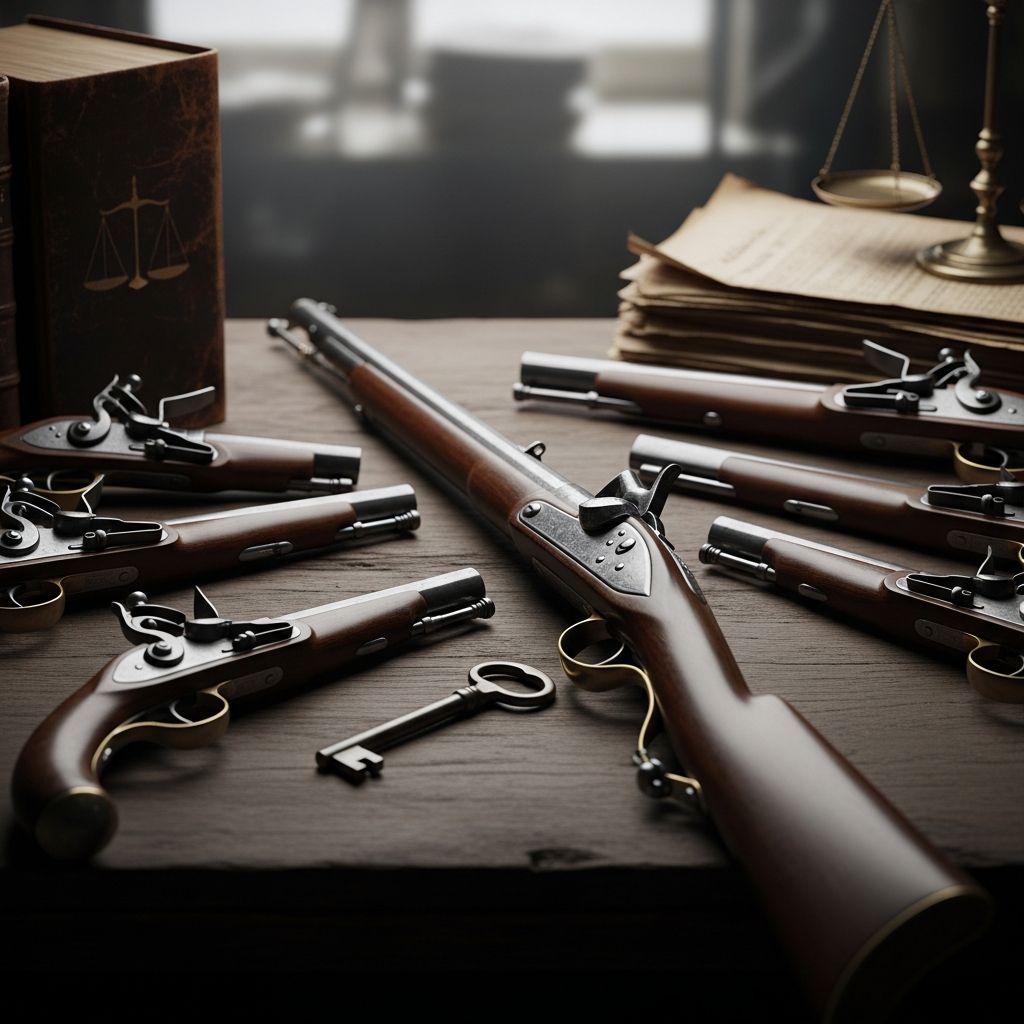
People with felony convictions frequently ask whether owning a muzzle-loading gun is a lawful way to enjoy hunting or target shooting when modern firearms are off-limits. The answer depends on a complicated mix of federal definitions, state law variations, and sometimes, the individual’s opportunity to restore gun rights.
This guide explains how U.S. law treats felons and muzzleloaders, why some black-powder or antique-style guns may be exempt under federal rules, and where hidden legal risks still exist.
Federal Baseline: How Felonies Affect Gun Possession
Under federal law, most people convicted of a felony face a broad, long-term prohibition on owning or possessing firearms or ammunition.
- Federal ban: Title 18 of the U.S. Code makes it unlawful for anyone convicted of a crime punishable by more than one year in prison to possess firearms or ammunition, with limited exceptions.
- Felon-in-possession crime: Violating this prohibition is itself a serious federal offense and can lead to new felony charges and federal prison time.
- State layers: Many states also adopt their own felon firearm bans, sometimes broader than federal law, meaning a person can be prosecuted at both state and federal levels for unlawful possession.
Because these bans are so strict, the key question becomes what the law counts as a “firearm”—and whether a particular muzzleloader falls inside or outside that definition.
What Counts as a Firearm? Why Definitions Matter
The legal status of a muzzle-loading gun turns first on how federal law defines a firearm. Federal statutes treat modern guns and certain older or replica weapons differently.
- Typical firearm: Most handguns, rifles, and shotguns that use fixed ammunition (cartridges or shells) are considered firearms under federal law.
- Antique firearms: Federal law generally excludes from the firearm definition many guns manufactured before a certain date or replicas that use black powder and cannot use modern fixed ammunition.
- Hybrid designs: Some muzzleloaders can be fitted with conversion cylinders or other parts that allow them to fire modern ammunition. These may be treated as firearms even if they resemble antiques.
If a particular muzzleloader falls within the federal “antique firearm” exception, a person prohibited from possessing firearms under federal law might not violate federal statute by owning that gun. However, that federal exception is only one part of the analysis.
Muzzleloaders and the Antique Firearm Concept
Muzzle-loading guns, especially traditional black-powder rifles and pistols, are often marketed as hunting or hobby equipment that bypasses conventional firearms rules. This idea is rooted in the antique firearm carve-out that appears in federal statutes.
In broad terms, an antique firearm for federal purposes typically includes:
- Guns manufactured a long time ago (often pre-1899) that use obsolete ignition systems or loose powder.
- Replicas of those guns that use black powder or equivalent and are not designed to use modern fixed ammunition.
When a muzzleloader fits this description, the Bureau of Alcohol, Tobacco, Firearms and Explosives (ATF) may not regulate it as a firearm for certain federal purposes. However, this does not automatically mean it is legal for a person with a felony record to possess under every law in every state.
Where State Laws Complicate the Picture
Even if a muzzleloader is treated as an antique firearm at the federal level, state law can still impose its own restrictions.
- Independent state prohibitions: Many states separately ban gun possession by people with felony convictions, and some define “firearm” more broadly than the federal definition.
- Black-powder as firearm: Certain states treat black-powder guns and muzzleloaders as firearms for purposes of felon-in-possession laws, exposing a person to prosecution even if federal law would not.
- Restoration rules: Some states allow people with older or nonviolent felonies to petition courts for restoration of firearm rights after a waiting period and proof of rehabilitation.
In Washington State, for example, unlawful possession of a firearm is a distinct crime, and the legislature expressly addresses how and when firearm rights may be restored after a felony conviction. Other states adopt very different schemes, so the legality of a muzzleloader can vary sharply across state lines.
Comparison: Modern Firearms vs. Muzzleloaders for Felons
| Feature | Modern Firearm (e.g., typical rifle) | Muzzleloader / Antique-Style Gun |
|---|---|---|
| Federal treatment for felons | Generally prohibited to possess | May be excluded from the federal firearm definition if it qualifies as an antique firearm |
| Use of modern fixed ammunition | Yes – uses cartridges or shells | Often no – many rely on loose black powder, though some hybrids can use cartridges |
| Common state-level status | Almost always banned for felons | Varies significantly; some states still treat them as firearms for felon-in-possession laws |
| Risk of legal misclassification | Low – clearly regulated as a firearm | Higher – legality may hinge on design details and specific state statutory wording |
Emerging Federal Policy: Relief and Rights Restoration
Beyond antique exceptions, the federal government has begun revisiting how certain people with older or less serious convictions might seek formal restoration of firearms rights. This runs parallel to the antique firearm issue but is conceptually different.
- Firearm rights restoration statute: Federal law grants the Attorney General authority under 18 U.S.C. § 925(c) to restore gun rights for individuals who can show they are not likely to endanger public safety and that restoring rights is not against the public interest.
- Program revival: The U.S. Department of Justice has recently moved to revive an administrative process allowing certain individuals prohibited from possessing firearms to apply for relief from federal restrictions.
- Public safety focus: The Justice Department states that it will weigh both restoring Second Amendment rights and protecting public safety when deciding applications.
Rights restoration is not a universal solution—violent felonies, recent convictions, or ongoing high-risk factors may bar eligibility—but it shows that federal policy is shifting toward more individualized assessments of past offenders’ future risk.
State-Level Restoration and Its Interaction with Federal Law
Even if federal law provides a theoretical path to relief, state law frequently controls what a person can do in everyday life, including buying or carrying guns locally.
- Separate state processes: Many states offer a petition or application process to regain firearm rights, sometimes tied to expungement, set-aside of the conviction, or restoration of civil rights.
- Waiting periods and clean record requirements: Some states require a specific number of years without new convictions before a person can seek restoration.
- Independent bans remain: Even if federal rights are restored, a person may still be blocked by state prohibitions unless those are separately lifted.
Advocacy groups on both sides emphasize that this dual system matters: gun safety organizations highlight that state-level enforcement is essential to make felon bans effective, while gun rights advocates focus on avenues for rehabilitation-based restoration.
Practical Risks Felons Face with Muzzleloaders
A person with a felony conviction who is considering a muzzle-loading gun should be aware of several specific legal risks:
- Design ambiguity: A gun sold as a muzzleloader might still qualify as a firearm under some laws if it can accept modern ammunition or is easily convertible.
- State definitions: The state where the person lives may include black-powder guns in its definition of “firearm” for felon-in-possession rules, regardless of the federal antique exemption.
- Possession of ammunition: Federal law also prohibits possession of ammunition by many felons, so even owning modern cartridges or certain components could be unlawful, separate from the gun itself.
- Law enforcement discretion: If an officer, prosecutor, or judge believes a particular muzzleloader qualifies as a firearm under state or federal law, the owner could face arrest and charges, leaving the classification to be fought out in court.
- Background checks and record errors: If a person’s criminal record is incomplete or misclassified, they may inadvertently pass or fail checks in confusing ways, which does not provide a legal defense if possession is in fact prohibited.
Due Diligence Before Buying a Muzzleloader
Because the stakes include potential felony charges, anyone with a serious criminal record should proceed cautiously.
- Review the exact text of your state’s felon-in-possession law and how it defines “firearm.” State legislative or code websites are often publicly available.
- Determine whether the particular model you are considering is classified as an antique firearm or a modern firearm under federal law, paying attention to any ability to use fixed ammunition.
- Consult a licensed attorney familiar with criminal and firearms law in your state to obtain advice specific to your situation.
- Consider whether applying for formal restoration of rights at the state or federal level is realistic before acquiring any gun-like device.
Because rulings and statutes evolve, especially as courts and agencies respond to recent Second Amendment litigation, legal advice that was accurate a few years ago may no longer be reliable.
Key Takeaways for People with Felony Convictions
- A felony conviction usually triggers a broad federal ban on possession of firearms and ammunition, and many states adopt their own parallel restrictions.
- Certain muzzleloaders and antique-style guns may fall outside the federal definition of a firearm, but state law can still treat them as firearms for felon-in-possession purposes.
- Ongoing policy developments, such as the revival of a federal rights restoration process under 18 U.S.C. § 925(c), may eventually offer relief for some individuals who can show rehabilitation and low risk.
- Because classification of a particular gun can be technical and law-specific, professional legal guidance is strongly recommended before making any purchase or taking possession of a muzzleloader.
Frequently Asked Questions (FAQs)
Q: If my muzzleloader is an antique firearm under federal law, am I completely safe to own it as a felon?
Not necessarily. Even if a muzzleloader is excluded from the federal firearm definition, your state may still treat it as a firearm for felon-in-possession laws, meaning you could be prosecuted under state law. Always check both federal and state rules before possession.
Q: Does a federal restoration of rights automatically override all state firearm bans?
No. A federal restoration typically removes federal disabilities, but many states maintain independent prohibitions. You may still be blocked by state law and must comply with each jurisdiction’s restoration or relief process separately.
Q: Can I legally own black powder or percussion caps if I am prohibited from possessing firearms?
Federal law focuses on firearms and ammunition rather than loose black powder or accessories, but states may regulate explosive materials and may treat certain components as part of a prohibited firearm regime. Because definitions vary, you should obtain local legal advice before purchasing any shooting supplies.
Q: How do I find out whether my state treats muzzleloaders as firearms for felons?
Start by reading your state’s firearms statute on felon possession, typically available on the state legislature or code website, paying particular attention to how “firearm” is defined. Judicial decisions interpreting that statute may also be important; a local attorney can help identify relevant case law.
Q: Is it easier to regain the right to own an antique or muzzleloader than a modern gun?
Usually no. Restoration processes focus on lifting the underlying disability to possess firearms generally, not on specific models. Antique status may help in narrow situations, but durable legal safety usually requires either explicit statutory permission or formal rights restoration.
References
- Federal Firearm Rights Restoration — U.S. Department of Justice. 2025-02-09. https://www.justice.gov/ffrr
- Justice Department Publishes Proposed Rule to Grant Relief to Certain Individuals Precluded from Possessing Firearms — U.S. Department of Justice, Office of Public Affairs. 2025-02-05. https://www.justice.gov/opa/pr/justice-department-publishes-proposed-rule-grant-relief-certain-individuals-precluded
- Trump’s Latest Executive Order on Firearms — Duke Center for Firearms Law. 2025-02-14. https://firearmslaw.duke.edu/2025/02/trumps-latest-executive-order-on-firearms
- RCW 9.41.040: Unlawful Possession of Firearms—Penalties — Washington State Legislature. 2023-07-23. https://app.leg.wa.gov/RCW/default.aspx?cite=9.41.040
- Felony Prohibitor — Everytown Research & Policy. 2024-04-10. https://everytownresearch.org/rankings/law/felony-prohibitor/
- Gun Rights for Convicted Felons? The DOJ Says It’s Time. — Best Lawyers. 2025-01-21. https://www.bestlawyers.com/article/doj-moves-to-restore-gun-rights-for-convicts/6860
Similar Articles








Read full bio of Sneha Tete


