
Motorized Wheelchairs and DUI Laws: Legal Implications
Understanding DUI liability and legal consequences for operating motorized wheelchairs while impaired.
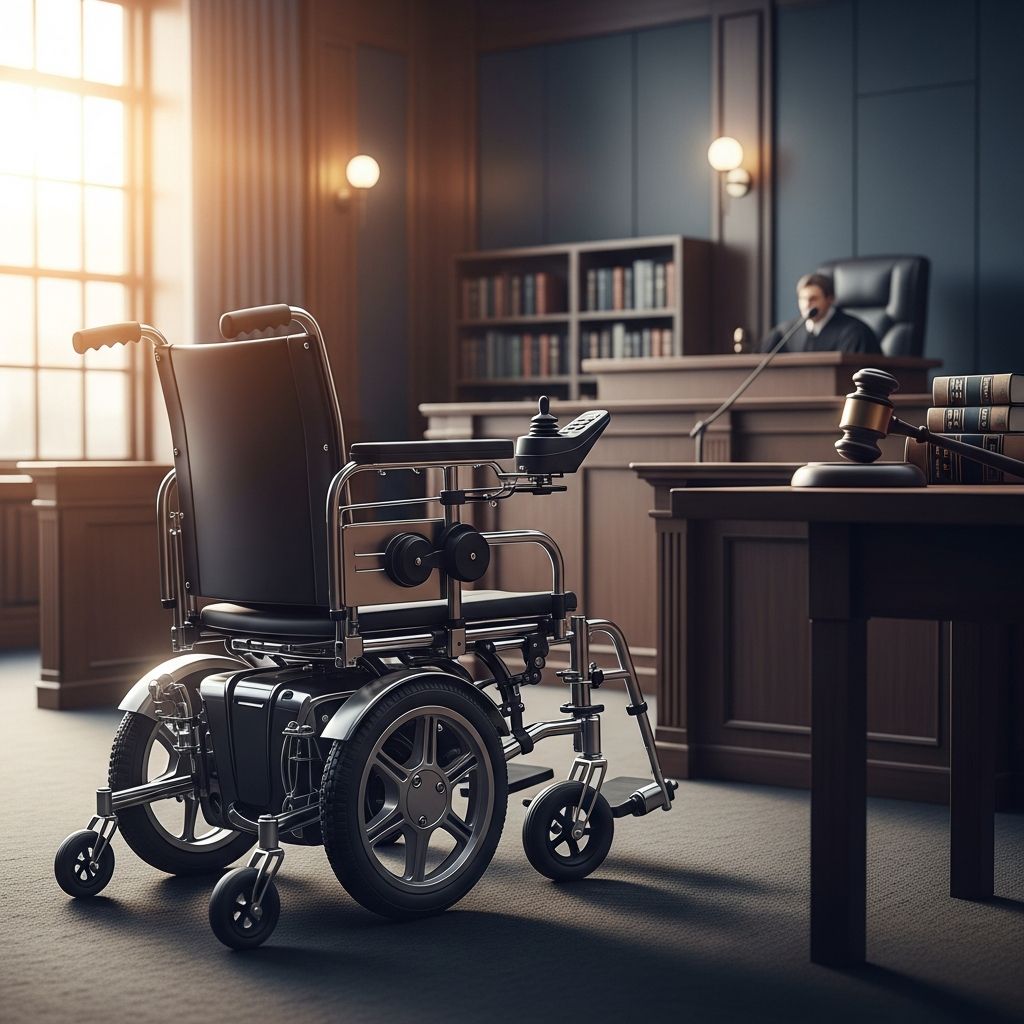
Motorized Wheelchairs and Impaired Operation: A Surprising Legal Gray Area
The question of whether someone can receive a DUI charge for operating a motorized wheelchair while under the influence of alcohol or drugs presents an intriguing legal puzzle that varies significantly depending on jurisdiction. While most people associate drunk driving laws exclusively with automobiles, motorcycles, and other traditional vehicles, the reality is considerably more complex. Several states have enacted DUI statutes with language broad enough to potentially encompass mobility devices, creating an unexpected legal minefield for wheelchair users who may not realize the consequences of operating their devices while impaired.
This legal ambiguity stems from the fundamental challenge legislators face when drafting DUI laws. The primary intent of these statutes is to prevent dangerous behavior on public roads and in public spaces. However, the specific language used to define what constitutes a “motor vehicle” or “vehicle” varies dramatically from state to state, leading to drastically different outcomes when impaired wheelchair operation comes into question.
How States Define Motor Vehicles and Vehicles
The critical distinction that determines whether DUI charges can apply to wheelchair users lies in how each state legally defines the terms “motor vehicle” and “vehicle.” These definitions are not universal, and the variations are substantial enough to produce entirely different legal consequences across state lines.
Some states employ extremely broad definitions that encompass virtually any device capable of motorized movement. Colorado law, for instance, defines a motor vehicle as any vehicle propelled by something other than muscular power, except vehicles on rails. Under this expansive definition, a motorized wheelchair theoretically falls within the scope of DUI statutes. Similarly, Florida law defines driving under the influence as operating or being in actual physical control of a vehicle while impaired, without explicitly excluding mobility devices from the category of vehicles.
In contrast, other jurisdictions have taken a more restrictive approach. Arizona law explicitly excludes motorized wheelchairs from the motor vehicle category under ARS Title 28-101, instead defining motor vehicles as devices used for transportation on public roads specifically, which does not include mobility aids. This distinction prevents wheelchair users from facing DUI charges under traditional drunk driving statutes in Arizona.
The difference between these approaches has profound consequences. In states with narrow definitions, wheelchair users have significantly greater legal protection. In states with expansive definitions, the same conduct could result in serious criminal charges.
The Distinction Between DUI and Related Charges
Even in jurisdictions where motorized wheelchairs technically fall outside the scope of traditional DUI statutes, individuals operating these devices while impaired are not necessarily free from legal consequences. State legislators have recognized the public safety risks associated with impaired operation of mobility devices and have created alternative legal mechanisms to address this concern.
Public intoxication laws provide one significant avenue for prosecution. When someone operates a motorized wheelchair while visibly intoxicated or impaired in a manner that creates disturbances or endangers others, they may be charged under public intoxication statutes. These charges do not carry the same severity as DUI convictions but can still result in criminal penalties, including fines, arrest, and potentially jail time.
Disorderly conduct statutes represent another potential basis for criminal liability. If an intoxicated wheelchair user creates a public disturbance, damages property, or behaves in a manner that disrupts public order, they may face charges under disorderly conduct laws rather than DUI statutes.
Additionally, reckless endangerment laws may apply when impaired wheelchair operation creates a substantial risk of harm to other individuals. These statutes focus on the dangerous nature of the conduct rather than the specific device being operated, making them applicable across different contexts.
Real-World Case Examples and Their Outcomes
Several notable cases have brought this legal question into sharp focus, demonstrating the unpredictable nature of how courts interpret impaired wheelchair operation.
The Georgia Incident
A Georgia case involved a man arrested after operating an electric wheelchair while intoxicated in a grocery store parking lot, where he was cited for public intoxication rather than DUI. Despite the man’s obvious impairment and the potential for dangerous behavior, prosecutors chose not to pursue DUI charges, instead relying on public intoxication statutes. This case illustrates how even when circumstances might technically qualify as DUI under state law, prosecutors may exercise discretion in choosing alternative charges.
The Michigan Case
A Michigan man was arrested in 2012 for operating a motorized wheelchair with a blood alcohol level three times the legal driving limit, compounded by the fact that he had stolen the wheelchair from a senior living facility. This case demonstrates the most serious end of the spectrum, where impaired operation combined with additional criminal conduct created a more complex legal situation.
The Oregon Court of Appeals Decision
In a landmark 2016 decision, the Oregon Court of Appeals ruled in State of Oregon v. James Richard Greene that a power wheelchair and its driver together fall under the classification of “pedestrian” when using sidewalks and crosswalks, resulting in the defendant’s acquittal from DUI charges. This ruling established important precedent protecting wheelchair users from DUI prosecution in Oregon, establishing that the context of operation (sidewalk versus roadway) and the classification of the user as a pedestrian rather than a driver should influence how impaired operation is legally characterized.
Potential Legal Consequences and Penalties
Even when DUI charges do not technically apply, individuals operating motorized wheelchairs while impaired may face serious legal ramifications. Understanding these potential consequences is essential for wheelchair users who consume alcohol or use substances.
Monetary Penalties
Public intoxication and disorderly conduct violations typically result in fines ranging from modest amounts to several hundred dollars, depending on the jurisdiction and severity of the offense. These fines accumulate quickly, particularly for individuals with repeated violations.
Arrest and Jail Time
Depending on the severity of the conduct and the jurisdiction’s enforcement policies, individuals may be arrested and potentially incarcerated. Short-term jail sentences for public intoxication or disorderly conduct are not uncommon, particularly for repeat offenders.
Community Service Requirements
Some jurisdictions impose community service obligations as part of the penalty for impaired wheelchair operation or related charges. These requirements can be burdensome, particularly for individuals with mobility limitations.
Criminal Records and Collateral Consequences
Even charges that fall short of DUI can result in criminal records that affect employment opportunities, housing applications, professional licensing, and other aspects of life. The collateral consequences of these convictions often extend far beyond the immediate legal penalties.
Comparative State Approaches: A Table Analysis
| Jurisdiction | Legal Classification | DUI Applicability | Alternative Charges Available |
|---|---|---|---|
| Arizona | Motorized wheelchairs explicitly excluded from motor vehicle definition | No DUI charges | Public intoxication, disorderly conduct |
| Colorado | Broad definition including any motorized device | Yes, theoretically applicable | Traditional DUI statute applies |
| Florida | Expansive vehicle definition without wheelchair exclusion | Yes, potentially applicable | DUI charges or alternative statutes |
| Oregon | Pedestrian classification for sidewalk/crosswalk use | No when functioning as pedestrian | Pedestrian-related statutes |
Defending Against Wheelchair-Related Charges
If you face criminal charges related to impaired operation of a motorized wheelchair, several defense strategies may be available depending on your jurisdiction and the specific circumstances.
First, challenge the characterization of the device itself. If your jurisdiction’s DUI statute requires operation of a “motor vehicle,” arguing that a motorized wheelchair does not meet the legal definition of a vehicle may be viable. This approach proved successful in Oregon and may work in other jurisdictions with similarly restrictive statutory language.
Second, question whether the wheelchair was actually being “operated” in the legally relevant sense. If the device was stationary or being used in a context where the operator functioned as a pedestrian rather than a driver, this distinction may prove critical to your defense.
Third, challenge the evidence of impairment. Just as with traditional DUI cases, the prosecution must prove impairment beyond a reasonable doubt. Field sobriety tests and breathalyzer evidence may be subject to challenge on reliability and testing procedure grounds.
Fourth, explore prosecutorial discretion. Prosecutors often have substantial discretion in determining what charges to pursue. An experienced attorney may negotiate to have charges reduced or dismissed in exchange for other considerations.
Protecting Yourself: Practical Recommendations
The most straightforward approach to this complex legal issue is to avoid operating a motorized wheelchair while impaired. The consequences are simply not worth the risk, regardless of whether your specific jurisdiction technically allows DUI charges.
If you use a motorized wheelchair and consume alcohol or other substances, plan alternative transportation in advance. Arrange for someone to drive you home, use rideshare services, or stay where you are until you are no longer impaired.
Educate yourself about your specific state’s laws regarding impaired operation of mobility devices. Contact a DUI attorney in your jurisdiction to understand exactly what charges you might face and under what circumstances.
If you are arrested or cited in connection with impaired wheelchair operation, exercise your right to remain silent and immediately request an attorney. Do not provide statements to law enforcement or attempt to explain your conduct without legal representation.
Frequently Asked Questions
Can I be charged with DUI for operating a motorized wheelchair while drunk?
The answer depends entirely on your jurisdiction. Some states like Arizona explicitly exclude motorized wheelchairs from DUI statutes, while others like Colorado use broad definitions that could theoretically encompass wheelchair operation. Research your state’s specific DUI law or consult with a local DUI attorney to understand your exposure.
What charges might I face instead of DUI?
Even if DUI charges do not apply, you could be charged with public intoxication, disorderly conduct, or reckless endangerment depending on the circumstances and your jurisdiction. These charges can carry serious penalties despite not being as severe as DUI convictions.
Do I lose my wheelchair if charged with impaired operation?
Criminal charges related to impaired wheelchair use do not typically result in loss of the mobility device itself, as the wheelchair is essential for your mobility and independence. However, this does not apply if the wheelchair was stolen or obtained unlawfully, as in the Michigan case.
Has anyone actually been convicted of DUI for wheelchair operation?
Yes, though such convictions are rare. The Oregon case involving James Richard Greene initially resulted in a conviction, though it was later overturned by the Court of Appeals. Most prosecutions result in alternative charges rather than traditional DUI convictions.
What should I do if I am arrested for impaired wheelchair operation?
Immediately request an attorney and exercise your right to remain silent. Do not provide statements or explanations to law enforcement. Contact a qualified criminal defense attorney in your jurisdiction as soon as possible to evaluate your specific situation and develop an appropriate defense strategy.
References
- Can You Get A DUI In A Wheelchair? — Shah Law Firm. Accessed December 2025. https://arjashahlaw.com/blog/can-you-get-a-dui-in-a-wheelchair/
- Can You Get a DUI in a Wheelchair? — The Law Firm. Accessed December 2025. https://tlflawfirm.com/can-you-get-a-dui-in-a-wheelchair/
- Wheelchair DUIs & Loose Laws — Hillsborough Defense. Accessed December 2025. https://www.hillsboroughdefense.com/blog/wheelchair-duis-and-loose-laws/
- Drinking, Power Wheelchairs and DUI — Wheelchair Travel. Accessed December 2025. https://wheelchairtravel.org/drinking-power-wheelchairs-dui/
Similar Articles








Read full bio of medha deb




