
The Moral Argument Against Immigration Raids
Examining religious ethics and human rights in modern immigration.
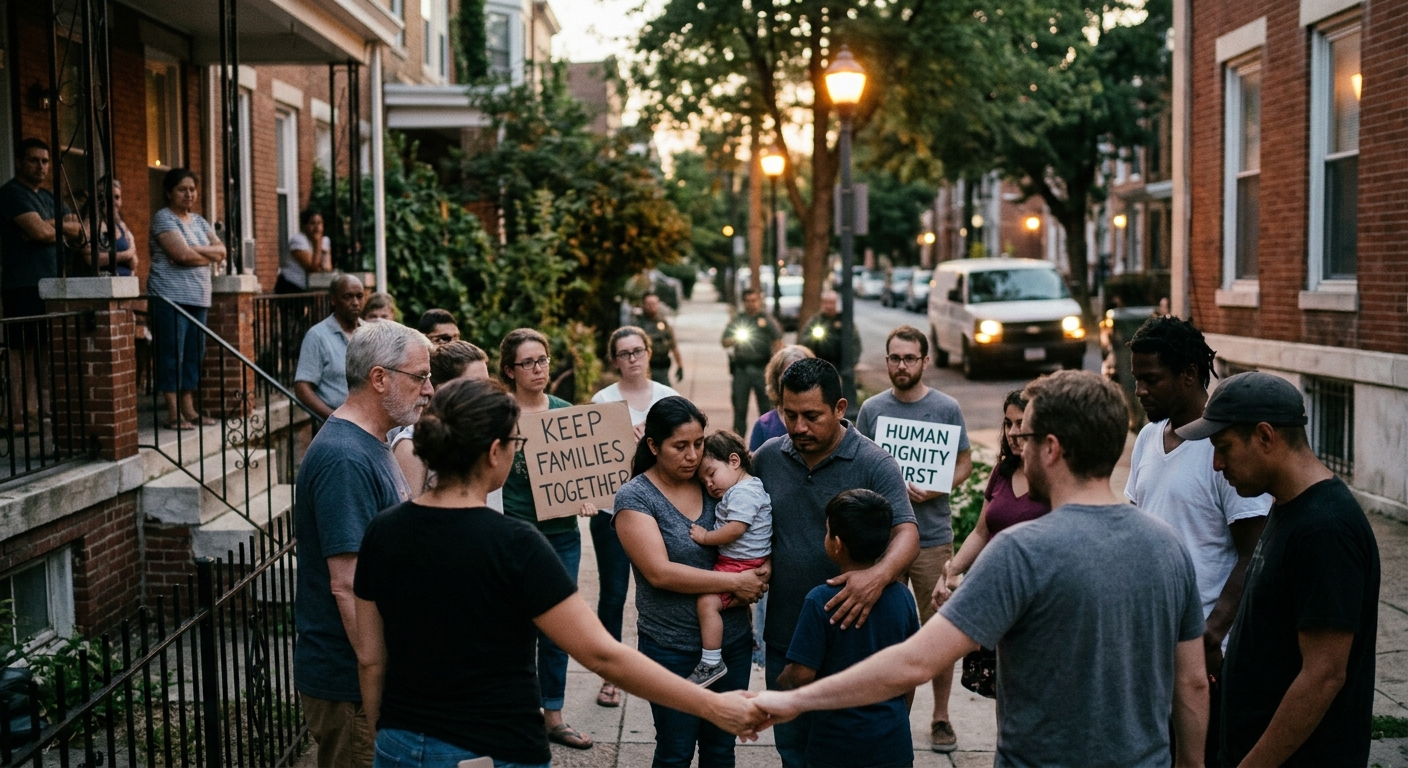
The global phenomenon of human migration has increasingly become one of the most polarizing political issues of the twenty-first century. As nations grapple with complex socioeconomic shifts, border security, and demographic transformations, the methodologies used to enforce immigration laws have come under intense scrutiny. Among the most controversial of these enforcement mechanisms are interior immigration raids—sudden, large-scale operations targeting undocumented individuals in their workplaces, neighborhoods, and sometimes even near schools or places of worship. While sovereign states possess the indisputable right to regulate their borders and maintain the rule of law, the aggressive nature of these tactics frequently collides with fundamental human rights and humanitarian ethics.
In recent years, a powerful coalition of religious leaders, human rights advocates, and psychological experts has emerged to challenge the morality of these enforcement strategies. This diverse alliance argues that current approaches prioritize rigid punitive measures over human dignity, inflicting profound, generational harm on vulnerable populations. By examining the intersection of faith-based social teaching, empirical sociological data, and pediatric psychology, it becomes evident that aggressive immigration raids do more than enforce the law—they fracture communities, traumatize children, and undermine the ethical foundations of a compassionate society.
The Ethical Framework: Prioritizing Human Dignity
For decades, prominent religious institutions have been at the forefront of the immigrants’ rights movement, drawing upon deep theological traditions that emphasize the sanctity of life and the inherent dignity of the human person. The United States Conference of Catholic Bishops (USCCB), alongside various interfaith coalitions, has consistently articulated that while border regulation is a valid governmental responsibility, it must never supersede the moral obligation to treat all individuals with respect and mercy. According to these faith-based doctrines, human beings cannot be reduced to their legal status; their fundamental rights are endowed by their humanity, not by government documentation.
This ethical framework challenges the utilitarian logic often employed to justify aggressive enforcement. Proponents of interior raids frequently argue that highly visible deportations serve as a necessary deterrent against future unauthorized immigration. However, religious advocates counter this by highlighting the human cost of such deterrence. When enforcement tactics involve armed agents conducting sweeping workplace arrests, the resultant terror strips individuals of their agency and dignity. The faith-based argument posits that a truly just legal system must balance the enforcement of laws with proportional compassion, recognizing the complex push factors—such as extreme poverty, gang violence, and political persecution—that compel people to migrate in the first place.
Furthermore, religious advocacy emphasizes the importance of family unity as the bedrock of a stable society. When immigration enforcement willfully separates parents from their children, it violates core tenets of familial sanctity upheld by almost all major world religions. The moral outrage expressed by religious leaders is not a call for open borders, but rather a demand for a legal framework that does not rely on human suffering as a tool for administrative compliance.
The Devastating Consequences of Interior Enforcement
Psychological Trauma Imposed on Children and Families
The moral arguments against immigration raids are deeply corroborated by scientific research concerning child development and public health. When a parent is abruptly detained or deported during a raid, the psychological impact on their children is immediate and catastrophic. The American Psychological Association (APA) has explicitly warned that the constant threat of detention and family separation creates a toxic environment of chronic stress, which severely increases the risk of anxiety, depression, and trauma-related symptoms in immigrant communities.
Children who witness the forced removal of a parent often suffer from post-traumatic stress disorder (PTSD), sleep disturbances, and acute behavioral regressions. The American Academy of Pediatrics (AAP) has similarly documented that even brief periods of detention or sudden parental separation can induce long-term mental health risks, disrupting healthy emotional development and undermining a child’s sense of security. These children, many of whom are native-born citizens, find themselves thrust into systemic instability. The sudden loss of a primary caregiver frequently leads to economic freefall, housing insecurity, and food scarcity, forcing older siblings into inappropriate caregiving roles and dramatically increasing school dropout rates.
The Disruption of Community Cohesion and Public Safety
Beyond the devastating micro-level impact on individual families, aggressive immigration raids generate a macro-level chilling effect that damages entire communities. When immigration enforcement is highly militarized and unpredictable, a pervasive climate of fear takes root. Undocumented immigrants, as well as mixed-status families, begin to withdraw from public life to avoid detection.
This withdrawal has severe implications for public safety and public health. Individuals become profoundly reluctant to report crimes to local law enforcement, fearing that any interaction with authorities could trigger deportation proceedings. As a result, predators and abusers within these communities operate with impunity, knowing their victims are too terrified to seek help. Similarly, out of fear of encountering immigration officials, families avoid seeking necessary medical care, accessing social services, or even attending parent-teacher conferences. A policy framework that forces a significant segment of the population into the shadows ultimately makes the broader community less safe, less healthy, and more economically fragile.
Analyzing the Scope: Immigration Enforcement Realities
To fully grasp the impact of these policies, it is essential to contextualize the scale of immigration enforcement. According to the Office of Homeland Security Statistics, hundreds of thousands of enforcement actions, encompassing apprehensions, removals, and returns, are executed annually. While a significant portion of these occurs at the physical border, interior enforcement operations—the raids and workplace sweeps conducted within established communities—carry a distinctly different socioeconomic weight.
Interior raids do not merely turn back individuals seeking entry; they uproot people who have often lived in the country for years or even decades. These individuals are frequently deeply embedded in the local economy, paying taxes, running businesses, and raising families. The structural disruption caused by their sudden removal cascades through the local infrastructure.
| Enforcement Strategy | Primary Objective | Collateral Socioeconomic Consequences |
|---|---|---|
| Interior Neighborhood Raids | Apprehension of individuals with outstanding removal orders. | Severe family separation, sudden loss of household income, heightened child welfare interventions, and widespread community panic. |
| Workplace Sweeps | Penalizing unauthorized labor and identifying undocumented workers. | Disruption of local business operations, exploitation of worker vulnerabilities, and deep erosion of labor rights for all employees. |
| Border Expulsions | Deterring unauthorized entry at international boundaries. | Increased reliance on human smugglers, denial of legitimate humanitarian asylum claims, and prolonged encampment in unsafe conditions. |
Faith in Action: Sanctuary and the Push for Systemic Reform
In response to the ethical and humanitarian crises precipitated by aggressive immigration raids, religious institutions and civil rights organizations have moved beyond verbal condemnation into actionable solidarity. Drawing historical parallels to the sanctuary movements of the 1980s, many congregations have transformed their physical spaces into places of refuge. By utilizing long-standing legal traditions that limit enforcement actions within sensitive locations like churches, hospitals, and schools, these communities provide vital protection for those at imminent risk of deportation.
However, providing sanctuary is recognized as a temporary mitigation, not a permanent solution. The ultimate goal of this diverse advocacy coalition is comprehensive legislative reform. Religious leaders continually lobby policymakers to dismantle the current reliance on punitive enforcement and mass detention. The USCCB and allied interfaith groups advocate for a system rooted in proportionality. This entails prioritizing the removal of individuals who pose genuine, verifiable threats to public safety, rather than indiscriminately tearing apart families or punishing individuals whose only offense is crossing a border to seek a living wage or flee extreme violence.
Furthermore, systemic reform must address the deeply flawed legal infrastructure that leaves millions in perpetual limbo. Advocates champion the creation of accessible, fair pathways to legal status and citizenship for long-term residents. They also push for an end to the privatization of immigration detention, arguing that injecting a profit motive into the incarceration of migrants fundamentally corrupts the justice system and leads to egregious human rights abuses.
Bridging the Divide: Moving Toward a Humane Future
The debate surrounding immigration enforcement is undeniably complex, fraught with competing economic, legal, and political interests. Yet, the moral imperative remains clear: policies must not be engineered at the expense of basic human dignity. The aggressive use of immigration raids serves as a stark reminder of the disconnect between the letter of the law and the spirit of justice.
Creating a sustainable and humane immigration system requires a paradigm shift. It necessitates moving away from the illusion that enforcement alone can solve structural global disparities. Instead, it requires holistic policies that address the root causes of migration, expand lawful avenues for entry, and treat immigrants not as security threats, but as human beings possessing inherent worth. By integrating compassion into policy, nations can uphold the rule of law without sacrificing their moral authority, ensuring a future where communities are defined by inclusion and resilience rather than fear and division.
Frequently Asked Questions (FAQs)
Why do religious leaders and institutions speak out against immigration raids?
Religious leaders advocate against aggressive immigration enforcement because these tactics often contradict fundamental theological teachings regarding human dignity, mercy, and the sanctity of the family. Faith-based doctrines generally argue that laws should serve humanity, and when enforcement causes widespread terror and family separation, it becomes a moral failing that the faith community is compelled to address.
What are the primary psychological effects of deportation on children?
The psychological toll on children facing the deportation of a parent is severe. Clinical organizations like the APA and AAP note that these children experience chronic toxic stress, which can lead to post-traumatic stress disorder (PTSD), severe anxiety, depression, and developmental delays. The sudden loss of a caregiver also triggers economic and housing instability, further exacerbating the child’s trauma.
How do interior immigration raids affect local law enforcement and community safety?
Interior raids severely undermine community safety by creating a chilling effect. When undocumented individuals and their families fear that interacting with any state authority could lead to deportation, they become reluctant to report crimes, cooperate with local police investigations, or seek help during emergencies. This breakdown in trust allows criminal elements to exploit marginalized communities without fear of intervention.
What are the proposed alternatives to aggressive interior immigration raids?
Advocates and religious institutions propose comprehensive immigration reform as the alternative. This includes establishing fair pathways to legal residency and citizenship, focusing enforcement solely on individuals who pose a legitimate threat to public safety, ending the use of for-profit detention centers, and investing in addressing the root causes of migration, such as poverty and violence in sending countries.
References
- Policy and Advocacy — U.S. Conference of Catholic Bishops (USCCB). 2025. https://www.usccb.org/committees/migration/policy-and-advocacy
- Yearbook 2023 — Office of Homeland Security Statistics, U.S. Department of Homeland Security. 2024-09-16. https://ohss.dhs.gov/topics/immigration/yearbook-immigration-statistics
- U.S. immigration policy: Mental health impacts of increased detentions and deportations — American Psychological Association (APA). 2025-09-01. https://www.apa.org/advocacy/immigration/mental-health-impacts
- Detention of Immigrant Children — American Academy of Pediatrics (AAP). 2017-05-01. https://publications.aap.org/pediatrics/article/139/5/e20170483/38727/Detention-of-Immigrant-Children
Similar Articles








Read full bio of Sneha Tete


