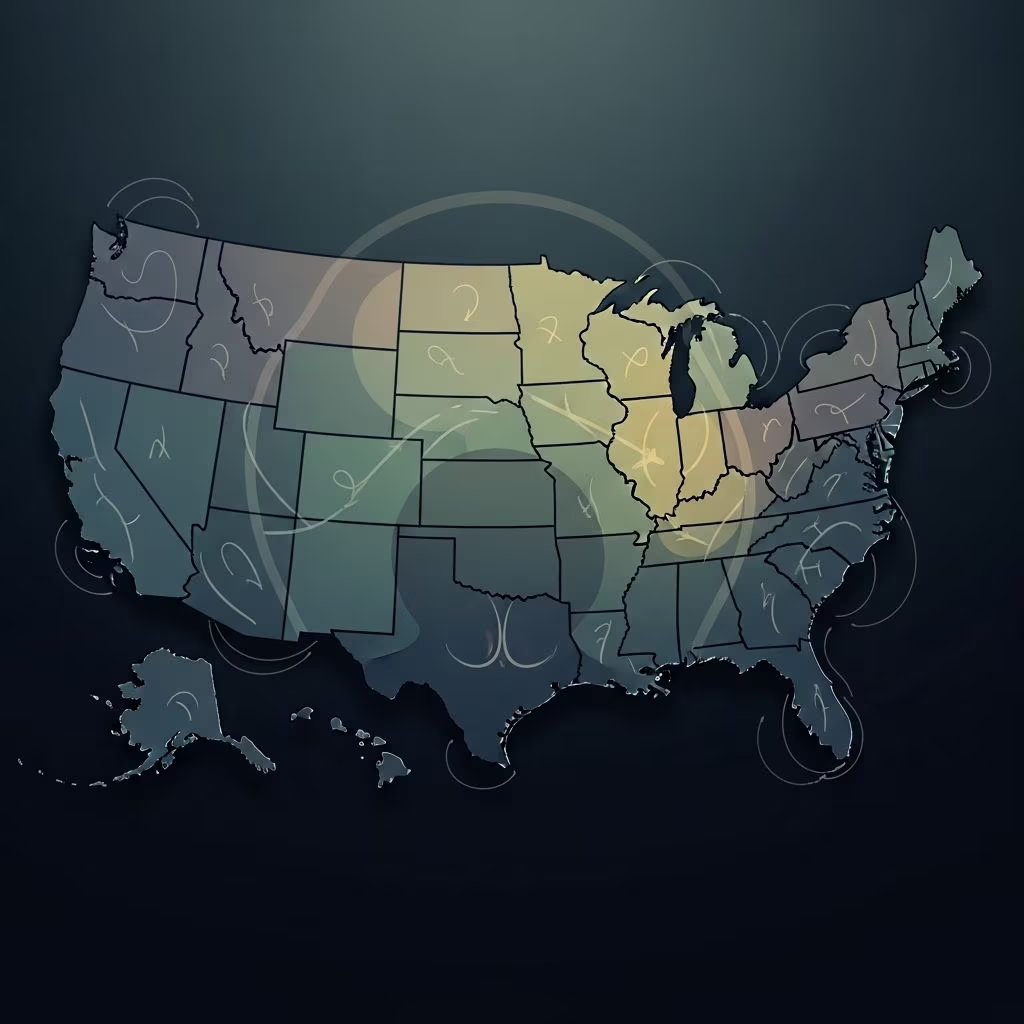
The Legal Landscape of Mooning in America
Mooning, the deliberate exposure of one’s buttocks in public, occupies a peculiar space in American criminal law. What some jurisdictions treat as a harmless prank can result in serious legal consequences in others, including criminal charges, jail time, and mandatory sex offender registration. The legal treatment of mooning varies significantly across state lines, creating a complex patchwork of regulations that anyone engaging in such behavior should understand.
The fundamental question facing courts and lawmakers is whether mooning constitutes indecent exposure. This determination depends heavily on how each state defines indecent exposure in its criminal code, particularly whether the definition focuses exclusively on genital exposure or extends to buttocks and other body parts. Understanding these distinctions is crucial for anyone accused of this offense or curious about the potential legal ramifications.
How States Define Indecent Exposure
The primary challenge in prosecuting mooning cases lies in the varying definitions of indecent exposure across different jurisdictions. Most states frame indecent exposure as the intentional display of genitals in public with the intent to offend or cause alarm to others. However, this definition creates a critical distinction: if mooning involves only the exposure of buttocks without displaying genitals, some jurisdictions argue it falls outside the traditional scope of indecent exposure.
Several states have adopted a narrow interpretation of indecent exposure, limiting it specifically to genital exposure. Under these definitions, mooning does not qualify as indecent exposure unless the defendant also exposes their genitals. Other jurisdictions take a broader approach, classifying any exposure of the buttocks or other intimate body parts as indecent exposure, regardless of genital display. This variation means that conduct considered criminal in one state might be merely disorderly conduct or not prosecutable at all in another.
The legal distinction between buttocks exposure and genital exposure has become increasingly important in appellate decisions. Courts have grappled with whether exposure of half of the buttocks meets the threshold for criminal conduct or whether additional factors must be present to warrant prosecution. These interpretations shape how law enforcement and prosecutors approach mooning complaints.
State-by-State Analysis of Mooning Statutes
Maryland’s First Amendment Protection
Maryland presents one of the most permissive legal frameworks regarding mooning. In a significant 2006 decision, a Maryland state circuit court determined that mooning constitutes a form of artistic expression protected by the First Amendment. This landmark ruling established that indecent exposure in Maryland relates solely to exposure of the genitals, not the buttocks.
The court’s reasoning was particularly illuminating. Judges acknowledged that mooning, while potentially disgusting and demeaning, does not meet the legal definition of indecent exposure when only buttocks are exposed. The court drew a parallel to women wearing thong swimwear at public beaches, noting that if buttocks exposure constituted indecent exposure, beach-goers in revealing attire would similarly be criminally culpable. This logical inconsistency led the court to conclude that mooning, standing alone, cannot sustain an indecent exposure conviction. However, prosecutors could potentially pursue alternative charges such as disorderly conduct depending on the circumstances surrounding the act.
California’s Motivation-Based Approach
California takes a distinctive approach by requiring proof of sexual motivation. In a December 2000 decision, the California Court of Appeal ruled that mooning does not constitute indecent exposure unless prosecutors can demonstrate beyond reasonable doubt that the conduct was sexually motivated. This standard creates a higher evidentiary burden for prosecutors and provides defendants with a potential defense strategy.
Under California law, the critical factor is not merely the exposure itself but the intent behind it. Mooning motivated by protest, humor, or provocation might escape indecent exposure prosecution, while similar conduct performed with sexual gratification as the underlying motivation could result in conviction. This distinction reflects a policy judgment that the defendant’s mental state and purpose for the act matter in determining criminal liability. Additionally, the California ruling means that mooning convictions under this standard do not automatically require sex offender registration, unless the sexual motivation element is proven.
Virginia’s Obscenity Requirement
Virginia law incorporates an obscenity requirement into its indecent exposure statute, creating another protective framework for those accused of mooning. Virginia’s statute requires that conduct constitute “obscene conduct,” defined as behavior appealing to prurient interest in sex, excretory functions, or sadomasochistic abuse. Mooning fails to meet this definition because it does not inherently appeal to prurient sexual interest.
In a notable Virginia case involving a fourteen-year-old who mooned his school bus driver, the Court of Appeals dismissed indecent exposure charges after finding insufficient evidence of obscene conduct. The court reasoned that mere exposure of buttocks, without additional context suggesting sexual motivation or appeal to prurient interests, does not satisfy the statutory definition. However, the court noted that mooning could potentially violate Virginia’s disorderly conduct statute, which captures behavior intended to provoke or disturb others even if it falls short of indecent exposure. This ruling provides guidance for other jurisdictions considering similar statutory requirements.
General Criminal Penalties for Indecent Exposure
Misdemeanor Classifications
Most states classify indecent exposure as a misdemeanor offense on first conviction. Typical penalties include fines ranging from a few hundred to several thousand dollars and jail time of up to one year in county jail. The specific sentence imposed often depends on factors such as the presence of children, the defendant’s prior criminal history, and the manner in which the exposure occurred.
In Maryland, for instance, indecent exposure carries penalties of up to three years in prison and fines up to $1,000. However, the court made clear that this potential sentence applies only to actual indecent exposure as defined by the statute. In states where mooning is not considered indecent exposure, these penalties would not apply to simple mooning incidents unless different statutes are invoked.
Aggravating Factors That Increase Penalties
Several circumstances can elevate charges or increase penalties even within the misdemeanor framework. The presence of children at the time of exposure is widely considered an aggravating factor that can result in enhanced sentencing or additional charges. Exposure in certain sensitive locations, such as schools or public parks where children congregate, similarly elevates the severity of charges.
Prior convictions for indecent exposure or related offenses also substantially increase penalties. Many jurisdictions treat repeat offenses as felonies rather than misdemeanors, leading to imprisonment in state prison for multiple years rather than county jail. Some states also consider whether the exposure involved masturbation or other sexually explicit conduct, which would transform the charge into a more serious offense than simple indecent exposure.
Sex Offender Registration Requirements
One of the most significant consequences of indecent exposure conviction is the requirement to register as a sex offender. In most jurisdictions, indecent exposure convictions trigger sex offender registration obligations that can last for years or even a lifetime. This requirement creates collateral consequences far exceeding the criminal penalty itself.
Sex offender registration affects employment prospects, housing options, educational opportunities, and personal relationships. Registered offenders face restrictions on where they can live and work, often must notify neighbors of their status, and appear on public registries accessible to potential employers and others. For mooning incidents that may seem minor or even humorous, the registration requirement creates a disproportionately severe long-term consequence.
However, some jurisdictions provide exceptions or modifications to registration requirements. California’s approach of requiring sexual motivation as an element before conviction means that many mooning cases do not result in registration. Similarly, states that do not classify mooning as indecent exposure entirely avoid the registration consequence, though other criminal charges might still carry registration obligations.
Alternative Criminal Charges
Disorderly Conduct
When mooning does not qualify as indecent exposure under a state’s statutes, prosecutors frequently pursue disorderly conduct charges instead. Disorderly conduct statutes typically prohibit behavior that disturbs the peace, provokes others, or creates public alarm. Mooning, particularly if done with intent to shock or provoke, readily fits within these definitions.
Disorderly conduct charges, while still criminal, often carry lighter penalties than indecent exposure. Jail sentences are typically shorter, sometimes measured in days rather than months or years. Fines are generally lower. Most importantly, disorderly conduct convictions typically do not require sex offender registration, avoiding the most severe collateral consequence associated with indecent exposure charges.
Open Lewdness and Related Offenses
Some jurisdictions have created intermediate categories of offense that capture buttocks exposure without reaching the threshold of indecent exposure. For example, some states distinguish between indecent exposure (genital exposure) and open lewdness (non-genital exposure of intimate body parts). Open lewdness carries lighter penalties than indecent exposure and may or may not require sex offender registration depending on the jurisdiction.
Prosecutors may also charge public indecency, which in some jurisdictions encompasses a broader range of conduct than traditional indecent exposure statutes. The availability of these alternative charges depends entirely on the specific criminal code of each state and how local prosecutors exercise their discretion.
Notable Examples and Their Outcomes
High-profile mooning incidents reveal how the legal system treats this behavior. In 2005, professional football player Randy Moss simulated pulling down his trousers and bent over toward opposing fans during an NFL game. While the action was a mime rather than actual exposure, it created sufficient public controversy that Moss faced a $10,000 fine from the NFL. The incident illustrated how mooning, even in simulated form, generates public disapproval and official sanctions.
In another case, a musician mooned a concert audience in England, an incident captured and reported by media. While this occurred in the United Kingdom rather than the United States, it demonstrates that mooning by public figures does not shield them from consequences and may generate greater scrutiny precisely because of their visibility.
These examples serve as reminders that mooning, regardless of intent or circumstances, invites legal risk and potential criminal charges. Even when acquitted or when charges are dismissed, the process of arrest, prosecution, and defense creates substantial costs and disruption.
Legal Defenses to Indecent Exposure Charges
Definitional Arguments
The most effective defense to indecent exposure charges based on mooning is a definitional argument: the conduct does not satisfy the statutory definition of indecent exposure because only buttocks were exposed, not genitals. This defense works particularly well in jurisdictions that have adopted the narrow definition of indecent exposure. Defendants can cite case law from their jurisdiction or persuasive authority from other states supporting the proposition that mooning alone does not constitute indecent exposure.
Lack of Sexual Motivation
In states requiring sexual motivation as an element of indecent exposure, defendants can argue that the mooning was motivated by humor, protest, or provocation rather than sexual gratification. Evidence supporting this defense might include the context in which mooning occurred, the defendant’s statements about their intent, and witness testimony about whether the conduct appeared sexually motivated or merely intended to shock or amuse.
Absence of Intent to Offend
Some statutes require that exposure be performed with intent to offend, disturb, or alarm others. Defendants might argue that no such intent existed or that the alleged victim was not actually disturbed by the conduct. This defense is more difficult when mooning is directed at specific individuals, but might succeed when mooning occurred in circumstances where the defendant reasonably believed it would not offend anyone.
Witness and Identity Issues
If no witnesses actually observed the alleged exposure, prosecution becomes difficult or impossible. Similarly, if the defendant’s identity cannot be established beyond reasonable doubt, charges should be dismissed. These defenses do not address the conduct itself but rather the evidence supporting the prosecution’s case.
Practical Considerations and Risk Assessment
Understanding mooning laws requires recognition that legal treatment varies significantly by jurisdiction. What is not prosecutable in Maryland or California might result in criminal conviction, jail time, and sex offender registration in other states. These variations mean that anyone considering mooning should first research the specific laws in their state.
The potential for sex offender registration makes even misdemeanor convictions substantially consequential. Individuals facing indecent exposure charges should take them seriously and consult with experienced criminal defense attorneys before deciding how to respond. Plea negotiations might result in dismissal or reduction to lesser charges with fewer collateral consequences.
Additionally, the context in which mooning occurs significantly affects legal risk. Mooning in private settings where only willing adult participants are present presents far less legal exposure than mooning in public spaces, near schools, or toward unwilling viewers. The presence of children creates aggravating circumstances that increase both the likelihood of prosecution and the severity of potential penalties.
Frequently Asked Questions About Mooning and Legal Consequences
Q: Is mooning always illegal in the United States?
A: No. Mooning’s legal status depends on your state’s definition of indecent exposure. Some states, like Maryland and California, do not classify mooning as indecent exposure unless specific additional elements are present. However, mooning might violate disorderly conduct or other statutes even in these states.
Q: Will I have to register as a sex offender if convicted of indecent exposure for mooning?
A: In most jurisdictions, yes. Indecent exposure convictions typically trigger sex offender registration requirements. However, some states may make registration discretionary or may not require it if mooning alone (without genital exposure) is the basis for charges.
Q: What is the difference between indecent exposure and disorderly conduct related to mooning?
A: Indecent exposure typically focuses on the exposure of genitals or intimate body parts in public. Disorderly conduct is broader and includes behavior that disturbs the peace or creates public alarm. Disorderly conduct charges generally carry lighter penalties and may not require sex offender registration.
Q: Can mooning be a form of protected expression?
A: In Maryland, courts have ruled that mooning can constitute protected expression under the First Amendment. However, this protection is specific to Maryland and does not automatically apply in other jurisdictions. Even in Maryland, the conduct must meet specific criteria to receive protection.
Q: What should I do if I am charged with indecent exposure for mooning?
A: Consult immediately with a criminal defense attorney licensed in your state. The specific nature of charges and available defenses depend entirely on your jurisdiction’s laws. An experienced attorney can evaluate your case, explain potential consequences, and explore options for favorable resolution.
Q: Does the presence of children always result in more serious charges for mooning?
A: Yes, the presence of minors at the time of exposure significantly increases legal exposure. Most jurisdictions treat exposure in the presence of children as an aggravating factor that increases penalties, can add additional charges, and may increase the likelihood of sex offender registration requirements.
References
- Indecent Exposure: “Mooning” is Not “Obscene” — May Law, LLP. 2024. https://maylawllp.com/indecent-exposure-mooning-is-not-obscene/
- Defending Against Indecent Exposure Charges in Maryland — William R. Hall, Criminal Defense Attorney. 2024. https://www.williamrhall.com/criminal-defense/sex-crimes/indecent-exposure/
- The Legal Aspects of Indecent Exposure and Defense Strategies — Chambers Law Firm. 2024. https://www.chamberslawfirmca.com/the-legal-aspects-of-indecent-exposure-and-defense-strategies/
- Is Streaking A Crime? Understanding Indecent Exposure Laws — Pittsburgh Criminal Defense Lawyers. 2024. https://www.pittsburghdefenselawyers.com/is-streaking-a-crime/
- Mooning — Wikipedia. Updated 2024. https://en.wikipedia.org/wiki/Mooning