
Lunar Personhood: 4 Key Arguments For And Against
Exploring the radical idea of granting legal rights to celestial bodies like the Moon amid space law evolution.
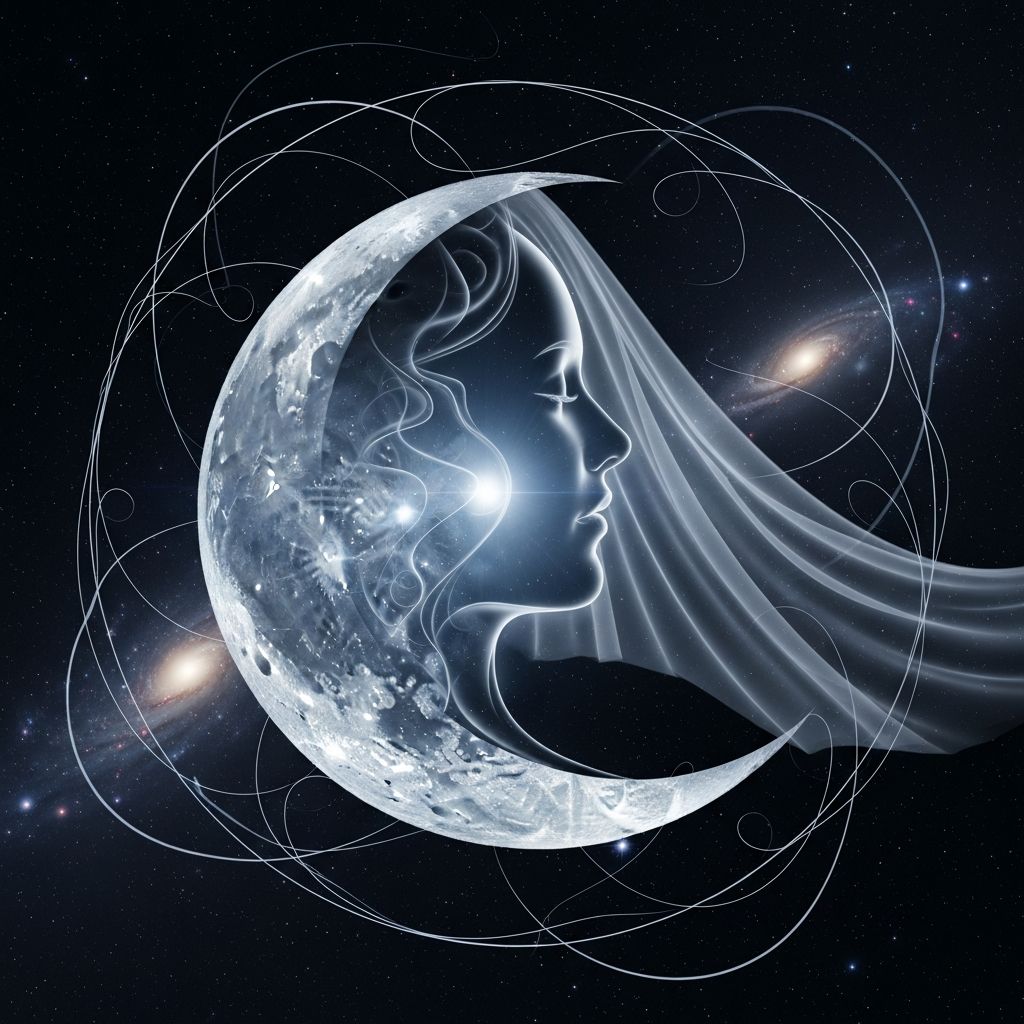
In an age where humanity reaches for the stars, a provocative question emerges: should the Moon be granted legal personhood? This concept, rooted in the extension of rights to non-human entities, challenges traditional notions of law and opens debates on celestial governance as space ambitions grow.
Understanding Legal Personhood Fundamentals
Legal personhood refers to the status that enables an entity to participate in the legal system, including owning property, entering contracts, and seeking court remedies. It distinguishes between natural persons—human beings—and juridical persons, such as corporations, which gain this status through legal processes.
Historically, this framework originated in Roman law and evolved in common law traditions to facilitate commerce and organization. Corporations, for instance, possess rights like suing or being sued, owning assets, and self-governance via bylaws. This artificial personality allows groups to function as unified entities separate from their members.
- Natural persons acquire rights at birth through inherent humanity.
- Juridical persons require state conferral, often via registration or statute, enabling entities like partnerships or cooperatives to act independently.
Non-human examples abound: universities, banks, and municipalities hold legal personality, shielding members from liability while imposing duties like taxation.
Extending Rights Beyond Humans: Key Precedents
The expansion of legal personhood to non-humans has accelerated, particularly for environmental entities. Rivers, forests, and mountains have been recognized as legal persons in various jurisdictions, marking a shift toward ecocentric law.
In New Zealand, the Whanganui River received personhood in 2017, appointing guardians to represent it in court against pollution and overuse. Similarly, India’s Ganges and Yamuna rivers, along with Ecuador’s Yasuni Amazon region, gained similar status to enforce protection.
| Entity | Jurisdiction | Year | Rights Granted |
|---|---|---|---|
| Whanganui River | New Zealand | 2017 | Legal standing, guardianship |
| Ganges & Yamuna Rivers | India | 2017 | Protection from pollution |
| Te Urewera National Park | New Zealand | 2014 | Autonomy and rights |
| Lake Erie | Ohio, USA (proposed) | 2019 | Bill for rights (failed) |
These cases demonstrate how law adapts to protect voiceless entities through human representatives, prioritizing ecological integrity over exploitation.
Celestial Bodies Enter the Legal Arena
As private companies like SpaceX and Blue Origin plan lunar bases, the idea of lunar personhood gains traction. A 2019 open letter from researchers proposed granting the Moon legal status to prevent overexploitation, drawing parallels to terrestrial precedents.
The Outer Space Treaty of 1967 declares space as the ‘province of all mankind,’ banning national claims but allowing use. However, it lacks enforcement for emerging threats like resource extraction or debris. Legal personhood could impose duties on actors to preserve the Moon’s environment.
Philosophically, this aligns with viewing nature as possessing intrinsic value, not mere utility. Jurists argue that graded personhood—tailored rights without full human equivalence—could apply to the Moon, focusing on preservation.
Arguments in Favor of Lunar Personhood
- Preventing Tragedy of the Commons: Without ownership bans, lunar sites risk commercialization, leading to contamination. Personhood enforces collective stewardship.
- Intergenerational Equity: Future generations deserve an intact Moon for science and inspiration, mirroring river protections.
- Precedent Momentum: If rivers hold rights, why not the Moon? This logical extension promotes consistent environmental ethics across domains.
- Innovation in Governance: Guardians could regulate mining, habitats, and artifacts, fostering sustainable space law.
Proponents envision a lunar guardian council, comprising scientists and indigenous representatives, to litigate violations internationally.
Challenges and Counterarguments
Critics highlight practical impossibilities. The Moon, a 384,400 km distant rock, lacks agency or interests definable in human terms. Representation raises who appoints guardians and whose values prevail.
International consensus is elusive; the US, China, and Russia dominate space, with conflicting interests. Amending treaties demands UN-level agreement, historically slow.
- Enforcement Nightmares: How to sue a lunar rover operator? Jurisdiction spans borders.
- Economic Barriers: Rights might deter investment in helium-3 mining or bases.
- Slippery Slope: If the Moon, why not asteroids or Mars? Dilutes focus.
Moreover, personhood historically excluded humans (e.g., enslaved people, women under coverture), questioning its equity for inanimates.
Philosophical Foundations of Non-Human Rights
Legal personhood is a construct, not tied to biology. John Locke’s ideas influenced it: personhood involves rationality and accountability, extendable via surrogates.
Modern theory posits it as graded: central (humans) to peripheral (corporations, nature). Psychological prototypes aid extension—rivers evoke life-like qualities. For AI or animals, debates rage; Yale scholars explore AI personhood ethics, relevant to autonomous lunar robots.
In space, this fiction could preserve universal heritage, treating the Moon as a global commons with standing.
Practical Pathways Forward
To implement, nations could pass domestic laws recognizing lunar personhood, pressuring treaties. The UN Committee on Peaceful Uses of Outer Space (COPUOS) offers a forum.
Hybrid models: limited rights for specific protections, like historical monuments. Blockchain for transparent resource tracking aids accountability.
Indigenous perspectives, viewing celestial bodies as kin, enrich discourse, as in New Zealand’s Maori-influenced laws.
Global Implications for Space Exploration
Lunar personhood redefines humanity’s cosmic role from conqueror to custodian. It anticipates conflicts over regolith mining or water ice, valued at trillions.
As Artemis Accords promote cooperation, embedding nature rights prevents future disputes. Long-term, it models governance for exoplanets.
Ultimately, this debate tests law’s adaptability: can it evolve for a multi-planetary future?
Frequently Asked Questions
What exactly is legal personhood?
A status allowing entities to hold rights, duties, sue, and own property in law. Applies to humans and corporations alike.
Has any non-living entity received personhood?
Yes, parks and rivers have, granting them legal standing via guardians.
Why the Moon specifically?
Impending missions risk environmental harm; personhood ensures preservation amid commercialization.
What are the main obstacles?
International agreement, enforcement, and defining the Moon’s ‘interests’.
Could this affect space companies?
Potentially, by imposing regulations on extraction and waste, balancing profit with protection.
References
- Legal person – Wikipedia — Wikipedia Contributors. 2023-10-01. https://en.wikipedia.org/wiki/Legal_person
- Legal personhood | Definition, Law, Corporations, & Artificial … — Britannica Editors. 2024-05-15. https://www.britannica.com/topic/legal-personhood
- What Exactly Is ‘Constitutional Personhood’ — Americans United for Life. 2010-04-23. https://aul.org/2010/04/23/what-exactly-is-constitutional-personhood-the-definition-of-personhood-and-its-role-in-the-life-debate/
- Introduction | A Theory of Legal Personhood — Oxford University Press. 2020-01-01. https://academic.oup.com/book/35026/chapter/298854871
- The Concept of Legal Personhood – What the Mind Reveals about Law — Journal of Law and Society. 2023-08-20. https://journaloflawandsociety.co.uk/blog/the-concept-of-legal-personhood-what-the-mind-reveals-about-law/
- Legal Personhood: Extending Rights to Nature? — JSTOR Daily. 2022-11-10. https://daily.jstor.org/legal-personhood-extending-rights-to-nature/
- The Ethics and Challenges of Legal Personhood for AI — Yale Law Journal. 2023-03-05. https://yalelawjournal.org/forum/the-ethics-and-challenges-of-legal-personhood-for-ai
Similar Articles








Read full bio of medha deb


