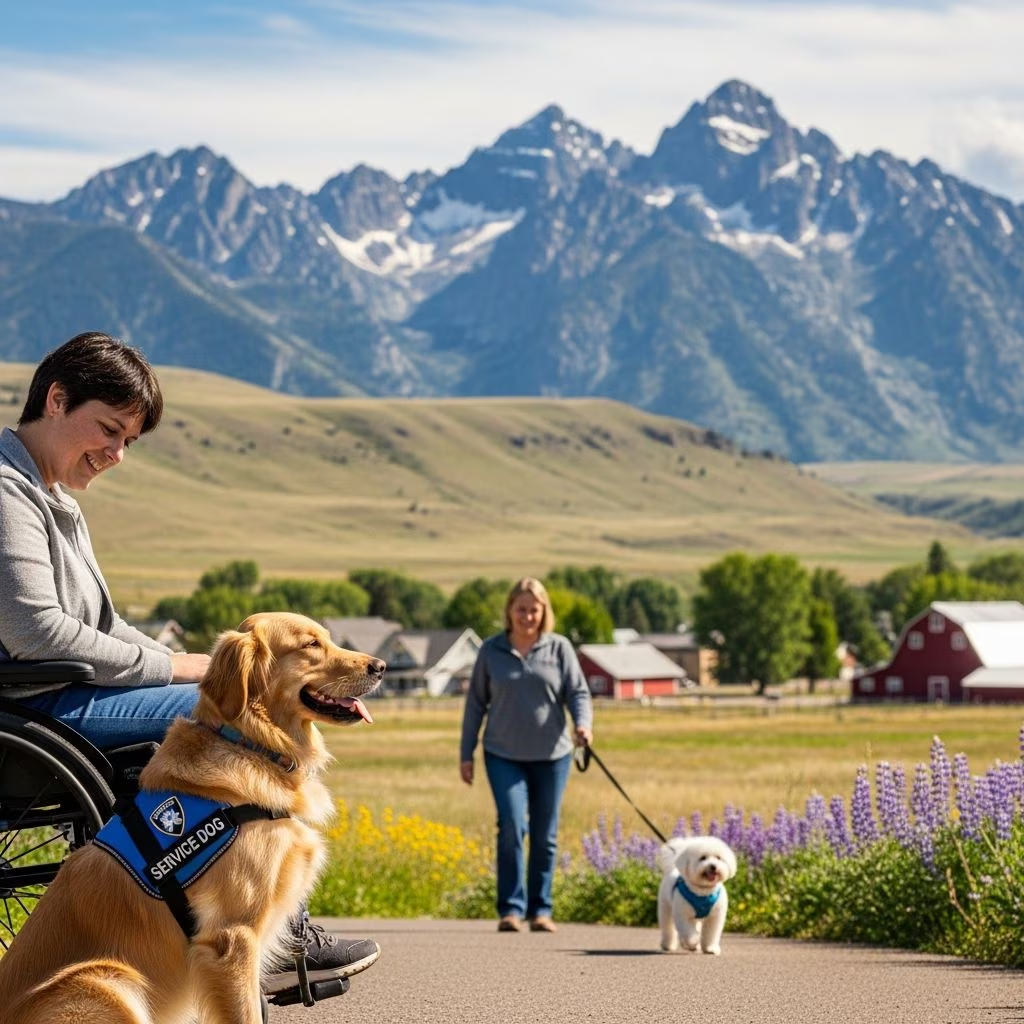
Montana provides robust legal protections for individuals with disabilities who rely on service dogs and emotional support animals (ESAs), blending state statutes with federal regulations like the Americans with Disabilities Act (ADA) and Fair Housing Act (FHA). These laws ensure access to public spaces, housing, and other facilities while distinguishing trained service animals from pets or ESAs to prevent abuse.
Defining Service Animals Under Montana Regulations
In Montana, a **service animal** is narrowly defined as a dog or miniature horse individually trained to perform specific tasks that mitigate a person’s disability. This excludes ESAs, which provide comfort but lack task training. Common tasks include guiding the blind, alerting to seizures, interrupting psychiatric episodes, or retrieving items.
- Dogs trained for hearing alerts (e.g., doorbells, alarms).
- Guide dogs for visual impairments.
- Psychiatric service dogs that prevent self-harm or remind about medications.
- Allergen detection dogs for substances like peanuts.
Federal ADA aligns closely, emphasizing task-training over certification or vests, though Montana requires visible identification for animals in training, such as harnesses or collars readable from 20 feet.
Public Access Rights for Service Dogs
Individuals with disabilities have the right to be accompanied by their service animal in all **public accommodations**—places offering goods, services, or facilities to the public. Montana law lists examples like stores, restaurants, hotels, theaters, schools, and medical offices (Mont. Code § 49-2-101(20)(a)). The ADA expands this to 12 categories, including professional offices, banks, and recreational facilities (42 U.S.C. § 36.104).
| Montana Public Accommodations | ADA Public Accommodations |
|---|---|
| Stores, hotels, restaurants | Places of lodging, food service |
| Theaters, schools, libraries | Educational institutions, recreation |
| Hospitals, professional offices | Doctor’s offices, banks, social services |
Businesses cannot charge extra fees for service animals, isolate handlers, or treat them less favorably. Food establishments must allow dogs in public areas despite health codes.
Verification and Inquiries Allowed
Staff may ask only two questions: (1) Is the dog a service animal required for a disability? (2) What tasks is it trained to perform? No proof of training, disability details, or certification can be demanded. The animal must remain under control via leash, harness, or tether (voice control if needed for tasks).
Conditions for Excluding Service Animals
Exclusion is permitted if the animal is out of control (e.g., aggressive barking) and the handler fails to correct it, or if not housebroken. It must pose a direct threat to health/safety based on behavior, not breed. Businesses must still offer access to the handler without the animal. Posted ‘no dogs’ signs must note service animal exceptions.
- Out of control: Aggression, excessive noise without correction.
- Not housebroken: Lack of basic hygiene training.
- Handler responsibility: Damage costs fall on the owner.
Protections for Service Animals in Training
Montana uniquely grants trainers the same access rights as handlers, provided the animal wears clear identification (e.g., vest stating ‘service animal in training’). This supports programs developing skilled dogs for public use (Mont. Code § 49-4-214(3)).
Housing Accommodations for Service Dogs and ESAs
The FHA mandates ‘no pets’ policies waive for **assistance animals**, including service dogs and ESAs, if needed for equal housing enjoyment. Montana law mirrors this, prohibiting extra fees or deposits for service animals, though damage liability applies.
Landlords can request reliable documentation for non-apparent disabilities but cannot inquire into specifics. ESAs qualify under FHA if a healthcare provider verifies necessity, unlike public access where only task-trained dogs enter.
| Aspect | Service Dogs | Emotional Support Animals |
|---|---|---|
| Public Access | Yes (task-trained dogs) | No |
| Housing (FHA) | Yes | Yes (with documentation) |
| Fees/Deposits | Waived (MT/FHA) | Typically waived |
| Training Required | Yes, specific tasks | No, comfort only |
Exclusions apply for threats to safety, but not breed/size alone.
Recent Legislative Enhancements and Penalties
Senate Bill 300 (recently enacted) criminalizes harassing, harming, or interfering with service dogs as a misdemeanor, with fines up to $1,000. This addresses incidents disrupting animal tasks. House Bill 439 (2019) makes misrepresenting a pet as a service animal a misdemeanor with escalating fines, combating fraud that erodes trust.
Montana Code § 49-4-214 outlines handler rights and responsibilities, including control and identification for trainees.
Key Distinctions: Service Dogs vs. Therapy Dogs vs. ESAs
- Service Dogs: Task-trained for one disabled handler; public/housing access.
- Therapy Dogs: Visit facilities for general comfort; no individual public rights.
- ESAs: Provide emotional support; housing only under FHA, no public access.
Misuse confuses businesses, prompting stricter laws.
Responsibilities of Handlers and Businesses
Handlers: Maintain control, clean up waste, cover damages, ensure training.
Businesses: Allow access, limit inquiries, offer alternatives post-exclusion, train staff. Violations invite complaints to Montana Human Rights Bureau or DOJ.
Frequently Asked Questions
Can restaurants deny service dogs due to health codes?
No, federal and state laws require access to public areas.
Do service dogs need vests or ID in Montana?
Trained animals do not; trainees must have visible identifiers.
Can landlords charge pet fees for ESAs?
No, under FHA and Montana law for verified needs.
What if my service dog causes damage?
You are liable, like any patron.
Is misrepresenting a pet as a service dog illegal?
Yes, misdemeanor under HB 439.
Are miniature horses allowed?
Yes, if task-trained per ADA/Montana definition.
Navigating Challenges and Seeking Help
Handlers facing denial should calmly educate staff, document incidents, and file complaints. Organizations like Ability Montana offer advocacy. Recent laws like SB 300 enhance deterrence against interference.
For housing disputes, FHA complaints go to HUD. Stay informed on updates, as Montana continues refining protections amid rising awareness.
References
- Service Dog Access in Montana: Progress and Challenges Ahead — Ability Montana. 2023. https://abilitymt.org/blog/service-dog-access-montana
- Service Dog and Emotional Support Animal Laws in Montana — Nolo. 2023. https://www.nolo.com/legal-encyclopedia/montana-laws-on-service-dogs-and-emotional-support-animals.html
- Montana Service Animals — Montana State University Extension. 2023. https://apps.msuextension.org/magazine/articles/3451
- Understanding Service Dogs — K9 Care Montana. 2023. https://www.k9caremontana.org/what-is-a-service-dog
- Understanding the Law-Individuals with Disabilities and Service Animals — Summit Independent Living Center. 2020-01-01. https://www.summitilc.org/2020/01/understanding-the-law-individuals-with-disabilities-and-service-animals/
- Montana Code Annotated 49-4-214 — Montana Legislature. 2023. https://archive.legmt.gov/bills/mca/title_0490/chapter_0040/part_0020/section_0140/0490-0040-0020-0140.html