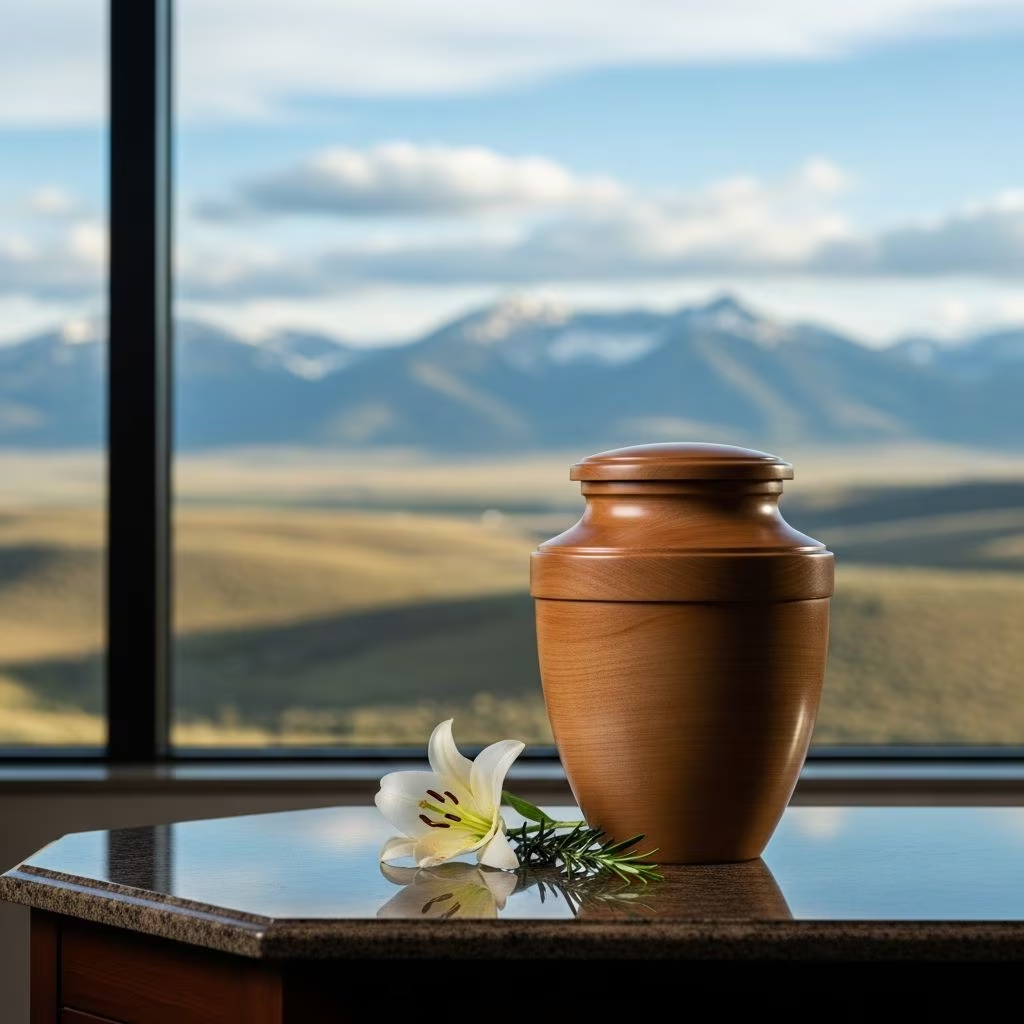
Montana’s legal framework for handling human remains emphasizes respect for individual choices while ensuring public health and safety. Families must navigate requirements for death certificates, disposition methods, and local variations, particularly for private burials and cremations. This guide details key regulations to assist in compliant planning.
Legal Authority Over Final Disposition
The Montana Right of Disposition Act empowers adults aged 18 and older, of sound mind, to control their posthumous handling. This includes specifying burial, cremation, or other methods through prepaid contracts, written directives signed by two witnesses, notarized affidavits naming an agent, or video instructions. These directions take precedence over default family hierarchies.
Without prior instructions, decision-making priority follows: surviving spouse, adult children, parents, adult siblings, or guardians. This structured order prevents disputes and ensures swift, lawful arrangements.
Obtaining and Filing Death Certificates
A death certificate must be filed with the local registrar within 10 days of death. The person managing disposition—often a funeral director—completes demographic details and forwards it to a physician, advanced practice nurse, or coroner for medical certification within three working days of notification or authorization.
Four copies are typically produced: one for the registrar, one for the coroner, one for the disposer, and one accompanying the remains until final placement. This process is mandatory before any burial or cremation proceeds.
Burial Requirements and Options
Montana does not mandate caskets for burials, though cemeteries may impose their own rules. Federal law requires providers to disclose alternative container options like unfinished wood or cardboard for cost savings. Burial depth standards specify at least 18 inches of earth over vaults or caskets (or 12 inches for double-depth), with the coffin top at least three feet below ground surface in standard practice.
Private Property and Family Burial Grounds
Home burials are feasible without state-level statutes explicitly permitting them, as private family graveyards are exempt from funeral board oversight. Local counties set guidelines, such as Powell County’s rules: up to five bodies per acre without cemetery designation, graves six feet deep, 100 feet from boundaries, 50 feet from structures, and 150-300 feet from water sources or wells. Sites must avoid floodplains, with perpetual family maintenance required and waterproof identification markers.
Families file a Private Family Burial Grounds Notice with details like the deceased’s name and location. Only the disposition-authorized person and landowner can approve, with written lien-holder consent if applicable. Violations may lead to county-ordered exhumation at owner expense.
| Aspect | Powell County Private Burial Rules | General State Practice |
|---|---|---|
| Max Bodies per Acre | 5 | Varies by locality |
| Depth Requirement | 6 feet vertical | 3 feet to coffin top |
| Distance from Water | 150-300 feet | 150 feet minimum |
| Property Line Buffer | 100 feet | Local rules apply |
This table summarizes key variances; always consult your county clerk and health department before proceeding.
Cemetery-Specific Guidelines
Municipal cemeteries like Billings’ Mountview have unique policies: one set of cremains per cremation-section grave, up to three in standard graves, or one casket with two cremains. Only cemetery staff operate lowering devices unless family-requested pre-service; families may place cremains directly.
Cremation Processes and Permits
Cremation requires a 24-hour waiting period after the Dead Body Removal Authorization. No casket is legally required; alternative containers suffice, with providers obligated to offer them. A separate permit may be needed from local authorities for final disposition.
Post-cremation, ashes (cremains) can be kept in homes, crypts, niches, or graves without state restrictions on storage locations.
Scattering Ashes: Locations and Restrictions
On Private and Public Lands
No statewide laws regulate ash scattering on private property with owner permission. For public or federal lands, discreet scattering away from trails, roads, campsites, waterways, and developed areas is generally unproblematic. National Park Service sites provide specific guidelines; notify rangers if required.
Water Bodies and At-Sea Disposition
Federal Clean Water Act governs inland waters (rivers, lakes) and oceans: scatter at least three nautical miles offshore for sea disposition, with non-decomposable containers discarded separately. Notify the EPA within 30 days; beach or pool scattering is prohibited. State waterway agencies may require inland permits.
Aerial Scattering Considerations
Federal aviation rules ban hazardous drops, but cremains are non-hazardous if removed from containers prior to dispersal, minimizing risks to people or property.
Planning Tools and Consumer Protections
Montana supports preneed arrangements, including perpetual care funds for cemetery maintenance. Consumers benefit from disclosures on non-mandatory embalming, caskets, and vaults. Video or written directives ensure wishes are followed without court intervention.
- Prepaid Contracts: Lock in services and goods at current prices.
- Disposition Agents: Delegate via affidavit for flexibility.
- Local Permits: Essential for interments outside cemeteries.
Frequently Asked Questions
Can I bury a loved one on my own property in Montana?
Yes, subject to county rules like depth, setbacks from water and boundaries, and filing notices. Check with your local health department and clerk.
Is a vault or casket required for burial?
No state requirement, but cemeteries may mandate them. Alternatives are federally protected options.
How soon after death can cremation occur?
After a 24-hour wait, with death certificate filed and permits obtained.
Where can I scatter cremated remains legally?
Private land (with permission), federal lands (discreetly), sea (3+ miles out), or inland waters (with permits). Avoid populated or sensitive areas.
Who decides disposition if no will exists?
Priority: spouse, adult children, parents, siblings.
Local Variations and Best Practices
Regulations differ by county—Madison and Powell exemplify strict private burial policies, while cities like Billings outline cremains limits. Always verify with county offices, avoiding utility easements or flood zones. Engage professionals early to align with health codes and family wishes.
Document everything: markers with waterproof IDs, maintenance plans, and permissions prevent future issues. Montana’s flexible laws honor personal autonomy while safeguarding communities.
References
- Burial of Persons on Private Property — Powell County, MT. 2023-06-06. https://www.powellcountymt.gov/media/201
- Montana Funeral Consumers Alliance Guide — Funeral Consumers Alliance. 2016. https://funerals.org/wp-content/uploads/2016/06/MT.pdf
- What Are Your Rights Over Your Remains? — Montana State University Extension. Accessed 2026. https://apps.msuextension.org/montguide/guide.html?sku=MT200918HR
- Burial and Cremation Laws in Montana — Nolo. 2024. https://www.nolo.com/legal-encyclopedia/burial-cremation-laws-montana.html
- Cemetery Guidelines — City of Billings, MT. Accessed 2026. https://www.billingsmt.gov/359/Guidelines
- 37-19-101 Definitions, MCA — Montana State Legislature. Accessed 2026. https://archive.legmt.gov/bills/mca/title_0370/chapter_0190/part_0010/section_0010/0370-0190-0010-0010.html
- Requirements for Burials — Administrative Rules of Montana. Accessed 2026. https://www.law.cornell.edu/regulations/montana/Mont-Admin-r-24.147.1310