
The Modern Censorship Crisis: Defending Diverse Voices
Exploring the legal battles and human costs of modern book bans.
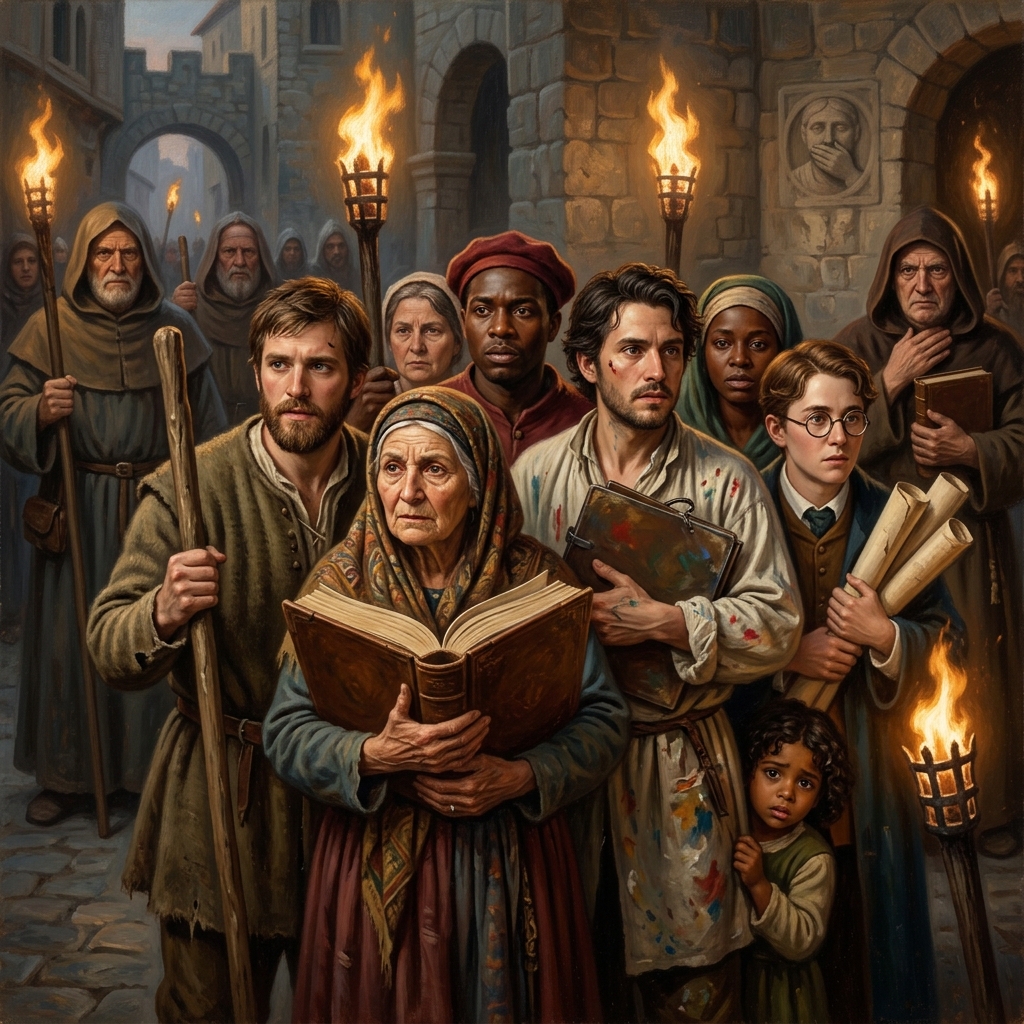
The freedom to read is one of the most fundamental pillars of a democratic society. It serves as both a mirror reflecting our own personal identities and a window opening into the vast, diverse experiences of others. Yet, across the United States, a highly coordinated and heavily funded wave of censorship has swept through public schools and community libraries. This modern censorship crisis is not a grassroots movement of concerned parents acting in isolation; rather, it is a systematic effort to challenge the First Amendment and silence marginalized voices. By disproportionately targeting authors of color and LGBTQ+ creators, these book bans threaten to erase the narratives of millions of Americans from the public square. This article delves into the systemic rise of modern literary censorship, the legal frameworks designed to protect intellectual freedom, and the fierce pushback from communities fighting to preserve diverse literature for future generations.
Understanding the Current Wave of Literary Censorship
Historically, literary censorship in the United States targeted individual books deemed obscene or politically subversivetitles like The Catcher in the Rye or Ulysses. However, the modern era of book banning operates on an entirely different scale and methodology. Over the past five years, the volume of challenged materials has shattered historical records, transforming from isolated local disputes into a national political strategy.
Data compiled by civil liberties and library associations illustrate a chilling trend. According to the American Library Association (ALA), there were 5,668 books banned from libraries in 2025, which accounted for 66% of the total books challenged that year . Furthermore, an overwhelming 92% of these book challenges were initiated not by individual parents raising concerns about a single book their child brought home, but by organized pressure groups, government officials, and political decision-makers .
| Year | Unique Titles Challenged | Total Books Banned |
|---|---|---|
| 2023 | 4,240 | Record breaking challenges documented |
| 2024 | 2,452 | Decrease in unique titles, but sustained pressure |
| 2025 | 4,235 | 5,668 (Highest ban implementation rate) |
This industrialization of censorship relies on distributed lists of hundreds of titles, often targeting entire genres or subjects at once. The goal is to overwhelm local school boards and library committees, forcing mass removals before a proper review process can even occur. When library shelves are stripped of materials through intimidation rather than institutional policy, it creates a “chilling effect” where educators and librarians begin to self-censor, preemptively removing titles to avoid public harassment or potential termination.
The Disproportionate Impact on LGBTQ+ and BIPOC Narratives
What is most striking about the current censorship movement is not just the sheer volume of books being banned, but the specific voices being targeted and silenced. The ideological center of these bans reveals a clear and undeniable pattern: the attempted erasure of marginalized identities. The sweeping campaigns are rarely about genuine educational suitability; instead, they heavily target stories written by or featuring Black, Indigenous, and People of Color (BIPOC), as well as individuals within the LGBTQ+ community.
PEN America, a leading organization defending free expression, reported a staggering 6,870 instances of book bans during the 2024-2025 school year alone . Their research consistently highlights that the topics most frequently challenged include themes of race, racism, sexual orientation, and gender identity. Supporting this, the ALA found that roughly 40% of the materials challenged in 2025 explicitly involved representations of LGBTQIA+ people and people of color .
These targeted censorship campaigns typically encompass:
- LGBTQ+ Protagonists: Novels featuring queer protagonists, exploring the process of coming out, or normalizing non-traditional family structures.
- Racial History: Historical and non-fiction accounts of systemic racism, the Civil Rights Movement, slavery, and indigenous history.
- Marginalized Memoirs: Coming-of-age biographies and memoirs detailing the lived experiences of minority identities overcoming adversity.
- Social Justice Texts: Educational literature exploring intersectional feminism, gender equity, and modern social justice movements.
When advocacy groups label books exploring Black history or queer relationships as “inherently divisive” or “inappropriate,” they are essentially categorizing the existence of these communities as taboo. This strategy weaponizes the concept of “protecting children” to enforce a monolithic, exclusionary worldview on public educational institutions.
The Legal Framework: The First Amendment in Schools and Libraries
At the heart of the battle over book bans is the First Amendment of the United States Constitution. While local school boards and municipalities are granted significant leeway to design curricula and manage public resources, their authority is not absolute. They operate within constitutional boundaries that explicitly prevent them from suppressing ideas simply because they find them disagreeable or politically inconvenient.
The definitive legal precedent regarding the removal of books from public school libraries is the 1982 Supreme Court case, Board of Education, Island Trees Union Free School District v. Pico . In this landmark civil rights case, a local school board attempted to unilaterally remove several books from middle and high school libraries, claiming they were “anti-American, anti-Christian, anti-Semitic, and just plain filthy.”
In a plurality decision, the United States Supreme Court ruled against the school board, establishing that the First Amendment protects a student’s fundamental right to receive information and ideas . Justice William J. Brennan Jr., writing for the plurality, famously distinguished between a school’s compulsory curriculum and its library space. While school boards have broad discretion over classroom curriculum, the school library serves as a locus of voluntary inquirya “marketplace of ideas.”
Therefore, under the Pico standard, school boards cannot remove books from library shelves simply because they dislike the ideas contained within those books . A removal must be based on objective criteria, such as a book being strictly lacking in educational suitability. However, modern censorship groups continuously test these legal boundaries by falsely conflating any LGBTQ+ content or discussions of race with “obscenity,” attempting an end-run around the First Amendment protections established decades ago.
The Mechanics of a Book Ban: How Challenges Escalate
Understanding how a book transitions from a celebrated library addition to a banned title requires looking at the mechanics of modern censorship. In decades past, a book challenge typically involved a parent reading a book their child brought home, filing a formal reconsideration request, and allowing a committee of educators to evaluate the text’s pedagogical value.
Today, the process has been effectively hijacked by highly organized political machinery. The escalation often follows a predictable playbook:
- List Generation and Distribution: National advocacy networks distribute extensive lists of “objectionable” titles to local community chapters. Many of the individuals submitting formal challenges have never actually read the books they are attempting to ban, instead relying on out-of-context summaries provided by these networks.
- Board Infiltration and Disruption: Organized groups attend local school board or library board meetings en masse. They utilize out-of-context excerpts excerpts focusing on brief passages detailing sexual identity or racial violence to manufacture outrage and paint the literature as inherently dangerous to minors.
- Bypassing Due Process: Facing intense pressure, threats of litigation, and public harassment, school administrators sometimes bypass their own established review policies. They opt for “quiet censorship,” pulling books immediately rather than waiting for a formal committee decision to protect their own careers.
- Legislative Escalation: When local efforts stall, censorship advocates lobby state legislatures to pass vague laws criminalizing the distribution of “harmful materials” to minors. These laws intentionally leave the definitions ambiguous enough to frighten librarians into extreme caution and self-censorship.
The Educational and Psychological Costs of Erasure
The consequences of this censorship wave extend far beyond constitutional theory and legal debates; they inflict real, measurable harm on students, educators, and the authors themselves. In the field of education, diverse literature is frequently described using Dr. Rudine Sims Bishop’s concept of “mirrors, windows, and sliding glass doors.” Books must act as mirrors, allowing children to see their own lives and identities reflected and validated. They must also act as windows, allowing students to understand and empathize with people from entirely different backgrounds.
When book bans disproportionately target LGBTQ+ and BIPOC stories, they shatter these mirrors and close these windows. For marginalized youth, the removal of these books sends a devastating psychological message: your identity is shameful, your history is dangerous, and your existence is not welcome in the public educational sphere. It denies them the crucial validation that literature provides during formative years.
Furthermore, censorship deeply impacts the authors themselves. Many Black, Indigenous, and queer writers face severe emotional and economic tolls. Being branded as “obscene” or “inappropriate” by coordinated political groups can result in targeted digital harassment, canceled school visits, and lost income, ultimately chilling the literary landscape and discouraging future generations of diverse voices from sharing their deeply personal stories.
Resistance, Legislation, and Legal Pushback
Despite the aggressive nature of the censorship movement, communities across the nation are mounting powerful resistance campaigns. Students, parents, educators, and civil rights organizations are fighting back through grassroots organizing, rigorous litigation, and progressive legislative action.
Students themselves have been at the forefront of this resistance, organizing walkouts, forming banned book clubs, and testifying at school board meetings to demand access to a diverse array of literature. Civil rights organizations, alongside authors and major publishing houses, have launched federal lawsuits against school districts, citing blatant First Amendment violations and demanding the restoration of unconstitutionally removed titles.
On the legislative front, several states are taking proactive steps to protect the freedom to read. Illinois led the nation in 2023 when Governor J.B. Pritzker signed House Bill 2789 into law . This groundbreaking legislation effectively outlawed book bans across the state by tying state grant funding for libraries to the adoption of the ALA’s Library Bill of Rights, which dictates that materials should not be removed because of partisan or doctrinal disapproval . Since Illinois paved the way, lawmakers in states like Maryland, California, and Colorado have introduced or passed similar anti-censorship protections, ensuring that librarians are legally safeguarded against coordinated political attacks.
Frequently Asked Questions (FAQ)
What is the difference between a book challenge and a book ban?
A book challenge is a formal attempt or request to remove or restrict materials from a library or school curriculum, often based on the personal or political objections of a person or group. A book ban is the successful culmination of that challenge, resulting in the complete removal of the targeted materials from the shelves, effectively denying access to all students or patrons regardless of their individual family’s preferences.
Why are books by LGBTQ+ and BIPOC authors targeted so frequently?
Modern censorship is largely driven by political and ideological campaigns rather than organic educational concerns. Advocacy groups disproportionately target books discussing systemic racism, gender identity, and sexual orientation because these topics clash with their specific political narratives. By labeling these books as “divisive” or “explicit,” they weaponize cultural anxieties to justify the systematic erasure of marginalized experiences from public life.
How does the First Amendment protect school library books?
The First Amendment protects the right to free speech, which the Supreme Court has interpreted to broadly include the right to receive information. In the landmark 1982 case Board of Education v. Pico, the Supreme Court ruled that school boards cannot remove books from school libraries simply because they disagree with the political, nationalistic, or social ideas expressed within them, cementing libraries as a marketplace of ideas.
What can local citizens do to combat book banning in their communities?
Citizens can actively oppose book bans by staying informed and actively participating in local governance. This includes attending school board and library board meetings to speak in favor of diverse literature, supporting local librarians publicly, joining national advocacy networks like Unite Against Book Bans, and purchasing or borrowing challenged books to demonstrate continued community demand.
Conclusion
The battle over the freedom to read is one of the most defining civil rights struggles of our current era. As coordinated censorship efforts continue to ruthlessly target LGBTQ+ and BIPOC narratives, the fundamental principles of the First Amendment and the integrity of American public education are being severely tested. A robust, functional democracy relies on an informed populace capable of critical thinking, deep empathy, and open intellectual discourse. Defending diverse voices in literature is not merely about protecting ink on a page; it is about protecting the right of every individual to exist, to be seen, and to share their story without fear of systemic erasure. By engaging in local politics, supporting legislative safeguards, and standing in unwavering solidarity with targeted authors and librarians, society can ensure that the public library remains a protected sanctuary for all ideas.
References
- Censorship by the Numbers: Banned Books Data the American Library Association. 2026-04-19. https://www.ala.org/advocacy/bbooks/banned-books-data
- Book Bans List 2026 PEN America. 2026-02-20. https://pen.org/issue/book-bans/
- BOARD OF EDUCATION v. PICO, 457 U.S. 853 (1982) FindLaw. 2024-02-09. https://caselaw.findlaw.com/court/us-supreme-court/457/853.html
- Gov. Pritzker Signs Bill Making Illinois First State in the Nation to Outlaw Book Bans State of Illinois. 2023-06-12. https://www.illinois.gov/news/press-release.26575.html
Similar Articles








Read full bio of medha deb


