
Mobilizing Grassroots Advocacy for Civil Liberties
How action centers and lobby days transform civic energy into policy change.
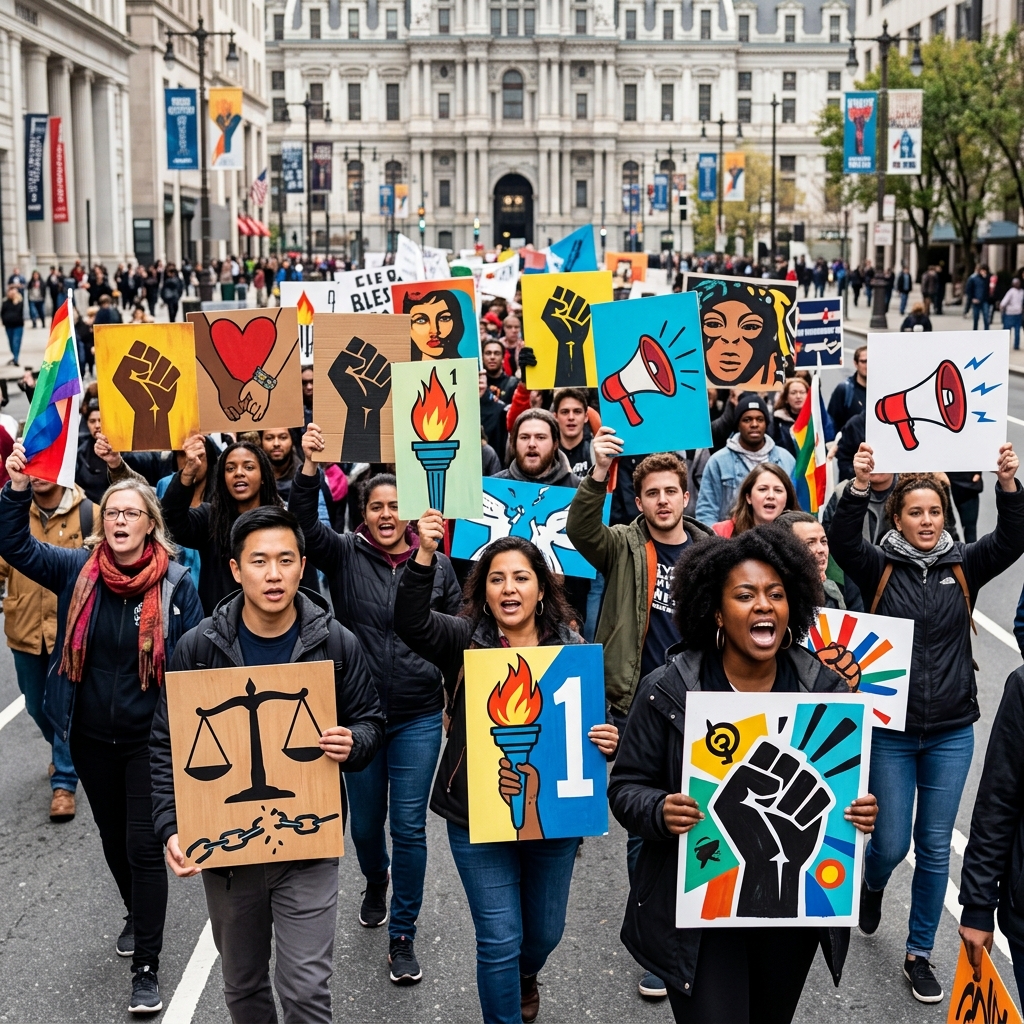
The Crucial Role of Grassroots Mobilization in Democracy
In the modern landscape of democratic governance, the vitality of civil liberties relies heavily on the vigilant and continuous participation of the public. While casting a ballot is frequently heralded as the ultimate civic duty, the reality is that the machinery of democracy requires constant, active maintenance between election cycles. This is precisely where grassroots advocacy and civic mobilization take center stage. For decades, human rights organizations, civil liberties watchdogs, and community coalitions have utilized national conferences, summits, and strategic gatherings to transform individual passion into highly coordinated legislative action.
These advocacy events are far more than mere networking opportunities or echo chambers for the like-minded. They serve as dynamic incubators for policy reform, where the theoretical ideals of justice are hammered into practical, actionable legislative strategies. When everyday citizens gather to focus on systemic issues—ranging from voting rights and immigration reform to mass surveillance and digital privacy—they create a centralized hub of democratic power. By organizing this collective energy, advocacy groups can exert significant pressure on local, state, and federal lawmakers.
To truly understand the impact of these movements, one must look at the structural mechanics of how these organizations operate. Through a combination of rigorous educational workshops, high-energy action centers, and highly orchestrated lobby days on Capitol Hill, civil liberties organizations effectively bridge the gap between ordinary citizens and the often opaque world of government policymaking. This systematic approach ensures that the voices of the public are not just heard, but are legally and politically impossible to ignore.
The Architecture of Advocacy: Building Knowledge Through Workshops
At the core of any successful grassroots mobilization effort is education. The legislative landscape is notoriously labyrinthine, filled with complex legal jargon, convoluted procedural hurdles, and opaque committee processes. When citizens decide to fight for their constitutional rights, they are often stepping onto a battlefield where the opposition—frequently well-funded corporate lobbyists and entrenched political insiders—already knows the terrain. Advocacy conferences are specifically designed to level this playing field through intensive educational programming.
During these strategic summits, policy experts, civil rights attorneys, and veteran community organizers break down the intricate nuances of pending legislation. Attendees learn not just what a specific bill intends to do, but how it physically moves through the chambers of government, who the key swing votes are on various committees, and what specific rhetorical arguments resonate most effectively with undecided lawmakers. This educational architecture is absolutely critical to the mission.
An informed constituent is a legislator’s most formidable counterpart. When a citizen can articulate the specific statutory flaws in a piece of legislation rather than simply expressing vague dissatisfaction, their advocacy carries exponentially more weight. Workshops also serve to contextualize modern civil liberties struggles within a broader historical framework, reminding participants that the fight for equitable treatment and constitutional protection is a multi-generational relay race that requires continuous education and strategic adaptation.
Turning Education Into Action: The Power of Action Centers
Education without application often leads to stagnant activism. To counter this, large-scale advocacy conferences frequently deploy “Action Centers”—interactive, high-energy hubs specifically designed to remove the friction between intention and action. Located just outside the main plenary halls or workshop rooms, these centers represent the beating heart of grassroots mobilization.
Action Centers are meticulously equipped to facilitate immediate constituent engagement. They typically feature banks of phones, computer stations, and pre-drafted issue materials. Here, attendees can take the knowledge they acquired in a workshop just moments prior and instantly apply it by calling their state representatives, emailing congressional staffers, or drafting personalized letters to their senators. The psychological impact of this immediate action is profound; it transforms passive listeners into active participants in the democratic process.
Furthermore, these hubs often incorporate a variety of engaging activities to maintain high morale and foster a sense of community among advocates. From interactive mapping of legislative districts to role-playing exercises that simulate challenging conversations with elected officials, Action Centers build the practical confidence necessary for long-term activism. By providing the tools, the scripts, and the communal encouragement, organizations ensure that hundreds of thousands of messages can flood legislative offices in a matter of hours, signaling a highly mobilized and attentive constituency.
Taking the Fight to Capitol Hill: The Impact of Lobby Days
The pinnacle of many national civil liberties conferences is the orchestrated “Lobby Day.” This is the moment when the theoretical discussions and digital activism materialize into physical presence within the halls of government. Participants converge on Capitol Hill or state capitols, conducting hundreds of coordinated meetings with lawmakers and their essential staff members to directly advocate for specific policy outcomes.
A common misconception in the realm of civic engagement is that 501(c)(3) public charities and nonprofit organizations are strictly prohibited from lobbying. In reality, federal law explicitly recognizes the right of these organizations to engage in both direct and grassroots lobbying within defined financial limits. Nonprofits possess a unique, boots-on-the-ground perspective regarding the needs of vulnerable populations, making their insights invaluable to the legislative process. Lobby days allow these organizations to leverage their most powerful asset: the authentic voices of their constituents.
During a lobby day, citizens sit face-to-face with the individuals elected to represent them. These meetings are heavily prepared for; advocates receive extensive briefings on the specific issues swirling in Congress, complete with data points, personal anecdotes, and clear “asks”—the specific actions they want the legislator to take. Whether urging a senator to vote against a bill that compromises personal privacy or asking a representative to co-sponsor a criminal justice reform act, the physical presence of informed voters in a legislator’s office sends a powerful message of accountability that simply cannot be replicated by a generic email campaign.
Key Frontlines: Surveillance, Privacy, and Modern Rights
To fully grasp the necessity of these mobilization efforts, one must examine the specific civil liberties issues that continually draw citizens to these conferences. In recent years, one of the most pressing battlegrounds has been the intersection of technology, privacy, and government surveillance. As digital communication has become ubiquitous, the potential for unwarranted government intrusion has expanded exponentially, prompting fierce pushback from civil rights advocates.
A prime example of this ongoing struggle is the debate surrounding Section 702 of the Foreign Intelligence Surveillance Act (FISA). Originally designed to allow the government to collect the communications of foreign targets overseas, the law has frequently been criticized for operating as a backdoor to conduct warrantless surveillance on millions of innocent Americans whose communications are swept up in the collection process. Advocacy groups have made FISA reform a central pillar of their lobby days, educating members on the complex legal loopholes that permit intelligence agencies to bypass the Fourth Amendment’s warrant requirements.
When advocates take to Capitol Hill to discuss issues like warrantless spying, data privacy, and the unchecked use of facial recognition technology, they are fighting to preserve the fundamental expectation of privacy in the digital age. By demanding meaningful safeguards, oversight, and transparency, grassroots mobilizers serve as a vital check on executive and intelligence overreach, ensuring that national security does not come at the expense of foundational constitutional liberties.
Sustaining the Movement: The Local Ripple Effect
The true measure of an advocacy conference’s success is not determined by the energy generated over a single weekend in Washington, D.C., but by the sustained momentum that follows. When participants return to their home states, they do not merely bring back souvenirs; they return as highly trained organizers equipped to implement place-based campaigning in their local communities.
This local ripple effect is essential for lasting social change. National policies are often influenced heavily by the accumulation of local victories. Advocates who learned how to navigate federal legislative processes use those exact same skills to attend city council meetings, engage with local school boards, and demand accountability from municipal police departments. They organize local chapters, train their neighbors in civil rights defense, and build resilient networks of civic engagement that operate year-round.
Ultimately, grassroots mobilization is a cyclical and regenerating force. By continually educating new generations of advocates, providing them with platforms for immediate action, and facilitating direct confrontation with the halls of power, civil liberties organizations ensure that the fight for justice remains active, vibrant, and fiercely democratic.
Frequently Asked Questions (FAQs)
What is the difference between advocacy and lobbying for nonprofits?
Advocacy is a broad term that encompasses any activity aimed at influencing public opinion or policy, such as educational campaigns, public forums, and awareness drives. Lobbying is a specific type of advocacy that involves attempting to influence specific, pending legislation by directly contacting lawmakers (direct lobbying) or urging the public to contact them (grassroots lobbying). While there are no limits on general advocacy, 501(c)(3) organizations must keep their lobbying expenditures within legally defined limits.
How do lobby days actually influence legislators?
Lobby days are effective because they represent highly organized, concentrated voter attention. Lawmakers prioritize the concerns of their specific constituents. When a diverse group of educated voters from a politician’s home district takes the time to travel, secure a meeting, and articulate a clear, data-backed demand regarding a piece of legislation, it signals to the lawmaker that this issue will directly impact their standing in the next election cycle.
Can anyone participate in grassroots advocacy?
Yes, grassroots advocacy is inherently designed to be accessible to everyone. You do not need a law degree or a background in political science to be an effective advocate. Organizations provide the necessary training, talking points, and logistical support so that everyday citizens can confidently voice their concerns and share their personal experiences with elected officials.
Why are privacy and surveillance considered major civil liberties concerns?
Privacy is a foundational element of a free society, protected fundamentally by the Fourth Amendment, which guards against unreasonable searches and seizures. Unchecked government surveillance, such as warrantless data collection, threatens to chill free speech, disproportionately target marginalized communities, and disrupt the balance of power between the state and the individual. Advocates work to ensure that technological advancements do not outpace constitutional protections.
How can individuals stay involved after an advocacy conference ends?
Individuals can sustain their involvement by joining local chapters of civil rights organizations, subscribing to legislative action alerts, participating in local government meetings (such as city councils or school boards), and consistently communicating with their elected representatives via phone calls and letters. Building relationships with local organizers ensures that the momentum of a national conference is translated into sustained, local action.
References
- Civic Engagement — Ash Center, Harvard University. 2026-06-04. https://ash.harvard.edu/civic-engagement/
- Nonprofit lobbying for public charities — Candid. 2026-05-26. https://candid.org/nonprofit-lobbying
- Durbin Continues To Call For Reforms To FISA Section 702 — United States Senate Committee on the Judiciary. 2026-04-28. https://www.judiciary.senate.gov/durbin-fisa-702
- Successful Advocacy Strategies for Government Affairs — Pace University. 2025-10-24. https://online.pace.edu/advocacy-strategies
Similar Articles








Read full bio of medha deb


