
Digital Transformation: Why Mobile Solutions Matter for Small Enterprises
Discover how mobile technology enables small businesses to compete, connect, and scale in today's digital marketplace.
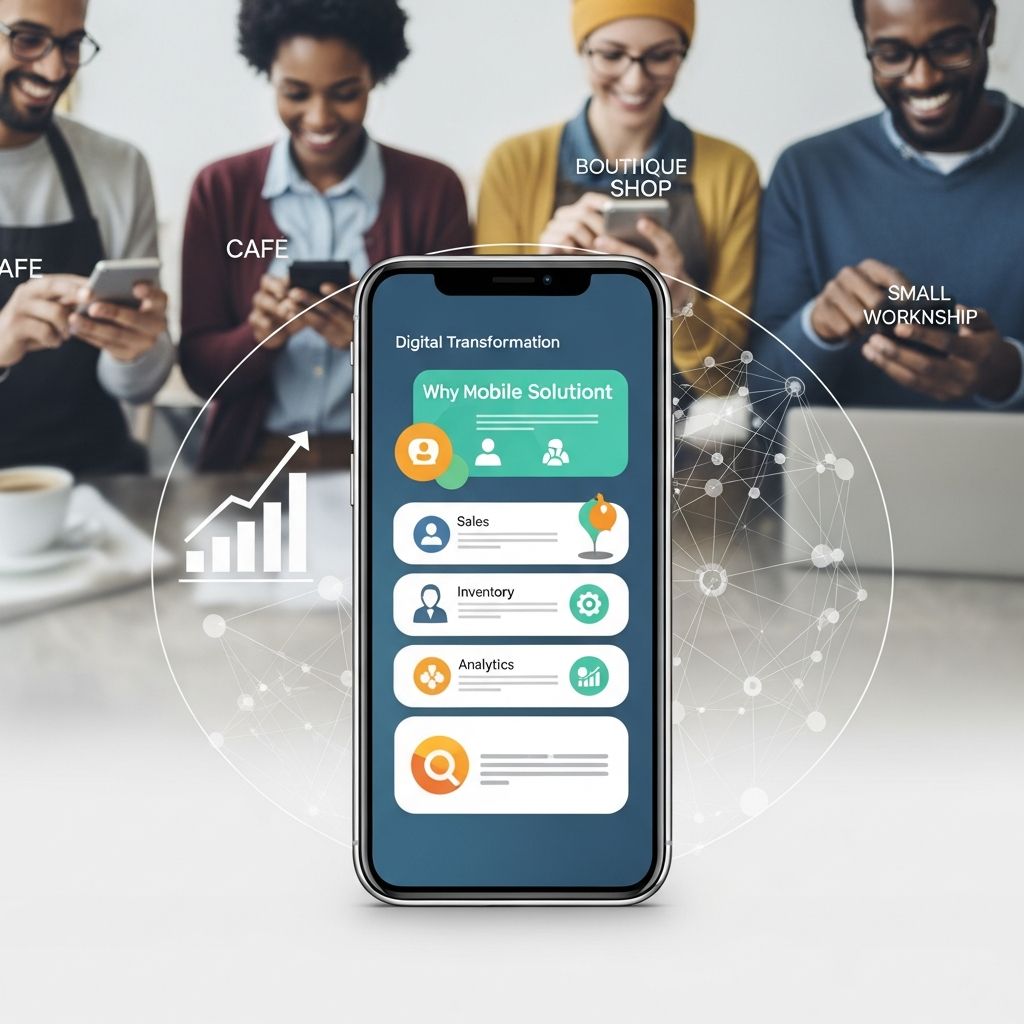
The business landscape has fundamentally shifted over the past decade. Consumers now expect seamless interactions with brands across all digital platforms, with mobile devices at the center of their daily routines. For small businesses, this transformation presents both a challenge and an unprecedented opportunity. Organizations that fail to prioritize mobile accessibility risk losing relevance in an increasingly mobile-first marketplace, while those that embrace these technologies position themselves for sustainable growth and competitive advantage.
The evidence is overwhelming: more than half of all website traffic originates from mobile devices, and consumer shopping behaviors have permanently evolved toward smartphone-based interactions. Small enterprises can no longer view mobile presence as optional or supplementary—it must become a core component of their business strategy. This comprehensive exploration examines the fundamental reasons why mobile adoption has become essential for small business success and how organizations can strategically implement these technologies to achieve their growth objectives.
Accessing Your Customers Where They Actually Are
Understanding customer behavior patterns requires recognizing a simple but profound truth: mobile devices have become the primary portal through which people interact with the world. Unlike desktop computers or traditional retail locations, smartphones accompany customers throughout their entire day—during commutes, while shopping, at home, and even during social activities. This constant connectivity creates an unparalleled opportunity for small businesses to establish direct communication channels with their target audiences.
The traditional assumption that businesses must wait for customers to visit physical locations or actively seek out websites no longer reflects reality. Instead, modern consumers expect brands to meet them on their mobile devices with relevant information, timely offers, and convenient transaction capabilities. Small businesses that establish strong mobile presence unlock the ability to reach potential customers at the exact moments when purchase decisions are being made or when they need specific services.
Location-based marketing technologies amplify this advantage further. By leveraging geotargeting capabilities, small businesses can deliver personalized messages to customers when they are physically near their stores or within defined geographic areas. For example, a local boutique can send special promotions to smartphone users browsing within a one-mile radius, driving foot traffic during specific times. This precision targeting transforms mobile devices from general communication tools into strategic assets for customer acquisition and engagement.
Furthermore, mobile accessibility establishes what marketing professionals call “constant visibility.” When customers install your business app on their phones, your brand maintains a permanent presence on their screens. This ongoing visibility strengthens brand recall and creates multiple touchpoints for engagement throughout the customer journey.
Streamlining Operations and Enhancing Internal Efficiency
While customer-facing applications receive substantial attention, the internal operational benefits of mobile technology often prove equally transformative. Mobile solutions fundamentally change how small business teams collaborate, access information, and execute daily tasks. These internal improvements directly translate to cost savings, faster decision-making, and improved service delivery that customers ultimately experience.
Consider how mobile devices enable employees to access critical business information instantly, regardless of location. Sales representatives can pull up customer history, pricing information, and previous interactions during client conversations. Service technicians can access work orders and inventory data while at customer locations. Project managers can coordinate team activities across distributed locations as easily as if everyone worked in the same office. This instant information access eliminates delays, reduces errors, and accelerates business processes.
Mobile technology also transforms internal communication patterns. Team collaboration platforms enable instant messaging, file sharing, and project updates across all organizational levels. Employees remain connected to their organizations and colleagues even when working remotely or traveling, which proves especially valuable for small businesses with limited office space or distributed workforces. This constant connectivity maintains productivity and ensures team alignment without requiring expensive centralized infrastructure.
The automation capabilities enabled by mobile solutions create additional operational advantages. Customer relationship management systems accessible via mobile devices allow teams to automatically log interactions, update client records, and trigger follow-up activities. Payment processing systems integrated with mobile devices automatically feed transaction data into accounting, inventory, and marketing systems, eliminating manual data entry and the associated errors. These automated workflows accelerate business operations while freeing human resources for higher-value activities like relationship building and strategic planning.
Converting Mobile Engagement into Revenue Growth
For small businesses operating with limited marketing budgets, the cost-effectiveness of mobile marketing strategies provides a critical advantage. Traditional advertising channels—television, print, and radio—demand substantial investment with uncertain return on investment, particularly for locally-focused small enterprises. Mobile marketing approaches, conversely, enable precise targeting with measurable results at substantially lower costs.
Mobile apps create multiple revenue generation mechanisms beyond traditional product or service sales. Subscription-based features allow customers to access premium content or services directly through your app. In-app purchases enable ancillary revenue streams—a fitness app might offer personal training plans, nutrition guides, or performance analytics. Location-based promotions drive increased store traffic during specific time periods when conversion likelihood peaks. Push notifications announcing flash sales or exclusive offers generate impulse purchases that wouldn’t occur without that timely communication.
The conversion efficiency of mobile marketing significantly exceeds traditional channels. Research consistently shows that mobile campaigns deliver higher engagement and conversion rates compared to desktop or print alternatives. This superior performance stems from the personal nature of mobile devices, the contextual relevance of location-based targeting, and the frictionless purchasing experience that mobile apps provide. A customer who receives a notification about a sale while passing your store can immediately enter and make a purchase, eliminating the delays inherent in traditional marketing approaches.
Mobile payment solutions eliminate friction from the purchasing process, directly impacting revenue. Customers can complete transactions in seconds using their smartphones, whether at traditional point-of-sale locations or while making mobile purchases. This accessibility particularly benefits service-based businesses like salons, fitness studios, and consulting firms, where customers can book appointments directly through apps and receive confirmation reminders. The simplified transaction process increases conversion rates and reduces cart abandonment.
Building Sustainable Competitive Advantages
Small businesses often assume they cannot compete with larger enterprises that possess bigger budgets and more extensive resources. However, mobile technology actually levels this competitive playing field by enabling small organizations to punch above their weight. A well-executed mobile strategy demonstrates that size matters far less than strategic execution in the modern marketplace.
Consumer preference data reveals the magnitude of this opportunity: approximately 60 percent of consumers actively prefer using mobile apps over websites for interacting with businesses. This preference creates an immediate competitive advantage for small businesses that offer quality app experiences. A local restaurant app that allows customers to order ahead, select specific menu items, and arrange payment positions that business as more convenient than competitors lacking app functionality. Over time, this convenience creates customer loyalty and generates repeat business that sustains growth.
Mobile apps also enable small businesses to gather valuable customer data that informs strategic decision-making. Usage analytics reveal which products attract the most attention, how customers navigate your offerings, and at what points in the customer journey conversions happen most frequently. This granular understanding allows small business owners to optimize their operations, tailor offerings to actual customer preferences, and personalize the experience in ways that larger competitors often cannot.
The differentiation that mobile presence creates extends beyond customer perception. Small businesses with sophisticated mobile strategies demonstrate operational maturity and commitment to customer service that attracts and retains talent. Employees prefer working for organizations with modern technology infrastructure because it makes their jobs easier and enables better productivity. This talent attraction improves service quality, which further strengthens competitive advantage.
Deepening Customer Relationships Through Personalized Engagement
Understanding individual customer preferences has always been a cornerstone of successful business strategy. However, the scale and sophistication of personalization that mobile technology enables vastly exceeds what traditional approaches allow. Mobile apps continuously gather behavioral data—what products customers view, how much time they spend on specific categories, what they ultimately purchase—and use this information to deliver increasingly relevant experiences.
This personalization manifests in concrete customer benefits: product recommendations tailored to individual preferences, promotional offers aligned with actual purchase history, and content that matches demonstrated interests. When customers receive offers for products they actually want, rather than generic promotions, engagement rates skyrocket. A customer scrolling through a fashion app sees clothing that matches their style preferences and size, not generic products marketed to everyone.
Mobile technology also enables customer service capabilities that strengthen relationships. Automated chatbots handle routine inquiries instantly—answering frequently asked questions, explaining return policies, or scheduling appointments—while immediately escalating complex issues to human representatives. This approach ensures customers receive immediate assistance without waiting for business hours or navigating complex phone systems. The convenience and responsiveness that customers experience directly translates to increased satisfaction and brand loyalty.
Push notifications, when deployed strategically, maintain ongoing engagement without becoming intrusive. Rather than bombarding customers with generic promotions, savvy small businesses send timely, relevant notifications: a reminder about an item left in a shopping cart, notification of a sale on products the customer previously viewed, or confirmation that their appointment is approaching. This targeted communication keeps your business top-of-mind while respecting customer preferences and attention.
Adapting to Evolving Consumer Expectations and Market Dynamics
Consumer expectations evolve continuously, with each technological advancement raising the baseline for acceptable business practices. A decade ago, having a website demonstrated technological sophistication; today, basic digital presence is assumed. Similarly, mobile-first experiences are rapidly becoming the minimum expectation rather than a differentiator. Small businesses that wait too long to prioritize mobile risk finding themselves hopelessly behind as consumer expectations continue advancing.
The post-pandemic business environment has permanently shifted expectations around digital interaction and remote engagement. Customers who adapted to online shopping, digital communication, and app-based services during lockdowns never fully reverted to previous patterns. They now expect businesses to offer the same digital convenience they became accustomed to, even as in-person services resumed. Small businesses that fail to meet these expectations lose customers to competitors who do.
Market trends indicate accelerating mobile adoption across all consumer demographics. Younger customers grew up with smartphones as primary communication devices and expect all business interactions to occur through apps. Older customers, increasingly comfortable with mobile technology, are shifting their shopping and service-seeking behaviors toward digital channels. This universal shift toward mobile means that small businesses serving any demographic must establish strong mobile presence.
The competitive landscape increasingly features organizations with sophisticated mobile strategies. When customers compare your small business to competitors and discover that competitors offer app-based ordering, personalized recommendations, or mobile payment options while you don’t, they perceive you as outdated and cumbersome. This perception, even if inaccurate regarding your actual quality or value, influences purchasing decisions. Mobile adoption is becoming necessary simply to maintain competitive parity.
Comparison: Traditional Approaches Versus Mobile-First Strategies
| Dimension | Traditional Business Approach | Mobile-First Approach |
|---|---|---|
| Customer Access | Physical location or desktop website | Always-available on customer smartphones |
| Marketing Costs | High investment in traditional advertising | Targeted, cost-effective digital marketing |
| Conversion Tracking | Uncertain attribution of sales sources | Precise measurement of user behavior and conversions |
| Customer Data | Limited understanding of preferences | Detailed behavioral insights enabling personalization |
| Operational Efficiency | Manual processes with information silos | Automated workflows with integrated systems |
| Competitive Position | Potentially outdated compared to mobile-first competitors | Modern, customer-aligned business infrastructure |
| Revenue Streams | Limited to primary products/services | Multiple monetization opportunities through apps |
Frequently Asked Questions About Mobile Strategy for Small Businesses
Q: What is the difference between a mobile website and a mobile app?
A: A mobile website is an optimized version of your website designed to display properly on smartphones and tablets, accessible through browsers. A mobile app is a software application installed on devices that typically offers more advanced functionality, offline access, and push notification capabilities. Many successful small businesses maintain both—a mobile website for general accessibility and an app for engaged customers seeking deeper functionality.
Q: Do small businesses really need mobile apps, or is a mobile website sufficient?
A: The answer depends on your specific business model, customer base, and available resources. A mobile-responsive website serves as the essential foundation—most customers will interact with your business through web search initially. However, if your business benefits from repeat customer interactions, offers services that require scheduling, or wants to leverage push notifications for marketing, a dedicated app provides additional value that justifies development investment. Many small businesses start with robust mobile websites, then develop apps as resources allow.
Q: How much does mobile app development cost for small businesses?
A: Development costs vary dramatically based on complexity, features, and platform choices. Simple apps addressing basic functions might cost $5,000-$15,000, while more sophisticated applications could reach $50,000 or more. Many platforms now offer affordable app-building tools and templates that reduce costs. For resource-constrained small businesses, these lower-cost solutions provide viable entry points into app development before investing in custom development.
Q: Can mobile strategies work for all types of small businesses?
A: While specific implementations vary, mobile strategies provide benefits across virtually all business categories. Service businesses benefit from appointment scheduling and customer communication capabilities. Retail businesses gain advantages from location-based marketing and mobile payments. Professional services can use mobile solutions to streamline client communication and document sharing. E-commerce businesses leverage mobile apps for convenient shopping experiences. The specific features and focus areas differ, but mobile accessibility enhances nearly all business models.
Q: What should small business owners prioritize when developing their mobile strategy?
A: Begin by ensuring your website is fully mobile-responsive and provides an excellent user experience on smartphones—this addresses the majority of customer interactions. Second, analyze where mobile technology could solve specific business challenges or improve customer experiences in your industry. Third, consider your most engaged customers and their preferences regarding app-based versus web-based interactions. Start with foundational elements that deliver clear value, then expand your mobile presence based on customer feedback and business results.
Q: How do small businesses measure the return on investment (ROI) from mobile strategies?
A: Track metrics including mobile website traffic volume and conversion rates, app download numbers and active user engagement, revenue generated through mobile channels, customer acquisition costs for mobile-driven customers versus other channels, and customer retention rates among app users compared to non-app users. Most platforms provide detailed analytics that reveal how mobile touchpoints contribute to business outcomes. Focus on metrics most relevant to your specific business—app retailers emphasize purchase conversion rates, while service businesses track appointment bookings or lead generation.
References
- Mobile Marketing for Small Businesses: Ultimate Guide — Market Veep. 2024. https://www.marketveep.com/blog/mobile-marketing-for-small-businesses-ultimate-guide
- Effective Mobile Strategy for Small Businesses — Strikingly. 2024. https://www.strikingly.com/blog/posts/effective-mobile-strategy-small-businesses
- How Any Business Can Benefit from the Right Mobile Strategy — AllianceTek. 2024. https://www.alliancetek.com/articles/how-business-can-benefit-from-right-mobile-strategy.html
- 7 Ways Small Businesses Can Benefit from Mobile Apps — CIO. 2024. https://www.cio.com/article/240965/7-ways-small-businesses-can-benefit-from-mobile-apps.html
- Why Your Small Business Needs a Mobile App — Salesforce. 2024. https://www.salesforce.com/blog/mobile-app-for-small-business/
- 9 Key Benefits of Mobile Apps for Your Business — PLAN A Agency. 2024. https://plana.tech/en/blogs/benefits-of-mobile-apps-for-your-business
- The Critical Advantages of a Mobile-First Strategy — Adjust. 2024. https://www.adjust.com/blog/the-advantages-of-a-mobile-first-strategy/
Similar Articles








Read full bio of medha deb


