
Mobile Device Distraction and Road Safety: Legal Framework
Understanding the legal consequences and safety implications of device use while operating vehicles.
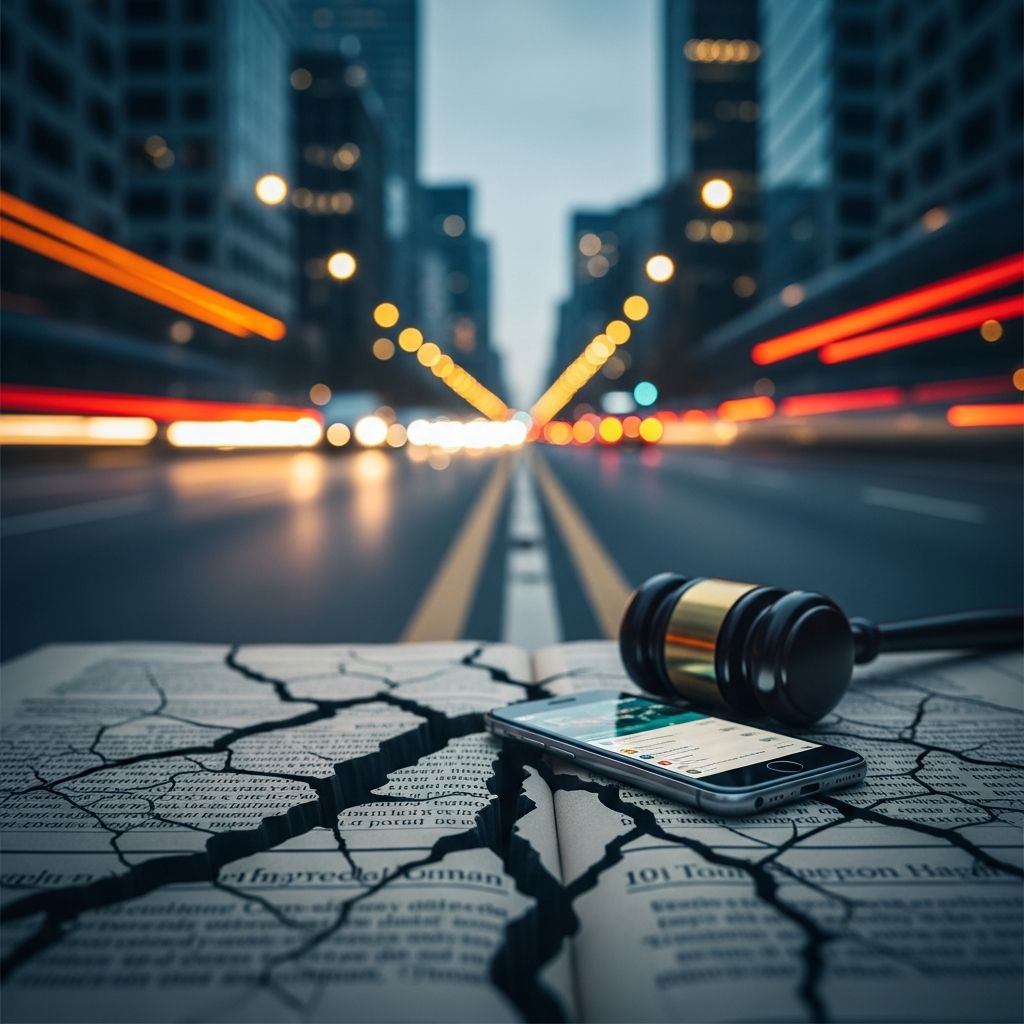
Understanding Distraction-Related Traffic Violations and Their Legal Consequences
The intersection of technology and driving safety has become a critical legal and public health concern in modern traffic law. When drivers operate vehicles while using mobile devices, they expose themselves and others to significant risks that extend far beyond the immediate physical danger. The legal system has developed a comprehensive framework to address these behaviors, encompassing criminal penalties, civil liability, insurance implications, and potential punitive damages. Understanding this multifaceted legal landscape is essential for drivers who want to avoid serious consequences and for accident victims seeking appropriate compensation.
Mobile device usage while driving represents a form of negligence that courts and legislatures have increasingly scrutinized. The legal consequences vary depending on whether the offense caused an accident, resulted in injuries or fatalities, and whether the driver violated specific statutory prohibitions. What may seem like a momentary distraction can trigger a cascade of legal ramifications that affect not only the driver but also insurance companies, employers, and accident victims.
Criminal Penalties for Device-Related Driving Violations
Most jurisdictions have enacted specific statutes addressing mobile device use while driving, with penalties that escalate based on the circumstances. Basic violations of these laws typically result in fines and points added to a driver’s record. In Florida, for example, a first-time offense of using a device while driving carries a $30 fine, while subsequent violations incur $60 fines plus three points on the driving record. When such violations occur in designated protection zones—such as school or work areas—the penalties are more severe from the initial offense, imposing $60 fines and three points immediately.
The consequences escalate dramatically when a device-related driving violation causes an accident. In these situations, drivers may face six points on their driving record, which can trigger license suspension and substantially increased insurance premiums. More critically, if the accident results in injuries, the driver may be prosecuted for reckless driving. Reckless driving occurs when a person operates a vehicle with willful or wanton disregard for the safety of others, demonstrating either an intent to endanger other road users or conscious indifference to obvious risks.
The distinction between ordinary negligence and recklessness is legally significant. Reckless driving convictions can result in substantial prison sentences—potentially up to five years if injuries occur as a result of the crash. Additionally, courts may view the combination of device use with other dangerous behaviors, such as speeding, as evidence of the elevated culpability required to establish recklessness. Alternative sentencing options may include mandatory attendance in wireless device safety classes or completion of distracted driving education programs.
Civil Liability and Negligence Claims for Accident Victims
Beyond criminal prosecution, drivers who use devices while driving face civil liability to anyone injured or harmed by their conduct. Civil liability operates independently from criminal penalties and allows accident victims to recover monetary damages. To establish civil liability, an injured party must demonstrate that the at-fault driver failed to exercise reasonable care—the standard definition of negligence.
Device use while driving establishes negligence with relative ease because the dangers of such behavior are well-documented and widely known. Courts recognize that using mobile devices, even in hands-free configurations, significantly impairs driver attention and reaction time—sometimes to a degree comparable to driving under the influence of alcohol. The plaintiff in a negligence case must establish that:
- The defendant owed a duty of care (which all drivers owe to others on the road)
- The defendant breached that duty by using a device while driving
- The plaintiff suffered actual damages (injuries, property damage, or financial losses)
- The defendant’s breach directly caused the plaintiff’s damages
Once negligence is established, the injured party may recover various categories of damages. These include economic damages such as medical expenses, surgical costs, rehabilitation fees, wage losses due to time away from work, and reduced earning capacity for permanent injuries. Non-economic damages compensate for subjective harms including pain and suffering, emotional distress, loss of enjoyment of life, and permanent disability. Additionally, courts typically award property damage compensation to repair or replace vehicles and other property destroyed in the accident.
The No-Fault Insurance System and Its Application to Device-Related Accidents
Most U.S. states, including Florida, operate under a no-fault auto insurance system that affects how accident victims recover damages from device-related crashes. Under this framework, injured parties first seek compensation from their own Personal Injury Protection (PIP) insurance coverage, regardless of who caused the accident. PIP coverage is mandatory and provides baseline compensation for medical expenses and lost wages without requiring the victim to prove the other driver’s fault.
However, the no-fault system has important limitations. When injuries are serious enough to meet the threshold for a claim against the at-fault driver (typically involving permanent injury, significant disfigurement, or medical expenses exceeding the PIP limit), injured parties can pursue additional compensation directly from the negligent driver. This is where the device-using driver’s automobile liability coverage becomes relevant. The at-fault driver’s liability insurance may cover judgments up to the policy limits, but the driver remains personally responsible for any damages exceeding those limits.
Comparative Negligence and Plaintiff Device Use
In some cases, the injured party’s own conduct may affect the damages they can recover. If a plaintiff was also using a mobile device at the time of the accident, a defense attorney may argue that the plaintiff’s inattention contributed to the accident and prevented them from avoiding the collision. Under comparative negligence principles, a plaintiff’s own negligent use of a device may reduce their recoverable damages proportionally to their degree of fault. However, this defense does not eliminate liability for the primary at-fault driver; it merely adjusts the damages award to reflect shared responsibility.
The Controversial Question of Punitive Damages
Punitive damages represent a fundamentally different category of damages from compensatory awards. Rather than compensating victims for their losses, punitive damages are designed to punish defendants for particularly egregious conduct and deter similar behavior in the future. The availability of punitive damages in device-related driving cases remains unsettled and varies significantly across jurisdictions.
Florida courts have grappled with this question without reaching definitive conclusions at the appellate level. In 2011, a trial court in Collier County allowed a punitive damages claim against a defendant accused of texting while driving, in a case that resulted in death. The plaintiff presented cellular data evidence showing the defendant had accessed voicemail and sent a text message within one minute of the crash. This ruling was potentially unprecedented, highlighting the uncertainty surrounding punitive damages for device-related driving offenses.
However, other jurisdictions have been more restrictive. Various state appellate courts have denied punitive damages claims based solely on cell phone use while driving, even when the driver admitted to the conduct or when evidence demonstrated the phone use at the time of the accident. These courts have reasoned that punitive damages require evidence of intentional misconduct or gross negligence—a higher threshold than ordinary negligence. Some courts have distinguished between cellular device use and other behaviors such as impaired driving, which more clearly demonstrate the recklessness necessary to support punitive damages awards.
The distinction matters considerably because punitive damages can be substantial and essentially uncapped, unlike compensatory damages which are limited to actual losses. Insurance companies typically do not cover punitive damages under standard policies, making these awards personally devastating to defendants. As a result, insurance carriers and defense attorneys closely monitor any indication that a plaintiff seeks punitive damages in device-related cases and may challenge such claims aggressively during litigation.
Insurance Coverage and Policy Implications
Device-related driving violations can trigger profound consequences within the insurance system. When a policyholder is found to have caused an accident through device distraction, the insurance company may be obligated to cover the judgment against its insured up to the policy limits. However, this coverage is not unlimited, and the company will investigate thoroughly to understand the defendant’s conduct and assess potential defenses.
Insurance premiums typically increase substantially following any at-fault accident, but the increase is particularly severe when distracted driving was the cause. Insurers view device-distracted drivers as high-risk, and some companies may even refuse to renew coverage for drivers with demonstrated patterns of device use while driving. Additionally, if a driver is convicted of reckless driving related to device use, the insurance impact becomes even more pronounced, potentially resulting in cancellation or non-renewal of the policy.
Investigation and Evidence in Device-Related Cases
Establishing that a driver used a device at the time of an accident requires specific evidence. Modern investigation techniques include retrieving cellular records that show phone activity at the moment of the crash, analyzing traffic camera footage that may capture the driver’s attention, and gathering witness testimony about observing the driver using a device. Some newer vehicles have event data recorders (similar to aircraft black boxes) that capture information about driver input and vehicle telemetry immediately before a crash.
Expert analysis of cellular records can be particularly powerful. Phone bills and carrier records show when calls were made or received, when text messages were sent or read, and when data was accessed—allowing investigators and attorneys to establish a timeline that correlates with accident occurrence. This type of evidence is increasingly available and admissible in court proceedings, making it more difficult for device-using drivers to deny their conduct.
Practical Considerations for Drivers and Accident Victims
For drivers, the most straightforward protection against these consequences is strict adherence to laws prohibiting device use while driving. Hands-free systems do not eliminate legal liability if they are not permitted under applicable law, though they may provide some mitigation in terms of reduced recklessness findings. Drivers should recognize that a momentary glance at a phone message can result in financial ruin through civil liability, criminal prosecution, and devastating insurance consequences.
For accident victims, the key is documenting all evidence of the other driver’s device use as soon as possible after an accident. Immediate preservation of traffic camera footage, witness contact information, and any observations about the driver’s phone use strengthen subsequent claims. Engaging experienced legal counsel early in the process allows attorneys to investigate thoroughly and gather evidence that may be lost over time.
Statutes of Limitation and Claim Deadlines
Accident victims should be aware that there are time limits for filing claims. Generally, injured parties have two years from the date of the accident to file a personal injury claim in many jurisdictions. This deadline emphasizes the importance of prompt action in documenting evidence and initiating the claims process. Waiting until near the deadline increases the risk of lost evidence and diminished recollection by witnesses.
Frequently Asked Questions
Q: Can I face jail time for using my phone while driving?
A: Jail time is unlikely for a simple device use violation unless the offense causes an accident or injuries. However, if your device-distracted driving causes a crash resulting in injuries, you could face reckless driving charges carrying potential prison sentences of up to five years.
Q: Will my insurance cover damages if I caused an accident while using my phone?
A: Your liability coverage will typically cover damages up to your policy limits, but your insurance rates will increase substantially. If punitive damages are awarded, your insurance may not cover those amounts, leaving you personally liable.
Q: What if I was partially at fault because I was also using my phone when the other driver hit me?
A: Your own device use may reduce your recoverable damages under comparative negligence principles, but it does not eliminate the other driver’s liability. You can still recover damages adjusted for your percentage of fault.
Q: How can I prove the other driver was using their phone?
A: Cellular records, traffic camera footage, witness testimony, and vehicle event data can establish phone use. An experienced attorney can investigate and gather this evidence through the discovery process.
Q: Are hands-free devices a complete legal defense?
A: Hands-free devices may reduce liability or recklessness findings in some cases, but they do not provide complete legal protection if they violate specific statutory prohibitions on device use while driving.
Q: What counts as using a mobile device while driving?
A: Texting, talking on a handheld phone, checking email or social media, looking up addresses, and other interactive functions constitute device use. Simply holding or touching a phone can violate many state statutes.
References
- The Legal Implications of Cell Phone Use While Driving — CSK Legal. 2011-2024. https://www.csklegal.com/newsroom/publications/the-legal-implications-of-cell-phone-use-while-driving
- Consequences of Using Your Cell Phone While Driving in Florida — USA Law. August 2023. https://www.usalaw.com/blog/2023/august/consequences-of-using-your-cell-phone-while-driv/
- Texting While Driving | Car Accident Lawyers in Tampa — Tragos Law. 2024. https://www.tragoslaw.com/personal-injury-guide/texting-while-driving/
- Consequences of Using Your Cell Phone While Driving in Florida — Bill Allen Law. 2024. https://billallenlaw.com/consequences-of-using-your-cell-phone-while-driving-in-florida/
- Florida Distracted Driving Law: Cell Phone Use, Fines & Injury Claims — Stein Law. 2024. https://www.steinlaw.com/blog/florida-distracted-driving-law-cell-phone-use-fines-injury-claims/
Similar Articles








Read full bio of medha deb


