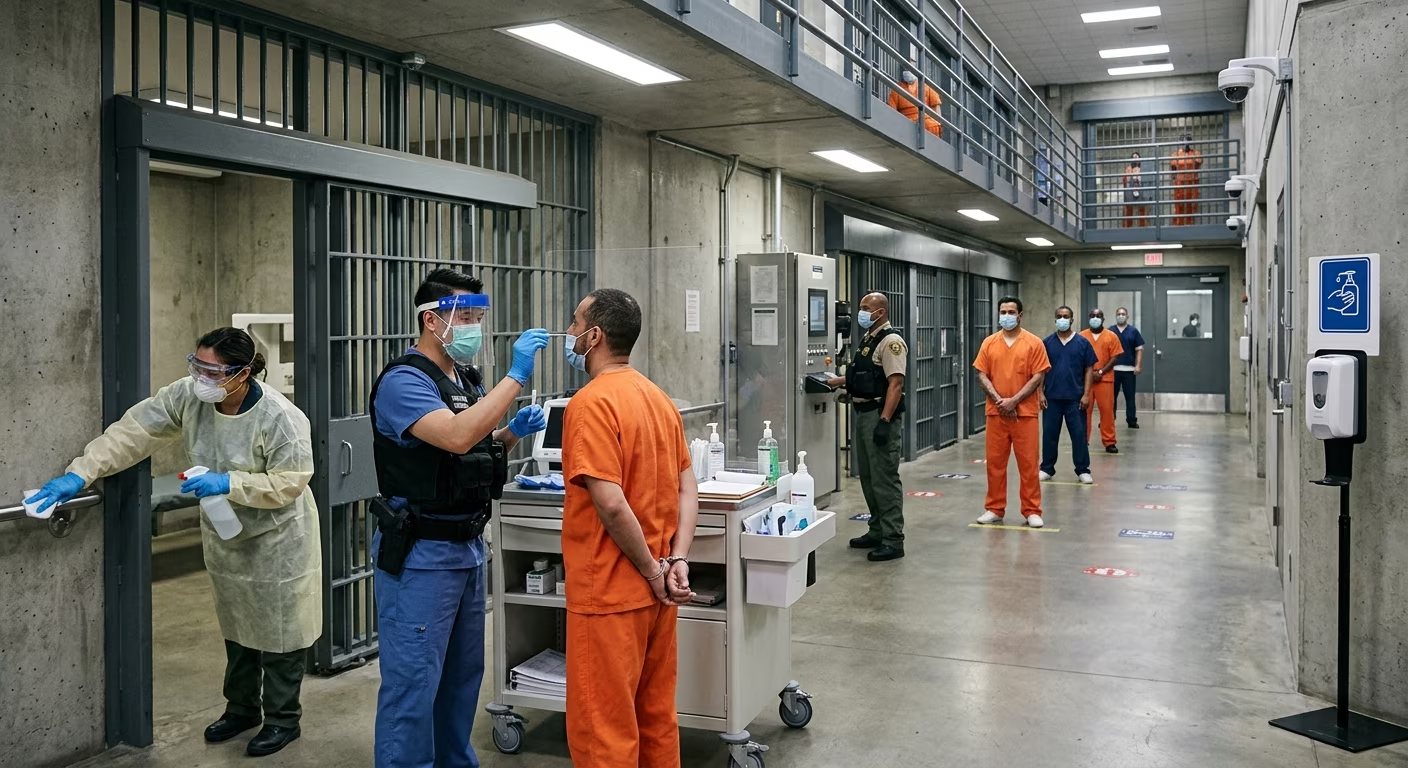
The rapid transmission of infectious diseases within correctional facilities is not an isolated institutional problem; it is a profound public health crisis that inevitably spills over into the broader community. When respiratory viruses, such as COVID-19, influenza, or airborne pathogens like tuberculosis, breach the walls of a prison, jail, or detention center, the structural realities of these facilities act as a dangerous accelerant. It is a documented reality that overcrowded, poorly ventilated spaces housing populations with a high prevalence of pre-existing health conditions will face catastrophic outbreaks if proactive measures are not taken. While much of the dialogue during major pandemics focuses on hospital capacity, vaccine distribution, and community lockdowns, the critical role of the criminal justice system—spanning from police officers and prosecutors to sheriffs, judges, parole boards, and governors—simply cannot be overstated. Each of these actors holds specific levers of power that, if pulled responsibly and swiftly, can drastically reduce the carceral population, improve internal facility conditions, and ultimately save human lives. Addressing disease transmission behind bars requires a collaborative, all-hands-on-deck approach, effectively shifting the operational paradigm from punitive confinement to proactive public health management.
The Intersection of Public Health and Incarceration
Overcrowding is widely recognized by medical professionals, epidemiologists, and human rights organizations as the primary catalyst for disease proliferation in custodial settings. According to the World Health Organization (WHO), prisons amplify infectious diseases because they are defined by environmental factors that make basic infection control protocols—such as physical distancing—virtually impossible to implement. Furthermore, a highly comprehensive 2025 scoping review published by the National Institutes of Health confirmed a direct, independent statistical association between prison overcrowding and significantly increased rates of infectious diseases, including COVID-19 and tuberculosis.
The standard architectural design of incarceration—featuring shared holding cells, communal dining halls, shared hygiene facilities, and limited medical resources—naturally creates an incubator for viral pathogens. This environmental risk is severely compounded by the fact that incarcerated individuals often suffer from chronic health conditions at rates significantly higher than the general, non-incarcerated population. Chronic illnesses such as asthma, diabetes, hypertension, and various immunosuppressive conditions run rampant within the carceral system due to a lifetime of systemic marginalization and lack of access to preventative care. Consequently, when a highly contagious virus is introduced into this environment, the resulting morbidity and mortality rates are disproportionately severe.
It is also crucial to recognize that correctional facilities are not hermetically sealed ecosystems. An outbreak inside a prison or jail invariably affects the outside world. Thousands of staff members, including correctional officers, healthcare providers, maintenance workers, and administrative personnel, cycle in and out of these facilities on a daily basis. They return to their families, shop at local grocery stores, and participate in community life. Consequently, prioritizing the health and safety of incarcerated individuals is an indispensable and inseparable component of any broader community health initiative.
Rethinking Law Enforcement and Arrest Practices
The first and perhaps most critical line of defense in preventing custodial outbreaks begins out on the streets. Law enforcement officers serve as the primary gatekeepers to the criminal justice system. During a public health emergency, the traditional metrics of policing—often measured by the sheer volume of arrests—must be fundamentally reconsidered to protect both the public and the officers themselves. Bringing individuals into cramped holding cells and tightly packed processing centers for low-level, non-violent offenses creates unnecessary chokepoints of contagion.
To mitigate this immense risk, police departments and municipal leadership must adopt policies that minimize custodial arrests. Whenever legally and operationally feasible, officers should issue citations, warnings, or desk appearance tickets in lieu of physical apprehension. Offenses such as loitering, simple drug possession, petty theft, and minor traffic violations do not warrant the severe public health risk associated with jailing a human being. By diverting these minor cases away from immediate incarceration, law enforcement can dramatically reduce the daily “churn” of local jails—the constant, rapid influx and outflow of people that introduces novel pathogens into the facility and carries them right back out.
Furthermore, local jurisdictions must radically rethink their approach to outstanding bench warrants. Executing warrants for unpaid municipal fines or missed civil court dates during an active pandemic is a highly counterproductive strategy that unnecessarily inflates the jail population. Law enforcement leadership must prioritize community safety in its truest, most holistic sense, recognizing that protecting the public explicitly includes preventing the spread of lethal, highly communicable viruses.
Prosecutorial Discretion and Pretrial Reform
If police officers act as the gatekeepers of the system, prosecutors and judges are the core architects of the pretrial population. In many jurisdictions across the country, the vast majority of people currently held in local county jails are legally innocent; they are awaiting trial simply because they cannot afford to pay cash bail. This wealth-based model of incarceration is highly controversial under normal circumstances, but during a viral outbreak, it transforms into a potentially lethal vulnerability.
Prosecutors possess immense discretionary power within the legal framework. They can unilaterally decline to prosecute minor infractions and quality-of-life crimes, thereby preventing vulnerable individuals from entering the system altogether. More importantly, prosecutors can and should actively consent to the release of individuals who are currently held in pretrial detention. By aggressively recommending release on recognizance (ROR) or supporting unsecured bonds rather than cash bail, prosecuting attorneys can facilitate the rapid decarceration required to allow for physical distancing within overcrowded jails.
Judges and magistrates must act with equal urgency and compassion. The continued, routine reliance on cash bail during a public health crisis forces low-income individuals to languish in high-risk environments. Judicial officers should systematically and continuously review their dockets to identify and immediately release those who do not pose an imminent, physical threat to public safety. Particular attention must be paid to medically vulnerable defendants, including the elderly, pregnant individuals, and those with severe underlying health conditions. The legal threshold for pretrial detention must be elevated so that incarceration genuinely serves as an absolute last resort rather than the default administrative setting.
Facility-Level Interventions: Sheriffs and Prison Administrators
For the individuals who remain incarcerated despite decarceration efforts, facility administrators—including county sheriffs, state wardens, and correctional health directors—bear both the constitutional and moral responsibility of providing a safe, habitable environment. The Centers for Disease Control and Prevention (CDC) continuously monitors and updates its respiratory virus guidance specifically tailored for correctional and detention facilities, emphasizing the absolute necessity for streamlined, actionable, and scientifically sound infection control strategies.
First and foremost, administrators must ensure universal, unimpeded access to basic hygiene supplies. In far too many facilities, fundamental necessities like antibacterial soap, hand sanitizer, and effective cleaning agents are treated as controlled contraband or are sold at exorbitant, predatory prices in the institutional commissary. This practice is entirely incompatible with modern public health standards. Free, unrestricted access to soap, running water, and CDC-approved sanitizers must be guaranteed to every incarcerated person.
Additionally, institutional medical co-pays must be abolished immediately. Even a seemingly nominal fee of a few dollars can severely deter an incarcerated person from seeking medical evaluation for early viral symptoms. When individuals hide their symptoms to avoid mounting debt, outbreaks spread silently and undetected until they become unmanageable. Comprehensive testing protocols, proactive symptom screening, and non-punitive medical isolation areas must be established. It is crucial that medical quarantine is not functionally indistinguishable from disciplinary solitary confinement, which is psychologically damaging and further discourages inmates from reporting illness.
Furthermore, administrators must address the profound human cost of modified facility operations. While temporarily suspending in-person visitation may be medically necessary to prevent the external introduction of a virus, the complete severing of family ties is devastating to morale and rehabilitation. Facilities must offset these strict health restrictions by providing entirely free phone calls, video visitation technology, and expanded electronic messaging. Maintaining consistent contact with loved ones is absolutely essential for the mental health and stability of the incarcerated population.
Probation, Parole, and the Pathway Out
The back end of the criminal justice system—probation and parole agencies—plays an equally critical, yet often overlooked, role in managing the overall carceral population density. A shockingly significant percentage of prison admissions are not for new criminal offenses, but rather for administrative, technical violations of supervision. These violations can include missing a scheduled meeting, failing a routine drug test, losing employment, or traveling outside a geographically restricted area. Incarcerating individuals for technical violations is fundamentally counterproductive under normal circumstances, and it is profoundly dangerous during a global pandemic.
Parole and probation officers should temporarily suspend all revocations for minor technical violations. Supervision requirements should be modernized and modified to rely almost exclusively on remote check-ins via phone, video conferencing, or digital applications, completely eliminating the need for individuals to travel to crowded, high-traffic community correction offices. By keeping people on supervision in their communities and out of holding cells, agencies can prevent unnecessary re-incarceration and reduce systemic burden.
At the highest level of state government, Governors possess the ultimate constitutional authority to enact swift, unilateral population reductions through their executive clemency powers. Governors should aggressively and boldly utilize commutations, pardons, and emergency release orders to free the elderly, those with terminal illnesses, and individuals nearing the absolute end of their sentences. This executive power can entirely bypass the notoriously slow bureaucratic delays of traditional parole boards and immediately alleviate dangerous facility overcrowding.
Long-term Implications for Systemic Reform
The systemic, multi-agency interventions required to mitigate viral outbreaks—such as reducing arrests for minor offenses, eliminating wealth-based pretrial detention, vastly improving facility hygiene, and ending the cycle of re-incarceration for technical violations—should not be viewed merely as temporary, stopgap emergency measures. The severe public health crises that continuously expose the fatal, structural flaws of mass incarceration also clearly illuminate the necessary path forward for a healthier society.
By effectively proving that society can safely decarcerate thousands of individuals without compromising broader public safety, the coordinated response to infectious diseases fundamentally dismantles the core, fear-based arguments sustaining hyper-incarceration. A truly sustainable public health model requires permanent, codified shifts in how we define both justice and safety. Moving forward, the permanent integration of public health priorities into criminal justice policy is not just necessary for surviving the next inevitable pandemic; it is foundational and essential for building a more humane, equitable, and rational justice system for generations to come.
Frequently Asked Questions (FAQs)
- Why are prisons and jails considered particularly vulnerable to infectious disease outbreaks?
Correctional facilities are highly vulnerable due to structural, unavoidable overcrowding, poor ventilation systems, and the complete inability of incarcerated individuals to practice recommended physical distancing. Additionally, the carceral population has statistically higher rates of pre-existing chronic illnesses, and there is a constant, daily influx of staff and new detainees, vastly increasing the chances of viral introduction. - What are practical alternatives to custodial arrests for minor offenses?
Instead of physically taking someone into custody, law enforcement officers can utilize citations, summons, or desk appearance tickets. This procedural approach ensures the individual still legally answers for the alleged offense but entirely prevents them from being placed in a crowded holding cell where viruses and bacteria spread rapidly. - How does the practice of cash bail contribute to public health risks?
Cash bail directly keeps legally innocent individuals incarcerated simply because they lack the financial resources to pay for their immediate release. During a viral outbreak, this practice leads to dangerously overcrowded local county jails, creating a volatile breeding ground for infectious diseases that threatens the lives of both the detainees and the broader surrounding community. - What is a technical parole violation, and why does it matter?
A technical violation occurs when a person on probation or parole breaks an administrative rule of their supervision (e.g., missing a strict curfew, failing to report to a supervising officer on time, or crossing a county line) without actually committing a new crime. Sending people back to state prison for these minor administrative infractions severely exacerbates systemic overcrowding and wastes crucial public health resources.
References
- Creating supportive conditions to reduce infectious diseases in prison populations — World Health Organization (WHO). 2023-11-06. https://iris.who.int/handle/10665/373657
- CDC Respiratory Virus Guidance: What it Means for Correctional and Detention Facilities — Centers for Disease Control and Prevention (CDC). 2024-03-07. https://www.cdc.gov/correctionalhealth/
- The association between health and prison overcrowding, a scoping review — BMC Public Health / National Institutes of Health (PMC). 2025-07-02. https://doi.org/10.1186/s12889-025-23340-9