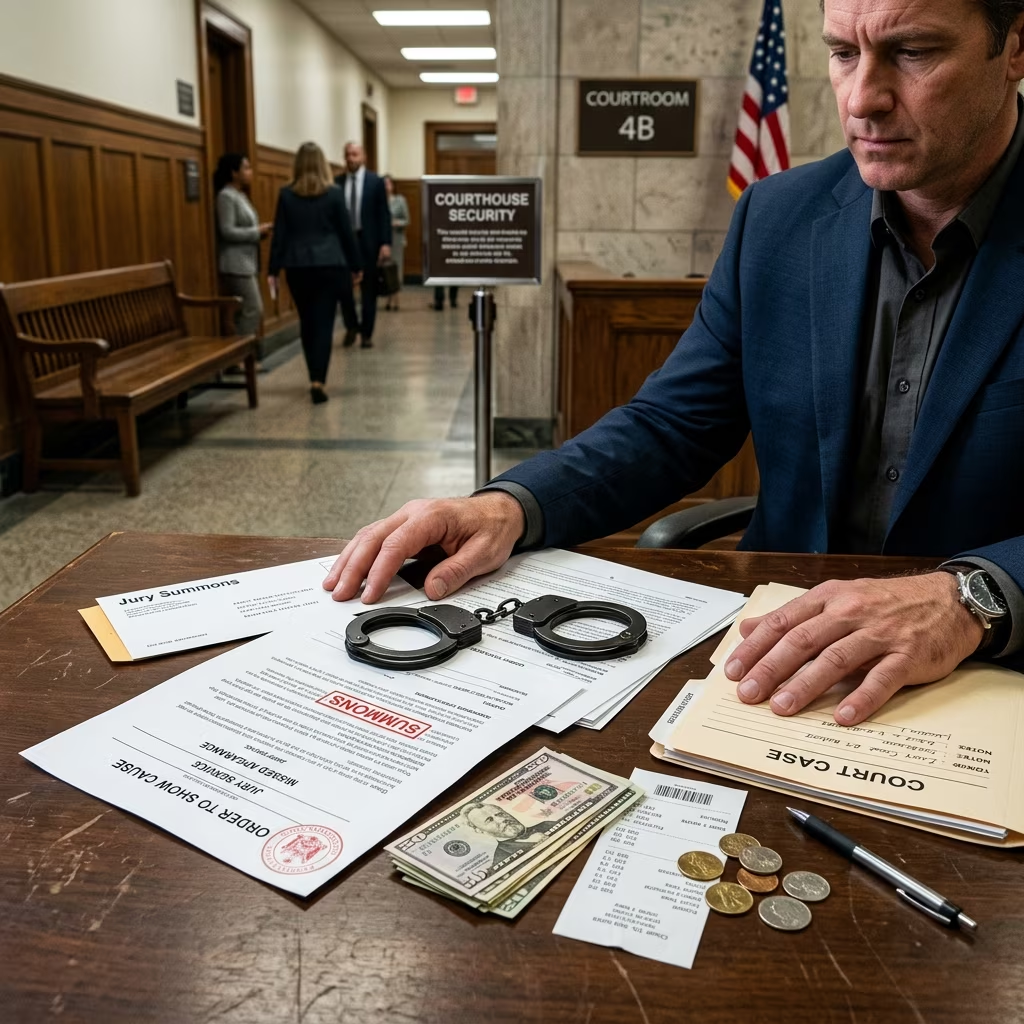
Jury duty looks like a simple letter in the mail, but in reality it is a formal court order. Ignoring that order can trigger fines, a finding of contempt of court, or, in rare but serious cases, jail time and a bench warrant for your arrest. Understanding the risks and how to respond if you miss your date can keep a stressful mistake from becoming a major legal problem.
Why Jury Duty Matters to the Legal System
In the United States, juries are a cornerstone of the justice system. When citizens fail to appear, courts must delay trials, reschedule cases, and sometimes call extra jurors, which wastes public resources and disrupts litigants, witnesses, and attorneys.
- Civic responsibility: Serving on a jury is a core way citizens participate directly in the administration of justice.
- Legal obligation: A jury summons is not an invitation. It is a command issued under state or federal law.
- System efficiency: Courts schedule trials based on expected juror attendance. No-shows create delays and added costs for everyone involved.
To protect the integrity of the system, most jurisdictions attach real legal consequences to skipping jury duty, even if those consequences are not enforced in every individual case.
Missing Jury Duty: Common Legal Consequences
Although the exact penalties differ from state to state, the same core concept applies almost everywhere: failing to respond to a jury summons or failing to appear as ordered can be treated as contempt of court.
1. Contempt of Court
Contempt of court occurs when a person willingly disobeys a lawful court order, interferes with court proceedings, or shows disrespect for judicial authority. Ignoring a jury summons falls into the category of disobeying an order.
- Civil contempt: Used primarily to compel obedience, it can involve fines or orders requiring you to appear and explain your absence.
- Criminal contempt: Punishes the violation itself, and may carry higher fines or short periods of incarceration.
In many states, the first response to a missed jury date is a warning or a second summons rather than immediate harsh sanctions, but the legal power to impose contempt penalties exists in the background.
2. Fines and Financial Penalties
Court systems often rely on fines as the primary tool to discourage people from ignoring their jury obligations. The amounts vary widely:
| Jurisdiction (Example) | Typical Fine Range for Missing Jury Duty | Source |
|---|---|---|
| California (San Bernardino Superior Court) | Up to $1,500 | California Code of Civil Procedure § 209 |
| Texas (state courts) | About $100–$1,000 | Texas trial attorney guidance |
| Georgia (state courts) | Hundreds of dollars; higher for repeat offenders | Georgia law firm guidance |
These fines are typically assessed when someone fails to appear after being given at least one chance to correct the problem, such as a second summons or a court hearing to explain the absence.
3. Bench Warrants and Arrest Risk
If a person repeatedly ignores summonses and warning letters, judges can escalate the response and issue a bench warrant. A bench warrant authorizes law enforcement to arrest you and bring you before the court.
- When warrants are used: Usually only after repeated failure to respond or appear, or when someone ignores a direct order to come to a “show cause” hearing.
- Practical impact: A routine traffic stop or other police contact can suddenly lead to custody if the warrant is active.
- Court hearing: Once arrested, you will be brought before a judge who can impose fines, require community service, or in some cases order short jail time.
4. Jail Time: Rare, But Possible
Actual incarceration for missing jury duty is uncommon, but not impossible. Courts treat jail as a last resort in situations that show clear, repeated defiance of court orders.
- In Texas, ignoring jury duty can lead to up to six months in jail for contempt, though judges typically reserve this for extreme, repeated violations.
- Some courts note possible incarceration of up to five days along with fines for failing to respond to a summons.
- Federal law permits short periods of imprisonment for contempt in cases where people refuse to comply with lawful orders, though most jury-related issues are resolved with lesser sanctions.
For most people, the realistic risk is not long-term incarceration but being forced into an unpleasant process involving hearings, fines, and additional obligations.
How Consequences Escalate When You Ignore a Summons
Court responses typically follow a graduated pattern. A single accidental miss is treated much differently than a pattern of repeated disregard.
Stage 1: Initial Miss or Non-Response
- Courts often send a reminder or “failure to appear” notice giving you a chance to reschedule.
- Some jurisdictions automatically issue a second summons with a new reporting date.
- At this stage, penalties are usually minimal if you contact the court promptly and comply with the rescheduled date.
Stage 2: Second Miss or Continued Silence
- You may receive a delinquency notice or an order requiring you to come before a judge to explain your absence (often called a “show cause” order).
- Judges may begin imposing fines in the statutory range for your jurisdiction.
- Failure to attend the show cause hearing can significantly increase the risk of contempt findings or a bench warrant.
Stage 3: Pattern of Willful Non-Compliance
- If you ignore multiple notices and court orders, the court may treat your behavior as willful contempt.
- Available sanctions include higher fines, community service, and, in extreme cases, short jail terms.
- A bench warrant may be issued, exposing you to arrest and mandatory court appearance.
This escalating framework aims to secure compliance while reserving the harshest penalties for those who persistently disregard the justice system.
State Examples: How Rules Differ Across the U.S.
Each state sets its own rules for jury administration, though many use similar enforcement tools. The following examples illustrate typical approaches.
California
Under California law, any prospective juror who is summoned and does not respond as directed, and who is not excused, may be found in contempt of court.
- Maximum fine of up to $1,500 for failure to appear.
- Possible incarceration for up to five days, or both fine and jail.
- Courts invite individuals who missed service to contact jury administration promptly to resolve the issue and often help reschedule.
Texas
Texas law authorizes fines and potential jail time when people ignore their jury obligations, particularly after multiple violations.
- Fines typically range between $100 and $1,000 depending on circumstances and whether the failure to appear is repeated.
- Contempt of court penalties can include jail time of between three days and six months in severe cases.
- Court orders to “show cause” are used to give individuals an opportunity to explain missed service before harsher sanctions are imposed.
Georgia
In Georgia, a jury summons is treated as a formal order to appear, and ignoring it is considered contempt of court.
- First-time violations can lead to fines of several hundred dollars.
- Repeat offenders may face higher fines and additional consequences.
- Judges may issue bench warrants and require hearings to address non-appearance; brief jail time is possible in rare situations.
Despite these differences, the message is consistent: you are expected to respond, and failure to do so can have genuine legal consequences.
Valid Excuses, Deferrals, and Exemptions
Courts recognize that not everyone can serve on the date listed in the summons. Most systems provide mechanisms to request a postponement, an excusal, or recognition of a statutory exemption, but these options must be used before you miss your date.
- Scheduling conflicts: Pre-planned travel, major work commitments, or important medical appointments often qualify for rescheduling if you provide documentation.
- Medical inability: Serious health conditions or disabilities may justify excusal if supported by a doctor’s note or similar evidence.
- Age or status exemptions: Some jurisdictions allow older individuals or certain professionals to opt out of service under specific conditions.
The key is communication: courts are far more lenient when people request adjustments in advance than when they simply fail to appear without explanation.
What To Do If You Already Missed Jury Duty
If you have already missed your jury duty date, prompt action is critical. Doing nothing increases the risk of escalating penalties.
Immediate Steps to Minimize Consequences
- Carefully read any follow-up notice: Look for references to “failure to appear,” “delinquency,” or “show cause,” and note deadlines.
- Contact the jury office or clerk: Call the number on your summons or the court’s jury administration office and explain the situation honestly.
- Offer to reschedule promptly: Many courts will allow you to select a new date if they believe your absence was accidental or based on a legitimate conflict.
- Gather documentation: If your absence was due to illness, emergency, or other unavoidable events, collect records to support your explanation.
Taking these steps can often resolve the problem at the administrative level, avoiding fines or more serious sanctions.
When You Should Talk to a Lawyer
- If you receive a notice referencing contempt of court or a scheduled hearing, legal advice can help you prepare and understand potential outcomes.
- If you learn a bench warrant has been issued, an attorney can assist in arranging a voluntary appearance and negotiating conditions of release.
- If you have missed jury duty multiple times and are worried about possible jail exposure, counsel can be especially important.
Legal professionals familiar with local courts can often explain how strictly judges in your area tend to enforce jury obligations and what options you have to reduce penalties.
Frequently Asked Questions About Missing Jury Duty
Is it really a crime to skip jury duty?
In many jurisdictions, skipping jury duty can be treated as contempt of court, which may be classified as a misdemeanor offense or lead to civil or criminal sanctions. While not every missed appearance results in criminal charges, the underlying conduct is legally prohibited.
Will I go to jail if I miss jury duty once?
Jail for a single missed appearance is extremely rare. Most courts start with warnings, rescheduling, or modest fines. Jail is typically reserved for repeated, willful non-compliance where a person ignores multiple summonses and court orders.
Can I just throw away the summons if I am busy?
No. A jury summons is a formal legal document requiring a response. If you are unable to serve on the scheduled date, you must follow the instructions to request a postponement or excusal rather than ignoring the notice.
What if I never received the notice?
Mail errors and address problems do occur. If the court later contacts you about a missed date, explain that you did not receive the summons and update your contact information. Courts may take this into account when deciding whether to impose penalties.
Does responding to a second summons fix the problem?
Often, yes. Many courts automatically send a new summons after an initial miss, and appearing as required on the second date can demonstrate good faith. However, if a judge has already scheduled a contempt hearing, you still need to address that proceeding directly.
Can I be excused permanently from jury duty?
Permanent excusals are limited and usually reserved for serious, ongoing medical issues or specific statutory categories like advanced age in some states. Most people are expected to serve when called, though temporary deferrals are common.
Practical Tips to Avoid Problems With Jury Duty
- Monitor your mail: Watch for official-looking envelopes from local, state, or federal courts, especially around times when jury pools are selected.
- Respond immediately: If the summons requires you to confirm online or by phone, do so as soon as you receive it.
- Plan ahead: If the reporting date conflicts with major obligations, request a rescheduling well in advance.
- Keep records: Save copies of your summons, any responses you send, and notes of phone calls with court staff in case questions arise later.
- Take court notices seriously: Any communication mentioning contempt, warrants, or hearings should prompt immediate attention and possibly legal advice.
By staying organized and proactive, you can fulfill your civic duty without exposing yourself to unnecessary legal risk.
References
- Failure to Appear/Respond to a Jury Summons — Superior Court of California, County of San Bernardino. 2024-01-01. https://sanbernardino.courts.ca.gov/general-information/jury-information/failure-appearrespond-jury-summons
- What Happens If I Miss Jury Duty in Texas? — Thiessen Law Firm. 2023-06-15. https://www.thetexastrialattorney.com/blog/what-happens-if-i-miss-jury-duty/
- The Easiest Way to Know What Happens if You Miss Jury Duty — Ullrich Law Group. 2023-09-10. https://ulg.law/what-happens-if-you-miss-jury-duty/
- What Happens if I Don’t Show Up For Jury Duty? — Mayfield Law, LLC. 2022-11-20. https://www.mayfieldinjury.com/blog/what-happens-if-i-dont-show-up-for-jury-duty/
- What Happens If You Miss Jury Duty in Georgia? — MG Law. 2023-04-05. https://www.mg4law.com/what-happens-if-you-miss-jury-duty-in-georgia/
- Is Skipping Jury Duty a Crime in New York? — SV Law Partners. 2024-02-12. https://www.svlawpartners.com/blog/is-skipping-jury-duty-a-crime-in-new-york/