
Public Access to Juror Information in Criminal Trials
Balancing open courts, juror privacy, and fair trial rights when the public seeks access to juror information in criminal cases.
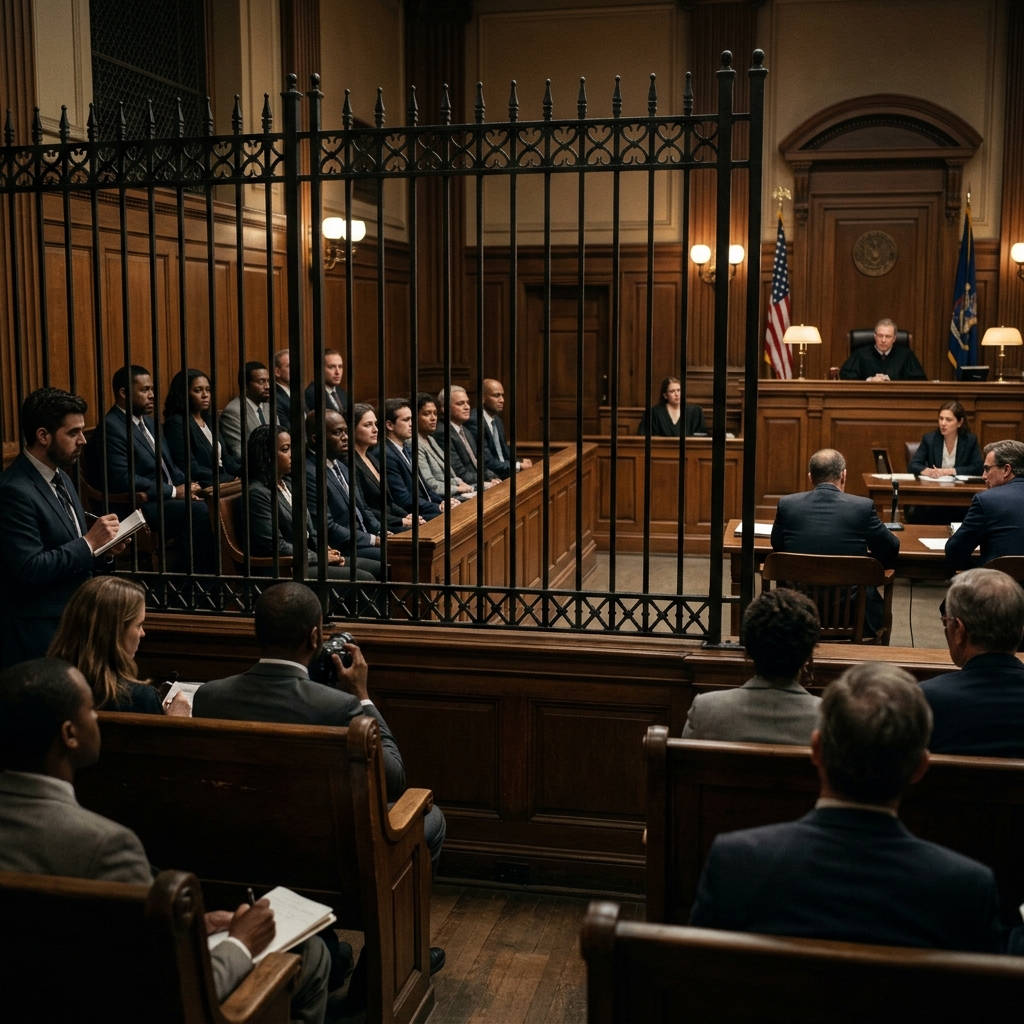
In criminal trials, questions often arise about how much information about jurors can be shared with the public, the press, and even parties not involved in the case. At the heart of the issue is a tension between three powerful interests: the public’s right to open courts, the privacy and safety of jurors, and the defendant’s right to a fair trial. Courts must navigate these competing concerns carefully, often on a case-by-case basis.
Open Courts and the Role of Jurors
In the United States, public access to criminal proceedings is a core feature of the justice system. Open courts promote transparency, allow community oversight, and help maintain confidence in verdicts and sentencing decisions. Jurors play a crucial role within these proceedings, serving as the fact-finders who listen to testimony, examine evidence, and reach decisions in both civil and criminal cases. Because jurors are integral to the process, information about who they are and how they were selected can have significant implications for public trust.
Yet, the public’s interest in knowing more about jurors must be balanced against genuine risks: harassment, unwanted publicity, or attempts to improperly influence jury deliberations. As criminal trials have become more publicly visible—through news, social media, and remote access to court records—the stakes of that balance have increased.
Types of Juror Information at Issue
When courts consider public access, they typically distinguish among different categories of juror information. Not all information receives the same level of protection, and not all of it is equally important to public scrutiny of the justice system. Common categories include:
- Identifying information – names, home addresses, work addresses, phone numbers, email addresses.
- Demographic data – age, gender, race or ethnicity, marital status, education level, occupation.
- Questionnaire answers – responses about prior jury service, experiences with crime, relationships with law enforcement, or attitudes relevant to the case.
- Voir dire disclosures – statements made in open court during jury selection about personal history, experiences, or biases.
- Post-verdict information – any details connected to juror contact after the verdict, such as interviews or complaints.
Courts are more likely to allow access to information that directly relates to whether jurors could be fair and impartial, and more likely to protect information that exposes jurors to personal risk or has little bearing on the fairness of the trial.
Legal Foundations for Public Access
Two key legal frameworks shape access to juror information: the First Amendment right of access and the common law presumption of open records. Under First Amendment principles, the public and the press enjoy a qualified right to attend criminal proceedings and view certain records, including aspects of jury selection. Courts often apply a test based on “experience and logic”—whether similar proceedings have historically been open, and whether openness plays a positive role in the functioning of the process.
Common law also supports a strong presumption that court records are publicly accessible, including juror names once a jury is seated. Appellate courts have recognized that juror names and, sometimes, addresses can become part of the public record, subject to limitations when safety or fairness are at stake. These rights are qualified, not absolute; courts can restrict access when necessary to protect compelling interests, but must justify such restrictions and tailor them as narrowly as possible.
Juror Privacy and Safety Concerns
Alongside access rights, courts must protect juror privacy and safety. Research and court policy guidance highlight several risks that can arise when juror information is freely available:
- Harassment and intimidation – jurors may be contacted or threatened by parties who are unhappy with the verdict.
- Intrusion into private life – public disclosure of sensitive information can lead to social or professional consequences unrelated to the case.
- Chilling effect on honesty – prospective jurors may be less candid in voir dire if they fear that personal disclosures will be widely disseminated.
- Reluctance to serve – widely publicized juror identities can reduce willingness to participate in jury service, undermining representativeness.
Some states and courts respond by limiting public access to identifying information while still allowing observation of the jury selection process. For example, certain court rules prohibit disclosure of juror source lists, detailed qualification records, or full questionnaire contents to the general public, while permitting limited access for the parties and their attorneys.
Anonymous and Partially Anonymous Juries
In rare and serious criminal cases, courts may adopt anonymous juries or partially anonymous juries. In these situations, the public and sometimes even the parties will not see juror names or specific addresses; jurors may be identified only by numbers or initials. Anonymous juries are usually reserved for cases involving:
- Organized crime or gang-related violence.
- Unusually violent offenders or threats of retaliation.
- High-profile defendants where intense media coverage raises safety concerns.
- Documented threats of jury tampering or interference with deliberations.
Courts generally require a strong factual basis before empaneling an anonymous jury, such as credible threats or a substantial risk of harm. They must also take steps to minimize unfair prejudice to the defendant, ensuring that jurors are not biased by the fact that their identities are being shielded.
Case-by-Case Balancing of Interests
Instead of applying blanket rules, many courts adopt a case-by-case balancing approach when deciding whether juror information should be disclosed. Under this framework, judges evaluate whether suppressing information is:
- Necessary to serve a compelling interest – such as juror safety or the defendant’s right to a fair trial.
- Narrowly tailored – limiting access only to specific types of information and only for a defined period.
- Without less restrictive alternatives – ensuring there is no milder way to protect the same interests, such as partial redaction or delayed release.
For example, a court might allow the public to attend voir dire and obtain general demographic data about jurors, but withhold full names and exact addresses until after the trial. Another court might permit access to questionnaires with sensitive responses redacted. These tailored solutions seek to preserve public oversight while respecting privacy and safety.
Access Rules for Parties Versus the General Public
Courts often differentiate between access rights of the parties and attorneys, and those of the general public. In many jurisdictions, attorneys receive more detailed juror information to conduct meaningful voir dire and exercise challenges, while public access to the same data is restricted. Typical patterns include:
| Type of User | Access to Juror Information |
|---|---|
| Defendant and Prosecutor | Names of prospective jurors, city of residence, occupation, education, family information, and questionnaire responses, subject to specific restrictions in exceptional cases. |
| Defense and Prosecution Attorneys | Full access required for voir dire and jury selection, including details relevant to challenges for cause and peremptory strikes. |
| General Public or Media | Limited access; may receive juror numbers, general demographics, and non-identifying data, but identifying details can be withheld where allowed by rules or specific court orders. |
Even where public access is limited, courts usually provide a mechanism for requesting additional information, often requiring a written motion that explains why the information is sought and how the request serves the interests of justice.
Electronic Records and Remote Access
The growth of electronic case records has introduced new questions about how juror information is shared. Courts must decide what information is available at the courthouse and what can be accessed remotely over the internet. General trends include:
- On-site access – public members can review many case records at court computers, but certain sensitive materials may be visible only to parties or may be sealed.
- Remote access – some case information is available online, but access may be limited for non-parties to protect privacy in sensitive matters or prevent misuse of personal data.
- Sealed or confidential records – if juror information is confidential by law or sealed by order, it is unavailable both at the courthouse and online.
These rules reflect a broader effort to balance transparency with the realities of widespread digital availability, where information can be easily replicated and shared far beyond the courtroom.
Practical Implications for Jurors and the Community
Policy choices about juror information have practical consequences for individuals and communities. Courts and related organizations emphasize that respectful treatment of jurors, including protecting appropriate privacy, can strengthen civic participation and public confidence in the jury system. When jurors feel safe and supported, they are more likely to:
- Participate willingly in jury service.
- Answer sensitive questions honestly during voir dire.
- Remain focused on evidence and instructions rather than external pressures.
At the same time, carefully managed public access enables media and community observers to scrutinize jury selection practices, examine representativeness, and identify potential biases. In this way, both privacy protections and access rights can work together to strengthen the legitimacy of criminal trials.
Frequently Asked Questions (FAQs)
Can the public obtain juror names during a criminal trial?
In many jurisdictions, juror names eventually become part of the public record, creating a presumption of access under common law and, in some cases, the First Amendment. However, courts may temporarily withhold names or use juror numbers instead when there is a credible concern about safety, harassment, or interference with the trial.
Are juror addresses or other contact information publicly available?
Addresses and other contact details are more frequently protected than names, because they pose a greater risk of direct contact or harassment. Some courts treat addresses as part of the public record, while others restrict access unless a specific justification is shown. In practice, full contact information is rarely released to the general public.
Do the media have special rights to juror information?
News organizations generally share the same qualified rights as other members of the public, grounded in the First Amendment and common law access doctrines. Courts recognize the important role of the press in monitoring jury selection, but may still limit access to particular information when necessary to protect safety or fairness.
How do courts decide when to use an anonymous jury?
Courts typically require a showing of specific risk—such as credible threats, organized crime involvement, or intense public hostility—before empaneling an anonymous jury. They also must take steps to ensure that anonymity does not undermine the defendant’s rights, such as explaining to jurors that anonymity is for their protection and not a reflection on the defendant.
Can parties or journalists challenge restrictions on juror information?
Yes. A party, the press, or another interested member of the public can file a motion or request asking the court to allow access to certain juror information. The court will then weigh the request against privacy, safety, and fairness concerns, often applying a case-by-case analysis that considers whether there are less restrictive alternatives.
References
- The Public’s Right of Access to Juror Information Loses More Ground — FindLaw. 2001-04-01. https://corporate.findlaw.com/law-library/the-public-s-right-of-access-to-juror-information-loses-more.html
- The right of access to juror names and addresses — Reporters Committee for Freedom of the Press. 2016-06-01. https://www.rcfp.org/journals/news-media-and-law-summer-2016/right-access-juror-names-an/
- Protecting the Many Facets of Juror Privacy: What Can Courts Do? — National Center for State Courts. 2015-01-01. https://ncsc.contentdm.oclc.org/digital/api/collection/juries/id/31/download
- Rule 814. Records — Minnesota Judicial Branch. 2022-01-01. https://www.revisor.mn.gov/court_rules/gp/id/814/
- Jury Service — U.S. Courts. 2024-01-01. https://www.uscourts.gov/court-programs/jury-service
- Who? Where? How? Viewing a Court’s Electronic Case Records — Judicial Council of California. 2023-01-01. https://courts.ca.gov/policy-administration/public-records/who-where-how-viewing-courts-electronic-case-records
- Center for Jury Studies — National Center for State Courts. 2022-06-01. https://www.ncsc.org/our-centers-projects/center-jury-studies
Similar Articles








Read full bio of medha deb




