
How to Check If Someone Has Filed for Bankruptcy
Learn practical, lawful ways to confirm bankruptcy filings using official public records, court tools, and careful privacy-aware searches.
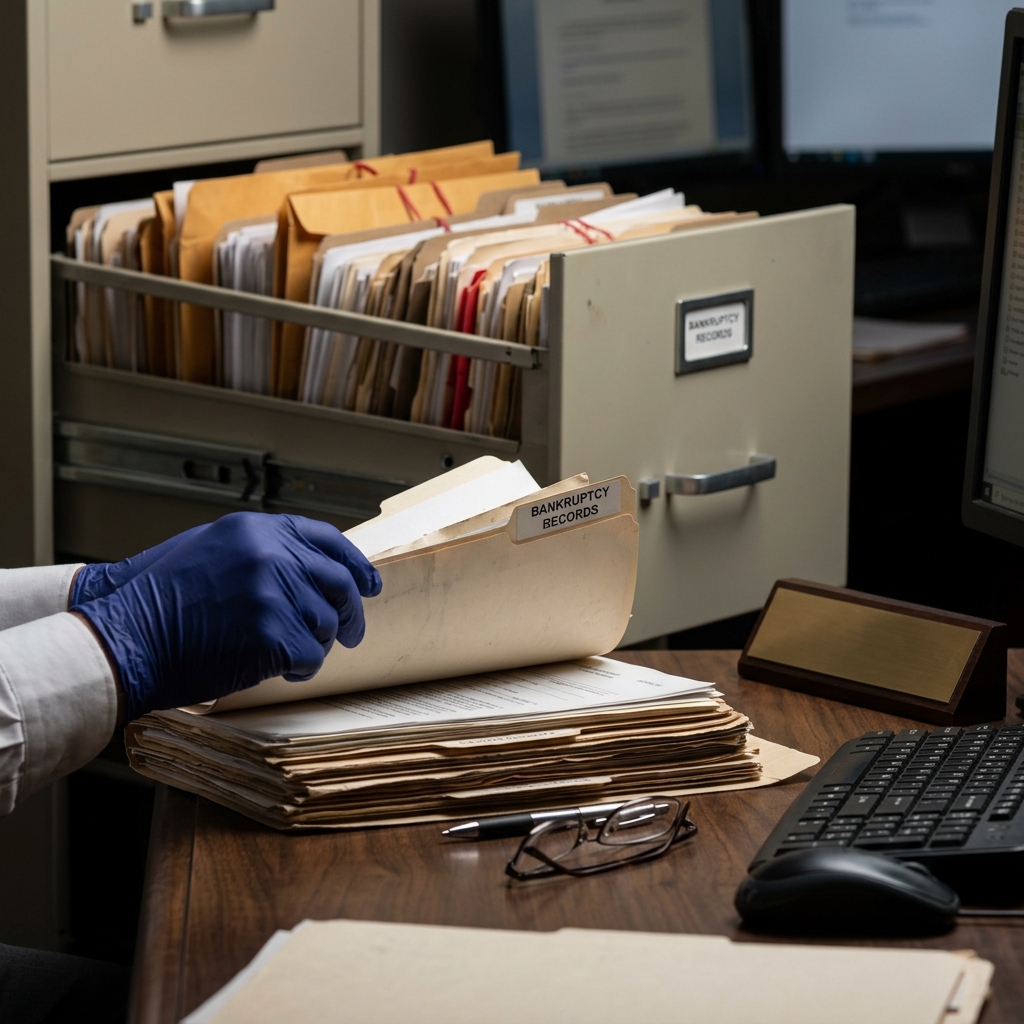
Bankruptcy filings in the United States are generally part of the public record, which means that under federal law most people can confirm whether an individual or business has filed for bankruptcy by using official court systems and related tools. However, those records are not always straightforward to locate or interpret. This guide explains how bankruptcy records work, where to search, and how to use the information responsibly.
Understanding How Bankruptcy Records Are Classified
Bankruptcy is handled entirely in the federal court system, not in state or local courts. Each federal judicial district has a bankruptcy court, and those courts maintain case files and dockets for every bankruptcy case that they oversee.
Under federal law, bankruptcy filings are considered public records open to examination, with limited exceptions for sealed or redacted information. This public status is what allows individuals, lenders, journalists, and others to research whether someone has filed for bankruptcy.
Key Legal Principles Behind Access
- Federal jurisdiction: Bankruptcy cases are filed in federal bankruptcy courts; they are not state or county civil cases.
- Public access rule: Federal law provides that bankruptcy case records are generally accessible to the public unless specifically sealed or restricted.
- Privacy protections: Certain personal identifiers (such as full Social Security numbers) are truncated or redacted in public documents to reduce the risk of identity theft.
Primary Ways to Find Out If Someone Filed for Bankruptcy
There are several common avenues for verifying a bankruptcy filing. They differ in cost, speed, and the level of detail they provide.
- Using the PACER online system for federal court records
- Contacting or visiting a bankruptcy court clerk’s office
- Using automated voice case information systems (VCIS) offered by some courts
- Reviewing credit reports and professional background checks
- Exploring reputable third-party legal or court record databases
Quick Comparison of Research Options
| Method | Cost | Coverage | Detail Level | Typical Use Case |
|---|---|---|---|---|
| PACER | Low per-page fees | Nationwide federal courts | High (full docket and documents) | Legal research, verified proof |
| Court clerk office | Usually free to view on-site | Single court district | High | Local cases, certified copies |
| VCIS phone system | Free searches per call in many districts | Specific district | Basic (status, case number) | Fast status checks |
| Credit reports / background checks | Varies by provider | Where bankruptcy appears on credit history | Moderate | Lender or employer screening |
| Third-party court record sites | Subscription or pay-per-search | Often multi-state or nationwide | Moderate to high | Convenient public record searches |
Step-by-Step: Using PACER to Search Bankruptcy Filings
The Public Access to Court Electronic Records (PACER) system is the official online portal for U.S. federal court case information, including bankruptcy cases. It is maintained by the federal judiciary and is considered the most authoritative source for verifying whether someone has filed for bankruptcy.
1. Create a PACER Account
To use PACER, you must first register for an account. Registration is conducted through the PACER website and requires basic contact and billing information. Once your account is approved, you can log in to search cases nationwide.
2. Use the Nationwide Case Index
PACER offers a nationwide search tool that allows you to look up cases filed in any federal court, including bankruptcy courts. This nationwide index is particularly useful if you are unsure which district the person may have filed in.
- Search by full name to distinguish among people with similar names.
- Specify that you are looking for bankruptcy cases, if the interface offers that filter.
- Where permitted, narrow results by approximate filing date or state to improve search accuracy.
3. Review the Docket Information
When PACER finds a matching case, it provides a docket sheet, which is the chronological record of filings and court actions. The docket typically includes:
- Case number and court location
- Names of the debtor(s) and any co-debtors
- Type of bankruptcy (such as Chapter 7, 11, or 13)
- Filing date and key dates (e.g., discharge or dismissal)
- Major motions and orders recorded by the court
Access to this docket information and to individual documents in the case generally costs a small fee per page viewed. For most basic inquiries, only a few pages are needed.
Checking Bankruptcy Records Through Court Clerks and VCIS
While PACER is convenient, some people prefer to work directly with a bankruptcy court clerk or use phone-based systems when available.
Visiting a Bankruptcy Court Clerk’s Office
Every bankruptcy court maintains a clerk’s office where members of the public can access case records during business hours. Many courts provide onsite computer terminals that allow visitors to look up cases and view documents at no charge, even though the same searches might incur PACER fees when performed remotely.
- Obtain the court’s address and hours via the Federal Court Finder or the court’s website.
- Bring identifying information such as the individual’s full name and, if known, the approximate year of filing.
- Use public terminals or ask staff for assistance locating relevant case numbers.
Using Voice Case Information Systems (VCIS)
Many bankruptcy courts offer an automated Voice Case Information System (VCIS), which lets callers check basic case information by phone. This service is typically available 24 hours a day and is free to use for several searches per call.
Depending on the specific court, VCIS may allow searches using:
- Case number
- Debtor’s name
- Partial Social Security number or tax identification number
The system usually returns limited details such as case status (open, closed, discharged, dismissed), the chapter of bankruptcy, and the filing date. For full document access, you still need PACER or the clerk’s office.
Role of Credit Reports and Background Checks
While bankruptcy courts do not report directly to credit bureaus, consumer reporting agencies often obtain bankruptcy information from public records. As a result, personal credit reports may reflect bankruptcy filings for a defined period of time, depending on the type of bankruptcy and bureau policy.
Credit Reports
Major credit reporting agencies commonly include significant public record events, including bankruptcies, in credit files. This information may influence credit scores and lending decisions, so individuals and creditors often track bankruptcy entries on credit reports and dispute any inaccuracies with the help of federal agencies such as the Consumer Financial Protection Bureau or the Federal Trade Commission.
Background Check Services
Many commercial background check providers compile public court records and credit-related data into searchable databases. Users may be able to view whether a person has filed for bankruptcy through these services, but the depth and reliability of information depend on the provider’s data sources and update practices.
Because these services sometimes lag behind or misinterpret official records, they are best used as a starting point rather than a definitive source. For legal or financial decisions, PACER and direct court records remain the most authoritative tools.
Interpreting Bankruptcy Information Responsibly
Finding a bankruptcy record is only the first step. Understanding what the information means is critical when evaluating someone’s financial situation or deciding how to interact with them as a lender, business partner, or landlord.
Key Factors to Examine
- Filing date: A bankruptcy many years ago likely reflects a different financial picture than a very recent case.
- Chapter type: Chapters 7, 11, and 13 involve different rules, repayment structures, and implications for creditors.
- Case outcome: Whether the case was discharged, dismissed, or is still pending matters for assessing ongoing obligations.
- Number of filings: Multiple filings over time can indicate recurring financial distress.
Ethical and Privacy Considerations
Even though bankruptcy filings are public records, they involve sensitive personal information. Responsible use of these records includes:
- Limiting research to legitimate purposes, such as credit risk evaluation, legal proceedings, or due diligence.
- Avoiding unnecessary sharing of personal financial details obtained from case files.
- Recognizing that many bankruptcies arise from events beyond a person’s control, such as medical emergencies or job loss.
Common Pitfalls When Searching for Bankruptcy Filings
People sometimes encounter difficulties when trying to determine whether someone has filed for bankruptcy. Several recurring issues are worth keeping in mind to avoid wasted effort or mistaken conclusions.
Misidentifying the Correct Court
Since bankruptcy is federal, searching only state or county civil records will not reveal a bankruptcy case. Anyone investigating a possible filing should focus on federal bankruptcy courts and the tools associated with them, such as PACER and VCIS.
Confusing People With Similar Names
Common names can produce multiple results in nationwide databases. To avoid attributing a bankruptcy to the wrong person:
- Use middle names or initials when known.
- Cross-check addresses or cities listed in case records with known information.
- Check dates of birth or partial identifiers where legally available.
Relying Solely on Search Engines
General web searches may surface some bankruptcy-related records, especially when court data is indexed by third-party sites. However, search engines do not guarantee complete or updated coverage of bankruptcy filings. For a thorough and accurate check, official federal court systems are more reliable.
Situations Where Professional Legal Help Is Recommended
In some cases, simply confirming the existence of a bankruptcy filing is not enough. You may need help interpreting how that filing affects contracts, debts, or pending litigation. Legal counsel is especially helpful when:
- You are a creditor seeking to understand your rights in an active bankruptcy case.
- You are evaluating whether to initiate a lawsuit against someone who has filed for bankruptcy.
- You need to interpret complex bankruptcy documents, such as reorganization plans or adversary proceedings.
Bankruptcy attorneys can translate docket entries into practical guidance and help ensure that any actions you take comply with bankruptcy rules and broader federal law.
Frequently Asked Questions
Are bankruptcy filings always public?
Most bankruptcy filings are public records under federal law, meaning that anyone can review them through court systems like PACER or at a clerk’s office. Some documents or details may be sealed or redacted, but the existence of the case is usually visible.
Can I see bankruptcy information on a credit report?
Credit reporting agencies often obtain bankruptcy case information from public records, and those entries can appear on credit reports for a number of years. If the information seems inaccurate, individuals can dispute it through the procedures provided by the Federal Trade Commission and Consumer Financial Protection Bureau.
Is PACER free to use?
Creating a PACER account is free, but viewing case information generally incurs a per-page fee. Some courts provide free public terminals at the clerk’s office where you can review documents without paying PACER charges.
Can I check for bankruptcy at a county courthouse?
Bankruptcy is a matter of federal law and is handled by federal bankruptcy courts, not county or state courts. County courthouses maintain their own civil and criminal records, but those will not include federal bankruptcy cases.
Do I need a lawyer just to find out if someone filed?
In many situations, you can use PACER, VCIS, or clerk’s office resources on your own to determine whether someone has filed for bankruptcy. Legal advice becomes more important when you need to understand the implications of that filing for your rights or obligations.
References
- Bankruptcy Case Records & Credit Reporting — United States Courts. 2023-06-01. https://www.uscourts.gov/court-programs/bankruptcy/bankruptcy-case-records-credit-reporting
- Bankruptcy Courts — USAGov. 2023-04-10. https://www.usa.gov/agencies/bankruptcy-courts
- Public Access to Court Electronic Records (PACER) — Administrative Office of the U.S. Courts. 2024-01-15. https://pacer.uscourts.gov/
- Finding the Status of a Bankruptcy Case — Washington Courts eService Center. 2022-09-01. https://customerservices.courts.wa.gov/support/solutions/articles/72000577274-finding-the-status-of-a-bankruptcy-case
- Records / Case Information — U.S. Bankruptcy Court, Southern District of California. 2023-03-20. https://www.casb.uscourts.gov/records-case-information
- Bankruptcy Court Records — Berkeley Advanced Media Institute, UC Berkeley. 2017-05-01. https://multimedia.journalism.berkeley.edu/tutorials/bankruptcy-court-records/
- Is it really THAT easy to find bankruptcy records? — Reddit r/Bankruptcy (user discussion). 2024-01-30. https://www.reddit.com/r/Bankruptcy/comments/1i23baj/is_it_really_that_easy_to_find_bankruptcy_records/
Similar Articles








Read full bio of Sneha Tete




