
Switching From Chapter 13 to Chapter 7 Bankruptcy
Understand when and how to convert a Chapter 13 repayment case into Chapter 7 liquidation, and what that change means for your debts and property.
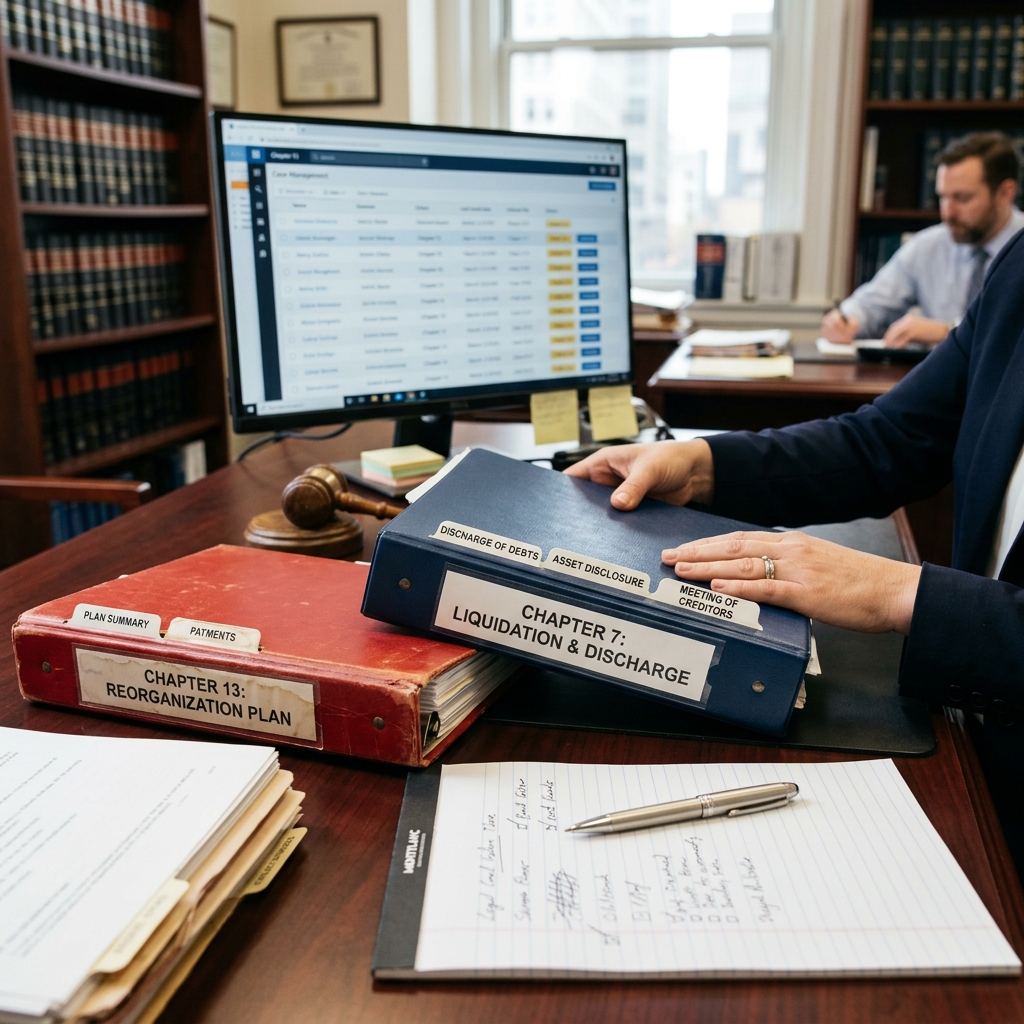
Many people start with a Chapter 13 bankruptcy because they intend to repay at least part of their debts over time, keep important property, and catch up on past-due obligations. Circumstances can change, though—job loss, illness, divorce, or unexpected expenses may make it impossible to continue making Chapter 13 plan payments. In those situations, converting the case to Chapter 7 bankruptcy can be an important option.
This guide explains, in plain language, when you can convert from Chapter 13 to Chapter 7, how the process works, and what the change means for your debts, property, and future financial life. It is not legal advice, but it will help you have an informed discussion with a qualified bankruptcy attorney.
Chapter 13 vs. Chapter 7: What Is Changing?
Before looking at conversion, it helps to understand the basic differences between Chapter 13 and Chapter 7. The conversion is not just a form change; it is a shift from a repayment model to a liquidation model.
| Feature | Chapter 13 | Chapter 7 |
|---|---|---|
| Core concept | Repayment plan over 3–5 years using future income | Liquidation of non-exempt assets; quick discharge of eligible debts |
| Monthly payments | Required to fund the court-approved plan | No plan payments; possible reaffirmation payments on secured debts |
| Timeline | 3–5 years before completion and discharge | Often 4–6 months from filing to discharge, absent complications |
| Main risk to property | Risk of case dismissal if payments aren’t made | Risk of losing non-exempt property to the Chapter 7 trustee |
| Main benefit | Chance to catch up on mortgage/car arrears and keep assets | Faster elimination of unsecured debts with no repayment plan |
Converting from Chapter 13 to Chapter 7 means moving from an income-based repayment structure to a system where a trustee examines your assets, sells non-exempt property if necessary, and then your dischargeable debts are erased once the case ends.
Do You Have a Legal Right to Convert?
Under federal law, most Chapter 13 debtors have a broad right to convert their case to Chapter 7 at any time, as long as they qualify to be a debtor under Chapter 7. This right cannot be waived in advance; any agreement to give up the right to convert is generally unenforceable.
However, there are important limitations and conditions:
- Eligibility under Chapter 7: The Bankruptcy Code does not allow conversion to Chapter 7 unless you meet the requirements to file under Chapter 7 in the first place.
- Prior Chapter 7 discharge: If you received a Chapter 7 discharge in a case filed within the last eight years, you cannot obtain another Chapter 7 discharge in a converted case.
- Good faith requirement: Courts can deny conversion if they determine the request is made in bad faith—for example, to hide assets or abuse the system.
Key Eligibility Rules for Chapter 7
Even though you are already in bankruptcy, conversion does not automatically mean you qualify for Chapter 7. The court still evaluates whether your financial situation fits the Chapter 7 standard, particularly under the means test and prior-discharge rules.
1. The Means Test
The means test is designed to prevent people with substantial disposable income from using Chapter 7 instead of repaying creditors in Chapter 13. In basic terms, the test compares your current income with the median income in your state for a household of your size, and then looks at allowable expenses.
- Below median income: If your current monthly income, as defined by the Code, is below your state’s median, you generally pass the means test and qualify for Chapter 7.
- Above median income: If your income is above the median, the court may require a detailed calculation of disposable income (income minus allowed expenses). If you have enough remaining income to repay a meaningful portion of unsecured debts, conversion can be denied.
- Jurisdiction differences: Some courts require a fresh means test when you convert; others treat the Chapter 13 filing date and prior findings as sufficient. Local practice matters.
2. Time Limit After a Prior Bankruptcy Discharge
The Bankruptcy Code limits how often you can obtain a discharge. If you received a Chapter 7 discharge in a case filed within the last eight years, you are not eligible for a new Chapter 7 discharge in a converted case. You might still convert for other reasons, but you would not receive the typical fresh start that comes with a discharge.
3. Good Faith and Honest Disclosure
Court approval of conversion typically assumes you have been honest in your Chapter 13 case and that your financial change is genuine. If there is evidence of concealment of assets, fraud, or misuse of the Chapter 13 process, the judge can refuse conversion and may dismiss the case or even impose additional sanctions.
Common Reasons for Converting From Chapter 13 to Chapter 7
Debtors usually convert because their initial expectations about income and expenses no longer match reality. Some of the most frequent reasons include:
- Loss or reduction of income: Job loss, reduced hours, or business failure can make plan payments impossible.
- Unexpected expenses: Medical bills, major home or car repairs, or family emergencies can overwhelm your budget.
- Plan not feasible in practice: Even if the plan looked workable on paper, it may prove too tight when real-life spending is factored in.
- Desire for faster discharge: Some debtors decide that continuing a multi-year plan is not worth it if they qualify for a quick Chapter 7 discharge.
- Limited property at risk: If you have few non-exempt assets, Chapter 7 may be more attractive because there is little for the trustee to sell.
Step-by-Step Overview of the Conversion Process
Converting from Chapter 13 to Chapter 7 is procedurally simpler than filing a brand-new case, but it still involves specific forms, fees, and deadlines. Local rules in your bankruptcy district will determine some of the details, so always check with counsel or the clerk’s office.
1. Filing the Notice of Conversion or Motion
In many districts, you can convert simply by filing a Notice of Conversion and paying a modest conversion fee; a motion and hearing are not required. In other districts, a motion explaining your reasons for conversion and supporting documents may be required.
- Some courts provide an official Notice of Conversion form that you can fill out and file electronically or on paper.
- The filing fee for conversion is typically around $25, though exact amounts vary.
- In jurisdictions that require a motion, you may need to attach a declaration explaining why you cannot continue the Chapter 13 plan.
2. Updating Schedules and Financial Information
When the case converts, you must update and often refile core bankruptcy schedules showing your assets, liabilities, income, and expenses. This is important because Chapter 7 focuses heavily on your current property and financial status.
- Updated schedules of assets and liabilities, along with statistical information and your statement of financial affairs, are usually required.
- If your income or expenses have changed since you filed Chapter 13, you must reflect those changes accurately in the new schedules.
- New debts incurred after the Chapter 13 filing date can often be added and potentially discharged in the Chapter 7 case if they qualify for discharge.
3. Means Test and Chapter 7-Specific Forms
Conversion typically triggers the need for Chapter 7-specific forms, especially those related to the means test. These may include forms showing your current monthly income, any exemption from the presumption of abuse, and a detailed means test calculation if your income is above the median.
4. Statement of Intention on Secured Debts
In Chapter 7, you must tell the court and creditors what you plan to do with secured property such as your home or car. This is done through a Statement of Intention.
- You indicate whether you plan to surrender the property, redeem it, or enter a reaffirmation agreement with the lender.
- Your decision affects whether you keep the property and how the related debt is treated after discharge.
5. New Meeting of Creditors
Even though you already attended a Chapter 13 meeting of creditors, conversion generally requires a new meeting (called a §341 meeting) with the Chapter 7 trustee.
- The trustee will ask questions about your updated financial situation, assets, and any changes since the original filing.
- Creditors may attend, although in many consumer cases they do not.
6. Debtor Education Requirements
To receive a discharge in Chapter 7, you must complete a post-filing debtor education course if you have not already done so in your Chapter 13 case. Proof of completion must be filed with the court.
What Happens to Your Property After Conversion?
Property treatment is one of the biggest differences after conversion. Under Chapter 13, you are generally allowed to keep your property as long as you follow the repayment plan. Under Chapter 7, a trustee can sell non-exempt property for the benefit of creditors.
Exempt vs. Non-Exempt Property
Bankruptcy exemptions are laws that protect certain property—such as a portion of home equity, a modest vehicle, household goods, and retirement accounts—from being taken and sold by the trustee. The available exemptions depend on whether your state uses federal exemptions, state exemptions, or allows a choice.
- Exempt property: You keep exempt property, and the trustee cannot sell it.
- Non-exempt property: The trustee can liquidate non-exempt assets and distribute the proceeds to creditors.
For conversion cases, the relevant exemption date is typically the date of the original Chapter 13 filing. That means property you acquired after the initial filing is often outside the bankruptcy estate and may be protected.
Home and Vehicle After Conversion
Your home and car may be treated differently after conversion. In Chapter 13, your plan might cure arrears and prevent foreclosure or repossession. In Chapter 7, there is no repayment plan to catch up missed payments. Instead, your ability to keep the property depends on both exemptions and the status of the loan.
- If your mortgage or car payments are current and the equity in the property is fully exempt, you may be able to keep the asset, often by reaffirming the loan.
- If payments are behind or equity is not fully exempt, you may need to surrender the property or negotiate separately with the lender.
How Creditors and Claims Are Handled
When your case converts, creditor claims do not simply disappear. Instead, they move into the Chapter 7 case and may be paid from any non-exempt property that the trustee is able to liquidate.
- Proofs of claim already filed in the Chapter 13 case usually carry over to the Chapter 7 case automatically.
- If non-exempt assets become available for sale, creditors may have a chance to file new or amended claims to share in any distribution.
- Once the case is complete, most unsecured debts listed in the bankruptcy are discharged, meaning you are no longer legally obligated to pay them, subject to standard exceptions (like certain taxes, student loans, and support obligations).
Advantages and Disadvantages of Converting
Conversion can be a lifeline, but it is not always the best path. Understanding the trade-offs will help you decide whether to pursue conversion or consider dismissal, modification of your Chapter 13 plan, or some other solution.
Potential Advantages
- Elimination of plan payments: You no longer have to make multi-year monthly payments to a Chapter 13 trustee.
- Faster discharge: Chapter 7 cases usually end within months, bringing quicker relief from unsecured debts.
- Fresh start when income has dropped: If you genuinely cannot afford to repay, Chapter 7 aligns better with your financial reality.
- Simpler administration: With no long-term plan to monitor, there are fewer ongoing obligations to the court.
Potential Disadvantages
- Risk to non-exempt property: You could lose assets that would have been protected in a repayment plan.
- No mechanism to cure arrears: Chapter 7 does not provide a structured way to catch up on past-due mortgage or car payments.
- Stricter eligibility: If you do not pass the means test, you may be forced to stay in Chapter 13 or face dismissal.
- Effect of prior discharges: If you are ineligible for a new discharge due to a prior Chapter 7 case, conversion may offer limited benefit.
When Might the Court Dismiss Instead of Convert?
In many cases, if your Chapter 13 plan fails because of missed payments or lack of feasibility, the court may dismiss the case rather than convert it. Dismissal ends the automatic stay and returns you to your pre-bankruptcy legal situation, including collection actions and lawsuits.
Courts often choose dismissal instead of forced conversion when:
- You are ineligible for Chapter 7 under the means test or prior-discharge rules.
- There is evidence of bad faith conduct during the Chapter 13 case.
- Conversion would not benefit creditors or the orderly administration of the case.
Practical Tips Before You Decide to Convert
Because conversion affects your property, long-term credit, and legal rights, it is critical to think through the decision carefully.
- Review your assets and exemptions: Make a realistic list of what you own and how much it is worth, then review your state’s exemption scheme to see what may be at risk.
- Check your income trends: If your income is likely to rise again soon, ask your attorney whether that should influence the timing and strategy.
- Consider loan status on home and vehicle: If you are behind on payments, think carefully about whether losing those assets is acceptable or whether a modified Chapter 13 plan would be preferable.
- Update your budget honestly: Courts rely on accurate schedules. Overly optimistic or misleading numbers can cause problems.
- Get professional advice: An experienced bankruptcy lawyer can explain local practices, trustee tendencies, and how conversion typically plays out in your district.
Frequently Asked Questions
Can I convert my Chapter 13 case to Chapter 7 at any time?
Most debtors can request conversion at any time, but the court will only allow it if you are eligible to be a debtor under Chapter 7 and the request is made in good faith. Prior discharges and the means test still apply.
Do I have to pass the means test again when I convert?
In many jurisdictions, yes—courts require updated forms and means test calculations based on your current income and expenses. Some courts, however, may treat earlier findings as sufficient. Local rules and case law govern this issue, so ask your attorney how your district handles it.
Will I lose my house or car if I convert?
Not automatically. If your payments are current and the equity in your home or car is fully exempt under applicable law, you may be able to keep these assets in Chapter 7. If you are behind on payments or have non-exempt equity, the risk of surrender or liquidation is higher, and you should evaluate that risk before converting.
What happens to the money already paid into my Chapter 13 plan?
Funds held by the Chapter 13 trustee are generally distributed according to court orders and local rules when the case converts or is dismissed. You usually do not receive a refund of all plan payments, but treatment varies by district. Discuss specific expectations with your attorney and the trustee’s office.
Is conversion better than letting my Chapter 13 case be dismissed?
Conversion often provides more protection because the automatic stay continues and you may obtain a Chapter 7 discharge. Dismissal ends the case, lifts the stay, and allows creditors to resume collection. Whether conversion is better depends on your eligibility for Chapter 7, the value of your assets, and your long-term financial goals.
Do I need a lawyer to convert my case?
While the law does not require you to have a lawyer, conversion involves technical rules, local procedures, and serious consequences for your property and discharge. Because of this complexity, consulting a qualified bankruptcy attorney is strongly recommended.
References
- 11 U.S. Code § 1307 – Conversion or dismissal — Legal Information Institute, Cornell Law School. 2023-01-01. https://www.law.cornell.edu/uscode/text/11/1307
- Converting Chapter 13 to Chapter 7 Bankruptcy Under the Law — Justia. 2022-06-01. https://www.justia.com/bankruptcy/chapter-13/converting-chapter-13-to-chapter-7/
- Converting to Chapter 7 Bankruptcy from Chapter 13 — Debt.org. 2023-03-01. https://www.debt.org/bankruptcy/converting-chapter-13-to-chapter-7/
- Conversion of Chapter 13 to Chapter 7 – Complete Filings — U.S. Bankruptcy Court, District of Minnesota. 2022-09-01. https://www.mnb.uscourts.gov/conversion-of-chapter-13-to-chapter-7-complete-filings-post-dec1-view
- CHAPTER 13 to 7, First Time Conversion — U.S. Bankruptcy Court, Central District of California. 2021-12-01. https://www.cacb.uscourts.gov/the-central-guide/chapter-13-conversion-debtor-chapter-13-7-first-time-conversion
- Converting A Chapter 13 To A Chapter 7 — Simon Fitzgerald, LLC. 2023-05-01. https://www.simonfitzgerald.com/what-type-of-bankruptcy-is-right-for-you/converting-a-chapter-13-to-a-chapter-7/
Similar Articles








Read full bio of Sneha Tete




