
Guide to Requesting and Using Police Reports
Learn who can access police reports, how to request them, and why they matter in insurance claims and legal cases.
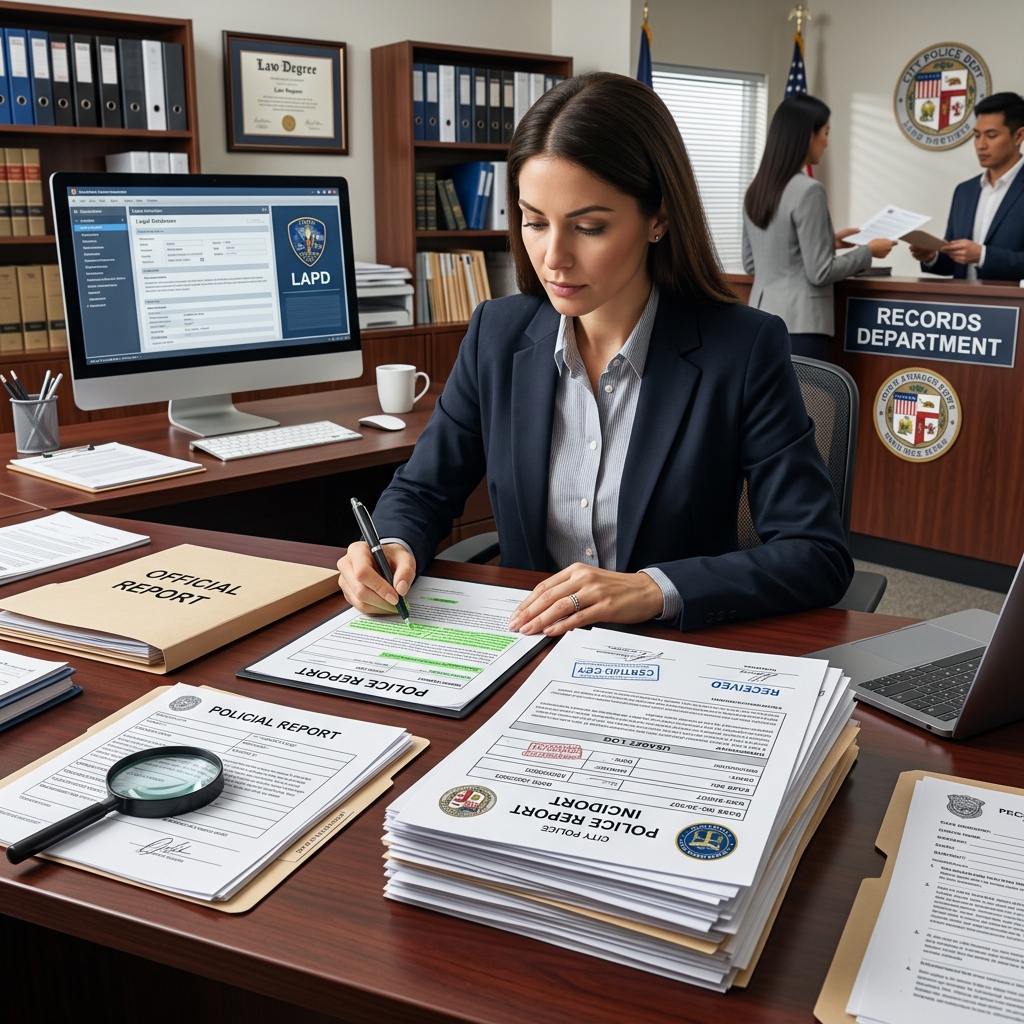
Police reports play a central role in documenting crimes, accidents, and other incidents that involve law enforcement. They can be critical evidence in criminal cases, civil lawsuits, and insurance claims, but they are also government records subject to rules about access and confidentiality. This guide explains what police reports are, when and how you can obtain them, and how they are typically used in legal and administrative processes.
Understanding What a Police Report Is
A police report is an official written record prepared by law enforcement after responding to an incident. It typically summarizes what officers observed, what they were told, and the basic facts they documented at the scene or during an investigation.
While the exact format varies by jurisdiction, most police reports include core information such as:
- Date and time of the incident and when officers arrived
- Location of the event (street address, intersection, or descriptive location)
- Names and contact information for involved parties and key witnesses
- Type of incident, such as a traffic collision, burglary, assault, or vandalism
- Officer observations, including physical evidence noted at the scene
- Statements from victims, suspects, and witnesses, sometimes in summarized form
- Identifying numbers, such as case or report numbers, used for tracking in the agency’s records system
It is important to understand that a police report is not a court ruling or a final determination of fault. It is an initial or ongoing record of what law enforcement documented, often used later to support or challenge claims in court or in insurance proceedings.
Common Types of Police Reports
Police agencies generate different kinds of reports depending on the nature of the incident. Some of the most frequently requested types include:
- Crime or incident reports: Used when officers investigate alleged criminal activity, such as theft, assault, or property damage.
- Traffic accident or collision reports: Created after motor vehicle crashes; they often include diagrams and information about road conditions, contributing factors, and involved vehicles.
- Supplemental or follow-up reports: Prepared when additional information is gathered after the initial report, such as new witness statements or updated contact information.
In many jurisdictions, accident reports are requested more frequently than other types because they are routinely needed for insurance claims and civil lawsuits related to injuries or property damage.
Who Is Allowed to Access Police Reports?
Access to police reports is generally governed by state public records or freedom of information laws. These laws aim to balance transparency with the privacy and safety of individuals involved in incidents.
In practice, access rules can differ depending on the type of report:
- Crime reports: Many agencies limit full copies to victims, their authorized representatives, or other individuals specified in state law. Sensitive details, such as information about ongoing investigations or protected victims, may be withheld.
- Accident reports: These are more often available to members of the public, especially to people involved in the crash, their insurers, and legal representatives. Some agencies allow anyone to request certain accident reports through online portals.
- Juvenile or sealed records: Reports involving minors or sealed cases may have stricter access requirements or may be heavily redacted before release.
Under many state freedom of information or open records laws, certain information may be considered confidential and excluded from disclosure. These exemptions can cover ongoing investigations, trade secrets, medical data, and some personal identifiers.
General Steps to Request a Police Report
Although each law enforcement agency has its own procedures, the process to obtain a police report tends to follow a similar pattern.
1. Identify the Correct Agency
You must first determine which department responded to the incident. This could be a city police department, county sheriff’s office, or a state-level agency such as highway patrol.
Key questions to ask yourself include:
- Where did the incident occur geographically?
- Was it within city limits or in an unincorporated county area?
- Did a specialized agency, such as state police, respond to the scene?
2. Confirm Eligibility and Access Rules
Once you know the agency involved, review its public information or records webpage to understand who can request which types of reports. Agencies often publish eligibility rules, fees, and request forms online.
3. Gather Essential Information
Before submitting a request, collect as much relevant information as possible, such as:
- Report or case number (if you were given one at the time of the incident)
- Date and approximate time of the event
- Exact or approximate location of the incident
- Names of involved persons, including yourself
- Type of incident (e.g., burglary, collision, vandalism)
Agencies often emphasize that having a report number or accurate date and location can significantly speed up processing.
4. Choose a Request Method
Many departments offer more than one way to request reports. Typical options include:
- In-person requests at a records unit or public counter during business hours.
- Mail-in requests, which may require a written letter and a check or money order for the fee.
- Online portals that allow you to submit requests electronically and download or receive reports by email.
- Third-party sites for accident reports authorized by state or local agencies, which allow online purchase and download of collision reports.
For crime reports, some agencies require a written, signed request and will only release copies to certain parties, such as victims or their attorneys.
5. Pay Applicable Fees
Police departments often charge a fee to cover the cost of searching for, copying, and mailing or electronically transmitting reports. The fee might be calculated per page or set at a flat rate.
Examples of fee structures include:
- A per-page copying fee for reports picked up in person
- Flat fees for mailed crime reports or online accident reports
- Potential fee waivers for incident victims in specific situations, such as domestic violence or identity theft, depending on local policy or law
6. Wait for Processing
After your request is submitted, the agency’s records unit will locate the report, review it for any necessary redactions, and prepare a copy. Many agencies process requests within several business days, although complex requests may take longer.
| Method | How You Receive the Report | Approximate Timeline |
|---|---|---|
| In-person request | Printed copy provided at records counter | Same day or within a few business days |
| Mail request | Paper copy sent via postal mail | Several days to a few weeks, depending on mail time |
| Online portal | Electronic copy (PDF) via email or download | Often within 3–5 business days after submission |
| Authorized accident report website | Download available once the agency uploads the report | Typically 3–5 business days after the incident |
Special Procedures for Accident Reports
Traffic accident reports often have streamlined request procedures because they are routinely needed for insurance claims. Many states and municipalities rely on designated online platforms to distribute these reports to involved parties.
To obtain a motor vehicle accident report, you may need:
- Names of at least one driver or involved party
- Date of the collision
- Name of the responding agency (police department, sheriff, or highway patrol)
- Report number, if known
- Vehicle identification number (VIN) of one of the vehicles involved
Once processed, accident reports are often available online around the same time they would be available at the records counter. Online platforms typically charge a separate fee for access and allow parties to download reports immediately after payment.
Open Records Requests and Public Transparency
In many states, police reports are considered public records subject to open records or freedom of information laws. These statutes give citizens the right to request access to government documents, including certain law enforcement records, within defined timelines.
Key features of open records systems include:
- Formal request process through written letters, email, or online portals
- Statutory deadlines for agencies to respond, often within a set number of business days
- Exemptions that allow agencies to withhold or redact information to protect privacy, safety, and ongoing investigations
- Appeal mechanisms for requesters who believe records were improperly withheld
Some jurisdictions use centralized systems or web portals for public records requests, allowing citizens to submit and track their requests online.
Limitations, Redactions, and Sensitive Information
Even when a police report is available to the public, certain information may be removed or masked. Common examples of redactions include:
- Social Security numbers and driver’s license numbers
- Home addresses and phone numbers of victims and witnesses
- Names or identifying details of minors
- Information that could compromise an ongoing investigation
These limitations exist to reduce the risk of identity theft, protect victims, and safeguard law enforcement techniques and investigative strategies.
How Police Reports Are Used
Obtaining a police report can be important for a variety of practical and legal reasons. Some of the most common uses include:
- Insurance claims: Insurers often request accident reports to verify the circumstances of a collision and assess liability and damages.
- Civil litigation: Lawyers use police reports as evidence in lawsuits involving injuries, property damage, or contractual disputes related to an incident.
- Criminal proceedings: Prosecutors and defense attorneys rely on reports as part of the official record of an arrest or investigation.
- Personal records and documentation: Victims or involved parties may keep copies for their own records or to support future legal actions.
While police reports carry significant weight, courts and insurers may also consider other evidence, such as photographs, medical records, and independent witness testimony. A report is one piece of the larger evidentiary picture rather than a definitive judgment on responsibility.
Correcting or Updating a Police Report
Sometimes individuals later realize that information in a report is incomplete or inaccurate. Procedures for correcting or supplementing a report vary by agency, but they often involve contacting the officer or department that prepared the original document.
Typical practices include:
- Requesting that the original officer review the report and consider revisions if there was a clerical error or misunderstanding
- Providing additional evidence or documentation (such as photographs or updated contact information) to support a supplemental report
- Speaking with a supervisor if there is a disagreement about the officer’s findings or narrative
Even when a report is not formally changed, it may be possible to have additional information added to the case file through supplemental documentation or statements.
Practical Tips When Requesting a Police Report
To make the process smoother, consider the following practical suggestions:
- Keep your case or report number if one was provided at the scene; this is often the fastest way for a records unit to locate your report.
- Record the responding agency’s name and contact information as soon as possible after the incident.
- Check the agency website for updated instructions, fees, and online request options.
- Allow sufficient time for processing before you need the report for insurance or court filings.
- Be prepared for identity verification if you are requesting a crime report and the agency needs to ensure you are an authorized party.
Frequently Asked Questions
How long does it usually take to get a police report?
Many agencies make reports available within several business days after an incident, especially for traffic accidents. Some departments note typical processing times of around three to five business days, although timelines can vary depending on workload and the complexity of the case.
Can anyone request a police report?
For accident reports, many jurisdictions allow broad access, particularly for people involved in the crash, their insurers, and legal representatives. For crime reports, access is frequently limited to victims, their authorized agents, or people specified in state public records laws. Certain sensitive reports may not be available to the general public.
Is there a fee to obtain a police report?
Yes. Agencies commonly charge copying and processing fees. These might be assessed per page or as flat fees for crime or accident reports, whether obtained in person, by mail, or online. In some circumstances, victims of specific crimes such as domestic violence or identity theft may receive one complimentary copy.
Can I request a police report online?
In many cities and counties, online options exist either through an official records portal or a designated accident-report website. Online systems often allow requesters to submit information and payment, then download the report or receive it by email once processed.
What if the report contains errors?
If you believe a report has inaccurate or incomplete information, contact the agency that prepared it. Often, you will be directed to speak with the officer who wrote the report or that officer’s supervisor. They may document additional information through a supplemental report or, in some cases, correct obvious errors.
Should I talk to a lawyer about my police report?
If your report relates to a serious crime, major injury, or significant property damage, legal advice can be helpful. A lawyer can explain how the report might affect potential claims or defenses and whether additional evidence should be gathered to support your position.
References
- How can I get a copy of a police report? — Los Angeles Police Department. 2023-05-01. https://www.lapdonline.org/how-can-i-get-a-copy-of-a-police-report/
- POLICE REPORTS / OPEN RECORDS — Savannah Police Department. 2023-02-15. https://savannahpd.org/reports/
- Process for Picking Up, Changing and/or Paying for a City of Atlanta Police Report — City of Atlanta 311 Knowledge Base. 2022-11-10. https://www.atl311.com/en-us/knowledgearticle/?code=KB0013144
- How Long Does a Police Report Take After an Accident in Georgia? — Horst Shewmaker. 2023-06-20. https://horstshewmaker.com/how-long-police-report-after-accident-georgia/
- Obtain Police Reports — City of Fort Wayne Police Department. 2022-09-30. https://www.cityoffortwayne.in.gov/616/Obtain-Police-Reports
- Records Unit — Chatham County Police Department. 2023-03-01. https://police.chathamcountyga.gov/Records/RecordsUnit
- Obtain a Police Report — Baltimore Police Department. 2023-01-10. https://www.baltimorepolice.org/obtain-police-report
Similar Articles








Read full bio of medha deb




