
Workplace Injury Claims Outside Workers’ Compensation: Guide
Learn when workplace injuries may lead to claims beyond workers’ compensation and what evidence matters most.
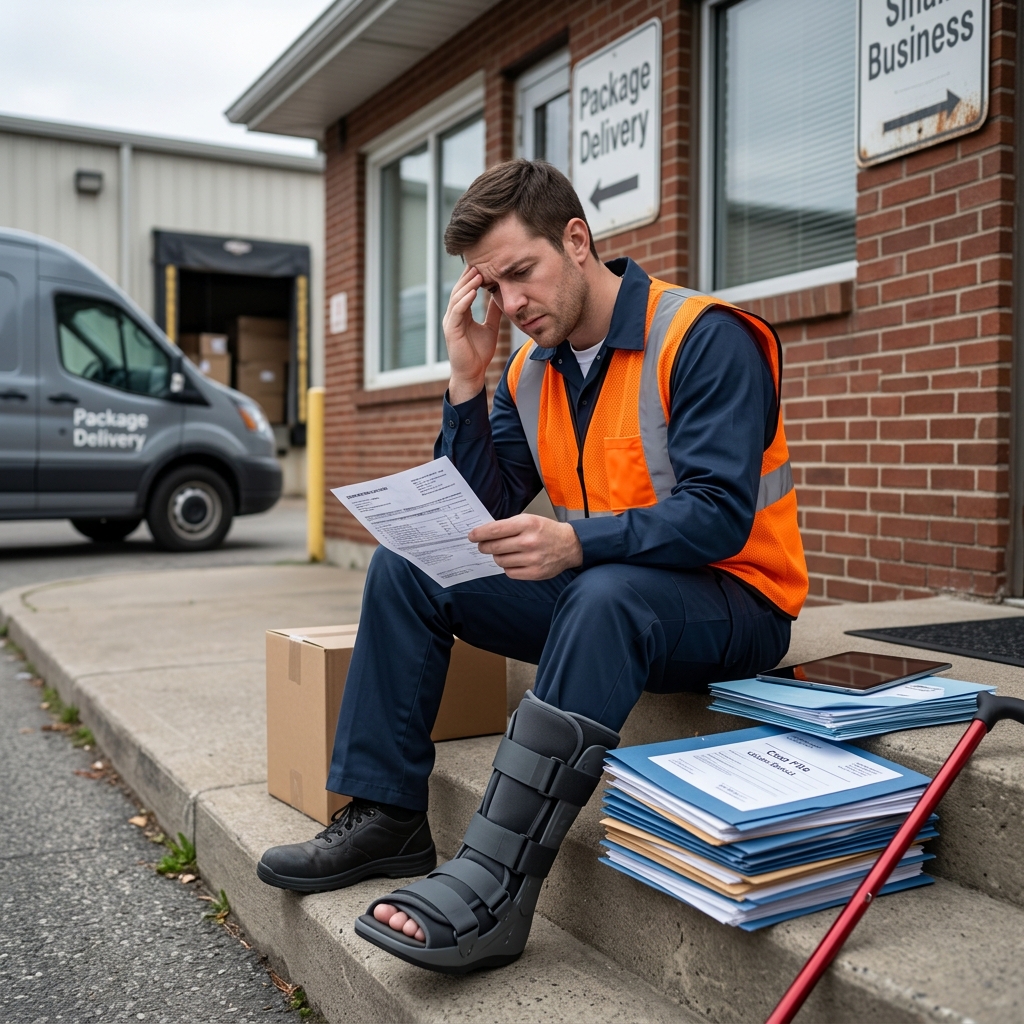
Most employees think of workers’ compensation as the main remedy after a job-related injury, and in many cases that is true. But some injuries raise questions that workers’ compensation does not fully answer, especially when an employer lacks coverage, a third party is involved, or the harm does not fit neatly within the usual administrative system. In those situations, an injured worker may have additional legal options.
This article explains the kinds of workplace injuries that may lead to claims outside the workers’ compensation system, the evidence that can strengthen a case, and the deadlines that often control whether a claim can move forward.
How workplace injury claims are usually handled
Workers’ compensation is generally designed to provide medical benefits and wage replacement for injuries or illnesses that arise out of employment, without requiring the employee to prove fault. The U.S. Department of Labor directs injured workers employed by private companies or state and local government agencies to their state workers’ compensation system for claim handling and benefits.
That no-fault structure is helpful, but it also has limits. Workers’ compensation may not be the only possible remedy if the worker was harmed by an outside party, if the employer is not covered, or if the injury falls into a category excluded by state law.
Situations where another claim may be possible
Not every job injury is handled the same way. Some cases can support a separate civil claim, while others remain within the workers’ compensation process only. Common examples include the following:
- Employer without workers’ compensation insurance: In some states, employees of non-subscribing or uninsured employers may be able to bring a direct negligence claim instead of relying on workers’ compensation benefits.
- Third-party involvement: If a contractor, driver, equipment manufacturer, or property owner helped cause the injury, the worker may have a claim against that outside party in addition to any workers’ compensation claim. This possibility depends on state law and the facts of the accident.
- Pre-existing conditions made worse at work: A work incident can still be compensable even when the employee had an earlier injury or medical condition. The key issue is whether the job incident caused a new injury or aggravated the old one.
- Excluded or disputed injuries: Some injuries may be denied because they happened during conduct outside the scope of employment, such as intentional self-harm, intoxication, or certain fights and recreational activities.
Pre-existing conditions do not automatically bar recovery
A common defense strategy is to argue that the employee was already injured or medically vulnerable before the workplace event. That argument does not automatically defeat a claim. A worker may still be entitled to benefits if the job accident aggravated a prior condition or caused a new worsening that can be medically documented.
This matters because many employees arrive at work with old back problems, shoulder issues, prior fractures, or chronic pain. If a lifting incident, fall, or equipment accident turns a manageable condition into a disabling one, medical evidence should clearly show how the workplace event changed the worker’s condition.
Evidence that can strengthen an injury claim
Whether the worker is pursuing benefits inside the workers’ compensation system or exploring a separate claim, evidence is critical. Strong documentation can help prove what happened, when it happened, and why the incident caused the injury.
| Type of evidence | Why it matters |
|---|---|
| Medical records | Show the diagnosis, treatment, and whether the work incident aggravated a prior condition. |
| Accident photos | Help show the severity of the scene, equipment condition, or visible injuries. |
| Video footage | Can capture how the accident occurred and whether unsafe conditions contributed. |
| Witness statements | Support the timeline and describe what co-workers observed. |
| Employment records | Can establish job duties, schedules, reporting history, and whether the employee was acting within the scope of work. |
Prompt medical treatment is especially important. Workers’ compensation agencies commonly instruct injured workers to seek care quickly and notify their employer as soon as possible, because delay can create disputes about causation and notice.
When an injury may be excluded from coverage
Workers’ compensation is broad, but it is not unlimited. State rules often exclude injuries tied to intentional misconduct, intoxication, serious rule violations, horseplay, or purely voluntary recreational activity.
For example, an injury during a spontaneous fight may be denied if the employee was the aggressor or if the altercation was mutual. Likewise, injuries during optional social activities may fall outside coverage unless attendance was required or the event primarily benefited the employer.
These exclusions matter because when a workers’ compensation claim is denied, the worker may need to evaluate whether another legal theory is available, such as negligence by a third party or direct action against an uninsured employer where allowed by state law.
What to do right after the injury
Early steps often determine whether a claim succeeds. After an on-the-job injury, an employee should act quickly and methodically:
- Report the injury to the employer as soon as possible.
- Get immediate medical evaluation, even if symptoms seem minor at first.
- Describe exactly how the injury happened and identify any witnesses.
- Save photos, messages, incident reports, and medical paperwork.
- Follow all claim-filing instructions from the state agency or employer.
State agencies emphasize that notice deadlines matter. In Texas, for example, an employee generally must report the injury to the employer within 30 days and file the claim within one year; in Virginia, notice to the employer is generally due within 30 days and the claim form within two years. New York similarly requires prompt reporting and emphasizes that injured workers may lose rights if notice is delayed.
Can you sue if your employer does not carry workers’ compensation?
In some jurisdictions, yes. If an employer does not subscribe to or carry workers’ compensation coverage where that coverage is required or permitted, the employee may be able to sue the employer directly for negligence. That can be significant because a civil case may allow recovery for damages that workers’ compensation does not usually pay, such as pain and suffering, depending on state law.
These cases are highly state-specific. Some states limit defenses available to uninsured employers, while others impose separate notice or procedural requirements. The key point is that a lack of workers’ compensation insurance can change the legal path of the claim entirely.
Why third-party claims matter
Even when workers’ compensation applies, a third party may still be responsible for part of the harm. A delivery driver struck by a negligent motorist, a warehouse employee injured by defective machinery, or a construction worker harmed by another contractor’s unsafe conduct may have a separate civil claim against the responsible outsider.
These claims can matter because workers’ compensation benefits are often limited to medical care and partial wage replacement, while a third-party case may also seek broader damages under ordinary tort principles. The exact recovery depends on the facts and the applicable state rules.
How lawyers evaluate these cases
An attorney reviewing a job injury will usually ask a few basic questions: Was the worker acting in the course of employment? Was there a pre-existing condition, and if so, did work make it worse? Was anyone else at fault? Did the employer have valid workers’ compensation coverage? Were notice and filing deadlines met?
Those questions help determine whether the case belongs only in the workers’ compensation system or whether a negligence claim, premises liability claim, product liability claim, or uninsured-employer action may also be available. The right answer often depends on a detailed review of medical records, witness accounts, and the workplace environment.
Common myths about workplace injuries
- Myth: A prior injury means no claim is possible. A work incident can still be compensable if it aggravated a prior condition.
- Myth: If the employer says it was my fault, I cannot recover. Workers’ compensation is often no-fault, and fault disputes do not always end a claim.
- Myth: I can wait to report the injury until I know how serious it is. Delay can jeopardize benefits because notice deadlines are strict in many states.
- Myth: Workers’ compensation is the only possible remedy. Third-party claims and uninsured-employer lawsuits may exist in some cases.
Frequently asked questions
Can I file a claim if I had a prior back injury?
Yes, if the workplace incident aggravated the prior injury or caused a new disabling condition. Medical records should explain the change in symptoms or function.
What if I was hurt during a company social event?
Coverage depends on whether attendance was required and whether the event primarily benefited the employer. Optional recreational activities are often excluded, though state rules vary.
Do I need to tell my employer right away?
Yes. Many states require notice within a short period, commonly 30 days, and missing the deadline can reduce or eliminate benefits.
What if someone other than my employer caused the injury?
You may have a separate claim against that third party. Examples include negligent drivers, equipment manufacturers, contractors, or property owners.
Can I get pain and suffering damages through workers’ compensation?
Usually not. Workers’ compensation benefits are typically limited, which is why a separate civil claim may matter when a third party or uninsured employer is involved.
Practical steps to protect your claim
Employees can improve their chances by treating the event as both a medical issue and a documentation issue. Getting checked by a doctor, following treatment instructions, and keeping records of every appointment can make the difference between a disputed claim and a successful one.
It is also wise to avoid informal statements that downplay the injury. Saying the pain is “fine” or failing to mention a prior condition can create confusion later. A clear, consistent record is usually more persuasive than an incomplete one.
References
- How Non-Work-Related Injuries Impact Workers’ Comp — LeeKe Law. 2025-??-??. https://www.leekelaw.com/blog/how-non-work-related-injuries-impact-workers-comp-claim/
- Injuries Not Covered By Workers’ Comp — WorkersCompNY. 2025-??-??. https://workerscompny.com/injuries-not-covered-by-workers-comp/
- Workers’ Compensation — U.S. Department of Labor. 2026-??-??. https://www.dol.gov/general/topic/workcomp
- What Happens If An Employer Does Not Have Workers Comp? — Terry Bryant Law. 2025-??-??. https://www.terrybryant.com/what-happens-employer-does-not-have-workers-comp
- Workers’ Compensation Fact Sheet — Texas Law Help. 2026-??-??. https://texaslawhelp.org/article/workers-compensation-fact-sheet
- Injured Worker’s Toolkit — New York State Workers’ Compensation Board. 2026-??-??. https://www.wcb.ny.gov/content/main/Workers/injured-workers-toolkit.jsp
- Injured Workers — Virginia Workers’ Compensation Commission. 2026-??-??. https://workcomp.virginia.gov/content/injured-workers
Similar Articles








Read full bio of medha deb




