
Juvenile Sentencing: A Practical Guide For Families And Courts
Exploring how juvenile courts balance accountability, rehabilitation, and public safety through diverse sentencing choices.
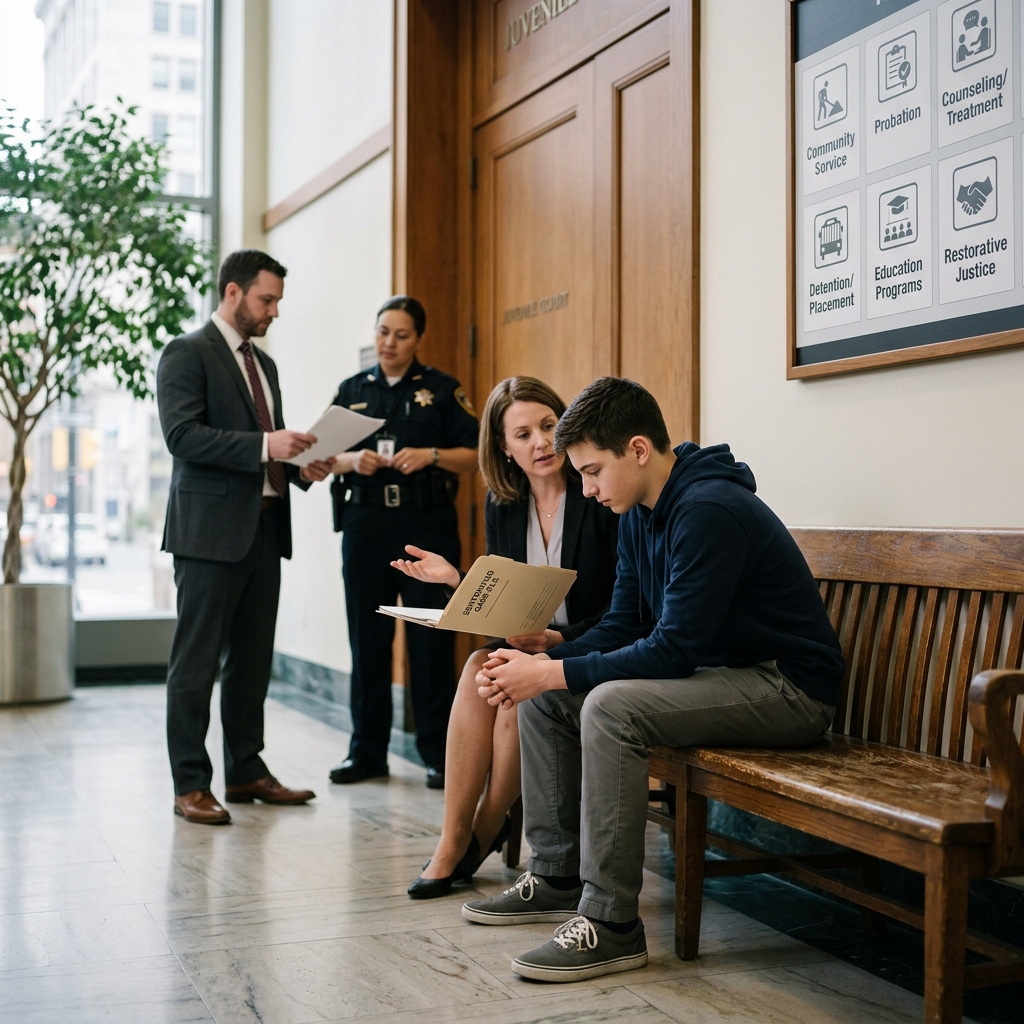
When a young person is found responsible for a crime in juvenile court, the judge must choose a sentence—usually called a disposition order—that both protects the public and supports the youth’s rehabilitation. Unlike adult criminal sentencing, juvenile dispositions emphasize education, treatment, and future potential rather than purely punishment.
This article explains the main sentencing options available in juvenile courts, how judges decide among them, and what families and youth can expect during and after disposition. It draws on widely accepted legal principles and current practices in youth justice across the United States.
Foundations of Juvenile Sentencing
The juvenile justice system was created on the premise that children and adolescents are still developing, and that early intervention can change their trajectory. Courts therefore seek to:
- Hold youth accountable for unlawful behavior
- Protect community safety from further harm
- Promote rehabilitation through services and supervision
- Respect legal rights and due process for minors and their families
These goals shape every sentencing choice, from a simple warning to long-term confinement.
Major Categories of Juvenile Dispositions
Juvenile sentencing options typically fall into two broad categories: incarceration and non-incarceration dispositions.
| Category | Examples | Primary Goal |
|---|---|---|
| Incarceration | Juvenile detention, residential facilities, house arrest, transfer to adult prison | Public safety, intensive supervision, structured environment |
| Non-incarceration | Probation, fines, counseling, community service, electronic monitoring, diversion programs | Rehabilitation, accountability, maintaining ties to school and family |
Non‑Incarceration Sentencing Options
Most youth in the justice system receive sentences that allow them to remain in the community, often under close supervision. These options are designed to correct behavior while minimizing the harms of detention.
Verbal Reprimand and Judicial Warning
For very minor offenses and first-time involvement, a judge may issue only a formal warning in court.
- The youth is told that future misconduct can lead to more serious penalties.
- The warning becomes part of the court record and may influence later decisions.
- This option is typically used when risk to public safety is low and the youth has strong family and school support.
Financial Sanctions: Fines and Restitution
Courts can order youth to pay fines to the government or restitution to victims for financial losses, such as property damage.
- Fines are intended to deter future offending.
- Restitution focuses on repairing harm done to victims.
- Judges often consider the family’s ability to pay, and may allow installment plans or alternative arrangements.
Loss of Driving Privileges
For driving-related offenses such as reckless driving or DUI, judges may suspend, revoke, or delay the youth’s driver’s license.
- Restrictions can include a full suspension or limits on where and when the youth can drive.
- In some cases, the youth may be prohibited from obtaining a license until a specified age.
Counseling and Treatment Requirements
Counseling is a common condition in juvenile sentencing, reflecting the system’s focus on addressing underlying causes of delinquent behavior.
- Individual therapy for issues such as trauma, depression, or anger
- Family counseling to improve communication and supervision
- Substance use treatment programs for alcohol or drug-related offenses
- Specialized educational groups (e.g., decision-making skills, social skills training)
These requirements may be imposed as stand-alone orders or as conditions of probation.
Community Service
Community service requires youth to complete unpaid work for public or nonprofit organizations.
- Tasks may include neighborhood cleanups, assisting at community centers, or speaking to peers about the consequences of crime.
- Judges can tailor community service to the nature of the offense—for example, educational presentations after a drunk driving incident.
- Successful completion may lead to reduced supervision or early termination of probation.
Electronic Monitoring
Electronic monitoring uses a wrist or ankle device to track a youth’s location, often combined with strict curfews.
- Allows the court to restrict movement while avoiding full detention.
- May be used as part of house arrest or during probation.
- Violations, such as tampering with the device or leaving approved areas, can result in more severe sanctions.
Probation: The Most Common Juvenile Sentence
Probation is one of the most frequently used dispositions in juvenile courts. Under probation, the youth remains in the community but must follow court-ordered rules under supervision of a probation officer.
Typical probation conditions include:
- Regular meetings with a probation officer
- Curfews and restrictions on travel
- School attendance and academic progress requirements
- Counseling or treatment participation
- Completion of community service hours
- Avoiding contact with certain peers or gangs
Failure to comply can lead to a violation hearing and more restrictive sentences, including detention.
Incarceration and Confinement Options
Although most juvenile dispositions are non-custodial, judges can order various forms of confinement, particularly for serious or chronic offending.
Home Confinement and House Arrest
Home confinement keeps the youth at home except for approved activities such as school, work, or treatment.
- Often paired with electronic monitoring.
- Parents or guardians are expected to help enforce court rules.
- Violations may trigger transfer to a detention facility.
Placement Outside the Home
Where home conditions are unsafe or inadequate, courts may place youth with relatives, foster families, or community-based residential programs.
- These placements can be short-term (stabilization) or longer-term (behavioral or educational programs).
- The aim is to provide a structured, supportive environment with closer supervision than the home.
Juvenile Detention and Residential Facilities
Juvenile detention facilities and residential programs provide secure confinement.
- Short-term detention may follow arrest or precede a court hearing.
- Longer-term residential placement is reserved for more serious offenses or repeated violations.
- Facilities often incorporate schooling, counseling, and life-skills training.
Secured Juvenile Facilities and State Commitment
Some states operate state-run youth facilities for serious felony-level offenses, with sentences that can extend for several years.
- In Texas, for example, youth can receive determinate sentences of up to 40 years for certain serious crimes, initially served in the juvenile system.
- Minimum confinement periods are set by statute and depend on offense severity.
Blended Sentences and Transfer to Adult Court
A number of states use blended sentencing, which allows courts to combine juvenile and adult sanctions in cases involving serious or violent youth offenders.
- Juvenile courts may impose both a juvenile and an adult sentence but suspend the adult term.
- If the youth successfully completes the juvenile portion and avoids new violations, the adult sentence is revoked.
- Failure can result in transfer to adult prison or activation of the adult term.
In rare and very serious cases, youth can be prosecuted in adult criminal court and sentenced directly to adult jail or prison. Policies vary by state and offense type.
Alternative and Diversion Programs
Many jurisdictions have created diversion and specialized youth programs as alternatives to formal court processing and confinement.
- Pre-court diversion: youth complete requirements (e.g., counseling, community service) in exchange for charges being dropped or reduced.
- Specialty courts: such as drug courts or mental health courts that focus on treatment and close monitoring.
- Comprehensive youth programs: integrating counseling, job training, family support, and educational assistance.
These approaches reflect research showing that incarceration is most effective as a last resort, reserved for serious and violent offenders.
How Judges Decide: Factors in Juvenile Sentencing
Juvenile court judges typically have broad discretion to craft individualized disposition orders.
Common factors include:
- Nature and seriousness of the offense
- Prior record or history of delinquent behavior
- Risk to public safety and likelihood of reoffending
- Age and maturity of the youth
- Family environment and supervision capacity
- School engagement and educational needs
- Physical and mental health, including substance use issues
Judges often rely on probation reports, psychological evaluations, victim input, and recommendations from attorneys and service providers.
Legal Rights and Appeals in Juvenile Disposition
Youths in juvenile court retain important legal protections, including the right to challenge their sentence.
- Right to appeal: A youth may appeal a disposition order to a higher court, similar to an adult appealing a criminal sentence.
- Modification requests: Juveniles can ask the original judge to modify the order if circumstances change—for example, significant progress in school or treatment.
- Legal representation: In most cases, youth have the right to counsel during disposition proceedings.
The possibility of modification is a distinguishing feature of juvenile sentencing, allowing courts to respond flexibly as the youth develops.
Impact of Youth Sentencing Trends
In recent decades, youth incarceration in the United States has dropped sharply—falling by nearly 75% between 2000 and 2023. This decline reflects a broad shift toward evidence-based approaches that prioritize community-based supervision, diversion, and treatment over confinement.
Still, serious and violent offenses continue to present challenges, and debates persist about when adult-like punishment is appropriate.
Practical Tips for Families Facing Juvenile Sentencing
Families play a critical role in helping youth comply with court orders and make lasting changes. The following steps can support a better outcome:
- Stay informed: Ask the attorney and probation officer to explain each sentencing option and requirement.
- Engage with services: Encourage consistent participation in counseling, education, and treatment programs.
- Document progress: Keep records of school attendance, grades, program completion, and positive activities.
- Communicate concerns: Tell the court or probation officer about barriers such as transportation, health issues, or family crises.
- Plan for reentry: If detention is ordered, begin planning early for the youth’s return to school and community.
Frequently Asked Questions
Is jail always an option for juvenile offenders?
No. While judges can order incarceration, most juvenile sentences involve probation, community-based programs, or other non-custodial options. Confinement is generally reserved for serious or repeated offenses.
Can a juvenile sentence be changed after it is imposed?
Yes. In many jurisdictions, youth can ask the sentencing judge to modify a disposition if their circumstances or progress justify a change. This flexibility is a key difference from adult criminal sentencing.
What happens if a youth violates probation?
Probation violations can lead to a hearing where the judge may warn the youth, add new conditions, extend probation, or impose more restrictive sanctions such as detention or electronic monitoring.
Do victims have a role in juvenile sentencing?
Victims often have opportunities to share impact statements or request restitution. Their input can influence the court’s decisions about accountability and rehabilitation measures, though judges must also consider the youth’s developmental needs and legal rights.
Are juvenile records sealed when the youth becomes an adult?
Record-sealing policies vary by state. In many places, juvenile records can be restricted or sealed under specific conditions to reduce long-term consequences, but serious offenses may remain accessible to certain agencies. Families should consult local law or a qualified attorney for state-specific rules.
References
- Juvenile Court Sentencing Options — Nolo. 2023-06-01. https://www.nolo.com/legal-encyclopedia/juvenile-court-sentencing-options-32225.html
- 13 Typical Punishments for Juvenile Offenders — Wallin & Klarich. 2022-05-10. https://www.wklaw.com/juvenile-crime/13-punishments-for-juvenile-offenders/
- Criminal Sentencing in Juvenile Court & Possible Legal Penalties — Justia. 2021-09-15. https://www.justia.com/criminal/offenses/other-crimes/juvenile-crimes/sentencing-in-juvenile-court/
- Sentencing Authority in Juvenile and Criminal Court — Office of Juvenile Justice and Delinquency Prevention (OJJDP). 2000-12-01. https://ojjdp.ojp.gov/sites/g/files/xyckuh176/files/pubs/reform2/ch2_k.html
- The Juvenile Justice System in Texas — Texas Juvenile Justice Department. 2023-02-20. https://www.tjjd.texas.gov/about-the-tjjd/the-juvenile-justice-system-in-texas/
- Youth in the Justice System: An Overview — Juvenile Law Center. 2020-07-01. https://jlc.org/youth-justice-system-overview
- Youth Justice by the Numbers — The Sentencing Project. 2024-01-10. https://www.sentencingproject.org/policy-brief/youth-justice-by-the-numbers/
Similar Articles








Read full bio of medha deb




