
Understanding Student Debt Cancellation Disputes
A practical legal guide to student loan cancellation disputes, borrower protections, and how to challenge denial of relief.
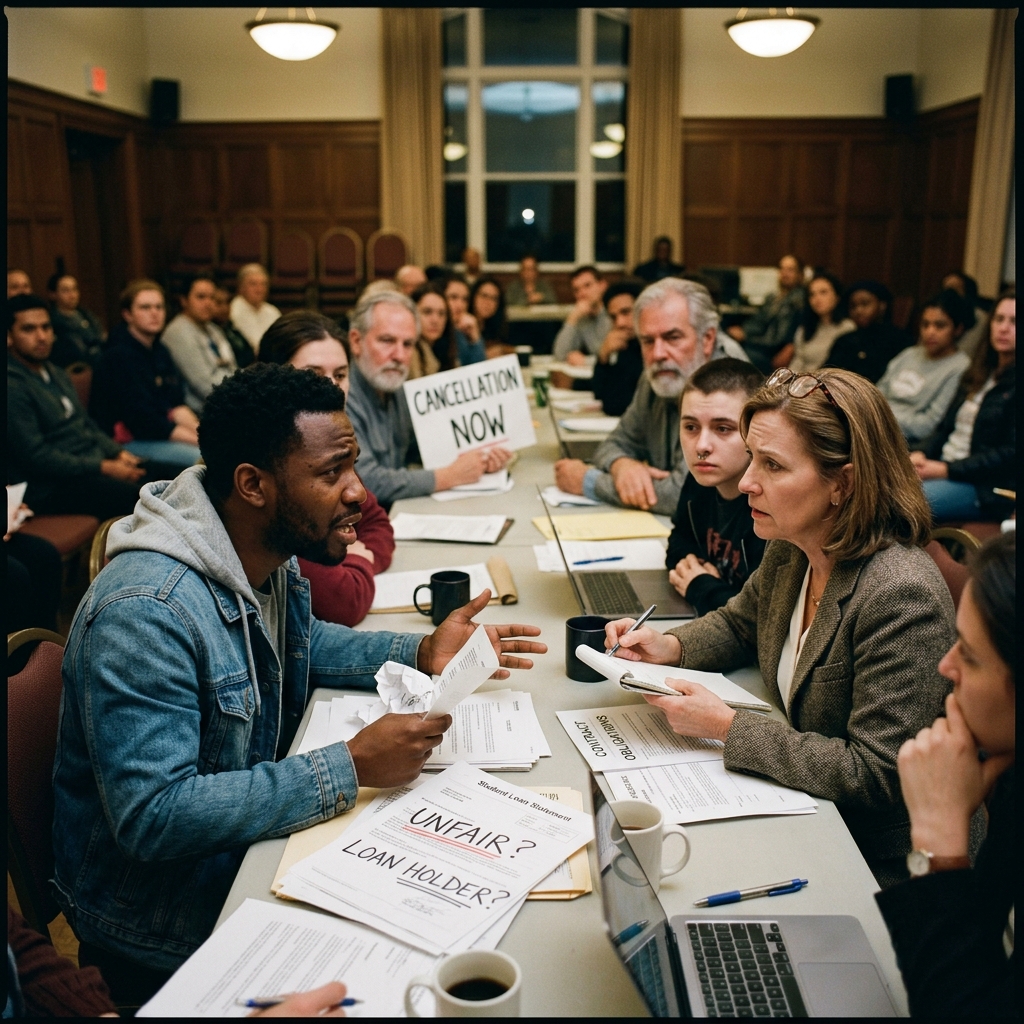
Student loan cancellation has become one of the most contested issues in modern financial and legal policy. While many borrowers are eligible for some form of relief, disputes frequently arise over whether a loan may legally be canceled, how much can be forgiven, and whether the government or lender has correctly applied the rules.
This article explains why cancellation disputes occur, outlines the major legal tools available to borrowers, and offers a practical roadmap for responding when your request for student debt relief is delayed, denied, or mishandled.
1. The Landscape of Student Debt Relief
Student debt relief is governed by a mix of federal statutes, regulations, and program-specific rules. Federal student loans are subject to comprehensive federal law, while private student loans are primarily governed by contract law and state consumer protection rules.
Broadly, borrowers encounter three main types of relief:
- Cancellation or discharge – eliminating all or part of a loan due to specific legal grounds, such as fraud or disability.[10]
- Forgiveness – erasing remaining balances after meeting conditions, such as years of qualifying payments or public service employment.
- Administrative relief – correcting servicing errors, recalculating balances, or adjusting terms without formally canceling the loan.
Disputes usually arise when borrowers meet the criteria for relief but the agency or lender refuses or delays action, or when a borrower challenges the validity of the debt itself.
2. Why Student Debt Cancellation Disputes Arise
Cancellation disputes are rarely simple disagreements. They typically involve questions of statutory interpretation, regulatory authority, and factual evidence about a borrower’s circumstances or school conduct.
Common sources of conflict include:
- Eligibility disagreements – the agency or servicer claims the borrower does not meet the program requirements, even when the borrower presents evidence of qualifying payments, employment, or misconduct by the school.[10]
- Processing delays – borrowers wait years for decisions on cancellation applications, sometimes continuing to make payments despite being legally entitled to relief.
- Legal challenges to broad programs – large-scale cancellation initiatives can be challenged in court, affecting millions of borrowers at once.
- Servicing and accounting errors – incorrect balances, misclassified repayment plans, or missing records can cause borrowers to be denied forgiveness or discharge.
Understanding which type of dispute you face is the first step toward choosing the right legal and administrative strategies.
3. Major Legal Grounds for Loan Cancellation
Federal law recognizes several grounds on which borrowers can seek cancellation or discharge of federal student loans. Each ground has specific criteria and evidence requirements.[10]
| Type of Relief | Key Basis | Typical Evidence |
|---|---|---|
| Borrower defense to repayment | School misrepresentation or unlawful conduct | Enrollment documents, advertisements, emails, complaints, accreditation records |
| Closed school discharge | School closure while enrolled or soon after withdrawal | Enrollment records, closure notices, transcripts |
| Total & permanent disability discharge | Inability to work due to qualifying disability | Medical certifications, Social Security disability determinations |
| False certification discharge | Improper certification of eligibility or identity theft | Loan documents, proof of disqualifying status, identity theft reports |
| Unpaid refund discharge | School failed to return required refunds after withdrawal | Withdrawal records, billing statements showing unreturned funds |
3.1 Borrower Defense to Repayment
Borrower defense to repayment allows cancellation of certain federal Direct Loans if the school engaged in misrepresentation or other unlawful conduct related to the loan or education services.[10]
Typical misconduct may include:
- Misleading statements about job placement rates or salaries
- False claims about program accreditation or licensing eligibility
- Deceptive descriptions of program costs, financial aid, or loan obligations
Borrowers must submit detailed narratives and supporting evidence. Disputes often center on whether the school’s conduct meets the legal standard for misrepresentation, and whether the borrower’s loan should be fully or partially discharged.
3.2 Closed School and False Certification
When schools cease operations, borrowers may qualify for closed school discharge if they were enrolled at the time of closure or withdrew shortly before. A key dispute is whether the borrower’s circumstances fit within the specific time windows and exceptions defined by regulation.
False certification discharge applies when a school wrongly certified a borrower’s eligibility, such as admitting students without a high school diploma when required, or certifying programs for which the borrower was legally barred from employment. It can also apply in cases where loans were taken out through identity theft or forged signatures, leading to disputes about authenticity of documentation and responsibility for the debt.
3.3 Disability, Refund, and Other Discharges
Borrowers who are unable to work due to qualifying disabilities may be eligible for total and permanent disability discharge of federal loans. Disputes here often involve medical evidence, definitions of disability, and the timing of eligibility.
Unpaid refund discharge addresses situations where a borrower withdrew from school, but the institution failed to return required refunds to the Department of Education, leaving the borrower liable for amounts they should not owe. Borrowers may need to reconstruct timelines and billing records to support their claims.
4. Forgiveness Through Long-Term Repayment Programs
Not all relief requires proving misconduct or special circumstances. Some programs offer forgiveness after years of qualifying payments or public service.
4.1 Income-Driven Repayment and Long-Term Forgiveness
Income-driven repayment (IDR) plans cap monthly payments based on income and family size, with remaining balances forgiven after 20–25 years of qualifying payments. Litigation and enforcement actions have shown that agencies can fail to properly track these payments, leading borrowers to pay beyond the date they should have received cancellation.
Key dispute points include:
- Whether all qualifying payments were correctly counted
- Whether periods of forbearance or deferment should have been treated as qualifying
- Whether the effective date of discharge is correctly recognized for tax purposes
4.2 Public Service Loan Forgiveness
Public Service Loan Forgiveness (PSLF) cancels remaining federal Direct Loan balances after 120 qualifying monthly payments while working full-time for eligible government or nonprofit employers. Historically, many borrowers were denied due to technical issues such as ineligible repayment plans or miscounted payments, creating widespread disputes and subsequent reforms.
Borrowers should regularly verify with official tools and servicer records that their employment and payments are correctly tracked, to reduce the risk of being unfairly denied.
4.3 Teacher and Other Occupation-Based Relief
Specific statutes offer teacher loan forgiveness and similar relief for certain professions in low-income or high-need areas. Disputes frequently involve whether the school meets low-income criteria, whether service requirements were fully satisfied, and how overlapping programs interact (for example, whether forgiveness under one program reduces eligibility for another).
5. Disputing Student Loans: Step-by-Step Strategy
When a borrower believes that a loan should be canceled or forgiven but the lender or servicer disagrees, the dispute process follows several practical steps.
5.1 Identify Your Loans and Servicers
Begin by confirming all loans and responsible entities:
- Use official federal resources to identify federal loans and current servicers.
- Review your credit reports to locate private loans and their lenders.
Accurate identification is crucial, as federal and private loans involve different dispute channels and legal standards.
5.2 Gather Documentation
Successful cancellation disputes rely on clear evidence. Borrowers should collect:
- Original loan promissory notes and disclosure statements
- Financial aid offer letters and cost of attendance documents
- School catalogs, marketing materials, and emails related to enrollment
- Payment histories, account statements, and correspondence with servicers
Organizing this material before filing complaints or applications allows borrowers to present coherent, persuasive cases.
5.3 Communicate in Writing
Borrowers should send written, dated communications to servicers or lenders explaining:
- The basis for believing the loan should be canceled or forgiven
- The specific legal or program grounds (for example, borrower defense, closed school, PSLF eligibility)
- The supporting evidence enclosed or available
Maintaining copies of all letters, emails, and responses is essential for later escalation.
5.4 Escalate Through Ombuds and Regulators
If a dispute is not resolved at the servicer level, federal and state systems offer additional avenues.
- Federal Student Aid Ombudsman Group – assists with unresolved federal loan disputes using documentation and case reviews.
- Consumer Financial Protection Bureau (CFPB) – accepts complaints about private student loan lenders and servicers, which can trigger investigations and mediation.
- State student loan ombudspersons – in some states, offices specialize in helping borrowers address complex loan problems and connect with legal assistance.
Borrowers should escalate systematically, referencing prior communications and attaching all relevant evidence.
6. Large-Scale Forgiveness Programs and Litigation
Beyond individual disputes, entire cancellation initiatives have been challenged in court. These cases shape the boundaries of executive authority and can dramatically affect borrowers’ expectations for relief.
6.1 Judicial Limits on Broad Cancellation
Recent decisions by the Supreme Court and appellate courts have found that certain broad student loan forgiveness programs exceeded statutory authority, blocking or significantly narrowing proposed relief. Courts have emphasized that large-scale cancellation affecting hundreds of billions of dollars in debt requires clear authorization from Congress.
For borrowers, this means:
- Promised broad relief may not materialize if challenged successfully in court
- Existing statutory programs (such as borrower defense, PSLF, IDR forgiveness) remain critical sources of relief
- Policy shifts may change eligibility or timelines, even after programs are announced
6.2 How Litigation Interacts with Individual Claims
When large programs are blocked, individual cancellation grounds generally still operate. Borrowers should continue to pursue statutory discharge and forgiveness options, even while broader policy debates unfold.
At the same time, litigation can influence how existing programs are interpreted or enforced, leading to corrective actions such as recalculating IDR payment counts or reprocessing borrower defense applications.[10]
7. Practical Tips to Protect Your Rights
Disputing student debt cancellation decisions can be complex, but certain practical strategies improve a borrower’s chances of a fair outcome.
- Keep paying unless instructed otherwise – missing payments during disputes can damage credit and may not be reversible.
- Use official channels – rely on government websites, certified forms, and recognized dispute procedures to avoid misinformation.[10]
- Document everything – maintain a personal file with timelines, copies of communications, and notes from phone calls.
- Seek assistance early – nonprofit programs, state ombuds, and legal aid can help interpret rules and prepare stronger applications.
- Monitor legal developments – changes in court decisions and regulations can open new avenues for relief or alter program requirements.
8. Frequently Asked Questions (FAQs)
8.1 Can I challenge a denial of loan cancellation?
Yes. Federal programs typically allow borrowers to submit additional documentation, request reconsideration, or appeal through administrative channels. Borrowers may also seek help from the Federal Student Aid Ombudsman Group or state ombuds if servicers refuse to correct errors.
8.2 What if my school misled me but has not closed?
Borrower defense to repayment does not require school closure. If the institution engaged in qualifying misrepresentation or unlawful practices related to your loans or educational services, you may still pursue borrower defense discharge.[10]
8.3 How do private student loan disputes differ from federal ones?
Private student loans are not governed by the same federal cancellation statutes, so relief options are narrower and largely based on contract law, state consumer protection, and lender policies. Borrowers with complaints about private loans can file with the CFPB and may need legal counsel to challenge unfair terms or fraud.
8.4 Does long-term forgiveness under IDR or PSLF happen automatically?
Historically, many borrowers were required to apply or certify employment and income to secure forgiveness, and failures in tracking caused some to miss out on relief. Recent reforms and settlements have sought to improve automatic recognition of qualifying payments, but borrowers should still regularly verify records and respond promptly to notices.
8.5 Will court decisions about broad forgiveness erase existing rights?
No. Judicial decisions limiting broad, mass cancellation programs do not repeal established statutory discharge and forgiveness options. Borrowers may continue to pursue borrower defense, closed school, disability discharge, PSLF, and IDR-based forgiveness under existing laws.
References
- Cancellation & Forgiveness Options — National Consumer Law Center / Student Loan Borrower Assistance. 2024-03-01. https://studentloanborrowerassistance.org/for-borrowers/dealing-with-student-loan-debt/loan-cancellation-forgiveness-bankruptcy/cancellation-forgiveness-options/
- How to Dispute Student Loans: Balances, Terms, & Forgiveness — Tate Esq. 2023-11-15. https://www.tateesq.com/learn/student-loan-dispute-balances-forgiveness
- Supreme Court strikes down Biden student-loan forgiveness program — SCOTUSblog. 2023-06-30. https://www.scotusblog.com/2023/06/supreme-court-strikes-down-biden-student-loan-forgiveness-program/
- Following Lawsuit by the AFT, Trump Administration Agrees to Deliver Student Debt Relief — American Federation of Teachers. 2019-10-01. https://www.aft.org/press-release/following-lawsuit-aft-trump-administration-agrees-deliver-student-debt-relief-and
- The Student Loan Forgiveness Saga: How the Litigation Played Out and What’s Next — The Federalist Society. 2024-10-07. https://fedsoc.org/commentary/fedsoc-blog/the-student-loan-forgiveness-saga-how-the-litigation-played-out-and-what-s-next
- Borrower Defense Loan Discharge — U.S. Department of Education, Federal Student Aid. 2024-02-20. https://studentaid.gov/manage-loans/forgiveness-cancellation/borrower-defense
- Get Help — Protect Borrowers. 2024-01-10. https://protectborrowers.org/get-help/
Similar Articles








Read full bio of medha deb




