
Understanding Per Se DUI Intoxication Laws
A detailed guide to how per se DUI intoxication laws work, the role of BAC limits, and what drivers need to know to protect their rights.
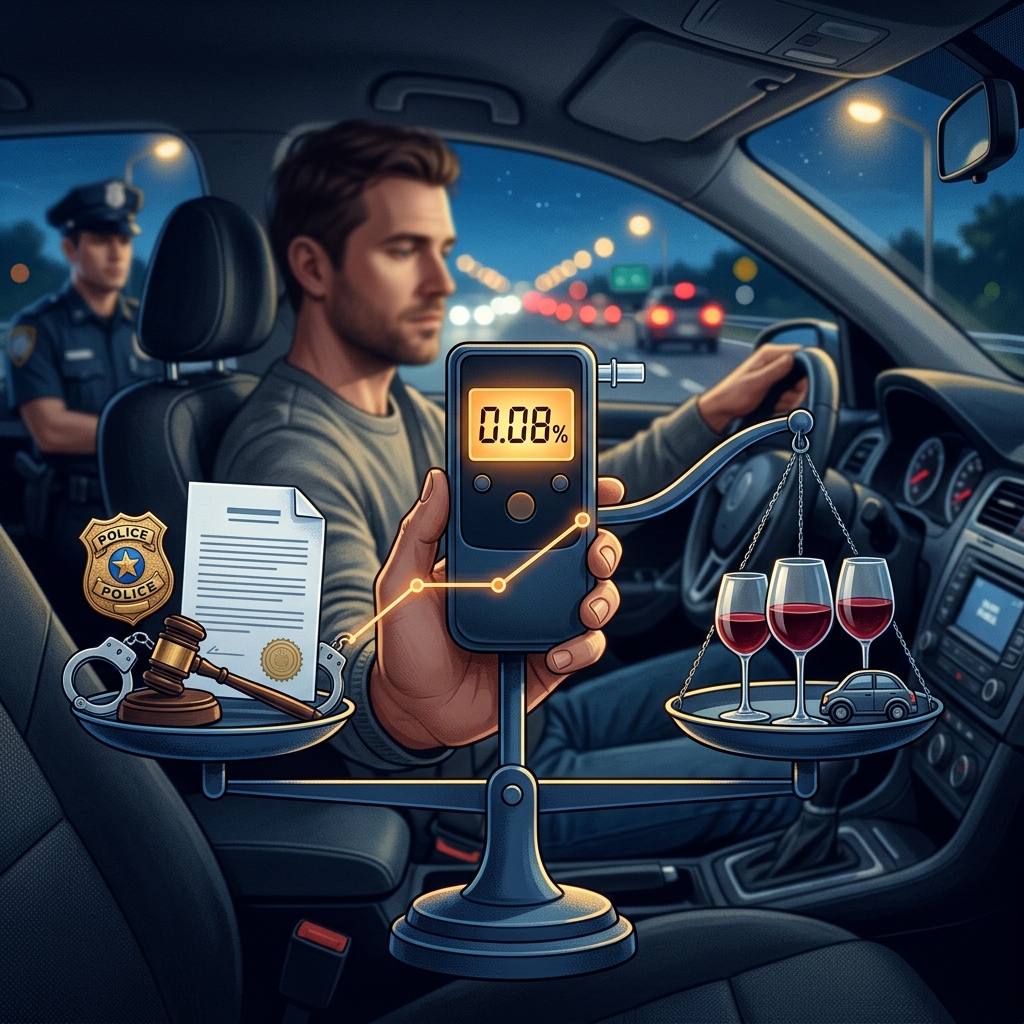
Per se DUI intoxication laws have reshaped how drunk driving cases are prosecuted across the United States. Instead of requiring the government to prove that a driver was visibly impaired, these laws allow a conviction based primarily on a chemical test result showing a certain blood alcohol concentration (BAC). Knowing how these rules work, and how they differ from traditional impairment-based DUI charges, is essential for anyone who holds a driver’s license.
What Does “Per Se” Mean in DUI Law?
The phrase “per se” comes from Latin and means “by itself”. In the DUI context, it refers to laws that make it illegal to drive with a BAC at or above a specified limit, regardless of whether the driver appears drunk or drives poorly. Under these statutes, the chemical test result is enough by itself to establish a violation.
Many states define a per se offense by setting a numeric BAC threshold. For adult drivers, that limit is commonly 0.08% BAC, measured by breath, blood, or sometimes urine tests. If a driver’s BAC meets or exceeds that value, the law presumes intoxication for purposes of the per se DUI charge.
Per Se DUI vs. Impairment-Based DUI
It is important to distinguish between a per se DUI and an impairment-based DUI charge. In many jurisdictions, prosecutors can pursue drunk driving cases under either or both theories.
Impairment-Based DUI
An impairment-based DUI requires proof that the driver’s ability to operate a vehicle safely was reduced because of alcohol, drugs, or a combination of substances. This usually involves evidence such as:
- Erratic driving (weaving, speeding, driving too slowly, or ignoring traffic signals)
- Physical signs of intoxication (odor of alcohol, red or watery eyes, slurred speech, poor coordination)
- Performance on field sobriety tests administered roadside by an officer
- Statements made by the driver or witnesses about drinking or drug use
In this type of case, there may or may not be a chemical test. Even if test results are below the per se limit, a driver can still be convicted if the evidence shows they were incapable of driving safely.
Per Se DUI Based on BAC
A per se DUI charge focuses almost entirely on the number produced by the chemical test. If the BAC is at or above the legal threshold, the law presumes intoxication, and no additional proof of unsafe driving is required. In other words, a driver could appear perfectly steady, obey all traffic laws, and still be convicted of per se DUI solely based on the BAC reading.
This approach simplifies prosecution: the state must show that the test was properly administered, that the result is reliable, and that the driver’s BAC was at or above the statutory limit at the relevant time.
Common BAC Limits Under Per Se Laws
Although exact thresholds vary, most states follow similar patterns when defining per se intoxication. Here are common BAC standards that frequently appear in drunk driving legislation.
| Driver Category | Typical Per Se BAC Limit | Example Jurisdiction |
|---|---|---|
| Adult non-commercial driver | 0.08% BAC | Pennsylvania, Maryland, Michigan |
| High BAC / “super drunk” designation | 0.17% BAC or higher | Michigan |
| Commercial driver | 0.04% BAC | Example: California standard for commercial licenses |
| Under 21 (zero or reduced tolerance) | 0.01–0.02% BAC | California and Michigan “zero tolerance” rules |
In addition, some states create separate offenses such as DUI per se, which may be defined as having a BAC of 0.08% or higher at the time of driving or within a certain period after driving (often two hours). These rules address situations where testing cannot be performed immediately at the roadside.
Administrative vs. Criminal Consequences
Per se intoxication laws often operate alongside administrative license penalties imposed by state motor vehicle agencies. These can occur even before any criminal court conviction.
Administrative Per Se Actions
In some jurisdictions, such as California, an arrest for DUI with a qualifying BAC triggers an Administrative Per Se action by the Department of Motor Vehicles (DMV). The agency may suspend the driver’s license based on the BAC result alone, while criminal charges proceed separately.
Typical administrative consequences include:
- Immediate confiscation of the physical driver’s license by law enforcement
- Issuance of a temporary permit that expires after a short period (e.g., 30 days)
- Automatic suspension if the driver does not request an administrative hearing within the allowed timeframe
Criminal Penalties Under Per Se Statutes
Criminal penalties depend on state law, the driver’s prior record, and the level of BAC. Sanctions can include fines, jail or prison time, mandatory treatment, and installation of ignition interlock devices. For example:
- Some states classify first-offense DUI or DUI per se as a misdemeanor with potential jail time and fines.
- Higher BAC levels or repeat offenses can lead to longer incarceration, larger fines, and felony charges.
- Where drunk driving causes injury or death, felony penalties increase sharply, with multi-year prison exposure.
Per Se DUI and Drug Intoxication
While many per se laws focus on alcohol, some states have adopted similar concepts for drugs. Instead of BAC, these statutes may prohibit driving with certain controlled substances present in the body at any level or above specified thresholds.
For example, a per se drugged-driving offense may apply where a driver has any detectable amount of particular illegal drugs, such as Schedule I substances or cocaine, in their system. In these cases, prosecutors do not need to show visible impairment – the presence of the prohibited substance itself triggers liability.
Evidence Used to Prove Per Se Intoxication
Even though per se DUI laws focus on chemical test results, courts still scrutinize how evidence was gathered and handled. A typical per se case may involve several categories of proof.
Chemical Tests: Breath, Blood, and Urine
Chemical testing is central to per se prosecutions. The state must typically show that:
- The test was administered by a qualified person using approved equipment
- Devices were properly calibrated and maintained according to regulations
- Samples were collected, stored, and analyzed correctly to avoid contamination or degradation
In Michigan, for instance, the per se theory requires the prosecutor to introduce evidence of the driver’s blood alcohol level and to prove that the test result is reliable. Similar standards apply in other states to prevent faulty or inaccurate measurements from unfairly determining guilt.
Timing of the Test
Because alcohol levels change over time as the body metabolizes alcohol, many laws specify the relevant time window for a valid per se measurement. Some statutes define DUI per se as having a BAC at or above the legal limit at the time of driving or within two hours after driving.
This timing window allows the state to rely on tests performed after arrest, while also giving the defense room to argue that BAC at the time of actual driving was lower than the test result suggests.
How Per Se Laws Affect Different Categories of Drivers
Per se intoxication rules do not affect all drivers equally. Legislatures frequently impose stricter standards on certain groups, reflecting public safety concerns.
Underage Drivers
Many states adopt “zero tolerance” or near-zero tolerance policies for drivers under 21, making it illegal to operate a vehicle with even a small amount of alcohol in the system. These rules aim to reinforce minimum drinking age laws and discourage any drinking before driving.
Commercial Drivers
Commercial drivers, such as truck and bus operators, are typically held to a stricter BAC limit (often 0.04%) when operating commercial vehicles. Because commercial vehicles can cause more severe accidents, regulators choose a lower threshold to promote safety and accountability.
Drivers with Prior DUI Convictions
Repeat offenders generally face enhanced penalties. In some states, multiple per se DUI convictions can eventually result in felony charges, longer license suspensions, and mandatory ignition interlock devices. Laws may also allow courts to look back over long periods, using earlier convictions to increase the severity of new charges.
Defenses and Challenges in Per Se DUI Cases
Although per se statutes rely on numerical BAC thresholds, they do not eliminate all defenses. Experienced counsel can still challenge how the test was conducted and whether the reading accurately reflects the driver’s condition.
Common Areas of Challenge
- Test procedure: Was the test administered according to required protocols and manufacturer guidelines?
- Equipment reliability: Was the device properly calibrated and maintained, and do maintenance records support its accuracy?
- Chain of custody: For blood or urine samples, can the prosecution prove an unbroken chain of custody with no contamination risk?
- Physiological factors: Medical conditions, mouth alcohol, or certain substances might affect breath test readings.
- Timing issues: If significant time passed between driving and testing, defense experts may argue that BAC was below the legal limit while the vehicle was actually being operated.
Relationship Between Per Se and Impairment Charges
It is common for prosecutors to charge both per se and impairment-based DUI counts in a single case. If the jury or judge finds the chemical test unreliable, they may still convict on the impairment theory based on driving behavior and other observable evidence.
Practical Tips for Drivers
While the safest approach is never to drive after consuming alcohol or drugs, understanding how per se laws operate can help drivers make more informed decisions and respond appropriately if they are stopped by law enforcement.
- Know your state’s limits: Become familiar with the BAC standards in your jurisdiction, especially for underage and commercial driving.
- Remember that “feeling fine” is not a defense: Under per se statutes, a legal violation may exist even if the driver feels unimpaired.
- Understand administrative deadlines: After a DUI arrest, there is often a short window to request a hearing to contest automatic license suspension.
- Seek legal advice promptly: Per se and impairment charges can carry significant consequences; early legal consultation is critical.
- Consider alternative transportation: Use taxis, rideshare services, or designated drivers when alcohol is involved.
Frequently Asked Questions About Per Se Intoxication Laws
1. Can I be convicted of DUI if my BAC is below 0.08%?
Yes. Per se DUI laws require a specific BAC threshold, but traditional impairment-based DUI statutes can apply even at lower levels. If evidence shows you were incapable of driving safely due to alcohol or drugs, a conviction may still be possible, regardless of whether the test result reaches the per se limit.
2. What happens if I refuse a chemical test?
Many states have implied consent laws that treat refusal to submit to chemical testing as a separate violation. Refusal can lead to automatic license suspensions and may be used as evidence in court. However, refusal also means the prosecution may not have a direct BAC reading for a per se charge, which can affect strategy on both sides.
3. Does a high BAC always mean harsher penalties?
In most jurisdictions, higher BAC levels are directly tied to more severe penalties. For example, Michigan law includes a high-BAC category at 0.17% or more, which triggers enhanced sanctions beyond those for standard OWI. Other states have similar tiers.
4. Are per se laws the same in every state?
No. There is broad similarity—especially the widespread 0.08% limit for adult drivers—but details vary. Differences include timing windows for testing, definitions of high BAC, special provisions for underage drivers, and the interaction between administrative and criminal processes.
5. How do per se drug laws work?
Some states treat certain drugs similarly to alcohol in the per se context. For example, there may be separate offenses for driving with any amount of specified illegal drugs in the body, regardless of outward signs of impairment. These laws typically rely on blood or urine tests rather than breath tests.
References
- DUI Legislation — Commonwealth of Pennsylvania. 2003-09-30. https://www.pa.gov/agencies/dmv/resources/laws-and-regulations/dui-legislation
- DUI Proving Impairment or Intoxication — CYabdoLaw. n.d. https://www.cyabdolaw.com/practice-areas/drunk-driving/dui-proving-impairment-or-intoxication/
- California Driver Handbook: Alcohol and Drugs — California DMV. 2023-01-01 (approx.). https://www.dmv.ca.gov/portal/handbook/california-driver-handbook/alcohol-and-drugs/
- Michigan DUI Charges: OWI, OWVI, Felony DUI — Barone Defense Firm. n.d. https://www.baronedefensefirm.com/dui-charges.html
- Colorado Drunk Driving Laws – Colorado Law Summary — Colorado General Assembly. 2019-01-01 (approx.). https://content.leg.colorado.gov/sites/default/files/colorado_drunk_driving_laws_-_colorado_law_summary.pdf
- DUI/DWI — Maryland People’s Law Library. 2021-06-01 (approx.). https://www.peoples-law.org/duidwi
- MCL 257.625 — Michigan Legislature. current through latest update. https://www.legislature.mi.gov/Laws/MCL?objectName=MCL-257-625
Similar Articles








Read full bio of Sneha Tete




