
Changing, Cancelling, and Revoking Parole Orders
A practical guide to how parole conditions can be changed, cancelled, or revoked and what rights parolees have during the process.
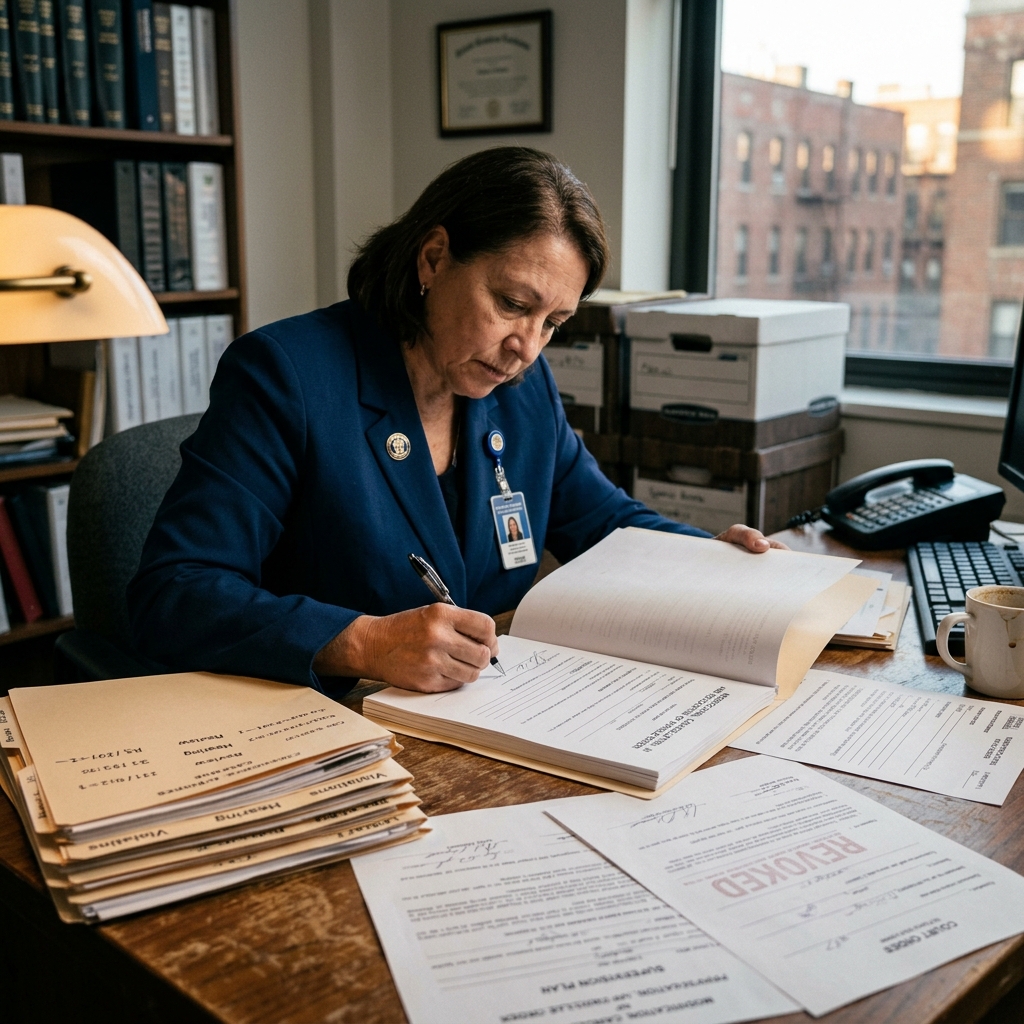
Parole offers a structured second chance to people leaving prison, but it does not freeze the original terms in place. Parole authorities have the power to modify conditions, rescind planned releases, and revoke parole after someone has already returned to the community. These decisions are bounded by law and by constitutional protections, especially due process.
This article explains how parole orders can be changed, cancelled, or revoked, what typically triggers each step, and which rights parolees usually have during the process. It is a general overview and does not replace legal advice about any particular case.
Understanding Parole and Its Core Conditions
Parole is a system of conditional release that allows eligible prisoners to serve part of their sentence in the community under supervision instead of behind bars. It is usually granted by a parole board or similar authority after reviewing the person’s conduct in prison, the nature of the offense, and public safety concerns.
Common Features of Parole Supervision
Although specific rules vary by state, most parole systems include similar expectations.
- Regular reporting to a parole or community supervision officer.
- Geographic limits, such as staying within the state or a particular county unless permission is obtained to travel.
- Restrictions on associations, for example avoiding contact with known criminal associates or codefendants.
- Obey all laws, including not committing new crimes and sometimes avoiding even civil violations or high-risk behaviors.
- Special conditions tailored to the case, such as substance abuse treatment, mental health counseling, employment requirements, or curfew.
These conditions are typically laid out in a written parole order that the parolee must sign and follow. That written order is also the starting point for later modification, rescission, or revocation.
Three Main Ways Parole Orders Can Change
Once a parole order exists, parole authorities may revisit it in three major ways:
- Modification: changing the terms or conditions while leaving parole in place.
- Rescission: cancelling a grant of parole before the person is released.
- Revocation: terminating parole after release and returning the person to custody.
Each process serves a different purpose and follows different rules and timelines.
Modification: Adjusting Conditions and Supervision
Parole boards generally have ongoing authority to modify any parole order, within the limits of governing statutes and regulations.[10] Modifications may respond to changes in risk, new information, or a parolee’s progress in the community.
Typical Types of Parole Modifications
- Changing conditions – adding, removing, or altering specific requirements, such as imposing electronic monitoring or lifting a curfew.[10]
- Adjusting supervision level – increasing contact with the parole officer or reducing it for low-risk parolees.
- Extending or shortening the parole period, when statutes allow the board to modify the length of supervision.[10]
Many jurisdictions explicitly authorize commissions or boards to modify parole conditions either on their own initiative or upon recommendation from supervision agencies.[10]
Legal Limits on Modification
Even when statutes grant broad discretion, modifications must rest on factual grounds, not arbitrary preferences. Courts have explained that decisions to rescind or alter parole must be supported by “some evidence” and cannot rely purely on rumor or unsupported allegations. This constraint is part of substantive due process.
In practice, this means parole boards should consider written reports, verified information, and any relevant new developments before tightening or relaxing parole terms.
Rescission: Cancelling Parole Before Release
Rescission occurs when a board revokes a parole grant before the scheduled release date, so the person never actually leaves prison on that particular grant. Many states explicitly recognize rescission as a distinct process from revocation.
Typical Grounds for Rescission
Regulations often list specific reasons why a previously approved release can be cancelled before it takes effect. A Connecticut rule illustrates common themes:
- Serious misconduct in prison after the parole vote but before release.
- Significant adverse information about the offender that was not known at the time of the original hearing, such as previously undisclosed criminal behavior or new victim input.
- Lack of suitable release plan, for example if an approved housing plan falls through in a way that undermines safe community supervision.
More broadly, rescission may be justified where the authority concludes that parole was “improvidently granted” given information now available.
Procedural Protections in Rescission
Because rescission cancels a liberty interest that has already been granted, courts and regulations often require due process safeguards. A typical rescission framework includes:
- Advance written notice of the proposed rescission and the specific misconduct or new information at issue.
- Opportunity to respond or explain, sometimes through a hearing before a neutral examiner.
- Written statement of the evidence relied upon and the reasons for rescission.
Although some authorities may rescind an unexecuted grant without a full hearing in limited circumstances, there must still be a factual basis for the decision. If the rescission rests on serious allegations, more robust procedural protections are typically required.
Revocation: Ending Parole After Release
Revocation is the process by which a parolee is returned to prison for violating parole conditions after they have already been released to the community. This is often the most serious consequence for non‑compliance.
Common Parole Violations Leading to Revocation
Violations fall into two broad categories:
- Technical violations – failures to follow supervision rules, such as missing appointments, changing address without approval, or failing drug tests.
- New law violations – being arrested or convicted of a new criminal offense while on parole, which generally signals higher risk to public safety.
Parole authorities may respond differently depending on the type, severity, and pattern of violations. Many states now use graduated sanctions or revocation caps so that not every violation results in full revocation and lengthy reincarceration.
The Parole Revocation Process
Revocation procedures are often two‑stage: an initial assessment of probable cause, followed by a more formal hearing if needed.
| Stage | Main Purpose | Typical Standard of Proof |
|---|---|---|
| Preliminary or probable cause hearing | Determine if there is enough evidence to believe a violation occurred and that further proceedings are warranted. | Probable cause or similar threshold. |
| Revocation hearing | Decide whether one or more conditions were violated and what sanction is appropriate. | Preponderance of credible evidence in many systems. |
At the revocation hearing, both sides may present documents and witness testimony. The hearing officer or panel then makes findings about each alleged violation and recommends or decides on an outcome.
Possible Outcomes of a Revocation Case
Modern parole practice recognizes a range of responses to violations beyond full revocation.
- Continue parole with no change, often when evidence is weak or violations are minor.
- Modify conditions by adding treatment requirements, electronic monitoring, or intermediate sanctions facilities.
- Short‑term incarceration or “flash incarceration,” such as 15, 30, or 90 day jail stays instead of returning for the full remaining prison term.
- Full revocation, under which the parolee may be returned to prison for all or part of the remaining sentence.
In some jurisdictions, time already successfully served on supervision may be forfeited upon revocation, although several reform proposals recommend limiting that forfeiture to the period after the violation.
Due Process and Legal Protections for Parolees
Because parole affects liberty, constitutional due process principles apply. The U.S. Supreme Court and lower courts have held that parole revocation and rescission cannot rest on arbitrary decisions and must include basic procedural safeguards.
Core Due Process Elements
While the details differ across states, four recurring protections appear in many frameworks:
- Notice – parolees should receive written notice of alleged violations or grounds for rescission in advance of a hearing.
- Opportunity to be heard – they should be able to present evidence, respond to allegations, and, where permitted, call witnesses.
- Neutral decision‑maker – hearings are typically conducted by a neutral hearing examiner or board member rather than by the supervising officer alone.
- Written decision – the authority’s conclusion and the evidence relied upon should be documented.
Many state rules also address access to counsel, use of documentary evidence, and rights to appeal within the parole system or to the courts.
Evidence Standards and Factual Basis
Revocation decisions usually rest on a “preponderance of credible evidence,” which means the evidence suggests it is more likely than not that a violation occurred. For rescission decisions, courts demand at least “some evidence” supporting the factual basis; a bare suspicion is not enough.
This emphasis on evidence aligns with substantive due process: parole decisions must be grounded in reality and defensible under the law.
Policy Trends: Graduated Sanctions and Revocation Caps
Recent research shows states increasingly using graduated sanctions and revocation caps to respond to violations in a proportional way, reserving full revocation for the most serious or persistent violations.
Graduated Sanctions
Graduated sanctions refer to a structured set of responses that escalate as violations become more frequent or serious.
- Verbal or written warnings.
- Enhanced reporting or supervision requirements.
- Mandatory participation in treatment or behavior‑change programs.
- Short‑term incarceration or residential sanctions facilities.
This approach aims to intervene early while avoiding unnecessary returns to prison, especially for technical violations that do not present direct threats to public safety.
Revocation Caps
Revocation caps limit how much of the remaining sentence can be imposed upon revocation. For example, some systems allow incarcerative sanctions shorter than the full remaining term, such as fixed 15‑, 30‑, 60‑, or 90‑day stays.
Research by the Robina Institute notes that about half of states with discretionary parole authority permit incarceration shorter than the remaining prison term as a sanction for violations. These caps seek to balance accountability with rehabilitation and resource constraints.
Practical Tips for Parolees Facing Possible Changes
People on parole cannot control every factor that might lead to modification, rescission, or revocation, but they can take steps to protect their status.
Strategies to Reduce Risk of Negative Parole Actions
- Know all conditions in writing and ask questions about any unclear rules.
- Document compliance, such as keeping records of attendance at programs, employment, and reporting dates.
- Communicate early with the parole officer about problems that might lead to violations, like job loss or transportation issues.
- Respond promptly to notices of alleged violations or rescission and seek legal advice if possible.
- Prepare for hearings by gathering favorable evidence, such as letters from employers, program completion certificates, and proof of community support.
Because the stakes are high, consulting a lawyer experienced in parole matters can be especially important when serious violations, new criminal charges, or rescission notices arise.
Frequently Asked Questions
Can my parole conditions be changed after I am released?
Yes. In most jurisdictions, parole boards or commissions retain authority to modify conditions at any time, either on their own or based on recommendations from supervision agencies, provided there is a factual basis and the modifications comply with due process requirements.[10]
What is the difference between rescission and revocation?
Rescission cancels a grant of parole before the person is released, often due to serious misconduct in prison or new adverse information. Revocation terminates parole after the person has already returned to the community and is triggered by violations of supervision conditions.
Do I always get a hearing before my parole is revoked?
Parolees are generally entitled to a preliminary assessment of probable cause and a more formal revocation hearing before parole is fully revoked, with notice and an opportunity to present evidence. Exact procedures depend on state law, but basic due process protections normally apply.
Can my parole be revoked for technical violations only?
Yes, revocation can occur for repeated or serious technical violations, even without new criminal charges. However, many states now use graduated sanctions and revocation caps so that technical violations may result in modifications or short‑term incarceration rather than full revocation in every case.
What happens to the time I have already served on parole if it is revoked?
Rules on forfeiture of time vary by state. Some jurisdictions rescind all time spent under supervision upon revocation, while others limit forfeiture to the period following the violation. Reform proposals increasingly recommend limiting forfeiture and separating supervision length from the underlying prison term.
References
- Can Parole Orders Be Modified, Rescind or Revoked? — LegalMatch. 2023-05-01. https://www.legalmatch.com/law-library/article/modification-rescission-or-revocation-of-parole.html
- Rescission and Modification of Parole — USLegal. 2019-08-15. https://pardonandparole.uslegal.com/scope-of-parole-power/rescission-and-modification-of-parole/
- Board of Pardons and Paroles Regulations (Connecticut) — Connecticut eRegulations System. 2016-01-01. https://eregulations.ct.gov/eRegsPortal/Browse/getDocument?guid=%7BE06D9F57-0A00-C1CC-83BA-125E103BB42A%7D
- Levers of Change in Parole Release and Revocation — Robina Institute of Criminal Law and Criminal Justice. 2015-10-01. https://robinainstitute.umn.edu/publications/levers-change-parole-release-and-revocation
- The Parole Revocation Process — The Cohen Law Firm. 2021-06-10. https://parolelaw.com/parole-revocation/the-parole-revocation-process/
- Parole Revocation: Understanding Its Legal Definition — USLegal. 2020-03-20. https://legal-resources.uslegalforms.com/p/parole-revocation
- Modification of Parole (Section 7–402) — Maryland Code via Westlaw. 2017-07-01. https://govt.westlaw.com/mdc/Document/N3B9F7B409CDB11DB9BCF9DAC28345A2A
Similar Articles








Read full bio of Sneha Tete




