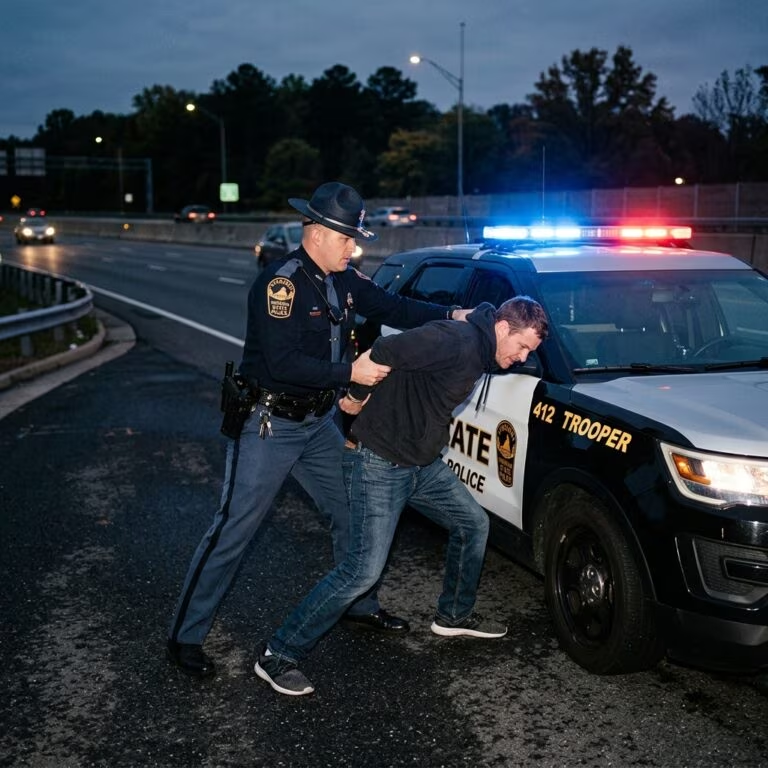
Drug charges can lead to consequences that range from a misdemeanor fine to lengthy prison terms, especially when the case involves trafficking, large quantities, prior convictions, or aggravating facts such as weapons or injuries. Under federal law, penalties depend on the drug schedule, the amount involved, and whether the conduct includes manufacturing, distribution, or possession with intent to distribute.
Why drug penalties vary so widely
Not every drug case is treated the same way. Courts and prosecutors usually look at the substance involved, how much was found, and what the person is alleged to have done with it. Simple possession is often punished less severely than distribution or trafficking, while repeat conduct can move a case into a much harsher sentencing range.
In many systems, the law also distinguishes between drugs that are treated as especially dangerous and those that carry lower statutory penalties. Federal law follows this approach through the Controlled Substances Act, which classifies drugs into schedules and ties punishment to the schedule and the facts of the offense.
Common conduct that can trigger criminal punishment
Drug cases often involve one or more of the following allegations:
- Possession of a controlled substance
- Possession with intent to sell or distribute
- Manufacturing or cultivation
- Transportation or trafficking across state lines
- Conspiracy or participation in a larger drug network
- Possession of drug paraphernalia connected to unlawful use or sale
Each of these theories can lead to different exposure at sentencing. A person accused of simple possession may face a relatively short jail term or probation in some jurisdictions, while a trafficking charge can bring mandatory prison time and substantial fines.
What makes a case more serious
Several factors commonly increase the seriousness of a drug charge. The most important are quantity, intent, prior convictions, and the presence of aggravating circumstances. Large quantities often support an inference that the drugs were meant for distribution rather than personal use, which can move the case into a higher felony category.
Prior convictions matter as well. Repeat offenses can raise the maximum sentence, increase minimum prison terms, and make probation or diversion less likely. Some laws also impose special enhancements when the offense involves a firearm, serious injury, or death.
Federal drug trafficking penalties
Federal trafficking penalties are especially severe. The Drug Enforcement Administration’s penalty chart shows that first offenses can range from years in prison to life, depending on the drug type and quantity, with large fines that can reach millions of dollars. The United States Sentencing Commission likewise reports that most trafficking defendants are sentenced to prison and that mandatory minimum penalties play a major role in federal cases.
Federal law also allows penalties to rise sharply when the offense involves large quantities. For example, the DEA’s chart provides escalating ranges for marijuana and other controlled substances, with the highest brackets allowing very long prison terms or life imprisonment for the largest quantities.
How federal law treats schedules I through V
Controlled substances are grouped by schedule, and the schedule influences the punishment range. Schedule I and II drugs generally carry the harshest penalties, while Schedule V drugs typically carry lower maximums.
| Drug schedule | General penalty pattern | Typical aggravating factors |
|---|---|---|
| Schedule I | Often the highest exposure, especially for trafficking | Large quantity, prior convictions, serious injury, death |
| Schedule II | Severe penalties, especially for distribution or large sales | Intent to distribute, large volume, repeat conduct |
| Schedule III | Moderate to severe penalties depending on the offense | Repeat offenses, distribution, injury-related outcomes |
| Schedule IV | Lower than Schedule I or II, but still criminally significant | Second offenses, large-scale conduct |
| Schedule V | Lowest federal trafficking ranges in the schedule system | Multiple offenses, distribution scheme, fraud-related conduct |
Possession versus intent to distribute
One of the most important distinctions in drug law is the gap between simple possession and possession with intent to distribute. Possession suggests personal use, while intent to distribute suggests commercial conduct or a larger drug operation. That difference can dramatically change the sentence range.
Evidence used to infer intent may include the amount of the drug, packaging materials, cash, ledgers, scales, and communications with buyers or suppliers. Even when no sale is completed, prosecutors may argue that the surrounding facts show a trafficking-level offense.
Enhancements that can increase punishment
Enhancements are legal rules that raise the sentence above the normal level because of a specific aggravating fact. In drug cases, enhancements often reflect the scale of the offense or the danger created by the defendant’s conduct.
- Prior convictions: Repeat offenses can raise minimums and maximums.
- Large quantities: Bigger amounts usually produce harsher statutory ranges.
- Death or serious injury: Some federal provisions sharply increase punishment when the offense causes serious harm.
- Weapons involvement: Firearms can make sentencing more severe under many laws.
- Conspiracy or organized conduct: Participation in a broader operation can expand liability.
These enhancements matter because they can transform a case from one that might allow probation into one that requires mandatory incarceration.
Collateral consequences beyond jail time
Drug convictions often have consequences that extend beyond the criminal sentence itself. Federal sources note that penalties may include forfeiture of property used to possess, transport, or conceal controlled substances, as well as loss of some federal benefits. A conviction can also affect future licensing opportunities and other civil rights or professional pathways.
For students and employees, the impact can be especially serious. A drug conviction may threaten educational aid, professional licensure, housing eligibility, and employment screening outcomes. These effects are often part of the real cost of a drug case even after any jail or prison sentence has been served.
How sentencing works in practice
In federal court, sentencing is shaped by statutory minimums, the advisory sentencing guidelines, and the facts found by the judge or admitted by the defendant. The United States Sentencing Commission reports that most trafficking defendants are sentenced to prison, showing how common incarceration is in these cases.
At the same time, not every defendant receives the same outcome. Some people qualify for relief from mandatory minimums, and sentencing can be affected by cooperation, criminal history, and the exact role played in the offense. That is why two cases with similar charges may still produce different results.
State and federal punishment can differ
Drug cases are prosecuted under both state and federal law, and the same conduct can be punished differently depending on the forum. States may provide a wider range of probation options for lower-level possession, while federal trafficking statutes often impose more rigid outcomes.
Some states also use enhanced felony classifications based on drug amount, and the punishment can rise sharply once a threshold is crossed. Human Rights Watch’s discussion of New York law illustrates how quantity-based tiers can escalate quickly from lower-level felonies to long prison terms. That general pattern appears in many jurisdictions, even though the exact numbers vary by state.
Defenses and issues that can affect the outcome
Although this article focuses on punishment, the strength of the prosecution’s case can affect the final sentence. Common defense issues include unlawful search and seizure, lack of possession, lack of knowledge, insufficient proof of intent, and disputes over quantity or drug identity. If evidence is suppressed or the charge is reduced, the sentencing exposure may drop significantly.
Because enhancements often depend on specific facts, any challenge that reduces the amount, weakens the distribution theory, or removes an aggravating factor can change the result. In practice, these issues can make the difference between a minor penalty and a mandatory prison sentence.
Quick comparison of common sentencing drivers
| Sentencing factor | Why it matters | Typical effect |
|---|---|---|
| Drug quantity | Signals seriousness and possible trafficking | Higher felony level, longer prison range |
| Intent to distribute | Shows commercial rather than personal use | Mandatory minimums may apply |
| Prior convictions | Indicates repeat conduct | Sentence enhancement, reduced leniency |
| Serious injury or death | Raises public safety concerns | Sharp increase in prison exposure |
| Property or weapons involvement | Shows organized or dangerous conduct | Forfeiture and harsher sentencing |
FAQs
Can a small amount of drugs still lead to felony charges?
Yes. Even small quantities can become felonies if the law treats the substance harshly, if there is evidence of distribution, or if the person has prior convictions.
Does intent to sell matter if no sale actually happened?
Yes. Prosecutors often rely on surrounding evidence to prove intent, so no completed sale is required for an intent-to-distribute charge.
Are federal drug penalties always harsher than state penalties?
Not always, but federal trafficking law is often more severe, especially when mandatory minimums and large quantities are involved. State systems can also be severe when quantity thresholds or repeat-offender rules apply.
What is the most common consequence in trafficking cases?
Prison is very common. The Sentencing Commission reports that 97% of individuals sentenced for drug trafficking received prison terms.
Can a drug conviction affect more than just the sentence?
Yes. Property forfeiture, loss of benefits, and professional licensing problems are all possible collateral consequences.
References
- Cruel and Usual — Human Rights Watch. 1997-01-01. https://www.hrw.org/reports/1997/usny/
- Federal Alcohol and Drug Penalties — Standard College of Nursing. 2024-01-01. https://www.standardcollege.edu/campus-safety/federal-alcohol-drug-penalties/
- Federal Trafficking Penalties for Schedules I, II, III, IV, and V (except Marijuana) — Fordham University. 2024-01-01. https://www.fordham.edu/student-life/deans-of-students-and-student-life/student-handbook/university-regulations/drug-free-campus-guidelines/federal-trafficking-penalties-for-schedules-i-ii-iii-iv-and-v-except-marijuana/
- Federal Trafficking Penalties — U.S. Drug Enforcement Administration. 2022-12-01. https://www.dea.gov/sites/default/files/2022-12/federal%20trafficking%20penalties.pdf
- Federal Drug Crimes: Overview — Nate Crowley Law Office, PC. 2024-01-01. https://www.natecrowleylaw.com/practice-areas/federal-criminal-defense/common-federal-crimes/federal-drug-crimes-overview/
- Punishments for Drug Crimes — Las Vegas Criminal Lawyers Hofland \u0026 Tomsheck. 2024-01-01. https://www.lvnvlawfirm.com/practice-areas/lv-criminal-law-center/drug-crimes/punishments-for-drug-crimes/
- Drug Trafficking — United States Sentencing Commission. 2024-01-01. https://www.ussc.gov/research/quick-facts/drug-trafficking