
Mandatory DNA Sampling in Criminal Investigations
How mandatory DNA collection works, when it is legal, and what it means for privacy, criminal defendants, and law enforcement in modern investigations.
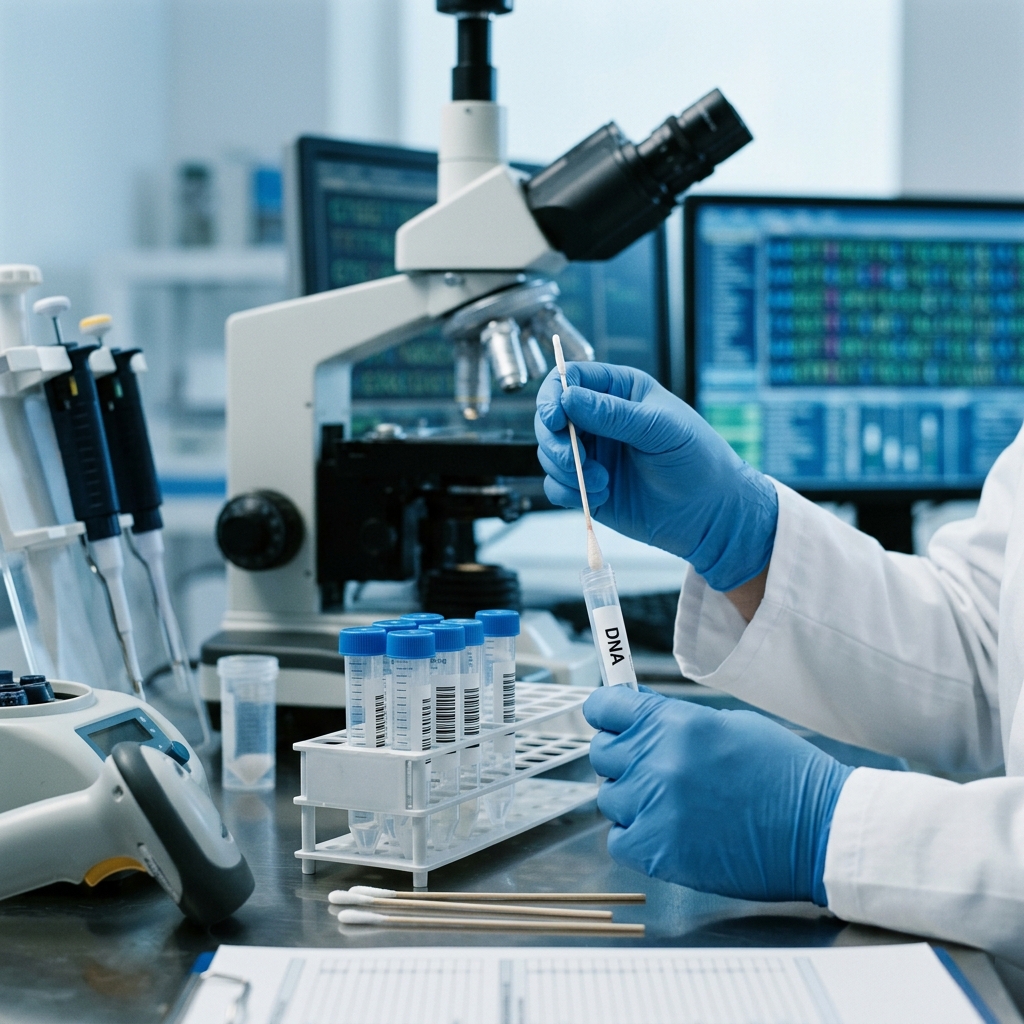
Deoxyribonucleic acid, commonly known as DNA, has transformed criminal investigations by providing a powerful tool to link people to crime scenes, confirm identities, and clear the wrongfully accused. In many jurisdictions, including the United States, DNA collection is mandatory for certain categories of offenders and, in some cases, for individuals who have only been arrested but not yet convicted. This practice raises complex legal, scientific, and privacy questions that anyone involved in the criminal justice system should understand.
Understanding DNA and Its Role in Criminal Cases
DNA is a molecule found in nearly every cell of the human body, carrying the genetic information that makes each person biologically unique (except identical twins). Because individuals have distinct DNA profiles, forensic scientists can compare DNA obtained from a crime scene with DNA taken from a suspect to look for a match.
Biological material suitable for DNA analysis may be found in many places, including:
- Blood stains on clothing, floors, or weapons
- Hair follicles embedded in fabric or left on surfaces
- Saliva on cigarette butts, drinking containers, or envelopes
- Skin cells on touched objects, door handles, or phones
- Bodily fluids such as semen or sweat on bedding or clothing
When properly collected and analyzed, these traces can help investigators identify unknown perpetrators, link multiple crimes to the same offender, or verify that a suspect has no biological connection to the crime scene.
From Crime Scene to Laboratory: How DNA Profiling Works
Forensic DNA profiling involves several steps:
- Collection: Trained personnel gather biological samples from crime scenes, victims, and suspects using sterile swabs, cutting stained fabric, or preserving objects.
- Extraction: Laboratory procedures isolate DNA from cells in the sample, separating it from other cellular material.
- Quantification and analysis: Scientists measure the amount of DNA and examine specific genetic markers, often short tandem repeats (STRs) that vary among individuals.
- Comparison: The resulting DNA profile is compared to known profiles in databases or to samples taken directly from suspects.
A sufficiently strong match between profiles can provide compelling evidence that the same person contributed both samples, although the interpretation must consider laboratory error, contamination risk, and statistical probabilities.
When DNA Sampling Becomes Mandatory
In the United States, all 50 states and the federal government have enacted laws requiring DNA collection from individuals convicted of certain crimes, especially felonies. Many states and federal law also authorize or require DNA sampling from people who are arrested or charged with specific offenses, even before a conviction.
Common Triggers for Mandatory DNA Collection
| Trigger | Typical Examples | Purpose of Collection |
|---|---|---|
| Post-conviction | Felony convictions, sex offenses, serious violent crimes | Populate state and federal databases (e.g., CODIS), assist future investigations |
| Pre-conviction (after arrest) | Arrest for specified offenses; federal felonies under the DNA Fingerprint Act | Rapid identification, linking suspects to unsolved crimes, ruling out uninvolved persons |
| Court-ordered sampling | Judicial orders during an investigation or trial | Obtain evidence in a specific case, such as assault, sexual violence, or burglary |
At the federal level, the DNA Fingerprint Act of 2005 authorizes collection of DNA from adults arrested for federal crimes and from certain noncitizens detained under U.S. authority. Similar provisions exist in numerous states, often limited to arrests for “qualifying” offenses such as violent felonies or sex crimes.
Types of Offenses Often Covered
- Sexual assaults, including rape and related offenses
- Homicide and attempted homicide
- Serious assaults or domestic violence offenses
- Burglaries and other property crimes involving direct physical contact
- Certain drug and weapons offenses designated by statute
Exact coverage varies by jurisdiction, so it is important to consult the specific statute or speak with a qualified criminal defense attorney to understand local rules.
Legal Framework: Privacy, the Fourth Amendment, and DNA
Compulsory DNA sampling raises critical constitutional issues, particularly under the Fourth Amendment, which limits unreasonable searches and seizures. Courts must balance the government’s interest in solving and preventing crime against the individual’s expectation of privacy and bodily integrity.
DNA Collection as a “Search”
Obtaining a DNA sample from an individual—commonly by swabbing the inside of the cheek—is considered a search because it involves taking biological material from the body for analysis. Courts analyze whether this search is reasonable by looking at:
- The seriousness of the offense
- The manner of collection (for example, non-invasive cheek swabs versus more intrusive procedures)
- The government’s interest in accurate identification and crime-solving
- The individual’s reduced privacy expectations when under arrest or in custody
Key Judicial Reasoning on Mandatory DNA
In major decisions, courts have recognized DNA sampling of arrestees and convicted persons as similar in purpose to fingerprinting and photographing: a routine booking procedure aimed at verifying identity and linking individuals to records and unsolved crimes. A frequently cited rationale is that a brief cheek swab is considered minimally intrusive, especially compared with the significant law enforcement benefits provided by DNA databases.
One appellate court summarized the balance by noting that DNA sampling:
- Helps identify arrested persons
- Solves past crimes by linking suspects to old evidence
- Prevents future crimes by identifying repeat offenders
- Exonerates innocent individuals by excluding them from biological evidence found at scenes
In some jurisdictions, courts have also emphasized that there must be probable cause for the underlying criminal charge before DNA can be taken, reinforcing the need for a legitimate investigative basis.
DNA Databases: CODIS and State-Level Systems
Mandatory DNA sampling is closely tied to large-scale databases that store genetic profiles for future comparison. In the United States, the main system is the Combined DNA Index System (CODIS), operated by the Federal Bureau of Investigation.
How DNA Databases Are Used
- Linking cases: DNA from one crime may match DNA collected in a different case, suggesting the same person is responsible for both.
- Identifying unknown suspects: When crime scene DNA is uploaded, CODIS searches for matches among profiles of known offenders or arrestees.
- Clearing the innocent: If a suspect’s DNA does not match the crime scene sample, prosecutors and investigators may reconsider charges, and past convictions can be revisited.
- Cold case resolution: Old evidence can be re-tested and compared against expanded databases, leading to long-delayed identifications.
Post-Conviction and Post-Arrest Databases
Statutes typically distinguish between:
- Convicted offender indexes: Profiles of individuals convicted of qualifying crimes; collection is now nearly universal across states.
- Arrestee or detainee indexes: Profiles drawn from people arrested or detained but not yet convicted; these systems are more controversial and vary widely.
Policies on how long profiles remain in databases, under what conditions they can be expunged, and which agencies may access them differ between jurisdictions and are frequently subject to legislative revision and litigation.
Benefits of Mandatory DNA Sampling
Mandatory DNA sampling has reshaped criminal justice in several positive ways when properly regulated and implemented.
Improved Accuracy in Identifying Offenders
- DNA can connect a suspect to very small biological traces at a crime scene, even when there are no eyewitnesses or physical fingerprints.
- Profiles allow investigators to rapidly eliminate suspects whose DNA does not match the evidence.
- Serial offenders can be identified and linked across multiple investigations, aiding in pattern recognition and resource allocation.
Exoneration and Protection of the Innocent
One of the most important contributions of DNA evidence is its role in clearing wrongly accused or convicted individuals.
- Post-conviction DNA testing has led to numerous exonerations, often many years after the original trials.
- Databases can identify the actual perpetrator in cases where someone else has been prosecuted or convicted.
- By confirming that a suspect’s DNA is absent from critical evidence, prosecutors may decide not to file charges or may dismiss existing charges.
Broader Public Safety Gains
- Identifying repeat offenders early can prevent additional crimes.
- Resolving cold cases improves community trust in law enforcement.
- Clearer evidence can reduce the likelihood of miscarriages of justice and costly appeals.
Risks, Limitations, and Privacy Concerns
Despite its advantages, mandatory DNA sampling is not without significant challenges. Policymakers and courts must weigh these concerns carefully when designing and applying legal frameworks.
Scientific and Practical Limitations
- Contamination: Improper collection or storage can contaminate samples, leading to misleading results.
- Partial or degraded samples: Environmental conditions may damage DNA, producing incomplete profiles that are harder to interpret.
- Lab errors: Mistakes in processing, recording, or interpreting results can affect reliability.
- Mixed samples: Crime scenes may contain DNA from multiple people, complicating analysis and statistical assessment.
Privacy and Data Retention Issues
Mandatory DNA sampling raises intense debates about privacy and the appropriate scope of government power.
- Database expansion: Collecting DNA from arrestees significantly increases the number of profiles stored, raising questions about how much information the state should possess about individuals never convicted of a crime.
- Retention after non-conviction: Some laws permit retention of DNA profiles even when charges are dropped or a defendant is acquitted, while others require expungement in those circumstances.
- Potential misuse: Concerns include using DNA databases for purposes beyond criminal investigation, such as familial searching, surveillance of certain groups, or non-consensual research.
- Genetic information sensitivity: Although forensic profiles generally focus on non-coding regions used for identification, the public may still worry about broader genetic privacy.
Fourth Amendment and Human Rights Debates
Opponents of broad mandatory DNA collection argue that taking genetic material from people who are merely arrested amounts to an unreasonable search, especially when the arrest is for relatively minor offenses or when no conviction follows. They also question whether existing safeguards are adequate to prevent abuse or unauthorized access to genetic information.
Proponents respond that modern statutes and court decisions place limits on collection and use, require legitimate investigative purposes, and recognize the reduced privacy expectations of individuals who have been lawfully arrested. They emphasize that cheek swab procedures are brief and non-invasive and that DNA databases are among the most effective tools for solving serious crimes and correcting wrongful convictions.
International Perspectives on DNA in Criminal Investigations
Many countries outside the United States have enacted detailed legislation governing the use of DNA in criminal investigations. For example, in New Zealand, the Criminal Investigations (Bodily Samples) Act sets out when police may collect bodily samples, how they must be handled, and the circumstances under which they can be used or retained. Similar frameworks in other jurisdictions address:
- Requirements for consent or judicial authorization
- Rules for collecting DNA from suspects, volunteers, and convicted persons
- Limits on databasing and data sharing among agencies
- Procedures for destruction of samples and deletion of profiles when no longer needed
These international models highlight the importance of clear legal standards, oversight mechanisms, and rights of individuals to challenge improper collection or retention of genetic material.
Practical Guidance for Defendants and Families
When a person is asked or ordered to provide a DNA sample in connection with a criminal investigation, the situation can be confusing and stressful. Understanding basic rights and procedures can help them respond appropriately.
Key Points to Consider
- Know the basis for collection: Determine whether the request is tied to an arrest, conviction, or a specific court order.
- Ask about legal authority: Law enforcement typically relies on statutes or warrants; asking which law applies can clarify the situation.
- Consult a lawyer promptly: A criminal defense attorney can advise on whether collection is mandatory, whether it can be challenged, and what the consequences may be.
- Document interactions: Keeping records of dates, officers involved, and reasons given for collection may be helpful in later legal proceedings.
- Consider expungement options: Some jurisdictions allow individuals to seek deletion of their DNA profile from databases if they are not convicted or if their conviction is reversed.
Frequently Asked Questions (FAQs)
Is DNA collection always mandatory after an arrest?
No. Whether DNA collection is mandatory depends on the jurisdiction and the type of offense. Some laws only require DNA sampling after convictions, while others authorize or mandate collection at the time of arrest for specified crimes.
Can DNA evidence be wrong?
DNA analysis is highly accurate when performed correctly, but mistakes can occur due to contamination, partial samples, human error, or misinterpretation. Courts often rely on expert testimony to explain the strength and limitations of specific DNA results.
What happens to my DNA sample after it is collected?
Typically, the physical sample is stored in a forensic lab, and the resulting DNA profile is entered into a database such as CODIS or a state system, if allowed by law. The profile may later be compared against other crime scene evidence.
Can I have my DNA profile removed from a database?
Some jurisdictions provide procedures for expungement or removal, especially when charges are dismissed or a person is acquitted. The specific rules, deadlines, and requirements vary by statute, so legal advice is crucial.
Is DNA collection considered the same as fingerprinting?
Courts frequently compare DNA sampling of arrestees to fingerprinting and photographing, viewing all of them as identification tools used during booking. However, DNA contains more sensitive biological information than fingerprints, which is one reason privacy debates remain active.
References
- Mandatory DNA Sampling in a Criminal Investigation — LegalMatch. 2024-03-01. https://www.legalmatch.com/law-library/article/mandatory-dna-sampling-in-a-criminal-investigation.html
- Debating DNA Collection — National Institute of Justice, U.S. Department of Justice. 2010-06-01. https://nij.ojp.gov/topics/articles/debating-dna-collection
- Fourth Amendment Limitations on DNA Collection, Procurement and Retention — National Police Foundation. 2017-05-15. https://www.policinginstitute.org/onpolicing/fourth-amendment-limitations-on-dna-collection-procurement-and-retention/
- The Use of DNA in Criminal Investigations — New Zealand Law Commission. 2019-11-01. https://www.lawcom.govt.nz/our-work/the-use-of-dna-in-criminal-investigations
- DNA Profiling in Forensic Science: A Review — J. Farooq et al., Journal of Forensic and Legal Medicine (NIH/PMC). 2021-11-30. https://pmc.ncbi.nlm.nih.gov/articles/PMC8635824/
- Summary: DNA Collection After Arrest Laws — National Conference of State Legislatures. 2022-01-15. https://www.ncsl.org/civil-and-criminal-justice/dna-collection-after-arrest-laws
Similar Articles








Read full bio of Sneha Tete




