
Field Sobriety Tests: 3 Standardized Tests And How To Challenge
Learn how DUI field sobriety tests work, why they are often unreliable, and the main legal strategies used to challenge them effectively in court.
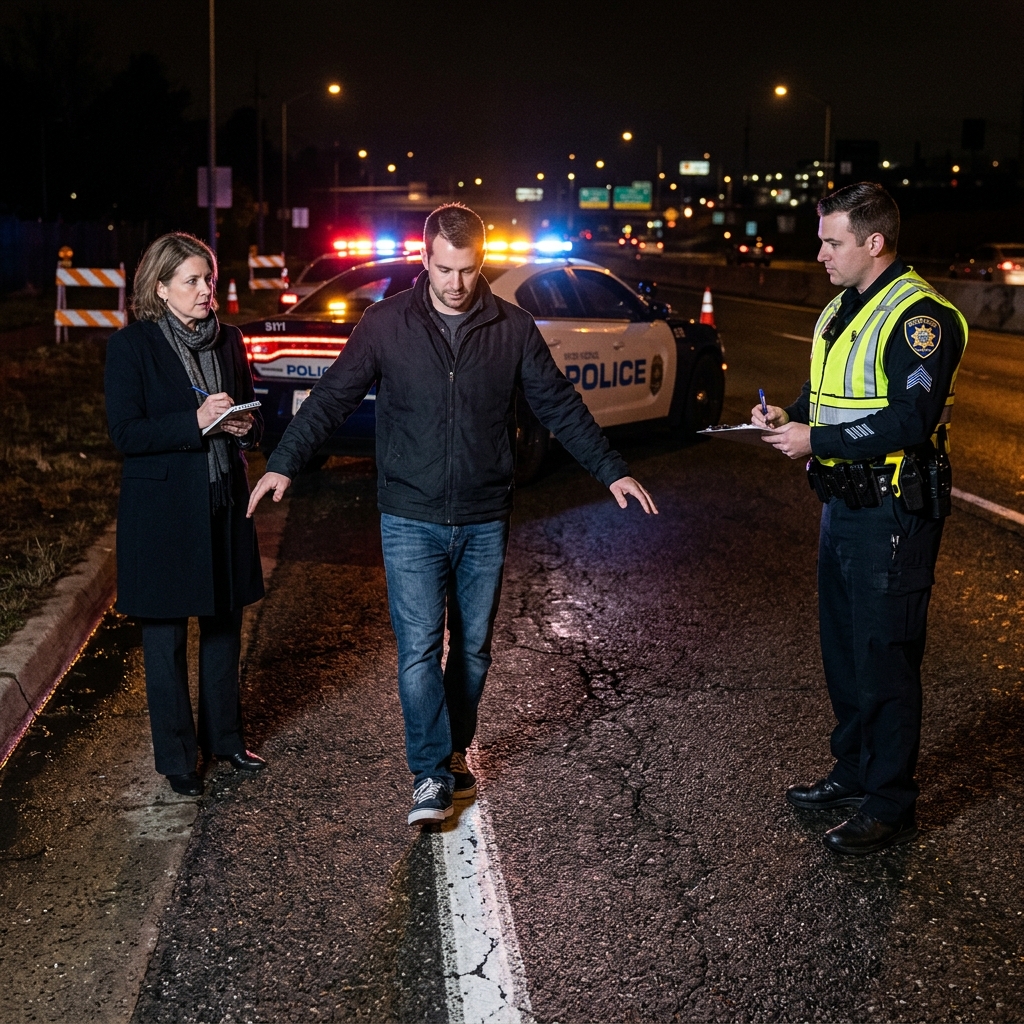
Field sobriety tests are one of the most common tools police officers use to decide whether to arrest a driver for driving under the influence (DUI). These roadside exercises may look simple, but they are complex, highly subjective, and often misunderstood. In many cases, they can be successfully challenged in court, reducing or even eliminating the impact they have on a DUI prosecution.
This guide explains how these tests work, why they are frequently unreliable, and what legal strategies defense attorneys use to attack them. It is informational only and does not replace advice from a licensed attorney in your jurisdiction.
What Are Field Sobriety Tests and Why Police Use Them
Field sobriety tests are a set of physical and cognitive tasks that an officer asks a driver to perform after a traffic stop when impairment is suspected. The officer watches how the driver performs and looks for signs of alcohol or drug impairment, such as poor balance, inability to follow instructions, or obvious confusion.
Police rely on these tests for several key reasons:
- Probable cause for arrest – Poor performance can give officers legal justification to place a driver under arrest for DUI.
- Evidence for prosecutors – Video of the tests and the officer’s observations may be introduced at trial to persuade a judge or jury that the driver was impaired.
- Indicators beyond alcohol – Because some tests measure coordination and attention, they may reveal impairment from drugs or medical conditions that would not show up on a breath test.
Importantly, in many states a driver can be charged with DUI based on observed impairment alone, even if their blood alcohol concentration (BAC) is below the legal limit. In those cases, field sobriety tests often become central to the prosecution’s case.
Standardized vs. Non-Standardized Sobriety Tests
Over time, law enforcement agencies recognized that ad hoc roadside tests were too inconsistent to be reliable. The National Highway Traffic Safety Administration (NHTSA) evaluated numerous exercises and identified three “standardized” field sobriety tests that, when administered according to strict protocols, have the most research support.
The Three Standardized Tests
| Test Name | Primary Skill Assessed | Typical Signs of Impairment |
|---|---|---|
| Horizontal Gaze Nystagmus (HGN) | Eye movement and neurological function | Involuntary eye jerking, inability to smoothly track a moving object. |
| Walk-and-Turn | Balance, divided attention, following multi-step instructions | Stepping off line, incorrect number of steps, using arms to balance, starting too soon, improper turn. |
| One-Leg Stand | Static balance and focus | Swaying, hopping, putting foot down, using arms for balance. |
NHTSA studies initially found that the tests were only about 47% accurate in predicting whether a driver was above the legal BAC limit. After standardizing the instructions and scoring, their combined accuracy rate increased to approximately 82% when all three are properly administered together.
That still means nearly one in five drivers identified as “impaired” by the tests may in fact be sober, underscoring why defense attorneys scrutinize this evidence carefully.
Non-Standardized Tests
Officers sometimes use additional, non-standardized tasks such as:
- Touching a finger to the nose.
- Reciting the alphabet or counting backwards.
- Standing with eyes closed and head tilted back.
Because these tests lack uniform scoring guidelines and research backing, their reliability is more easily challenged. Courts in some jurisdictions view them as less probative than standardized NHTSA tests, especially where they were administered in confusing or unsafe conditions.
Why Field Sobriety Tests Are Often Unreliable
Despite their widespread use, field sobriety tests are far from perfect. Lawyers frequently highlight several categories of problems when attacking them in court.
1. Scientific Limitations and False Positives
Studies reviewed by NHTSA and other experts show that even under controlled conditions, standardized tests misclassify a significant number of sober drivers as impaired. Early research reported accuracy below 50%, and even the improved protocols leave a notable margin for error.
Key scientific concerns include:
- Limited validation – The tests were primarily validated for alcohol impairment, not for other substances like prescription drugs or cannabis.
- Threshold issues – Performance is used to infer whether a driver is over the legal BAC limit, but impairment varies widely between individuals.
- Binary outcomes – Complex human performance is reduced to “pass/fail,” which can oversimplify nuanced behavior.
2. Officer Training and Subjectivity
NHTSA created detailed instructions for how officers must explain, demonstrate, and score each standardized test to reduce subjectivity. Yet in real roadside encounters, officers do not always follow these rules.
Common issues include:
- Officers not being properly trained or failing to maintain their certification for administering the tests.
- Incomplete or confusing instructions, causing drivers to “fail” because they misunderstood the task, not because they were impaired.
- Officers scoring performance inconsistently or emphasizing minor deviations that have little bearing on actual safety.
Because officers are both the test administrators and the evaluators, their perceptions and expectations can strongly influence the outcome. This offers multiple avenues for cross-examination and expert critique at trial.
3. Environmental and Roadside Conditions
Field sobriety tests are usually conducted at night, on the side of the road, under stressful circumstances. Conditions rarely resemble a controlled laboratory setting.
Factors that can compromise test reliability include:
- Uneven pavement, gravel, or sloped shoulders that affect balance.
- Poor lighting or bright headlights that interfere with visibility.
- Bad weather such as rain, wind, or cold temperatures.
- Noise from traffic or emergency vehicles that makes instructions hard to hear.
Defense attorneys often use photos, video, and expert testimony to show that the test environment was unsuitable, undermining any inference of intoxication drawn from performance.
4. Medical Conditions, Age, and Physical Limitations
Many people have health conditions or physical limitations that make balancing, walking in a straight line, or standing on one leg difficult even when completely sober. For example:
- Inner ear disorders and vestibular problems can cause chronic imbalance.
- Neurological conditions such as neuropathy or Parkinson’s disease affect motor control.
- Joint injuries, back problems, or obesity can limit mobility.
- Older adults may have slower reflexes or weaker muscles.
In addition, certain medications can cause dizziness or drowsiness without indicating illegal impairment. When such conditions are documented with medical records or expert evaluations, they can seriously weaken the prosecution’s reliance on test results.
Legal Strategies to Challenge Field Sobriety Tests
Experienced DUI defense attorneys rarely accept field sobriety test results at face value. Instead, they examine every aspect of the tests and the surrounding circumstances to determine whether the evidence can be excluded, limited, or undermined.
1. Attacking Officer Training and Protocol Compliance
One of the most effective approaches is to analyze whether the officer adhered to NHTSA guidelines. Common steps include:
- Requesting training records to confirm the officer was properly certified to administer standardized tests at the time of the stop.
- Reviewing body camera and dash camera footage to see whether the officer demonstrated the tests, gave all required warnings, and used correct positioning and timing.
- Comparing the officer’s report to NHTSA manuals to highlight deviations from accepted procedures.
If the officer failed to follow standardized protocols, a defense lawyer may argue that the tests have little to no scientific value and should either be excluded or treated as unreliable evidence.
2. Highlighting Environmental and Safety Concerns
Defense counsel often reconstructs the roadside scene to show that the driver was tested in difficult conditions. This may involve photographs taken shortly after the arrest, measurements of road slope, or testimony from passengers.
Key arguments include:
- The surface was too uneven or narrow to expect accurate balance.
- The driver was required to perform near moving traffic, impacting concentration.
- Weather or poor lighting made it hard to follow visual cues.
Demonstrating that the environment was inherently challenging can weaken the inference that poor performance was caused by intoxication rather than external factors.
3. Presenting Medical and Physical Evidence
Another central tactic is documenting the driver’s health history. Attorneys may:
- Obtain medical records and physician statements explaining how existing conditions affect balance or coordination.
- Use expert witnesses such as neurologists or physical therapists to interpret test performance in light of those conditions.
- Show that the officer failed to ask about or consider the driver’s limitations before administering the tests.
When a jury understands that a person would struggle with the tests even when sober, the persuasive value of the prosecution’s evidence can drop substantially.
4. Questioning the Link Between Test Results and Legal Impairment
Field sobriety tests do not directly measure BAC; they only provide indirect clues about potential impairment. Defense attorneys frequently argue that the prosecution has not proven a solid connection between the observed deficits and the legal standard for DUI.
Arguments may include:
- Test results are inconsistent with breath or blood tests showing low or borderline BAC.
- Minor missteps on complex tasks do not necessarily indicate unsafe driving.
- Performance differences are within normal variation for tired or stressed individuals.
In jurisdictions that allow DUI convictions below the per se BAC limit based solely on impairment evidence, challenging that link becomes especially important.
Practical Tips If You Have Already Taken Field Sobriety Tests
If you were arrested after performing field sobriety tests, you cannot undo the tests, but you can take steps that may help your defense. These suggestions are informational; always follow the advice of your own attorney.
- Write down details while they are fresh – Note the location, roadway surface, weather, lighting, and what the officer said and did.
- Document medical issues – List any injuries, conditions, or medications that may have affected your balance or coordination.
- Preserve potential evidence – If possible, take photographs of the area where you were tested or ask someone to do so soon after the incident.
- Consult a DUI defense attorney promptly – Legal deadlines for challenging license suspension or evidence can be short.
Frequently Asked Questions About Challenging Field Sobriety Tests
Are field sobriety tests required by law?
The rules vary by state. In many jurisdictions, drivers are not legally required to perform field sobriety tests and may decline to do so, though refusal can still be used as evidence of possible impairment. Some states treat these tests as voluntary roadside exercises, distinct from mandatory chemical testing of breath or blood.
Can a DUI be based only on field sobriety tests?
Yes, in some states a driver may be convicted of DUI based on evidence of impairment alone, even if laboratory tests show a BAC below the legal limit. In those cases, field sobriety performance, officer observations, and video footage become central pieces of evidence, making challenges to the tests especially important.
How often do sober people fail field sobriety tests?
Research cited by NHTSA and defense practitioners indicates a significant rate of false positives. In standardized studies, the combined accuracy rate of the three NHTSA tests is around 82%, meaning roughly one out of five drivers identified as impaired could be sober. Other studies and practical experience suggest even higher error rates under real roadside conditions.
What happens if the court finds the tests unreliable?
If a judge concludes that field sobriety tests were not properly administered or are too unreliable, the court may exclude them from evidence or limit how the prosecution may use them. In other cases, the tests are admitted, but defense cross-examination and expert testimony persuade the jury to give the results little weight.
Do I need an expert witness to challenge field sobriety tests?
Expert witnesses are not always required, but they can be very helpful, especially in contested trials. Specialists in toxicology, neurology, or human factors can explain scientific limitations, interpret medical records, and analyze whether the officer’s administration and scoring of tests complied with recognized standards.
References
- Fighting Field Sobriety Tests — FieldSobrietyTests.org. 2021-05-10. http://www.fieldsobrietytests.org/fightingfieldsobrietytests.html
- Field Sobriety Tests: Potential Problems and Challenges — Hamp Law. 2020-08-15. https://www.hamplaw.com/field-sobriety-tests
- What You Need to Know About Field Sobriety Tests and Your DUI Defense — The 928 Law Firm. 2025-03-12. https://928law.com/legal-blog/what-you-need-to-know-about-field-sobriety-tests-and-your-dui-defense/
- How to Challenge Field Sobriety Tests in a Florida DUI Case — CG Frey Law. 2025-06-03. https://www.cgfreylaw.com/blog/2025/06/how-to-challenge-field-sobriety-tests-in-a-florida-dui-case/
- West Palm Beach Field Sobriety Test Lawyer — Meltzer & Bell, P.A. 2024-02-20. https://www.meltzerandbell.com/dui-drunk-driving/field-sobriety/
- Why Field Sobriety Tests Fail — Challenging SFSTs in New Jersey — Rosenberg Perry & Associates. 2023-11-01. https://www.rosenbergperry.com/blog/field-sobriety-tests-flaws/
- ELI5: Why Does the USA Do Sobriety Field Tests for Suspected DUIs? — Reddit / ExplainLikeImFive. 2024-04-18. https://www.reddit.com/r/explainlikeimfive/comments/1dvse8p/eli5_why_does_the_usa_do_sobriety_field_tests_for/
Similar Articles








Read full bio of Sneha Tete




