Choosing how to hold **title to real estate** is one of the most important legal decisions you make when buying or inheriting property. The form of title you select determines who owns the property, how decisions are made, what happens at death, and how easily ownership can be sold or transferred.
This guide explains the major forms of real estate title used in the United States, how they differ, and how they interact with **deeds**, estate planning, and creditor claims, so you can discuss informed options with a qualified real estate or estate planning attorney.
Title vs. Deed: Two Different Legal Concepts
Many buyers use the words “title” and “deed” as if they mean the same thing, but they refer to **different parts of the ownership puzzle**.
What is a Real Estate Title?
A **title** is the bundle of legal rights associated with owning real property. It is not a physical document; it is a legal concept that identifies who has the rights to use, control, enjoy, and transfer the property.
Key rights included in a typical property title are:
- The right to access and occupy the property.
- The right to use the property for any lawful purpose.
- The right to sell, gift, or otherwise transfer the property.
- The right to encumber the property, for example by granting a mortgage.
What is a Deed?
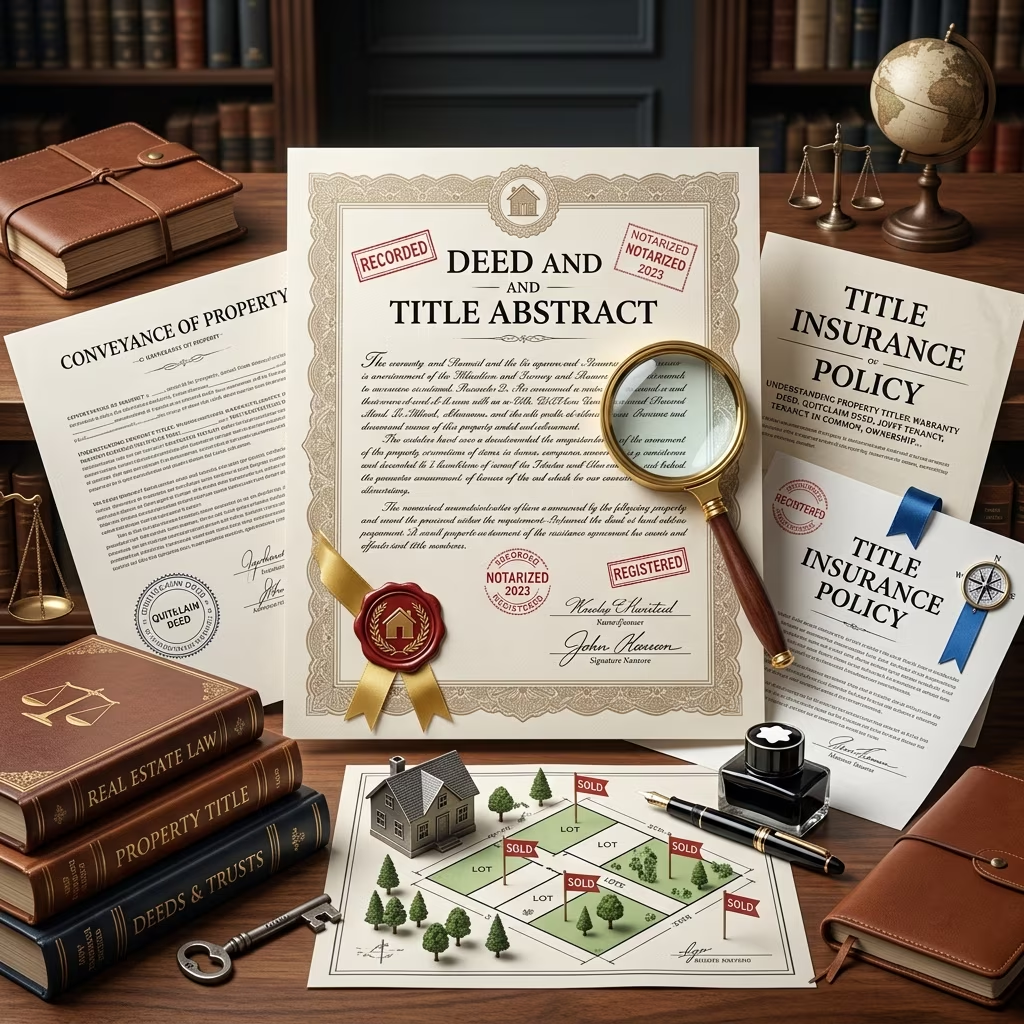
A **deed** is the written legal instrument that transfers title rights from one party to another. Unlike title, a deed is a physical document that must be properly executed and delivered to be effective.
In a typical sale:
- The seller (grantor) signs a deed.
- The deed describes the property and identifies the buyer (grantee).
- Upon delivery, the deed legally transfers the seller’s title rights to the buyer.
Common deed types include **general warranty deeds**, **special warranty deeds**, and **quitclaim deeds**, each offering different levels of protection around title defects such as liens or undisclosed claims.
| Aspect | Title | Deed |
|---|---|---|
| Nature | Legal concept of ownership rights | Physical legal document |
| Function | Defines who has rights to the property | Transfers those rights between parties |
| Evidence | Shown through records and deeds | Recorded in public land records |
| Example | Fee simple ownership of a home | General warranty deed conveying the home |
Why the Form of Title Matters
Real estate can be held in different **forms of ownership**, and those forms carry very different legal consequences.
When multiple people hold title together, the form of title determines:
- Whether each owner has an equal or unequal share.
- Whether one owner’s interest automatically passes to the other at death.
- Whether creditors of only one owner can force a sale of the property.
- Whether the property must go through probate when an owner dies.
Even for single owners, the title form (usually fee simple) sets the scope of ownership and any legal limitations on use.
Fee Simple Ownership: The Standard Private Title
**Fee simple** is the most complete form of private ownership of land recognized in American property law. When most people say they “own” a house, they typically mean they hold it in fee simple.
Core Features of Fee Simple
In a fee simple estate, the owner generally has:
- The broadest possible right to use, occupy, and enjoy the property, subject to zoning and other laws.
- The right to sell, gift, or mortgage the property without needing another person’s consent.
- The right to pass the property to heirs or beneficiaries through a will or other estate plan.
However, even fee simple ownership is not absolute. It is still subject to public and private restrictions such as:
- Local zoning and building codes.
- Easements (for utilities, shared driveways, or access).
- Restrictive covenants or homeowners’ association rules.
When Fee Simple is Typically Used
Fee simple title is common in scenarios such as:
- A single individual buying a primary residence.
- An investor purchasing rental property personally.
- Ownership of land that is not part of a special arrangement like a life estate or condominium regime.
Joint Tenancy: Shared Ownership with Survivorship Rights
**Joint tenancy** is a form of co-ownership where two or more people hold equal interests in the same property and have a built-in **right of survivorship**.
Key Characteristics
- Each joint tenant owns an equal share of the property.
- All joint tenants have equal rights to possess and use the entire property.
- If one joint tenant dies, their interest automatically passes to the surviving joint tenants, not to their heirs or under their will.
Because of the right of survivorship, joint tenancy is frequently used by couples or family members who want the property to pass quickly and automatically to the surviving owner without probate.
Advantages of Joint Tenancy
- Automatic transfer at death under survivorship, avoiding probate for that property interest.
- Clear equal shares and simple division of control among co-owners.
- Useful in basic estate planning where owners want the survivor to own the property outright.
Potential Drawbacks
- No ability to direct your share through a will; survivorship controls who receives it.
- If relationships change (divorce, family disputes), joint tenancy can become problematic to unwind.
- Creditors of one joint tenant may reach that tenant’s interest, potentially leading to forced sale in some circumstances.
Tenancy in Common: Flexible Shares Without Survivorship
**Tenancy in common** is another common form of co-ownership, but unlike joint tenancy, it **does not include survivorship rights** and allows owners to hold **unequal shares**.
Core Features
- Two or more owners hold title to the same property at the same time.
- Shares may be equal or unequal (for example, one owner might hold 70%, another 30%).
- Each tenant in common has the right to possess the whole property, regardless of share size.
- On death, a tenant in common’s share passes according to their will or, if no will exists, to their heirs under state law.
When Tenancy in Common Makes Sense
Tenancy in common is commonly used when:
- Friends or business partners buy investment property together and contribute different amounts of capital.
- Family members inherit property jointly but want their share to pass to their own heirs rather than co-owners.
- Co-owners want flexibility to sell or transfer their individual share without needing unanimous consent (subject to any agreements between them).
Pros and Cons
Benefits:
- Customizable ownership shares.
- Each owner can leave their share to chosen beneficiaries.
- Works well for unrelated co-owners with separate estate plans.
Risks:
- Potential disputes over management, repairs, and sale decisions.
- Creditors of one owner can pursue that owner’s share and may seek partition (court-ordered sale).
- Heirs who inherit a share become new co-owners, which may complicate future decision-making.
Tenancy by the Entirety: Special Protection for Married Couples
**Tenancy by the entirety** (sometimes called tenants by the entirety) is a form of title available in certain states only to legally married spouses. It treats the couple as a single legal owner rather than two separate individuals.
Distinct Legal Features
- Only available to legally married couples in jurisdictions that recognize it.
- Spouses are considered one legal entity for ownership purposes.
- Includes a right of survivorship: when one spouse dies, the other automatically owns the property outright.
- In many states, creditors of just one spouse cannot force a sale of property held as tenancy by the entirety, offering an added layer of protection.
Benefits for Spouses
Tenancy by the entirety can be attractive because it:
- Simplifies transfer at death through survivorship.
- Can shield the home from certain individual creditor claims, depending on state law.
- Aligns well with estate plans where the surviving spouse is intended to receive the marital home.
Limitations and Considerations
- Not all states offer this form of title, and rules vary among those that do.
- Divorce or legal separation can terminate tenancy by the entirety and convert ownership into another form (often tenancy in common), changing rights and creditor exposure.
- Both spouses usually must agree to sell, mortgage, or otherwise encumber the property.
Other Common Ways to Hold Title
While fee simple, joint tenancy, tenancy in common, and tenancy by the entirety are core forms of title between individuals, property can also be held in other structures.
Community Property (Spouses in Certain States)
In nine states, including California and Texas, **community property** rules treat most property acquired during marriage as owned equally by both spouses, even if title is in only one name. Community property has separate tax and estate planning implications from the title forms described above.
Entity and Trust Ownership
- Corporate ownership: Title is held by a corporation, often to separate business liability from personal assets.
- Partnership ownership: Title held by a partnership or among partners who co-own property for profit.
- Trust ownership: Title is held by a trustee for the benefit of one or more beneficiaries, commonly used in estate planning.
Holding title through an entity or trust can provide liability protection, privacy, and smoother transfer at death, but requires careful legal and tax planning.
Practical Factors When Choosing a Title Form
Selecting the best form of title should be a deliberate decision, ideally made with professional advice. Consider the following factors:
- Relationship between co-owners: Spouses, relatives, business partners, and friends may need different arrangements.
- Estate planning goals: Do you want your share to pass automatically to a co-owner or to specific heirs?
- Creditor and asset protection concerns: Tenancy by the entirety and certain entity structures can affect exposure to individual creditors.
- Tax implications: Community property and certain trust structures can change income and estate tax treatment.
- Future flexibility: If you may need to sell or transfer your share independently, tenancy in common often offers more flexibility than joint tenancy.
Frequently Asked Questions About Real Estate Titles
Does the deed type change my form of title?
No. The **form of title** (fee simple, joint tenancy, tenancy in common, tenancy by the entirety) describes how ownership rights are held. The **deed type** (such as general warranty, special warranty, or quitclaim) describes the level of assurance the grantor gives about the quality of that title and any undisclosed defects.
Can I change from joint tenancy to tenancy in common?
In many jurisdictions, it is possible to change the form of co-ownership, but doing so typically requires a new deed and may need consent of all co-owners. The specific procedure and consequences depend on state law, so legal advice is important.
What happens if a joint tenant sells their share?
State rules vary, but if one joint tenant transfers their interest to someone else, that transfer may break the “joint” nature of the title. The new owner often becomes a tenant in common with the remaining joint tenants, changing survivorship rights and future inheritance patterns.
Is tenancy by the entirety available to unmarried couples?
No. Tenancy by the entirety generally requires a legal marriage under state law and is unavailable to unmarried partners. Unmarried couples typically choose between joint tenancy and tenancy in common, depending on their goals.
Do I still need a will if I hold property with right of survivorship?
Yes. While a survivorship form of title (such as joint tenancy or tenancy by the entirety) controls who receives that specific property at death, a will or other estate plan is still needed for all other assets and to address situations where co-owners die close together or where ownership structures change over time.
Taking the Next Step
Understanding forms of real estate title is the first step toward protecting your property and aligning ownership with your long-term financial and family goals. Because state laws differ and title decisions interact with tax, estate, and creditor rules, it is wise to review your situation with an attorney experienced in **real estate** and **estate planning** before you buy, retitle, or transfer property.
References
- Forms of Real Estate Title — LegalMatch. 2023-06-01. https://www.legalmatch.com/law-library/article/forms-of-real-estate-title.html
- Ways to Hold Title to Property — Georgia Estate Plan: Smith Barid LLC. 2022-04-15. https://www.georgiaestateplan.com/ways-to-hold-title-to-property
- What Does Title Mean? — FindLaw. 2021-11-10. https://www.findlaw.com/realestate/buying-a-home/what-does-title-mean.html
- Real Estate Lawyer in Michigan: Understanding Titling and Deeds — Mark Mueller Attorney. 2020-09-30. https://www.markmuellerattorney.com/titling-and-deeds
- Consumer Guide: Deeds and Titles — National Association of REALTORS®. 2019-05-20. https://www.nar.realtor/the-facts/consumer-guide-deeds-and-titles