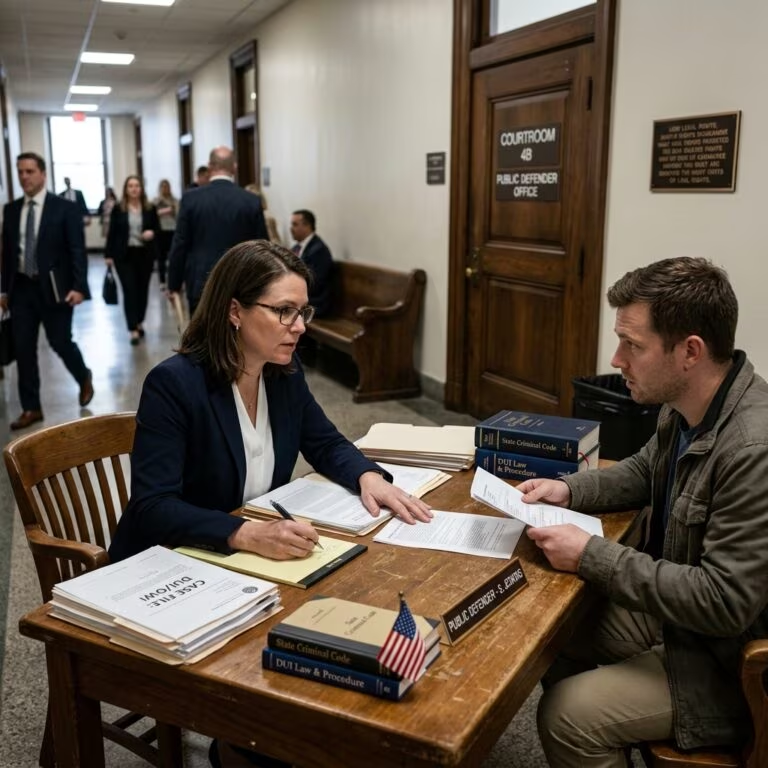
Driving under the influence (DUI) charges do not begin and end with a single court date. A DUI case unfolds through a series of legal and administrative stages, from the first flashing lights in your rearview mirror to the final resolution of criminal penalties and driver’s license consequences. Knowing what happens at each stage helps you make informed decisions, work effectively with your attorney, and minimize the long-term impact on your life.
Big-Picture Overview: How a DUI Case Typically Progresses
Although procedures vary by state, most DUI cases follow a recognizable sequence of events.
- Investigation and traffic stop based on suspected impaired driving.
- Arrest and booking after field sobriety and chemical testing.
- Administrative license action by the motor vehicle agency.
- First court appearance (arraignment) and entry of a plea.
- Pretrial phase including discovery, motions, and negotiations.
- Trial if the case is not resolved by plea or dismissal.
- Sentencing if there is a guilty plea or conviction.
- Post‑conviction and reinstatement of driving privileges.
Some cases end early through plea agreements, while others proceed all the way to trial and, in rare situations, appeal. The following sections walk through each step in more detail.
Stage 1: Initial Stop and DUI Investigation
The DUI process usually begins with a law enforcement officer observing behavior suggesting possible impairment, such as weaving within a lane, failing to maintain speed, or running a red light. The officer needs reasonable suspicion to justify a traffic stop, which is a relatively low legal threshold.
Officer Observations and Personal Contact
Once the vehicle is stopped, the officer approaches and assesses the driver’s condition. According to guidance referenced by the American Bar Association, officers typically move through three phases during a DWI investigation: vehicle in motion, personal contact, and pre‑arrest screening.
- Noticing smell of alcohol, bloodshot eyes, or slurred speech.
- Listening for confused or delayed responses to questions.
- Observing manual dexterity when retrieving documents.
Field Sobriety and Preliminary Tests
To build probable cause, officers often request standardized field sobriety tests (FSTs) and may use a roadside breath test device.
- Common FSTs include the walk‑and‑turn, one‑leg stand, and eye movement tests.
- Preliminary breath tests estimate blood alcohol concentration (BAC), but formal evidentiary tests usually occur later at a station or jail.
If the officer concludes there is sufficient evidence of impairment, the investigation moves into the arrest phase.
Stage 2: Arrest, Booking, and Immediate Consequences
Once probable cause exists, the officer will place the driver under arrest for suspected DUI. This moment officially begins the criminal case.
What Happens During Booking
After the arrest, the driver is usually transported to a police station or local jail for booking.
- Personal information is recorded.
- Photographs (mugshots) and fingerprints are taken.
- Formal chemical testing (breath, blood, or sometimes urine) is performed to measure BAC.
In many jurisdictions, the vehicle is towed and impounded at the driver’s expense, adding to the financial impact of the arrest.
Release Conditions and Bail
After booking, a person may be released on bail or on their own recognizance, depending on the severity of the charges and local rules. Some states use standard bond schedules for DUI; others hold brief hearings to set conditions of release, such as no driving with any alcohol in the system or installing an ignition interlock device for certain offenders.
Stage 3: Administrative License Suspension and DMV Hearings
DUI arrests often trigger administrative license actions separate from the criminal case. These proceedings are usually handled by the state’s department of motor vehicles (DMV) or similar agency.
Immediate License Impact
In many states, the arresting officer immediately confiscates the driver’s license and issues a temporary paper license. The driver has a limited time—sometimes as little as 10 days—to request a hearing to contest the suspension.
Scope of the DMV Hearing
The administrative hearing focuses on whether the license should be suspended or revoked, not on criminal guilt or innocence.
- Officials review whether the officer had legal grounds to stop and test the driver.
- They evaluate the chemical test results or refusal to submit to testing.
- The outcome can include upholding, modifying, or rescinding the suspension.
Even if a driver wins the administrative hearing, the criminal DUI charge continues in court and may still cause license loss if there is a conviction.
Stage 4: Arraignment – The First Court Appearance
The arraignment is typically the first formal court appearance in a DUI case. It serves several key functions.
Key Features of Arraignment
- The court informs the defendant of the charges and potential penalties.
- The defendant is advised of the right to counsel, and counsel may be appointed if the person qualifies for public defense.
- The defendant enters a plea: guilty, not guilty, or in some states, no contest.
If a defendant pleads guilty or no contest at arraignment, the case may proceed directly to sentencing. If the plea is not guilty, the matter continues into the pretrial stage.
Stage 5: Pretrial Phase, Motions, and Negotiations
The pretrial phase is where much of the legal work in a DUI case occurs. It can include multiple hearings over several months.
Exchange of Evidence (Discovery)
Prosecutors provide police reports, test results, video recordings, and other evidence to the defense. Defense counsel reviews these materials to identify weaknesses, inconsistencies, or constitutional problems in the state’s case.
Pretrial Motions
Lawyers may file motions asking the court to limit or exclude certain evidence, or even to dismiss charges.
- Suppression motions challenging the legality of the stop, arrest, or search.
- Challenges to the accuracy of chemical tests or how they were administered.
- Motions addressing improper statements or procedural errors.
Plea Discussions and Case Resolution
Many DUI cases end in the pretrial phase through plea agreements instead of going to trial.
- Prosecutors may offer reduced charges or sentencing recommendations in exchange for a guilty plea.
- Defense counsel evaluates whether the offer is preferable to the risk of trial.
- Judges usually approve plea deals as long as they comply with law and policy.
When negotiations do not produce an acceptable agreement, the case moves toward trial.
Stage 6: DUI Trial – How the Case Is Decided
If the defendant maintains a not‑guilty plea and the case is not dismissed, it may proceed to trial in front of either a jury or, in some instances, a judge alone. Trials are more common in contested cases or where significant penalties are at stake.
Typical Trial Structure
| Trial Phase | What Happens |
|---|---|
| Jury selection | Prospective jurors are questioned and either accepted or excused to form an impartial panel. |
| Opening statements | Each side outlines the evidence it expects to present and its theory of the case. |
| Prosecution case | Officers, experts, and other witnesses testify; video and test results are introduced. |
| Defense case | The defense may call witnesses, challenge the state’s evidence, or argue that proof is insufficient. |
| Closing arguments | Attorneys summarize the evidence and argue how the law should be applied. |
| Deliberation and verdict | The judge or jury decides whether the prosecution has proved guilt beyond a reasonable doubt. |
Possible Trial Outcomes
- Acquittal: The defendant is found not guilty and the DUI charge is resolved in their favor.
- Conviction: The defendant is found guilty and the case proceeds to sentencing.
- Mistrial: In rare cases, serious problems during trial may require starting over.
Stage 7: Sentencing and Typical DUI Penalties
Sentencing occurs when a defendant pleads guilty, enters a no‑contest plea that results in conviction, or is found guilty at trial. Penalties vary widely by jurisdiction and by the specific facts of the case.
Common Criminal Penalties
According to national summaries of DUI penalties, courts often impose a combination of sanctions, which may increase for repeat offenses or aggravating circumstances.
- Fines and court costs.
- Probation with conditions such as alcohol treatment or monitoring.
- Community service requirements.
- Jail time, particularly in cases with high BAC, crashes, or prior convictions.
- Mandatory completion of DUI education or counseling programs.
License Penalties and Vehicle‑Related Sanctions
In addition to criminal penalties, a DUI conviction typically leads to significant driving and vehicle restrictions.
- Suspension or revocation of the driver’s license for a defined period.
- Impoundment of the vehicle in some jurisdictions.
- Requirement to install an ignition interlock device that prevents driving with alcohol in the system.
Courts may also order substance abuse assessments and ongoing treatment as conditions for regaining or keeping driving privileges.
Stage 8: After Sentencing – Compliance, Appeals, and Reinstatement
Once sentencing is complete, the focus shifts to complying with the court’s orders and addressing lingering administrative consequences.
Completing Court Requirements
To avoid further penalties, defendants must complete probation terms, pay fines, attend required classes, and obey any restrictions on driving or alcohol use. Failure to comply can result in extended probation, additional fines, or incarceration.
Appeal Options
In some cases, the defendant may have grounds to appeal the conviction or sentence, asserting legal errors that occurred during trial or plea proceedings. Appeals are governed by strict deadlines and procedural rules, and they rarely re‑try the entire case; instead, they focus on whether the law was correctly applied.
Reinstating Driving Privileges
After the suspension period, drivers usually must meet specific conditions before their license is reinstated.
- Providing proof of completion of required education or treatment programs.
- Paying reinstatement fees and any outstanding fines.
- Maintaining ignition interlock devices when mandated.
- In some states, providing proof of high‑risk insurance coverage.
Administrative agencies often maintain separate timelines and requirements from the criminal courts, so it is important to track both.
Frequently Asked Questions About DUI Case Stages
How long does a typical DUI case take from start to finish?
The duration depends on the jurisdiction, court backlog, and whether the case goes to trial. Many first‑offense DUIs resolve within several months through plea agreements, while contested cases involving pretrial motions and trials can take significantly longer.
Can I drive while my DUI case is pending?
Driving privileges during the case depend on administrative rulings and court orders. Some drivers may use temporary licenses or restricted permits, while others face complete suspension. Requesting a DMV hearing promptly after arrest is often critical to preserving any ability to drive during the case.
Do all DUI cases go to trial?
No. Most DUI cases do not reach trial. They are resolved through plea agreements, diversion programs, or dismissals based on legal or evidentiary issues. Trial generally occurs when negotiations fail or when the defense believes the evidence does not support conviction.
What factors affect DUI sentencing?
Courts consider prior DUI convictions, BAC level, whether there was a crash or injuries, the presence of minors in the vehicle, and the defendant’s cooperation and compliance. Many states have mandatory minimum penalties for certain DUI circumstances, including repeat offenses.
Is a DMV license suspension the same as a criminal conviction?
No. Administrative suspensions are handled by motor vehicle agencies and can occur even if the criminal case is later reduced or dismissed. A criminal conviction is entered by a court and may carry separate, and sometimes additional, license consequences.
References
- DUI Cases and Legal Defense — FindLaw. 2023-05-01. https://www.findlaw.com/dui/cases.html
- The Stages of a DUI Case in Florida: What to Expect — Law Office of David C. Brown. 2021-03-10. https://www.jacksonvillecriminaldefenseattorneyblog.net/the-stages-of-a-dui-case-in-florida-what-to-expect/
- What Are the Different Stages of a DUI Case? — ABC Counseling. 2022-04-15. https://www.abc-counseling.com/blog/what-are-the-different-stages-of-a-dui-case/
- Stages of a DUI Case — Law Offices of Thomas Tears. 2020-11-20. https://www.thomastears.com/criminal-defense/dui/stages-of-a-dui-case/
- DUI Court Process in California — Cronis, Iserls & Stark. 2022-06-01. https://www.cronisraelsandstark.com/california-dui-court-process
- Understanding DWI Investigations — American Bar Association. 2019-08-01. https://www.americanbar.org/groups/judicial/resources/highway-justice/understanding-dwi-investigations/