
Understanding Police Lineup Identifications
How police lineups work, why eyewitness identifications can go wrong, and what safeguards exist to protect suspects and strengthen criminal investigations.
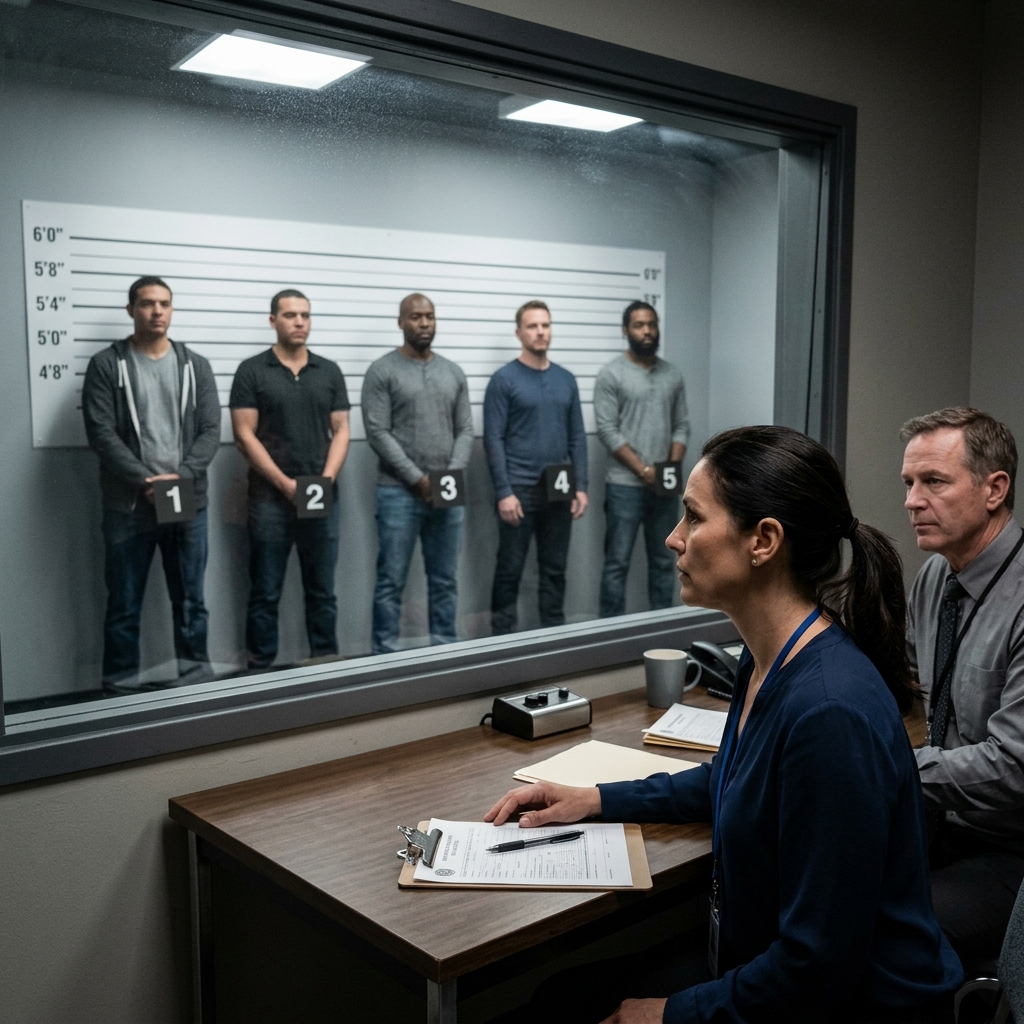
Police lineups are a common investigative tool used to test whether a witness or crime victim can recognize a suspect among several similar-looking people or photographs. They can be powerful evidence in criminal cases, but they also carry a risk of error when eyewitnesses are mistaken or procedures are flawed. This article explains how lineups work, why reliability is such a concern, and what safeguards and rights exist to reduce the chances of wrongful identification.
What Is a Police Lineup?
A police lineup (often called an identity parade in some jurisdictions) is a procedure in which investigators present a suspect together with several non-suspect individuals known as fillers and ask a witness whether they can identify the perpetrator. Lineups can be conducted using live participants in a room or, more commonly, using photographs arranged for viewing.
Two core elements define a typical lineup:
- One suspect – Only one person in the lineup is under investigation for the crime.
- Multiple fillers – Other people or photos resemble the suspect based on the witness’s description but are known to be innocent.
When correctly designed and administered, a lineup functions as a memory test: the witness must distinguish the suspect from similar-looking fillers and decide whether any person matches their recollection of the culprit.
Types of Eyewitness Identification Procedures
Law enforcement agencies use several formats to obtain eyewitness identifications. Each carries different strengths and risks for reliability.
Common Lineup Formats
| Procedure | Description | Key Features |
|---|---|---|
| Live lineup | Suspect and fillers stand or sit in a row while the witness views them in person. | Usually 5–6 individuals; participants can be asked to speak, move, or change position. |
| Photo lineup | Witness views a series of photographs instead of live persons. | More common in U.S. practice; typically 6 or more photos; easier to document and repeat. |
| Showup | A single suspect is presented to the witness shortly after the crime. | Time-sensitive and less controlled; higher risk of suggestiveness compared with full lineups. |
Simultaneous vs. Sequential Lineups
Lineups can also differ in how they are shown to a witness:
- Simultaneous lineup – All faces or participants are displayed at once, and the witness chooses one or declares that the perpetrator is not present.
- Sequential lineup – Photos or individuals are presented one at a time, and the witness must decide about each before seeing the next.
Research and professional guidelines have raised concerns that simultaneous lineups may encourage “relative judgment,” where witnesses pick the person who looks most like the culprit rather than deciding whether any person truly matches their memory. Sequential procedures, especially when carefully administered, may reduce that tendency by forcing witnesses to evaluate each option independently.
Why Police Lineups Can Be Unreliable
Although eyewitness testimony is often perceived as persuasive, scientific studies and wrongful conviction cases have shown that memory is fragile and lineup procedures can inadvertently push a witness toward the suspect. Problems typically arise for three reasons: limitations of human memory, poor lineup construction, and suggestive administration.
Human Memory Limits
Eyewitness identifications rely on memory formed during a stressful incident, often under poor lighting or brief exposure. Factors such as fear, distractions, cross-racial recognition difficulty, and the passage of time can degrade accuracy. Law enforcement best practices emphasize documenting the witness’s opportunity to observe the suspect, including distance, lighting, and duration.
Biased or Unfair Lineup Composition
A lineup should be “fair,” meaning that the suspect does not stand out from the fillers. When fillers differ noticeably in age, race, clothing, or distinctive features, witnesses may be nudged toward the suspect simply because they appear different. Guidelines from multiple jurisdictions recommend that fillers be similar to the suspect in gender, race, age, height, and other distinctive traits described by the witness.
Common composition problems include:
- Only one person matches the description – If the suspect is the only person with a particular feature (for example, a visible tattoo or unique hairstyle), the lineup becomes suggestive.
- Fillers known to the witness – If the witness recognizes all fillers except the suspect, the procedure can implicitly steer them toward the stranger.
- Multiple suspects in one lineup – Best practice is to include only one suspect per lineup; more than one can distort the witness’s decision-making.
Suggestive Administration and Due Process
Courts have long recognized that overly suggestive identification procedures can violate a defendant’s right to due process. If a lineup or showup is so suggestive that it creates a “very substantial likelihood of misidentification,” testimony about that identification may be inadmissible at trial.
Examples of suggestive conduct include:
- Informing the witness beforehand that the suspect is in the lineup.
- Having all fillers known to the witness, leaving only the suspect as unfamiliar.
- Making comments or gestures that hint at which person the witness should choose.
- Praising or validating the witness after choosing a particular person.
Because of these risks, modern reforms emphasize standardized instructions, independent administration of lineups, and careful documentation.
Best Practices for Reliable Eyewitness Identifications
Over the last two decades, law enforcement agencies, researchers, and policymakers have developed recommended practices to make eyewitness identifications more dependable. While details vary by jurisdiction, many guidelines share common themes.
Blind or Blinded Administration
One major safeguard is the use of a blind or blinded lineup administrator. In a blind lineup, the officer conducting the procedure does not know who the suspect is. This reduces the risk that nonverbal cues, wording of instructions, or responses to witness questions will unconsciously guide the witness toward the suspect.
In a blinded procedure, the administrator may know the suspect’s identity but cannot see which photo or person the witness is viewing at the moment of decision, thanks to techniques such as shuffled photo folders.
Standardized Witness Instructions
Clear, consistent instructions help ensure that witnesses understand the process and do not feel pressured to choose someone. Recommended instructions typically include the following points:
- The perpetrator may or may not be present in the lineup.
- The witness is not required to make an identification; saying “none of these” is acceptable.
- The investigation continues even if no identification is made.
- The administrator does not know who the suspect is (in blind procedures).
- Honest uncertainty is important; witnesses should not guess.
Some agencies also instruct witnesses to focus on facial features rather than clothing, particularly where clothing may have been changed after the event.
Careful Selection of Fillers
Fillers should be chosen to match the witness’s pre-lineup description of the suspect, not merely the suspect’s current appearance. This prevents officers from tailoring fillers to make the suspect stand out. Key principles include:
- Using fillers of the same general race, age range, and gender.
- Matching distinctive features where possible (facial hair, hairstyle, build).
- Avoiding unusual clothing or accessories that draw attention to one person.
- Ensuring fillers are not individuals the witness already knows.
Documenting Confidence and Reactions
Guidelines increasingly stress the importance of recording the witness’s confidence level at the time of the identification, in their own words, rather than later after exposure to other information. Officers are encouraged to document:
- The exact statements the witness makes when identifying or rejecting individuals.
- Any nonverbal reactions, such as hesitation or visible uncertainty.
- The witness’s description of how sure they are (e.g., “I’m pretty sure,” “I think it might be number 3”).
Some jurisdictions require audio-visual recording of the entire lineup procedure, which can later be reviewed by courts and attorneys when fairness is disputed.
Legal Protections for Suspects in Lineups
A person who becomes the focus of a lineup has several legal interests at stake: the right to fair procedures, the right to challenge unreliable identifications, and, in some settings, the assistance of counsel. These protections emerge from constitutional due process principles and state-level statutes or guidelines.
Due Process and Excluding Unfair Identifications
Under federal constitutional law, courts evaluate lineup procedures by considering the “totality of the circumstances.” If they find that police used methods so impermissibly suggestive as to make misidentification highly likely, any resulting identification may be excluded from evidence. Factors may include the fairness of lineup composition, the witness’s opportunity to observe the suspect during the crime, and whether officers signaled or hinted at which person to choose.
Right to Counsel in Certain Lineups
In some jurisdictions, once formal charges are filed, the defendant may have a right to have counsel present at live lineups. This allows defense attorneys to observe the composition and administration and later raise challenges if they believe the procedure was unfair. Rules differ by state and depend on procedural stage, so legal advice is essential.
Statutory and Guideline-Based Safeguards
Beyond constitutional doctrine, many states have enacted specific statutes or official guidelines governing eyewitness identification. For example, some laws require:
- Pre-lineup documentation of the witness’s description of the perpetrator.
- Blind administration of photo or live lineups.
- One suspect per lineup and use of appropriately similar fillers.
- Separate viewings for multiple witnesses to avoid contamination.
- Audio-visual recording of the lineup procedure.
Defense lawyers can use violations of these rules to challenge the reliability of an identification and, in some cases, seek suppression or a remedy such as a new lineup conducted under proper conditions.
Practical Guidance for Witnesses and Suspects
While lineup rules mainly bind law enforcement and courts, both witnesses and suspects can take practical steps to protect the integrity of the process.
For Witnesses
- Be honest about uncertainty – If you are not sure, say so. Avoid pressure to “pick the closest match.”
- Ask for clear instructions – Make sure you understand that you do not have to choose anyone.
- Focus on memory, not expectations – Do not assume that the perpetrator must be present in the lineup.
- Avoid outside information – News stories, conversations with other witnesses, or social media can alter your memory. Try to rely only on what you personally saw.
For Suspects and Defendants
- Consult an attorney promptly – A criminal defense lawyer can advise you on whether lineup procedures were lawful and how to challenge them.
- Preserve evidence of unfairness – If you notice suggestive comments or obviously biased lineup composition, tell your attorney and document what happened.
- Understand the stakes – Even a single identification can be very influential at trial. Early legal intervention may be crucial.
Frequently Asked Questions About Police Lineups
Are police lineups always reliable?
No. While lineups can produce accurate identifications, they are vulnerable to human memory errors and procedural flaws. Studies and official reviews have linked mistaken identifications to wrongful convictions, leading to reforms aimed at increasing reliability.
Can a case rely solely on a lineup identification?
In some prosecutions, eyewitness identification is the central piece of evidence. However, courts and legal scholars increasingly urge caution, recommending corroborating evidence such as physical traces, video recordings, or admissions. When an identification stands alone, defense counsel often scrutinizes the lineup’s fairness and seek expert testimony about memory.
What happens if officers violate lineup guidelines?
Consequences vary. A judge may decide to exclude the identification from trial if the procedure was so suggestive that it threatens due process. Even if exclusion is not ordered, defense attorneys may cross-examine officers and witnesses about deviations from best practices to attack credibility and reliability.
Is a showup less fair than a full lineup?
Showups—where a single suspect is presented to a witness—are often considered more suggestive because they lack fillers and may implicitly signal that the suspect is the perpetrator. Some jurisdictions restrict their use or require strong justification, especially when enough time has passed to arrange a proper lineup.
Can a witness change their identification later?
Witnesses sometimes become more certain over time, particularly after learning that the person they selected has been charged. For this reason, best practices emphasize capturing the witness’s initial confidence at the time of the lineup, before any feedback or external information influences their recollection.
References
- Police Lineups: Making Eyewitness Identification More Reliable — National Institute of Justice, U.S. Department of Justice. 2013-10-01. https://nij.ojp.gov/topics/articles/police-lineups-making-eyewitness-identification-more-reliable
- Police Lineups in California — Eisner Gorin LLP. 2018-10-01. https://www.egattorneys.com/police-lineups-in-california
- New York State Lineup Procedure Guidelines — District Attorneys Association of the State of New York. 2010-11-23. https://www.daasny.com/wp-content/uploads/2014/08/Line-up-Id-Procedures-11-23-10.pdf
- Eyewitness Identification Procedures — Eyewitness Identification Reform Resources (eyewitnessevidence.org). 2020-01-01. https://eyewitnessevidence.org/eyewitness-identification-procedures/
- Lineup — Due Process — U.S. Department of Justice, Criminal Resource Manual §241. 1997-01-01. https://www.justice.gov/archives/jm/criminal-resource-manual-241-lineup-due-process
- Police Lineup — Research Starters, EBSCO. 2017-01-01. https://www.ebsco.com/research-starters/social-sciences-and-humanities/police-lineups
- Eyewitness Identifications – Show-Ups, Photographic, and Live Lineups — Florida State University Police Department. 2019-01-01. https://police.fsu.edu/sites/g/files/upcbnu1426/files/Documents/FSUPD_Policies/810%20-%20Eyewitness%20Identifications-Show-Ups,%20Photographic,%20and%20Live%20Lineups.pdf
Similar Articles








Read full bio of medha deb




