
Station-House Detention: Rights, Limits, And What To Do Today
Learn what station-house detention means, how it differs from arrest, and the rights you have when held at a police station for questioning.
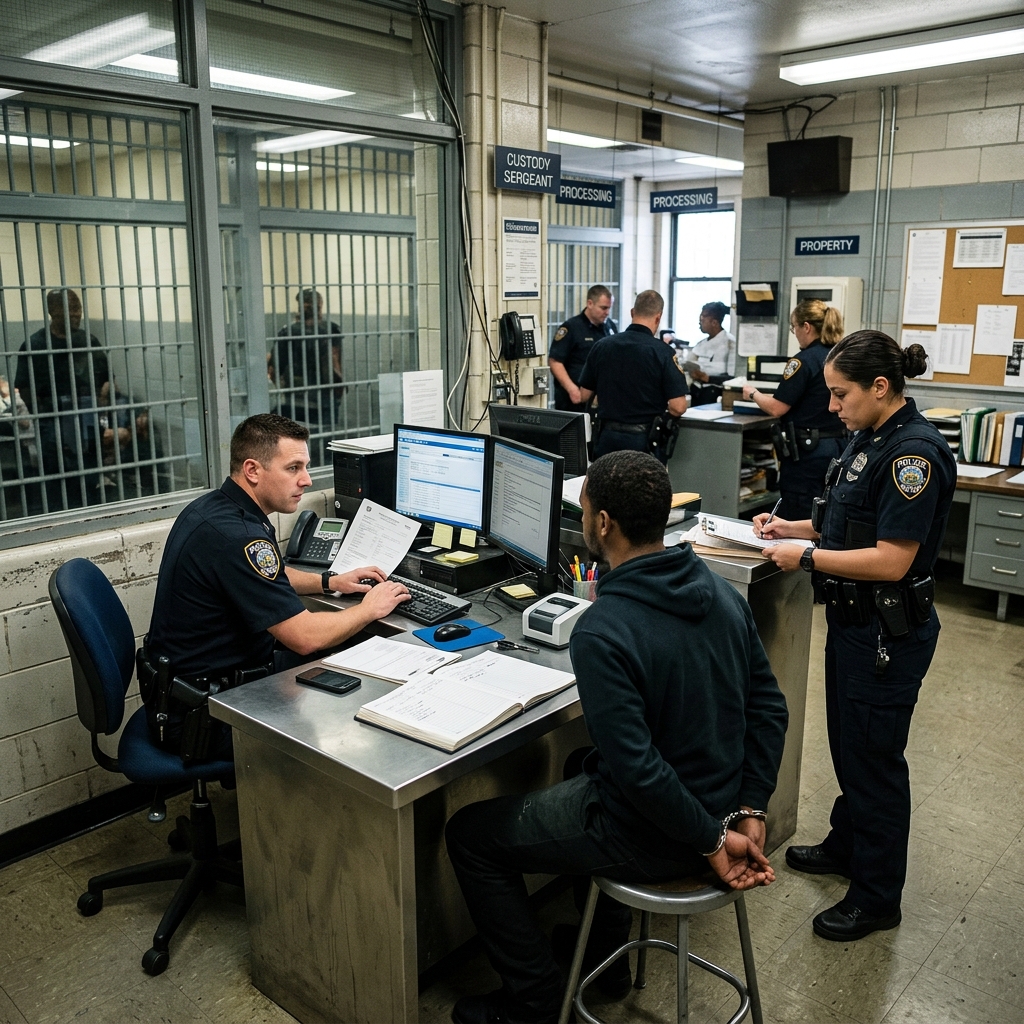
Being taken to a police station and kept there for questioning can be confusing and frightening. This type of custody, often called station-house detention or detention of a suspect, sits at the intersection of police investigative powers and your constitutional rights. Understanding what this detention is, when it is lawful, and what protections you have is critical to safeguarding yourself during any encounter with law enforcement.
What Is Station-House Detention?
Station-house detention refers to a situation where police hold a person at a police station as a suspect in connection with a crime, typically after an arrest but before formal criminal charges have been filed. The primary purpose is investigative: officers question the suspect, verify information, and determine whether there is enough evidence to support charges.
Legally, this detention is treated as a form of seizure under the Fourth Amendment, which protects people against unreasonable searches and seizures. Even if officers say you are “just being detained,” if you are not free to leave, you are in custodial status and significant constitutional protections apply.
- Location: Usually occurs at a police station or similar law enforcement facility.
- Timing: Most common after arrest but before the prosecutor files formal charges.
- Purpose: Questioning, evidence collection, and case evaluation.
- Legal character: A Fourth Amendment seizure; often functionally equivalent to custody following arrest.
Detention vs. Arrest: How Are They Different?
In everyday language, people may think of “detention” as something less serious than “arrest.” Legally, however, the line between the two is narrow and depends on the level of restraint and justification. According to constitutional doctrine, a person is seized when an officer, by physical force or a show of authority, restrains their liberty. Once that restraint is significant and ongoing, the situation often amounts to an arrest.
| Feature | Investigative Detention (Stop) | Arrest / Station-House Custody |
|---|---|---|
| Legal basis | Reasonable suspicion of criminal activity | Probable cause to believe a crime was committed |
| Typical duration | Brief, limited in time to the purpose of the stop | Extended; may last until charges are filed or suspect is released |
| Location | Street, traffic stop, public places | Police station or jail |
| Level of restraint | Short-term, less intrusive (though may include pat-downs) | Full custody; suspect is not free to leave |
| Rights triggered | Fourth Amendment protections against unreasonable seizures | Fourth Amendment + Miranda rights during custodial interrogation |
Courts have recognized that not all interactions with police count as seizures. A seizure occurs only when the officer restrains the liberty of the citizen through force or authority. Once officers handcuff you, transport you to the station, and keep you there, that custody is generally treated as arrest-level restraint, even if officers describe it as “just detention.”
Constitutional Protections During Station Detention
Two major constitutional frameworks govern police station detentions:
- Fourth Amendment — protects against unreasonable seizures and requires probable cause for arrests and most searches.
- Fifth Amendment and Miranda doctrine — protects against compelled self-incrimination during custodial interrogation.
Fourth Amendment: Limits on Seizure and Force
The Fourth Amendment requires that people be secure in their persons and property against unreasonable searches and seizures. For an arrest or station-house detention to be lawful, officers must generally have probable cause—a reasonable, fact-based belief that the person has committed a crime.
When officers detain or arrest a suspect, they may use only such force as is reasonably necessary under the circumstances; statutes and departmental policies commonly forbid unreasonable or excessive force in detaining, arresting, or holding a person.
Miranda Rights and Custodial Interrogation
Once you are in custody and subject to questioning, the protections identified in Miranda v. Arizona apply. Police must advise you of specific rights before beginning a custodial interrogation.
- The right to remain silent.
- A warning that anything you say can be used against you in court.
- The right to consult with an attorney and have one present during questioning.
- The right to an appointed attorney if you cannot afford one.
You are not required to answer questions. Exercising your right to remain silent and to an attorney is one of the most effective ways to protect yourself during station-house detention.[10]
How Long Can Police Hold You Without Charges?
The maximum length of station-house detention without formal charges depends on state law and local procedures. Many jurisdictions set a specific time limit for how long the police may hold a suspect while prosecutors decide whether to file charges. For example, some states allow up to 24 hours of custody for charging decisions; if no charges are filed within that period, the suspect must be released.
Key points about detention length and charges include:
- Short investigative stops must be limited in duration to what is reasonably necessary to accomplish their purpose.
- Extended station detention typically requires probable cause, and the clock for filing charges is governed by state law and court rules.
- Unreasonable delay in seeking a warrant or filing charges may raise constitutional concerns and, in some contexts, can render continued detention unlawful.
If you are held for many hours or overnight, it is reasonable to ask whether formal charges have been filed and to request to speak with an attorney about your status.
Your Rights While Held at a Police Station
Being in a station-house detention does not strip you of your constitutional protections. Several rights may be relevant:
Right to Silence and Counsel
You have the right to refuse questioning and to insist on speaking with a lawyer before answering any substantive questions.[10] This right applies whether you are formally arrested or simply “detained” in custody.
- You may clearly state: “I want to remain silent and I want a lawyer.”
- Once you invoke these rights, officers should stop questioning until counsel is provided.
- Anything you voluntarily say can later be used against you in court.
Protection Against Unreasonable Searches
Officers may conduct certain searches when a person is lawfully arrested or detained, but they remain subject to constitutional limits.
- Search incident to arrest: If you are lawfully arrested, officers may search your person and areas within your immediate control for weapons or evidence.
- Pat-downs: During investigative detention, officers may perform a limited pat-down of outer clothing if they have reasonable suspicion that you may be armed and dangerous.
- Consent searches: Officers may ask you to consent to a broader search, but you are not required to agree.
Refusing consent to search often helps preserve your rights. Even if officers later obtain a warrant, your refusal can be important for later legal challenges.
Humane Treatment and Due Process
Detained individuals retain basic rights to humane treatment. For example, physical abuse, denial of necessary medical care, or excessive force may violate constitutional protections, including those under the Eighth and Fourteenth Amendments. You are also entitled to due process—fair procedures, notice of charges once filed, and an opportunity to be heard.
Police Powers and Limits During Detention
Police powers during station-house detention are significant but not unlimited. Officers can:
- Keep you in secure custody when they have lawful authority to do so.
- Question you after properly advising you of your rights.
- Collect evidence through lawful searches, warrants, or voluntary consent.
- Consult with prosecutors to evaluate whether charges should be filed.
However, they must avoid:
- Holding you for an unreasonable period without moving toward charges or release.
- Using unreasonable or excessive force during detention.
- Questioning you in custody without advising you of your Miranda rights.
- Searching your body, belongings, or electronic devices without lawful basis or valid consent.
Practical Steps If You Are Detained at a Station
Knowing what to do can significantly impact the outcome of a station-house detention. Legal and civic education materials emphasize remaining calm and asserting your rights clearly.
Core Actions to Protect Yourself
- Stay calm and respectful. Escalating the situation through resistance, threats, or insults can lead to additional charges and physical danger.
- Clearly assert your rights. Calmly state that you wish to remain silent and want an attorney. Repeat this if questioning continues.[10]
- Do not consent to unnecessary searches. You may politely decline consent to search your person, belongings, or electronic devices.
- Avoid discussing the case. Do not talk about what happened, your involvement, or other people’s actions until you have legal advice.[10]
- Ask about your status. It is appropriate to ask whether you are under arrest, whether charges have been filed, and when you may speak to a lawyer or be released.
Frequently Asked Questions About Station-House Detention
Am I under arrest if I am taken to the station but told I am “just detained”?
If you are transported to a station, kept there, and not free to leave, courts often treat this as custody comparable to an arrest, even if officers use the word “detained.” The key factor is whether your liberty has been significantly restrained through force or authority.
Do police always need a warrant to arrest and detain me at the station?
Officers do not always need a warrant to make an arrest. Under the Fourth Amendment, they may arrest without a warrant if they have probable cause to believe you committed a felony or a misdemeanor in their presence. However, the arrest and any subsequent detention must still be reasonable.
What if I have not been read my rights?
Miranda warnings are required before custodial interrogation, not merely upon every encounter. If you are in custody and officers question you without providing Miranda warnings, statements you make may be subject to suppression in court.
How long can police ask me questions?
There is no fixed national time limit, but questioning must be reasonable in length and conducted in compliance with your rights. You may end questioning at any time by clearly asserting your right to silence and to counsel.[10] State law may also limit total detention time before charges must be filed or you must be released.
Can I refuse to answer questions about the incident?
Yes. You have the right to refuse to answer questions whether you are stopped, detained, or arrested.[10] You can choose not to respond for any reason, and exercising this right cannot legally be used as proof of guilt.
What should I do if I feel my rights were violated during detention?
Document as much as you can once you are able—times, locations, officer names, and specific actions. Then consult a qualified attorney. They can advise you about possible motions to suppress evidence, civil rights claims, or other legal remedies based on the conduct you experienced.
References
- Police Station-House Detentions — LegalMatch. 2024-01-01. https://www.legalmatch.com/law-library/article/police-station-house-detentions.html
- Detention Short of Arrest: Stop and Frisk — Justia U.S. Constitution Annotated. 2023-01-01. https://law.justia.com/constitution/us/amendment-04/14-detention-short-of-arrest-stop-and-frisk.html
- Your Rights During an Arrest in Missouri — Scrivner Law Firm. 2023-06-01. https://www.scrivnerlawfirm.llc/understanding-the-arrest-process-in-missouri/your-rights-during-an-arrest-in-missouri/
- Learning Domain 15: Laws of Arrest — California Commission on Peace Officer Standards and Training (POST). 2022-01-01. https://post.ca.gov/portals/0/post_docs/basic_course_resources/workbooks/LD_15-V5.0.pdf
- Police Encounters — Show Me Rights. 2023-07-01. https://showmerights.org/police-encounters/
- Revised Statutes of Missouri, Section 84.710 — Missouri Revisor of Statutes. 2021-01-01. https://revisor.mo.gov/main/OneSection.aspx?section=84.710
- Law Facts: Your Rights if Questioned, Stopped or Arrested by the Police — Ohio State Bar Association. 2022-09-01. https://www.ohiobar.org/public-resources/commonly-asked-law-questions-results/law-facts/law-facts-your-rights-if-questioned-stopped-or-arrested-by-the-police/
Similar Articles








Read full bio of Sneha Tete




