Understanding On-Call Pay
On-call work sits in a gray area for many employers and employees. A worker may be required to remain available for a possible call, yet not be actively performing tasks until an actual request comes in. Whether that waiting time must be paid depends on how much control the employer exercises over the worker’s time and whether the employee can realistically use the period for personal activities.
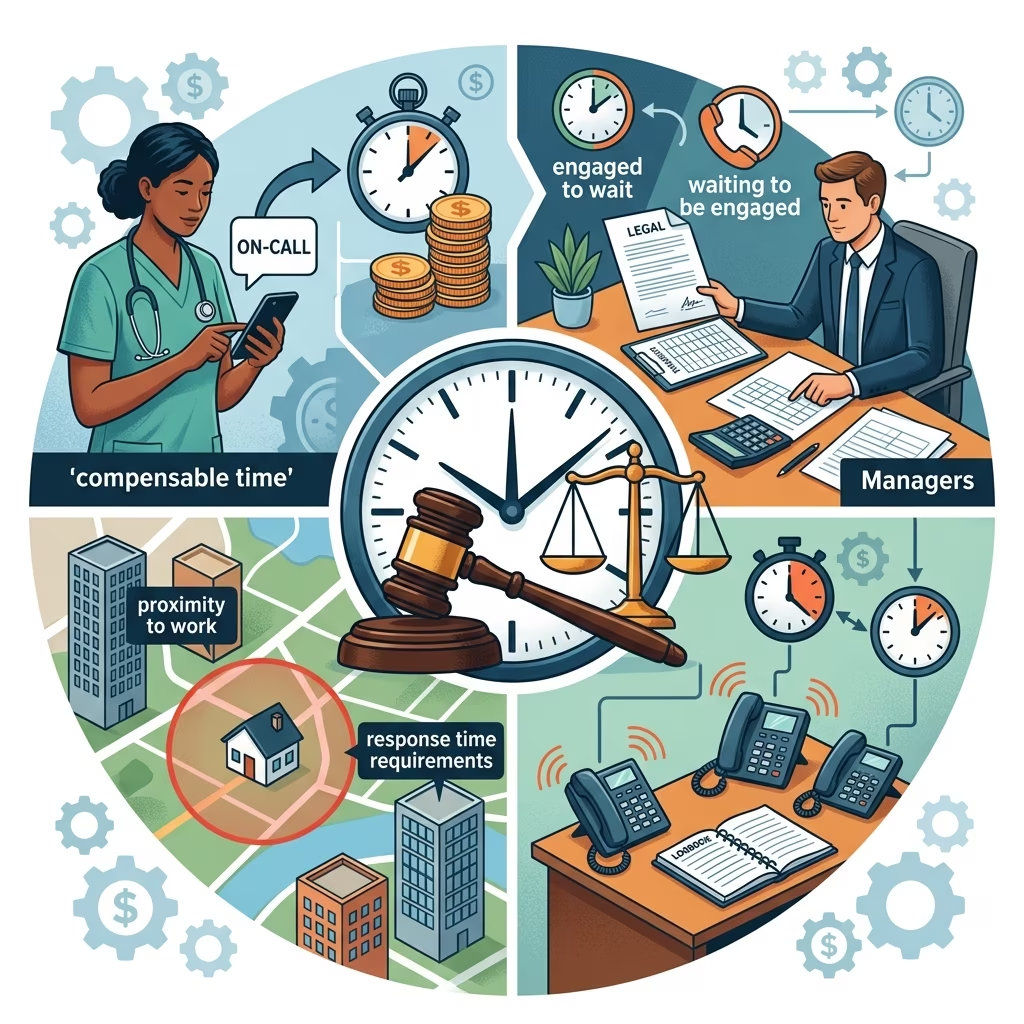
The basic rule under federal wage law is that employees must be paid for all compensable hours worked, but not every period of availability qualifies as work time. The key question is whether the worker is effectively “engaged to wait” or simply “waiting to be engaged.” If the person is so restricted that the time mainly benefits the employer, the on-call period may be treated as paid work time.
When On-Call Time Becomes Paid Time
Federal guidance makes clear that on-call time is not automatically compensable in every situation. Instead, the determination is fact-specific. A worker who must stay on the employer’s premises, remain very close to the workplace, or follow restrictions that prevent meaningful personal use of the time is more likely to be entitled to pay for the entire on-call period.
By contrast, an employee who is merely required to be reachable by phone, text, or pager, and who can otherwise go about normal personal activities, is less likely to have compensable on-call time. The more freedom the employee has, the less likely the waiting period is considered hours worked.
| Situation | Likely pay result |
|---|---|
| Must stay on the employer’s premises | Usually compensable |
| Must stay very near the workplace | Often compensable |
| Only needs to be reachable | Often not compensable |
| Called in and performs actual work | Always compensable for the work performed |
This distinction matters because employers sometimes assume that if no active work is being done, no pay is owed. Wage law does not work that simply. The real issue is whether the employee is free enough to use the time for their own purposes.
Hourly Employees Versus Salaried Employees
On-call rules often affect hourly workers more directly because they are usually nonexempt under the Fair Labor Standards Act (FLSA). Nonexempt employees are generally entitled to minimum wage and overtime protections for all compensable work. If an hourly employee’s on-call hours count as worked time, those hours must be included when calculating overtime.
Salaried exempt employees are treated differently under federal law. They are generally not entitled to overtime in the same way nonexempt workers are, and employers often do not have to provide separate on-call pay. That said, some employers choose to offer a stipend or bonus for availability as a matter of policy or retention, even when not legally required.
- Nonexempt workers: More likely to be paid for restricted on-call time.
- Exempt workers: Usually not entitled to separate on-call pay under federal wage rules.
- Actual work performed: Always must be paid, regardless of job category.
How Overtime Interacts With On-Call Work
If compensable on-call hours push a nonexempt employee above 40 hours in a workweek, overtime may be due. The on-call period itself may not always be payable, but once the time is counted as hours worked, it becomes part of the overtime calculation.
This issue is especially important in industries that rely on rotating availability, such as health care, maintenance, IT support, and emergency response. A worker who is called in multiple times during a week may end up crossing the overtime threshold even if the total time spent actively working is relatively short.
Employers should also remember that all actual work performed during an on-call period must be paid. If a worker receives a call, starts handling a task, and continues working beyond the scheduled shift, that time cannot be treated as unpaid availability.
Common Methods Employers Use to Pay On-Call Time
Employers typically use one of several models to handle on-call arrangements. The right method depends on how restrictive the on-call obligation is and how the employer wants to structure compensation.
- Regular hourly pay for the entire on-call period: Common when the worker’s time is heavily restricted and the period is fully compensable.
- Stipend plus hourly pay if called in: Often used when the worker is available but not actively working unless needed.
- Hourly pay only for time actually worked: More likely when the worker is free to use the time for personal matters.
In some situations, employers may pay on-call time at the regular rate or a lower rate, so long as the arrangement complies with minimum wage requirements and other wage rules. The important point is that any agreement should be lawful, clear, and applied consistently.
What Makes an On-Call Policy Safer and Clearer
A written on-call policy helps reduce disputes and gives employees a better understanding of expectations. A strong policy should explain when workers are considered available, how they will be contacted, what response time is expected, whether travel limits apply, and how compensation is calculated.
Good policies also define the difference between simply being reachable and being actively assigned to work. That distinction can matter when determining whether time is compensable. The more an employer restricts where the worker may go, what they may do, and how quickly they must respond, the more likely the time will be treated as work time.
- Set a clear response window.
- State whether employees may leave home or travel.
- Explain how calls, texts, and reporting instructions will be handled.
- Describe pay for both availability and actual work.
- Address overtime treatment for nonexempt employees.
Examples of Restrictive and Non-Restrictive On-Call Arrangements
Consider two workers with different schedules. One must remain at the employer’s facility for the entire standby period, cannot use the time for personal activities, and may be called in at any moment. That worker is likely being paid for working time, even if the tasks are intermittent.
Another worker is free to stay home, go shopping, or spend time with family, as long as they answer the phone and can report if needed. That person may not have compensable on-call time unless the actual call-in period itself creates paid work hours.
The difference is not just technical. It changes payroll obligations, overtime exposure, and whether a company is complying with federal wage law.
Industries Where On-Call Work Is Common
On-call schedules are common in businesses that cannot predict demand precisely or that must respond quickly to problems. These arrangements appear frequently in health care, building maintenance, information technology, utilities, and other service industries where emergencies or staffing shortages can arise without warning.
Because these industries often involve urgent staffing needs, employers may be tempted to use broad availability requirements. That makes it even more important to evaluate whether the arrangement is truly off-duty time or whether it is legally closer to working time.
Frequently Asked Questions
Is all on-call time paid?
No. Under federal wage rules, whether on-call time must be paid depends on the level of restriction placed on the employee and whether the employee can use the time for personal purposes.
If I am called in, do I get paid for the work?
Yes. Any actual work performed while on call must be paid. If the total compensable hours for the week exceed 40 for a nonexempt employee, overtime may also apply.
Do salaried employees get on-call pay?
Usually not under federal law. Exempt salaried workers are generally outside the standard overtime framework, although employers may still choose to provide extra pay or a stipend.
Can employers pay a flat on-call stipend?
Often yes, especially when the worker is not fully restricted and the stipend is paired with hourly pay for actual work. The arrangement should still comply with wage and minimum wage requirements.
What should I do if I think my on-call time was unpaid improperly?
Workers who believe their on-call time should have been counted as hours worked may want to review their schedule, restrictions, and call-in duties. Because the analysis is fact-specific, disputes often turn on how much freedom the worker really had during the standby period.
Why Documentation Matters
Both employers and employees benefit from keeping records. Employers should document schedules, call logs, compensation rules, and overtime calculations. Employees should keep track of when they were required to remain available, how quickly they had to respond, whether they could leave home, and how often they were actually called in.
Well-kept records can help resolve disagreements over whether time was compensable and whether overtime was correctly paid. They also make it easier to spot patterns, such as repeated after-hours interruptions that effectively turn a supposedly off-duty schedule into regular working time.
References
- On-Call Pay Guide: Rules for Hourly & Salaried Employees — OnPay. 2026. https://onpay.com/insights/on-call-pay-overview/
- How on-call pay works and how to calculate it — Oyster HR. 2026. https://www.oysterhr.com/library/on-call-pay
- elaws – FLSA Hours Worked Advisor — U.S. Department of Labor. 2026. https://webapps.dol.gov/elaws/whd/flsa/hoursworked/screenEr80.asp
- Should You Be Paid For “on-call” Time? — Mansell Law. 2026. https://ohio-employmentlawyer.com/pay-for-on-call-time/
- C. Waiting or On-Call Time — Texas Workforce Commission. 2026. https://efte.twc.texas.gov/c_waiting_or_on_call_time.html
- 'On-Call' Time in Washington: When Being Available Counts as Hours Worked — Justice Law Corp. 2026. https://justicelawcorp.com/blog/on-call-time-in-washington-when-being-available-counts-as-hours-worked/