
Minnesota Home Funeral Regulations: Complete Family Guide
Navigate Minnesota's rules for home funerals: from body care to permits and family-led arrangements without mandatory embalming.
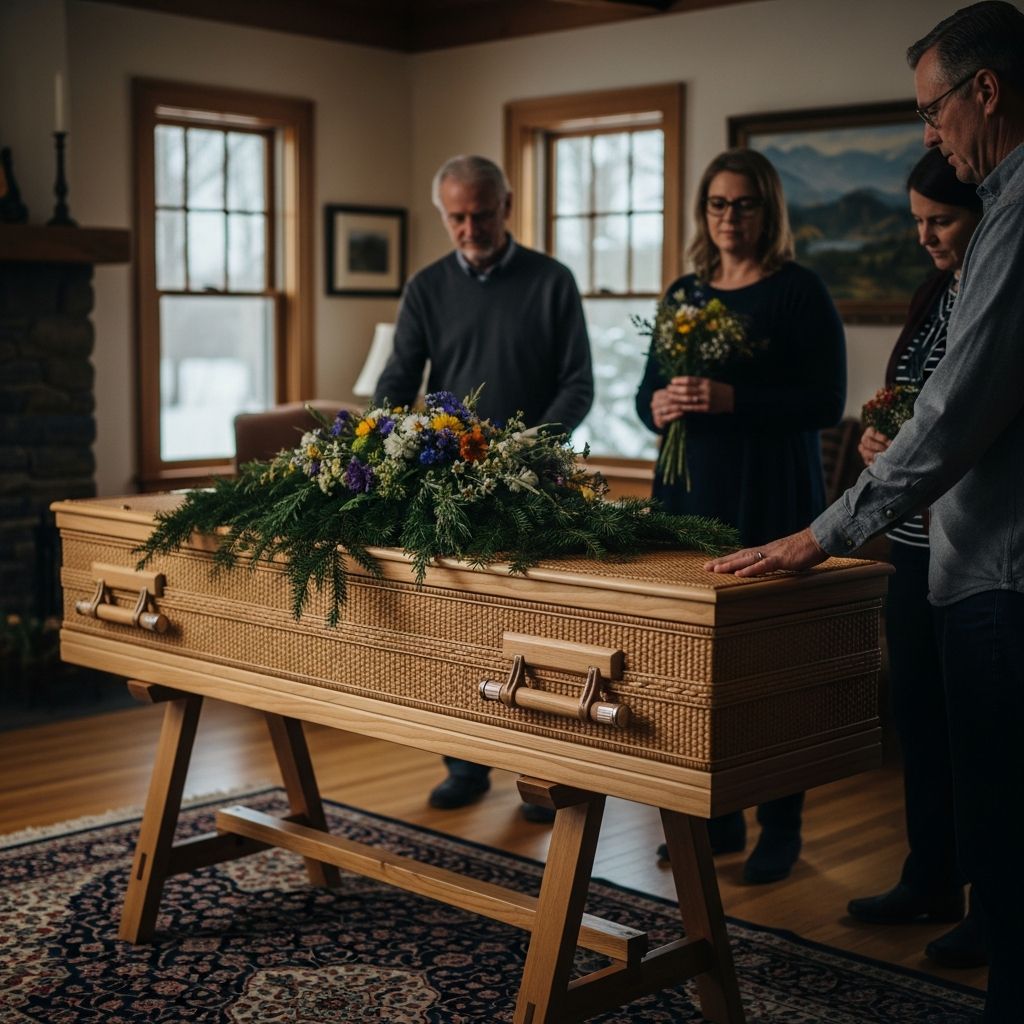
Conducting a home funeral in Minnesota allows families to personally manage the care of a deceased loved one, fostering intimate and meaningful rituals without relying solely on professional funeral services. This practice is legally supported, provided specific state requirements on body preservation, documentation, and final disposition are followed. Minnesota statutes emphasize consumer rights, transparent pricing, and health protections while permitting family custody of remains.
Understanding Your Legal Right to Family-Led Aftercare
Every state, including Minnesota, grants next-of-kin custody and control over a loved one’s body post-death, enabling families to bring remains home for bathing, dressing, private viewings, and ceremonies. No law mandates using a funeral home; families can handle arrangements independently as long as they comply with health and reporting rules. This autonomy supports cultural, religious, or personal preferences for home-based farewells.
Key benefits include cost savings—avoiding facility fees—and emotional closure through hands-on involvement. However, responsibilities involve timely preservation, official paperwork, and coordination with local authorities to ensure public health safety.
Body Preservation Requirements After Death
Minnesota law requires that remains not be disposed of immediately; families must preserve the body appropriately to prevent decomposition. Specifically:
- Embalming or refrigeration below 45°F is mandatory after 72 hours post-death.
- Refrigeration is permitted for up to 6 days; dry ice use is limited to 4 days.
- Disposition must occur within a reasonable time frame thereafter.
- For deaths involving contagious diseases, additional precautions like prompt embalming or physician consultation apply.
These rules differ from funeral home regulations, which mandate embalming or refrigeration within 24 hours—but families conducting home funerals face the 72-hour threshold. Dry ice or commercial refrigeration units can be rented from suppliers, offering practical home solutions.
| Time After Death | Required Action | Options |
|---|---|---|
| 0-72 hours | No embalming needed | Room temperature OK if disposition planned soon |
| After 72 hours | Preservation mandatory | Embalming, refrigeration (<45°F, max 6 days), or dry ice (max 4 days) |
| Contagious disease | Enhanced measures | Embalming likely required; notify physician |
Public viewing on private property (like home) may extend to four days without embalming under recent updates, but confirmation with local health departments is advised.
Death Certificates and Official Reporting
Families must file a death certificate promptly, typically within days of death. This document, signed by a physician, coroner, or medical examiner, records cause and manner of death. Home funeral guides recommend obtaining multiple certified copies for permits, burial arrangements, and vital records.
- Contact the deceased’s physician or county medical examiner if no attending doctor.
- Submit to the local registrar of vital statistics.
- Fees vary by county; processing takes 1-2 weeks for official copies.
Failure to file accurately can delay disposition. For natural deaths at home, the process is straightforward; unattended or suspicious deaths trigger medical examiner involvement.
Transportation Rules for Remains
Transporting a body within Minnesota requires caution to meet health standards. Private vehicles can be used by family members, but:
- Secure the remains in a leak-proof container or pouch.
- Avoid public roads if decomposition risks exist; embalming may be needed for longer trips.
- No permit is required for intrastate family transport, unlike interstate shipping which demands embalming or sealed casket if over 24-48 hours.
To a funeral home, crematory, or cemetery, ensure the vehicle is cleanable and remains covered. Professional transporters charge fees, but families save by self-handling short distances.
Disposition Permits and Final Arrangements
A disposition permit (transit or burial permit) authorizes final handling—burial, cremation, or other methods. Issued by the local registrar after death certificate review.
- Burial: Coordinate with cemetery for plot and interment permit.
- Cremation: Requires 24-hour wait (statute, not family-specific); submit to crematory with death certificate.
- Alkaline hydrolysis or natural organic reduction: Separate pricing and descriptions mandated.
Families sign as authorizing agent. Immediate burial options exist without embalming if under timelines.
Consumer Protections and Pricing Transparency
Minnesota aligns with the Federal Funeral Rule, requiring funeral providers to offer itemized price lists upon request. For home funerals bypassing providers, this ensures no deceptive practices if services are used later.
Mandatory disclosures include:
- Separate prices for embalming, viewing facilities, caskets, urns, and transport.
- Statement: “Except in certain cases, embalming is not required by law. Embalming may be necessary, however, if you select certain funeral arrangements.”
- Cash advance items (e.g., obituary fees) must be itemized with good faith estimates.
Preneed agreements demand copies to next-of-kin upon death notice. Families should document all selections in a signed statement.
Special Considerations for Vulnerable Cases
Certain deaths impose restrictions:
- Communicable diseases: Report to physician; embalming or limited handling required.
- Public viewings: Embalming mandatory if open casket or public exposure.
- Shipping out-of-state: Embalming if not reaching destination in 48 hours.
- Infants/children: Same rules apply; sensitive handling advised.
Consult county health departments for local variances. Veterans may qualify for free burial flags or honors via VA coordination.
Practical Steps for a Smooth Home Funeral
- pronuncio death to physician or 911 if needed.
- Obtain death certificate and copies.
- Preserve body per timelines (dry ice, fridge).
- Plan ceremony: dress, vigil, gather family.
- Secure disposition permit.
- Arrange transport and final placement (bury, cremate).
- File for estate/probate if applicable.
Resources like the National Home Funeral Alliance provide checklists. Local funeral directors may assist with paperwork without full services.
Frequently Asked Questions (FAQs)
Can I keep my loved one at home indefinitely?
No, preservation rules limit time: refrigerate after 72 hours, dispose reasonably soon after.
Is embalming ever required for home funerals?
Not routinely, but yes for public viewings, long transport, or health orders. Refrigeration is a legal alternative.
Do I need a funeral director’s signature?
No for family-led home funerals; you sign as authorizing agent on permits.
How much does a home funeral cost?
Significantly less: $500-$2000 for basics (permits, ice, casket) vs. $7,000+ traditional.
Can I cremate without a funeral home?
Yes, direct to crematory with permit and 24-hour wait.
What if death occurs in hospital?
Request release to family; no embalming needed initially.
Home funerals empower Minnesota families with control, dignity, and affordability in end-of-life care. Always verify with current statutes, as laws evolve.
References
- MN Statutes Sec. 149A.71 — Minnesota Revisor of Statutes. 2023. https://www.revisor.mn.gov/statutes/cite/149A.71
- Quick Guide to Home Funerals by State — National Home Funeral Alliance. 2022. https://www.nhfuneral.org/uploads/1/1/7/5/117550115/quick_guide_to_home_funerals_by_state.pdf
- Laws & Regulations — Michaelson Funeral Home. 2024. https://www.michaelsonfuneral.com/resources/laws-and-regulations
- MN Statutes Sec. 149A.72 — Minnesota Revisor of Statutes. 2023. https://www.revisor.mn.gov/statutes/cite/149a.72
- Planning a Funeral — Minnesota Attorney General. 2023. https://www.ag.state.mn.us/consumer/handbooks/probate/CH7.asp
- Mortuary Science Laws — Minnesota Department of Health. 2024. https://www.health.state.mn.us/facilities/providers/mortsci/regulate.html
Similar Articles








Read full bio of Sneha Tete


