
Understanding Minnesota Civil Rights and Human Rights Protections
Learn how Minnesota civil and human rights laws protect you in work, housing, education, and everyday life across the state.
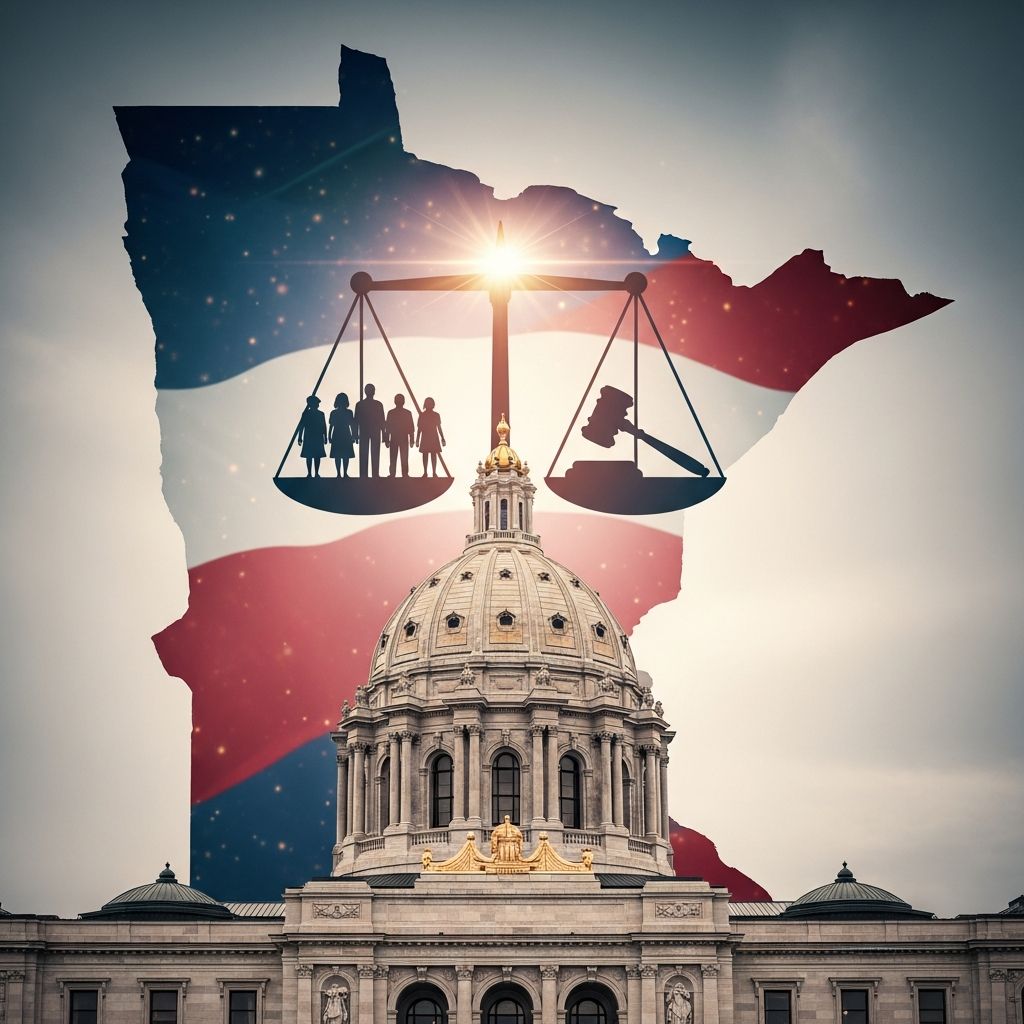
Minnesota has one of the more comprehensive state civil rights frameworks in the United States. At its core is the Minnesota Human Rights Act (MHRA), a state law that prohibits discrimination in many areas of public life and is enforced by the Minnesota Department of Human Rights (MDHR). This guide explains the main protections, how they apply in everyday situations, and what you can do if your rights are violated.
1. What Civil and Human Rights Mean in Minnesota
In Minnesota, civil rights and human rights refer to legally protected freedoms that ensure people are treated fairly and not denied opportunities because of who they are. The MHRA is the primary state law that turns these principles into enforceable rules.
These protections go beyond federal law in some areas by:
- Covering additional protected characteristics not explicitly listed in federal statutes
- Applying to a broad range of settings, including employment, housing, education, public services, and more
- Providing state-level enforcement through the Minnesota Department of Human Rights (MDHR)
2. Key Minnesota Laws Protecting Civil Rights
Several laws and legal frameworks work together to safeguard civil rights in Minnesota. The most important at the state level is the MHRA.
2.1 The Minnesota Human Rights Act (MHRA)
The MHRA is a statewide anti-discrimination law that applies to both public and private actors in covered areas. It forbids discrimination on the basis of specific protected characteristics and authorizes MDHR to investigate complaints and enforce the law. Over nearly 70 years, the Legislature has steadily expanded who is protected, where protections apply, and what remedies are available.
2.2 Relationship to Federal Civil Rights Laws
Minnesota civil rights protections operate alongside federal laws such as:
- Title VII of the Civil Rights Act of 1964 (employment discrimination)
- Fair Housing Act (housing discrimination)
- Americans with Disabilities Act and ADA Amendments Act (disability discrimination)
State and federal protections can overlap. In many situations, a person may have the option to pursue a claim under both federal and state law, depending on the facts and deadlines. Minnesota has intentionally aligned some definitions, such as disability, with federal standards so that courts recognize a wide range of health conditions as protected impairments.
3. Where the Minnesota Human Rights Act Applies
The MHRA covers discrimination in several major areas of daily life. If a person or organization in Minnesota offers something of value to the public—like a job, housing, education, or services—there is a strong chance the law applies.
| Area of Life | Examples of Covered Situations |
|---|---|
| Employment | Hiring, firing, promotions, pay, job assignments, workplace harassment, retaliation |
| Housing | Renting apartments, buying homes, mortgage lending, rules in rental properties |
| Public Accommodations | Access to restaurants, hotels, stores, health clubs, theatres, and other businesses open to the public |
| Public Services | Services provided by state and local government, such as licensing, benefits, or programs |
| Education | Admission, discipline, services, and access within public and many private educational institutions |
| Credit and Business | Loans, credit cards, and some other business transactions or services offered to the public |
4. Protected Classes Under Minnesota Law
The MHRA protects people from discrimination based on defined protected classes. These are characteristics that the law specifically recognizes as improper grounds for treating someone unfairly.
According to state guidance, Minnesota law protects individuals from discrimination based on, among other things:
- Race and color
- National origin and ethnicity
- Religion and creed
- Sex
- Gender identity
- Sexual orientation
- Disability (physical, sensory, or mental)
- Age
- Marital status
- Familial status
- Status with regard to public assistance
Every person in Minnesota is considered part of at least one protected class. For example, all people have a race, age, and sex, so protections apply regardless of whether they belong to a historically disadvantaged group.
4.1 Recent Developments in Protected Class Definitions
In recent legislative sessions, Minnesota has broadened key definitions within the MHRA to ensure the law remains effective and in step with current understanding of discrimination. For example:
- Disability now explicitly includes episodic conditions or impairments in remission if they would substantially limit a major life activity when active, following the federal ADA Amendments model.
- Harassment is clearly recognized as a form of discrimination when based on any protected status, not just sexual harassment.
- Intersectional discrimination, where a person is targeted because of a combination of protected traits (for example, race and gender together), is expressly prohibited.
5. What Discrimination Looks Like Under the MHRA
Under Minnesota law, discrimination occurs when a person or organization treats someone unfairly, denies them opportunities, or harasses them because of a protected characteristic.
5.1 Common Examples in Daily Life
- Employment
- Firing an employee when the real reason is pregnancy, disability, or age
- Subjecting a worker to severe or pervasive harassment based on sex or gender identity
- Retaliating against someone who filed a discrimination complaint
- Housing
- Denying a rental application because of national origin or familial status
- Imposing different terms, conditions, or rules on tenants with disabilities
- Public Accommodations
- Refusing to serve a customer because of race or sexual orientation
- Setting different prices or access rules based on protected traits
- Education
- Excluding a student from programs due to disability without exploring reasonable modifications
- Allowing identity-based harassment to go unaddressed in a way that denies equal educational access
5.2 Harassment as Discrimination
Harassment can be a form of illegal discrimination when it targets someone because of a protected class and is serious enough to affect their access to work, housing, or services. Recent amendments to the MHRA clarify that harassment related to any protected trait—not only sexual harassment—can violate the law.
6. Enforcement: The Minnesota Department of Human Rights
The Minnesota Department of Human Rights (MDHR) is the state agency charged with enforcing the MHRA and promoting equal opportunity.
6.1 MDHR’s Core Responsibilities
MDHR performs three main functions under state law:
- Investigating discrimination charges filed by individuals who believe their rights were violated
- Overseeing equity and inclusion in state contracting and procurement
- Education and outreach to reduce discrimination and disparate outcomes across Minnesota
6.2 Complaint Investigation Process (Overview)
Although specific procedures can evolve over time, a typical MDHR enforcement process includes:
- Intake and determination of whether the allegation falls under the MHRA
- Notice to the respondent (for example, an employer or landlord)
- Gathering documents, interviewing witnesses, and reviewing evidence
- Offering mediation or other alternative dispute resolution options in many cases
- A determination of whether there is probable cause to believe discrimination occurred
Recent legislative changes require MDHR to make a probable cause or no probable cause determination within a specified period, with certain exceptions when the parties are engaged in mediation or similar processes.
7. Remedies and Consequences for Violations
If a violation of the MHRA is found, Minnesota law allows for a range of remedies aiming both to make the victim whole and to deter future violations.
7.1 Types of Remedies Available
The MHRA has historically offered broad remedies, and lawmakers have expanded these over time. Available outcomes may include:
- Compensatory damages such as back pay, front pay, and compensation for emotional distress
- Treble damages in certain cases, allowing up to three times actual damages sustained
- Punitive damages to punish exceptionally wrongful conduct, with recent amendments removing or raising previous caps in some situations
- Attorney’s fees and costs for prevailing individuals
- Civil penalties payable to the state’s general fund in enforcement actions
- Non-monetary relief such as policy changes, training requirements, reinstatement to a job, or changes in business practices
7.2 Time Limits and Procedural Options
Minnesota has adjusted some procedural deadlines for civil rights claims to more closely mirror federal practice. For example, the period for individuals to bring a civil action after an MDHR dismissal has been extended in recent legislation, aligning with federal Equal Employment Opportunity Commission timelines in many cases. Individuals can often pursue claims in court once administrative processes are completed or concluded, and amendments have clarified how the agency’s process interacts with other legal remedies.
8. Local and Municipal Civil Rights Protections
In addition to statewide protections, several Minnesota cities have local civil rights ordinances that expand on or complement the MHRA. For example, Minneapolis has updated its city-level civil rights ordinance to add protected classes and broaden definitions such as race, familial status, and disability in the employment context.
Local ordinances may:
- Add protected classes such as housing status or other categories
- Provide additional protections for pregnant workers and religious practice
- Impose distinct filing and enforcement mechanisms through city civil rights departments
This layered approach means that someone experiencing discrimination in a city like Minneapolis may have rights under federal law, state law, and local ordinances simultaneously.
9. Practical Steps If You Experience Discrimination
If you believe you have been discriminated against in Minnesota in a way that relates to a protected class and a covered area (such as work or housing), there are several practical actions you can consider.
9.1 Document What Happened
- Write down dates, times, locations, and names of people involved
- Keep copies of emails, letters, text messages, or policies that help explain the situation
- Note any witnesses who may have observed the events
9.2 Review Your Options
- Check whether your situation fits within a protected class and area covered by the MHRA
- Consider speaking with a civil rights or employment lawyer for tailored legal advice
- Learn about MDHR’s complaint process and relevant deadlines
9.3 Filing a Charge or Complaint
Individuals can file a charge of discrimination with MDHR when they believe the MHRA has been violated. Depending on the facts, they may also file with federal agencies (such as the Equal Employment Opportunity Commission in employment cases) or with local civil rights offices when city ordinances apply. Because deadlines can be strict and vary by law, it is important to act promptly.
10. Frequently Asked Questions (FAQs)
Q1: Does the Minnesota Human Rights Act protect everyone, or only some groups?
The MHRA protects every person in Minnesota. Because everyone has traits such as race, age, and sex, all Minnesotans fall within one or more protected classes. State guidance emphasizes that “every person is a member of a protected class” under the Act.
Q2: Is discrimination only illegal at work?
No. While employment discrimination is a major focus, Minnesota law also makes discrimination illegal in housing, public accommodations, public services, education, credit, and certain business transactions. The same protected characteristics generally apply across these areas.
Q3: How is Minnesota’s approach different from federal law?
Minnesota often provides broader protections than federal law. The MHRA covers additional protected classes, recognizes intersectional discrimination, and has expanded the definition of disability in line with the ADA Amendments Act so more health conditions qualify as protected impairments. The state also offers its own enforcement pathway through MDHR.
Q4: Are there special rules for employers asking about pay history?
State civil rights guidance notes that employers in Minnesota are prohibited from asking job applicants about their current or past pay as part of anti-discrimination and equal pay efforts.
Q5: Can I bring a lawsuit if MDHR dismisses my case?
Often yes, but it depends on the specific circumstances and deadlines. Minnesota has extended the time period during which an individual may file a civil action after MDHR dismisses a charge to better match federal timelines, and recent changes clarify that the MDHR process is exclusive only while it is pending.
References
- Minnesota Department of Human Rights – Home — Minnesota Department of Human Rights. Accessed 2025-12-08. https://mn.gov/mdhr/
- Your Civil Rights — Minnesota Department of Human Rights. Accessed 2025-12-08. https://mn.gov/mdhr/yourrights/
- Human Rights Resources — City of Falcon Heights, Minnesota. Accessed 2025-12-08. https://www.falconheights.org/residents/resources-for-residents/human-rights-resources
- How the ’23–’24 Legislature Expanded Civil Rights Protections — Minnesota State Bar Association (Bench & Bar of Minnesota). 2024-10-01. https://www.mnbars.org/?pg=BenchBarofMinnesota&pubAction=viewIssue&pubIssueID=47719&pubIssueItemID=294965
- Minnesota’s Human Rights Act Amended — Jackson Lewis P.C. 2024-05-31. https://www.jacksonlewis.com/insights/minnesotas-human-rights-act-amended
- Minneapolis Expands Workplace Civil Rights Protections and Reasonable Accommodation Obligations — Proskauer Rose LLP (Law and the Workplace). 2025-05-09. https://www.lawandtheworkplace.com/2025/05/minneapolis-expands-workplace-civil-rights-protections-and-reasonable-accommodation-obligations/
- Your Rights Under the Minnesota Human Rights Act — Minnesota Governor’s Council on Developmental Disabilities. 2015-04-01. https://www.disability.state.mn.us/wp-content/uploads/2015/04/CM-x17-MN-Human-Rights_ENG-UPDATED-VERSION.pdf
Similar Articles








Read full bio of medha deb


