
Minnesota Car Crash Reporting: Rules, Deadlines, and Practical Steps
Understand when and how to report a Minnesota motor vehicle accident, protect your rights, and comply with state law.
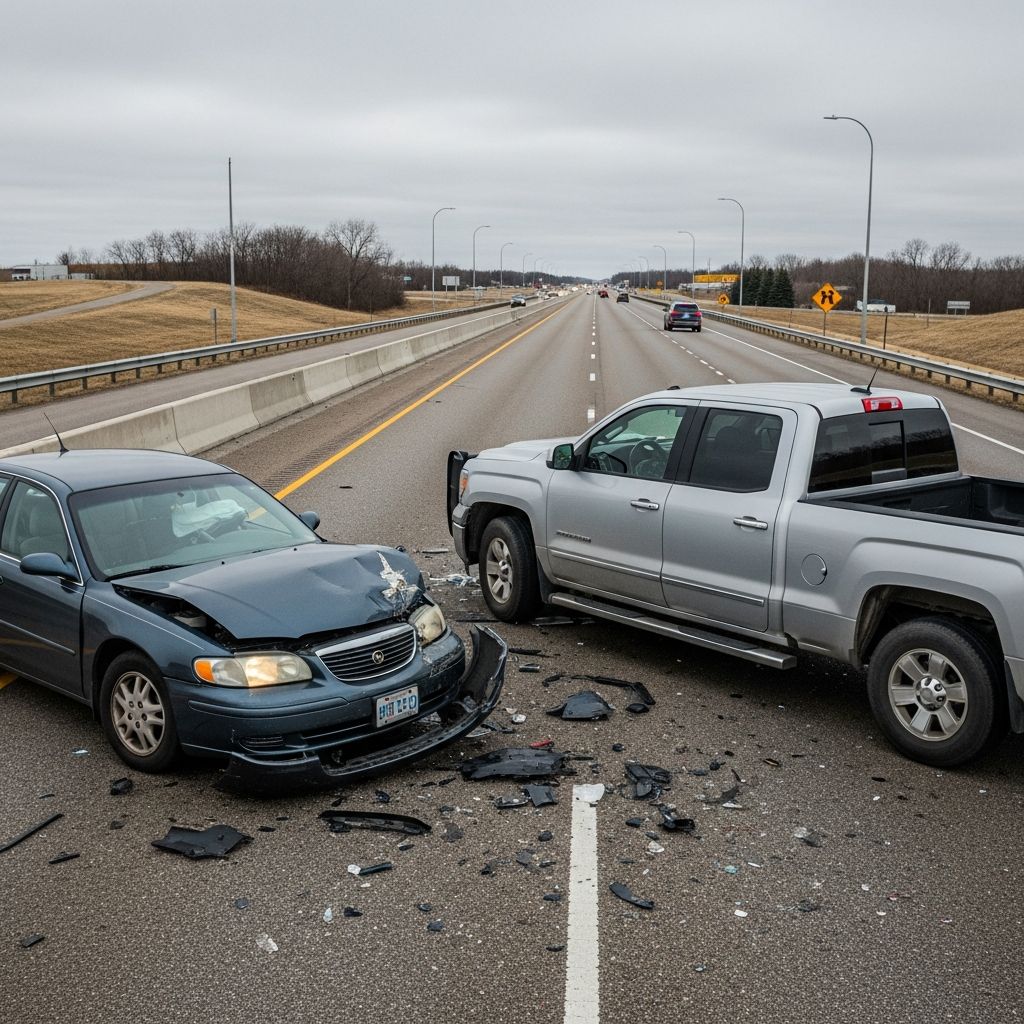
After any motor vehicle crash in Minnesota, you face two urgent priorities: getting everyone to safety and making sure you follow the state’s accident reporting laws. Knowing when you must call law enforcement, when a written crash report is required, and how these documents affect your insurance or potential legal claim can prevent costly mistakes and even criminal penalties.
This guide explains, in plain language, how car accident reporting works in Minnesota, what Minnesota Statute § 169.09 requires of drivers, and how to use police and crash reports to protect your interests.
Why Accident Reporting Matters in Minnesota
Reporting a crash is not just a formality. It serves several crucial functions in Minnesota’s traffic safety and legal systems:
- Public safety: Accurate reports help law enforcement and safety agencies identify dangerous locations, patterns, and behaviors that cause crashes.
- Legal accountability: Reports create an official record of the incident, which may be used in criminal cases (such as hit-and-run) and in civil lawsuits.
- Insurance claims: Insurers rely heavily on crash and police reports to evaluate fault, damages, and whether policy obligations are triggered.
- State records: Minnesota’s Department of Public Safety uses standardized crash reporting to analyze trends and comply with federal reporting requirements.
Because of this, Minnesota law requires reporting when certain thresholds are met, and imposes penalties when drivers fail to comply.
Immediate Duties at the Scene of a Minnesota Crash
Before you think about paperwork, Minnesota law imposes obligations that begin the moment a collision occurs.
1. Stop and Remain at the Scene
The driver of any vehicle involved in a collision that results in injury, death, or damage to another vehicle that is driven or attended must stop as close to the scene as safely possible and remain long enough to fulfill legal duties. Leaving the scene too soon can lead to hit-and-run charges.
2. Provide Information and Render Aid
After stopping, you must:
- Provide your name, date of birth, and mailing or email address to the other parties or to law enforcement.
- Give the registration plate number of the vehicle you are driving.
- Show your driver’s license or permit to any peace officer investigating the crash, if requested and available.
- Offer reasonable assistance to anyone injured, which can include arranging transportation or calling for medical help.
If the damaged property is an unattended vehicle, you must make reasonable efforts to locate the owner, report the collision to law enforcement, or leave a conspicuous note with your identifying information.
3. Move Vehicles If It Is Safe
When a crash is minor and vehicles are drivable, Minnesota encourages drivers to move vehicles out of traffic when it is safe to do so. This helps prevent additional collisions and allows emergency responders to work more efficiently. Local public safety agencies also advise drivers to prioritize securing the scene by using hazard lights and emergency triangles where available.
4. Call 911 for Injuries or Serious Hazards
If anyone is hurt or killed, or if the crash creates a major traffic hazard or property damage, calling 911 immediately is essential. Dispatchers can send law enforcement and medical responders, and the responding officers will typically complete an official accident report that is later submitted to the Commissioner of Public Safety.
When Minnesota Law Requires You to Report a Crash
Minnesota has specific thresholds that determine when crashes must be reported to law enforcement or the state. Some duties rest on drivers; others fall on investigating officers.
Legal Triggers for Reporting
Under Minnesota Statute § 169.09 and related state guidance, an accident must be reported if it involves:
- Death of any person as a result of the crash.
- Bodily injury requiring medical treatment at or away from the scene.
- Property damage exceeding a monetary threshold (commonly applied at $1,000 in damage to any one person’s property or to all property combined).
- Commercial motor vehicles or crashes on public rights-of-way meeting state reporting conditions.
Driver’s Duty to Notify Law Enforcement
When a collision results in bodily injury or death, the driver must, after complying with stop-and-aid obligations, promptly notify the appropriate agency by the quickest means of communication:
- The local police department if the crash occurs within city limits.
- The Minnesota State Patrol if it occurs on a trunk highway.
- The county sheriff’s office for other qualifying incidents.
Failing to report a qualifying accident can expose a driver to criminal penalties, especially when the crash involves injuries, fatalities, or significant property damage.
When a Written Minnesota Motor Vehicle Crash Report Is Required
Separate from calling 911 or notifying law enforcement, Minnesota requires a formal crash report in certain situations. Guidance from Minnesota public agencies indicates that a driver must submit a crash report when:
- The crash involves injury or death to any person.
- The total property damage to all vehicles and property is more than $1,000.
These reports use the Minnesota Motor Vehicle Crash Report form, which is processed through the Driver and Vehicle Services (DVS) Crash Records unit.
Deadlines for Reports
Timelines differ depending on who is making the report:
| Who Must Report | Type of Report | Deadline | Legal Basis / Practice |
|---|---|---|---|
| Driver (qualifying crash) | Minnesota Motor Vehicle Crash Report | Generally within 10 days of the crash | Local and state guidance for injury / $1,000+ damage crashes |
| Investigating peace officer | Official law enforcement accident report | Within 10 days after the date of the accident | Required by Minnesota Statute § 169.09, subd. 8 |
| Coroner / medical examiner | Fatal accident report to Commissioner of Public Safety | Within 15 days after the death | Required for deaths stemming from motor vehicle accidents |
Understanding the Minnesota Motor Vehicle Crash Report
Minnesota uses a standardized crash report format prescribed by the Commissioner of Public Safety. This ensures consistent data across the state and allows detailed analysis of crash causes and contributing factors.
What the Crash Report Typically Includes
According to the Minnesota crash reporting manual and statute, a properly completed report usually captures:
- People involved: drivers, passengers, pedestrians, and cyclists.
- Vehicles: vehicle types, identification, and licensing details.
- Location: roadway, intersection, mile marker, or public land/trail description.
- Conditions: weather, lighting, and road surface conditions at the time of collision.
- Crash type: for example, rear-end, angle, sideswipe, single-vehicle, or rollover.
- Apparent contributing factors: distraction, impairment, speed, roadway defects, or other hazards.
- Injury and damage information: severity, whether medical treatment was required, and estimated property loss.
The form is designed both for drivers and for peace officers who investigate crashes in the regular course of duty.
Where and How to Submit a Crash Report
For crashes that meet the reporting thresholds, drivers generally submit completed Minnesota Motor Vehicle Crash Report forms to the state’s Crash Records unit at the Department of Public Safety. Local government guidance emphasizes sending the report within the applicable deadline to the address designated by the Driver and Vehicle Services (DVS). State agencies provide instructions and, in many settings, access to the necessary forms in paper or digital formats.
The Role of Police Reports in Minnesota Accident Cases
When law enforcement responds to a crash, the investigating officer normally completes a law enforcement accident report. That report becomes part of the official state crash record and can be requested by eligible parties.
What Police Reports Add
A police report can provide:
- An objective timeline of the incident based on officer observation.
- Documentation of roadway conditions, traffic control devices, and visible damage.
- Information about citations or arrests that resulted from the crash.
- Officer summaries of witness statements and driver explanations.
These reports can significantly influence how insurers and courts evaluate fault and credibility in disputed crashes.
Obtaining a Copy of a Minnesota Accident Report
In Minnesota, vehicle accident reports prepared by law enforcement can typically be obtained in two main ways:
- Requesting a copy directly from the local law enforcement agency that handled the crash (police department, sheriff, or State Patrol).
- Submitting a Crash Records Request through the Minnesota Driver and Vehicle Services (DVS) office, often for a small fee.
Local agency procedures vary slightly, but many provide online, mail-in, or in-person options to request reports.
Who May Access the Report
Under Minnesota privacy and data practices laws, access to detailed crash reports is generally granted to people with a direct connection to the crash, such as:
- Individuals involved in the crash and their legal representatives.
- Insurers for any party in the collision.
- Next of kin or representatives of someone who died in the crash.
Redacted or summary information may be available to the general public depending on the nature of the crash and governing privacy rules.
How Accident Reports Affect Insurance and Legal Claims
Although a crash report in Minnesota does not decide fault by itself, it often plays a crucial role in both insurance negotiations and litigation.
Impact on Insurance Claims
Insurers in Minnesota frequently treat police and crash reports as a primary source of factual information. Without a report, an insurer may question whether the crash occurred as described, whether the claimed injuries are related, or who was responsible for the collision.
While you can sometimes file a claim without a police report, missing documentation can make it more difficult to prove your version of events and may lead to delays or even denials. Adjusters often compare your statements to the official accident record to test for consistency.
Use in Personal Injury and Property Damage Lawsuits
In a civil case, the accident report can:
- Identify key witnesses and their contact information.
- Document early observations about vehicle damage and injuries.
- Show whether any driver was cited for traffic violations linked to the crash.
- Provide a starting point for deeper investigation, accident reconstruction, or expert testimony.
Courts may not treat every detail in a police report as conclusive, but having an official, contemporaneous account usually strengthens the evidentiary foundation of your case.
Common Mistakes Minnesota Drivers Make After a Crash
Despite clear laws, drivers frequently make avoidable missteps that can create legal and financial problems later.
- Leaving the scene too soon: Departing before providing required information or before law enforcement arrives (when they have been called) can be seen as fleeing the scene.
- Failing to report qualifying crashes: Not notifying law enforcement or not filing a required crash report within the deadline.
- Admitting fault prematurely: Statements at the scene can later be used against you; it is safer to provide facts without speculating about fault.
- Not documenting the scene: Skipping photos or not collecting witness details makes it harder to challenge an inaccurate or incomplete report.
- Ignoring minor symptoms: Some injuries appear hours or days later; mentioning all discomfort to responders and seeking timely medical care creates a clear medical record.
Checklist: Practical Steps After a Minnesota Car Accident
The following checklist blends Minnesota’s legal requirements with practical best practices:
- Make sure you and passengers are as safe as possible; move to a secure location if you can do so without creating new hazards.
- Turn on hazard lights and use cones or triangles if available to alert approaching drivers.
- Check for injuries and call 911 immediately if anyone is hurt, if there is a fatality, or if traffic is blocked.
- Exchange identifying and insurance information with other involved drivers, and provide required details to law enforcement.
- Where possible, take photographs of vehicle positions, damage, license plates, nearby traffic signs, and any skid marks.
- Write down names and contact information for any witnesses.
- Ask which agency will prepare the official accident report and how you can later obtain the report number.
- Contact your insurance company promptly to report the crash, following any policy-specific requirements.
- If the crash meets Minnesota’s reporting thresholds, obtain and file the Minnesota Motor Vehicle Crash Report within the required timeframe.
- Keep copies of all documents, including medical records, repair estimates, and correspondence with insurers.
Frequently Asked Questions About Minnesota Accident Reports
Do I always need to call the police after a minor fender-bender?
If there are no injuries and property damage is clearly below the statutory threshold, Minnesota law does not necessarily require law enforcement to respond. However, calling the police can still be helpful if there is any doubt about damage amounts, fault, or the other driver’s insurance status. When in doubt, many drivers err on the side of notifying authorities so that an official record exists.
Can I file an insurance claim without a police report in Minnesota?
Yes, you can generally open a claim without a police report. However, your insurer may treat your claim with greater scrutiny, and the lack of an official record can complicate disputes over fault or causation. Having at least a crash report or some documentation typically makes the process smoother.
How long do I have to file a Minnesota Motor Vehicle Crash Report?
State and local guidance commonly require drivers in qualifying crashes to submit the crash report within about 10 days of the collision. Failing to meet this deadline can lead to administrative or legal consequences, and it may also undermine the credibility of your later claims.
Who keeps Minnesota crash records?
The Minnesota Department of Public Safety, through its Driver and Vehicle Services (DVS) Crash Records unit, serves as the central repository for statewide crash data. Law enforcement agencies submit crash reports to this office, which maintains the data for safety analysis, compliance, and public record purposes.
Are accident reports public in Minnesota?
Many aspects of crash reports are public data, but access to complete reports can depend on your relationship to the crash and on state data practices laws. Individuals directly involved in a crash, their attorneys, and their insurers usually have straightforward access to detailed reports, while the general public may receive redacted or limited information.
References
- Sec. 169.09, Traffic accidents — Minnesota Revisor of Statutes. 2023-01-01. https://www.revisor.mn.gov/statutes/cite/169.09
- What to Do After a Crash — City of Anoka, Minnesota. 2024-03-01. https://www.anokaminnesota.com/286/What-to-Do-After-a-Crash
- Accident Reporting — Minnesota Department of Administration, Risk Management. 2023-06-15. https://mn.gov/admin/government/vehicles/accident-reporting/index.jsp
- Accident — Minnesota Crash Report Instruction Manual — National Highway Traffic Safety Administration & Minnesota DPS. 2003-01-01. https://www.nhtsa.gov/sites/nhtsa.gov/files/documents/mn_crashreportinstructionmanual_1_2003_0.pdf
- Vehicle Accident Reports — Ramsey County Sheriff’s Office. 2022-09-01. https://www.ramseycountymn.gov/your-government/leadership/sheriffs-office/sheriffs-office-divisions/public-safety-services/patrol-services/vehicle-accident-reports
Similar Articles








Read full bio of Sneha Tete


