
Defending Freedoms Against Militarized Border Enforcement
Examining the civil liberties impact of expanding federal border enforcement.
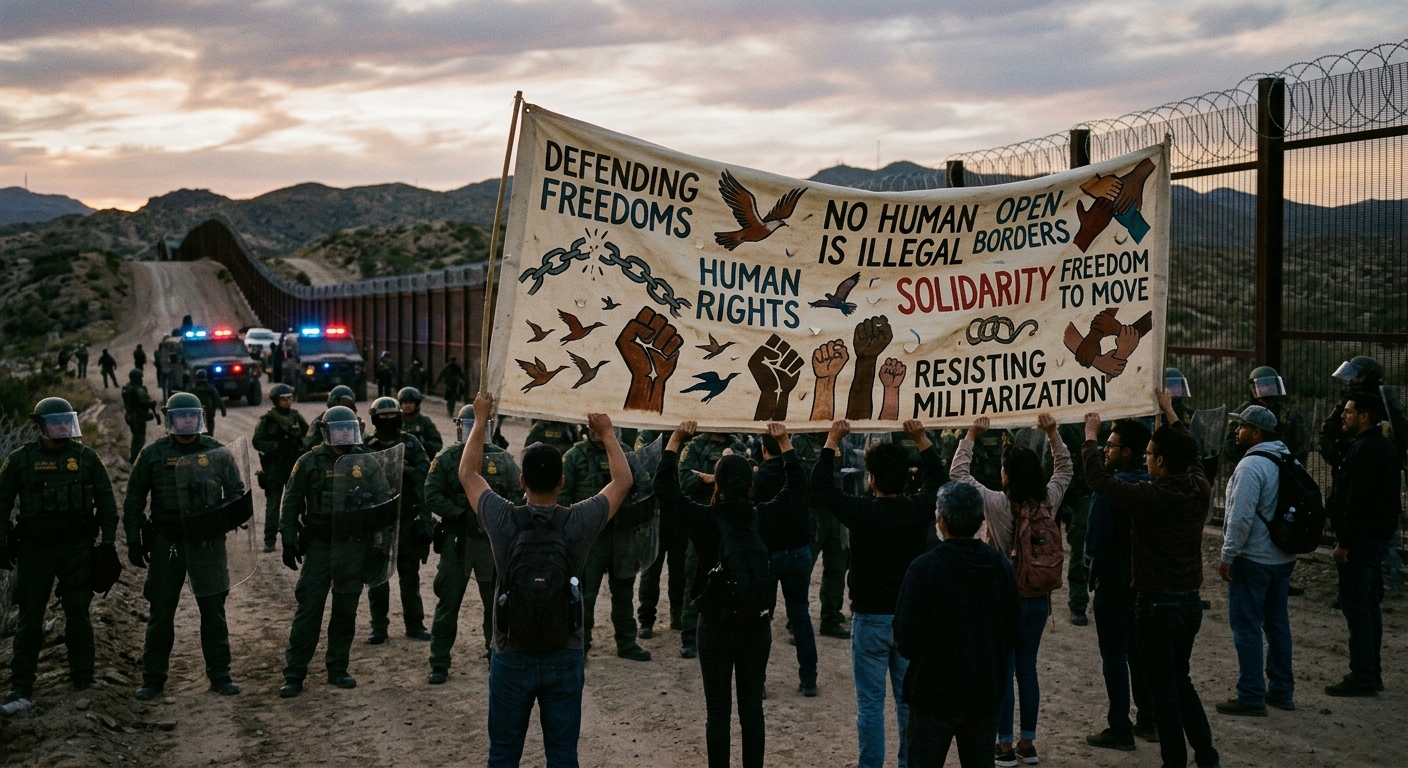
Navigating the Intersection of Homeland Security and Constitutional Rights
The delicate balance between national security and the preservation of civil liberties is a defining feature of the American democratic experiment. Over the past two decades, this equilibrium has been increasingly tested by the rapid expansion, militarization, and operational shifting of federal border enforcement agencies. What was once a geographically confined effort to regulate international boundaries has transformed into a sprawling domestic policing apparatus. At the center of this transformation is the United States Customs and Border Protection (CBP) and its enforcement arm, the U.S. Border Patrol.
With nearly 20,000 agents and a budget that dwarfs those of other federal law enforcement bodies, the agency’s footprint now extends far beyond physical borders. The deployment of tactical border agents in civilian environments, the persistence of the 100-mile border zone, and the utilization of military-grade surveillance technology have sparked intense debates regarding constitutional rights. This article delves into the systemic civil rights implications of contemporary border enforcement, examining how expansive legal authorities and a lack of robust oversight mechanisms have allowed federal agents to operate with unprecedented domestic latitude.
The Evolution of a Paramilitary Force
To understand the current controversies surrounding border enforcement, one must first examine the historical trajectory of the agencies involved. For much of the 20th century, the U.S. Border Patrol operated with a relatively narrow mandate, focusing primarily on the immediate physical boundaries of the nation. However, the legislative overhaul following the September 11, 2001, terrorist attacks fundamentally altered the landscape of domestic security. The creation of the Department of Homeland Security (DHS) absorbed the Border Patrol, infusing it with massive capital, advanced technology, and a broadened national security mission.
Fueled by unprecedented appropriations from Congress, CBP quickly evolved into the largest federal law enforcement agency in the United States. This paradigm shift was not an overnight phenomenon but a deliberate policy choice spanning multiple administrations, viewing migration primarily through the lens of threat rather than regional economics or human rights. This expansion was not merely numerical; it was distinctly tactical. The agency acquired vast amounts of military surplus equipment, transforming its operational aesthetic and capabilities.
Today, CBP operates what is effectively one of the largest law enforcement air forces globally, utilizing Black Hawk helicopters, Predator drones, and sophisticated surveillance blimps previously deployed in overseas combat zones. This militarization of border enforcement has blurred the lines between civilian policing and military occupation, fostering an environment where agents are equipped and trained for high-intensity conflicts rather than community-oriented law enforcement. The resulting culture often prioritizes aggressive enforcement tactics over the preservation of civil liberties, creating friction when these units interact with domestic populations.
The 100-Mile Zone and the Erosion of the Fourth Amendment
One of the most consequential and controversial aspects of federal border authority is the concept of the “100-mile border zone.” Under federal regulations, specifically 8 C.F.R. § 287.1, a “reasonable distance” from the external boundary of the United States is defined as 100 air miles. Within this expansive geographic area, Border Patrol agents possess extraordinary legal powers that bypass traditional Fourth Amendment protections against unreasonable searches and seizures.
Agents operating within this zone can set up interior checkpoints and stop vehicles without a warrant and without “probable cause” of a crime. Instead, they require only “reasonable suspicion” of an immigration violation to conduct a stop, a legally malleable standard that critics argue frequently opens the door to racial profiling. Because the United States is heavily coastal, this 100-mile zone encompasses roughly two-thirds of the nation’s entire population. Entire states, including Florida, Michigan, Maine, and Hawaii, lie completely within this jurisdiction. Major metropolises such as New York City, Los Angeles, and Chicago fall under this umbrella, meaning that tens of millions of Americans go about their daily lives within an area where their constitutional protections are fundamentally diluted.
The origins of this regulation date back to the mid-20th century, a time when transportation and border dynamics were vastly different. Fast forward to the present day, and the application of this outdated geographic mandate has severe modern consequences. Commuters, students, and local residents are routinely subjected to interrogations about their citizenship status merely for driving on domestic highways. The psychological toll on border communities is immense; residents often describe living in a state of perpetual surveillance, where simple commutes to work or school involve navigating federal checkpoints and facing intense scrutiny. Legal scholars frequently argue that this zone creates a “Constitution-lite” region, where the fundamental American right to go about one’s day free from government interference is subjugated to broad immigration enforcement goals.
Constitutional Protections vs. Border Exceptions
| Legal Standard | Traditional Civilian Policing | 100-Mile Border Zone Exception |
|---|---|---|
| Vehicle Stops | Requires reasonable suspicion of a traffic violation or a crime. | Allowed at fixed interior checkpoints without any individualized suspicion. |
| Vehicle Searches | Requires a warrant or probable cause of illicit activity. | Roving patrols require reasonable suspicion; prolonged stops require probable cause. |
| Interrogation | Miranda rights apply during custodial interrogations. | Agents frequently conduct citizenship inquiries without Miranda warnings at checkpoints. |
| Jurisdiction | Confined to specific municipal, county, or state borders. | Extends up to 100 air miles from any land or maritime national boundary. |
Mission Creep: Tactical Deployments in Civilian Settings
The constitutional friction generated by CBP’s expansive authority reached a boiling point when border agents were deployed to interior cities to police civilian demonstrations. In the summer of 2020, during widespread protests for racial justice, the Department of Homeland Security deployed specialized tactical units, including the Border Patrol Tactical Unit (BORTAC), to cities far from the southern border, most notably Portland, Oregon.
BORTAC agents operate essentially as a SWAT team, highly trained for high-risk operations such as intercepting heavily armed drug cartels or rescuing hostages in rugged border terrains. Their deployment to police civilian protests marked a severe escalation in domestic law enforcement tactics. Reports and verified accounts detailed unidentified federal officers clad in military camouflage, operating without visible name tags or agency insignia, pulling demonstrators into unmarked rental vans. These actions sidestepped local jurisdictions, often occurring against the explicit wishes of municipal and state leaders.
The use of federal border agents as a de facto national police force to quell domestic dissent raised profound First and Fourth Amendment concerns. It demonstrated the extreme flexibility of DHS’s mandate and the ease with which border security infrastructure can be co-opted to police the interior of the country. When specialized units trained for combat-style engagements are tasked with crowd control at domestic protests, the risk of excessive force naturally escalates, chilling free speech and assembly in the process. The events served as a stark warning about the dangers of “mission creep” within federal security agencies.
Civil Rights Impacts and the Oversight Deficit
The daily operational reality of Border Patrol, even outside of high-profile protest deployments, is fraught with allegations of civil rights violations. Advocacy groups and federal watchdogs have repeatedly highlighted systemic issues regarding excessive use of force, deplorable conditions in short-term holding facilities, and widespread racial profiling. For example, a 2021 congressional inquiry spearheaded by members of the Subcommittee on Civil Rights and Civil Liberties scrutinized CBP apprehension records in Michigan. The data suggested a disturbing pattern: despite the proximity to the Canadian border, the overwhelming majority of noncitizens detained by CBP in the state were of Latin American origin, many of whom were long-term residents rather than recent border crossers.
Compounding these civil liberties concerns is a chronic lack of transparency and independent oversight. The Government Accountability Office (GAO) has issued multiple reports emphasizing the need for improved oversight of CBP’s operations, particularly concerning internal checkpoints and the medical care provided to individuals in custody. Internal investigations into agent misconduct are often opaque, and the agency has historically resisted implementing accountability measures common in local police departments, such as mandatory body-worn cameras.
When civil rights abuses occur, victims face immense legal hurdles in seeking redress. Legal doctrines like qualified immunity frequently shield federal agents from personal liability in civil rights lawsuits. Without a clear, accessible path for accountability, inappropriate conduct can go unchecked, fostering an agency culture that feels insulated from the legal standards governing other branches of law enforcement. This deficit in oversight fundamentally undermines public trust and endangers the civil liberties of citizens and non-citizens alike.
Pathways to Reform and Accountability
Addressing the civil liberties crisis perpetuated by militarized border enforcement requires a multi-faceted approach, emphasizing legislative action, judicial review, and executive restraint. First and foremost, advocates call for a drastic reduction of the 100-mile border zone. Legislation has been proposed to shrink this jurisdiction to a more reasonable 10 or 25 miles from the actual physical border, which would immediately restore full Fourth Amendment protections to tens of millions of Americans.
Furthermore, Congress must exercise the power of the purse to curb the militarization of CBP. Divesting from military-grade surveillance technology and tactical gear, and instead redirecting those funds toward humanitarian processing and community resources, would alter the agency’s operational posture. Additionally, strict statutory limitations must be enacted to prevent the executive branch from deploying border enforcement personnel to police domestic protests or act as a national police force outside of their explicit immigration and customs mandate.
Additionally, the implementation of comprehensive data collection laws is vital. Without accurate, publicly available data regarding who is being stopped, searched, and detained, identifying and rectifying patterns of racial profiling remains an uphill battle. Lawmakers must demand regular, independent audits of CBP’s domestic operations, ensuring that the agency operates within the strict confines of its intended legal mandate. Creating an enforceable statutory framework that penalizes civil rights abuses and dismantles the culture of impunity will take sustained political will. Ultimately, establishing robust, independent oversight mechanisms is non-negotiable. Only through comprehensive structural reform can the United States protect its borders without sacrificing the constitutional liberties that define the nation.
Frequently Asked Questions (FAQs)
- What is the 100-mile border zone?
The 100-mile border zone is a geographic area extending 100 air miles inland from any external land or maritime boundary of the United States. Under federal regulations, Border Patrol agents have enhanced legal authorities within this zone, allowing them to operate interior checkpoints and stop vehicles with broader discretion than local police. - Can Border Patrol agents search my vehicle without a warrant at a checkpoint?
While agents can stop your vehicle at a designated immigration checkpoint to ask about citizenship without a warrant or prior suspicion, they cannot search the interior of your vehicle without your explicit consent or “probable cause” that a federal crime is being committed. - Why were Border Patrol agents deployed to civilian protests?
During the summer 2020 protests, the executive branch utilized a specific provision in federal law authorizing the Department of Homeland Security to protect federal property. This led to the controversial deployment of specialized Border Patrol tactical units (BORTAC) to interior cities to confront demonstrators, a move widely criticized as severe federal overreach. - How does the militarization of border enforcement affect everyday citizens?
Militarization introduces military-grade technology (like drones and armored vehicles) and combat-oriented tactics into civilian areas. This can lead to increased surveillance, the erosion of privacy rights, and a higher likelihood of excessive force and racial profiling during interactions with federal agents in domestic communities.
References
- Homeland Security gets new role under Trump monument order — The Associated Press (AP News). 2020-07-10. https://apnews.com/article/donald-trump-ap-top-news-us-news-wa-state-wire-immigration-8804cf3fb293ef64fc9c5222db2f90a5
- Subcommittee Requests Briefing from DHS After Allegations of Discrimination by Border Patrol Agents in Michigan — Office of Congresswoman Rashida Tlaib. 2021-08-05. https://tlaib.house.gov/posts/subcommittee-requests-briefing-from-dhs-after-allegations-of-discrimination-by-border-patrol-agents-in-michigan
- 8 C.F.R. § 287.1 – Definitions (Reasonable distance from the border) — Code of Federal Regulations / Legal Information Institute. https://www.law.cornell.edu/cfr/text/8/287.1
- Border Patrol: Actions Needed to Improve Checkpoint Oversight and Data (GAO-22-104568) — U.S. Government Accountability Office. 2022-06-06. https://www.gao.gov/products/gao-22-104568
Similar Articles








Read full bio of Sneha Tete


