
Milestones in the American Civil Rights Journey
Explore the key turning points, people, and laws that reshaped civil rights and equal protection in the United States.
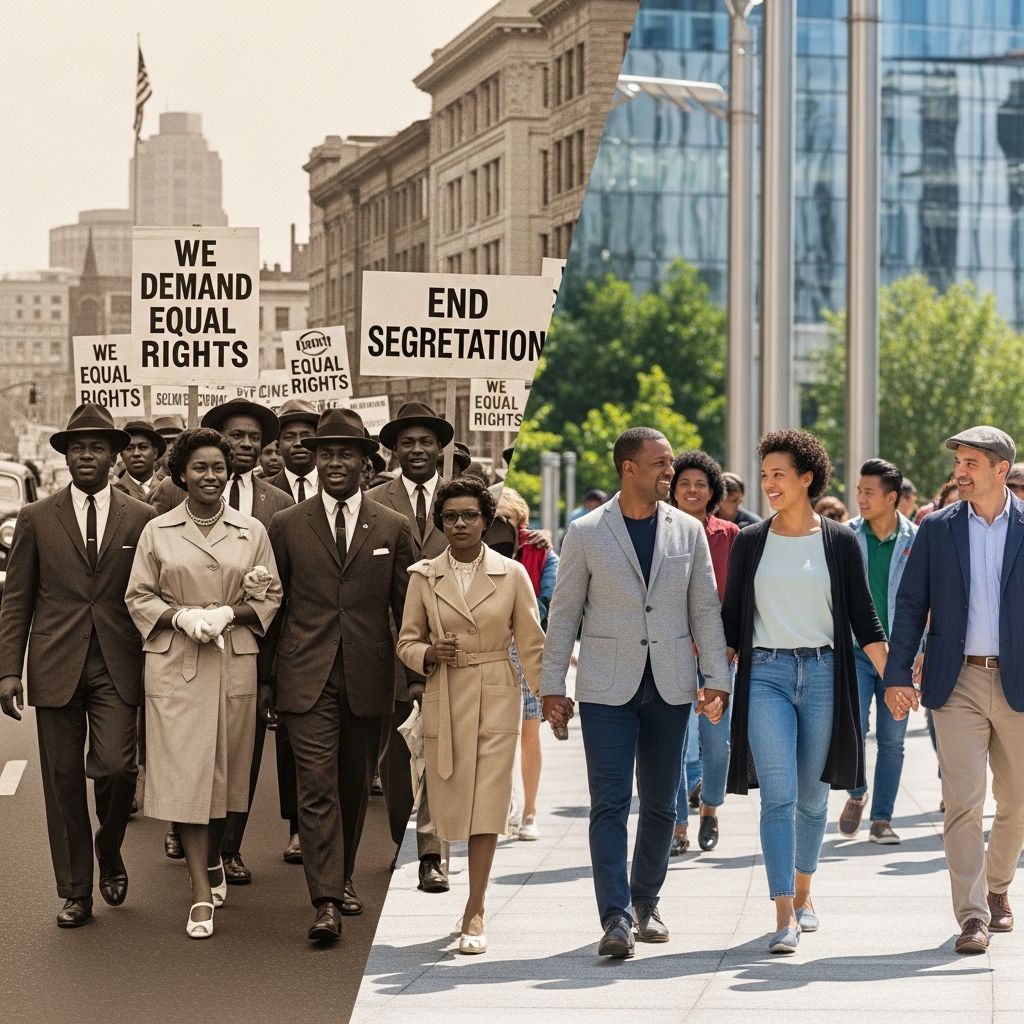
The story of civil rights in the United States is a long struggle to make the nation live up to its promises of liberty and equality. From the end of slavery through the mass protests of the 1950s and 1960s and into the modern era, activists, courts, lawmakers, and ordinary people have reshaped the law and public life.
This article walks through major turning points in the expansion of civil rights, explaining what happened, why it mattered, and how each step built on earlier efforts.
Foundations: Rights in the Constitution and Reconstruction
American civil rights history is anchored in the Constitution, especially the amendments adopted after the Civil War.
- 13th Amendment (1865): Abolished slavery nationwide, ending legal human bondage but leaving many questions about freedom, citizenship, and equality.
- 14th Amendment (1868): Guaranteed birthright citizenship and promised due process and equal protection of the laws to all persons. This clause later became the key legal tool against school segregation, voting restrictions, and discriminatory laws.
- 15th Amendment (1870): Prohibited denying the right to vote on the basis of race, color, or previous condition of servitude.
Despite these amendments, Southern states quickly developed new systems—such as Black Codes, poll taxes, literacy tests, and Jim Crow laws—to restrict Black Americans’ political power and access to public life.
Segregation and the Road to Legal Challenge
By the late 19th and early 20th centuries, segregation and racial discrimination were embedded in law and custom across much of the country.
- Jim Crow era: State and local laws required separate schools, transportation, housing, and public facilities for white and Black people. These systems were defended as providing “separate but equal” services.
- Early civil rights organizations: Groups such as the NAACP (founded 1909) began to challenge discriminatory laws through the courts, focusing especially on unequal education and disenfranchisement.
Over time, these legal strategies built a record showing that segregated facilities were not equal in practice, laying the groundwork for direct constitutional challenges.
Breaking the School Segregation Barrier
Mid-20th century court decisions, especially on public education, became the opening wedge against legalized segregation.
Brown v. Board of Education (1954)
In Brown v. Board of Education, the U.S. Supreme Court held that segregated public schools violated the Equal Protection Clause of the 14th Amendment. The Court declared that “separate educational facilities are inherently unequal,” overturning earlier decisions that had permitted state-sanctioned segregation.
Key impacts included:
- Striking down laws that mandated racially separated public schools.
- Providing a constitutional basis for challenging segregation in other areas of life.
- Galvanizing both civil rights activists and segregationist resistance, making desegregation a national political issue.
Integrating Schools Under Federal Protection
Despite Brown, many local officials resisted court-ordered integration.
- Little Rock, Arkansas (1957): When nine Black students attempted to attend previously all-white Central High School, the Arkansas governor used the National Guard to block them. President Dwight D. Eisenhower sent federal troops to enforce the court’s desegregation order, signaling that the federal government would intervene when states defied constitutional rights.
- Later school desegregation cases: Federal courts continued to oversee integration through measures such as busing and redrawing school district lines to dismantle dual school systems.
| Case / Event | Year | Main Outcome |
|---|---|---|
| Brown v. Board of Education | 1954 | School segregation unconstitutional under Equal Protection. |
| Little Rock Central High integration | 1957 | Federal troops enforce desegregation, strengthening federal role. |
Grassroots Direct Action and Mass Protest
While lawyers fought in the courts, local communities reshaped the civil rights landscape through boycotts, sit-ins, and marches.
The Montgomery Bus Boycott (1955–1956)
In Montgomery, Alabama, Black riders faced rigidly segregated buses and humiliating treatment. After a Black seamstress and activist refused to surrender her seat to a white passenger, local leaders called for a citywide bus boycott.
Core features of the boycott included:
- Coordinated carpools, walking groups, and church-based ride networks.
- Broad participation from Black community members over more than a year.
- Emergence of new leadership, including Martin Luther King Jr., and a visible commitment to nonviolent protest.
The boycott ended after a federal court ruling, later affirmed by the Supreme Court, held that bus segregation violated the Constitution. It showed that sustained, organized economic pressure could change local policy and attract national media attention.
Sit-ins, Freedom Rides, and Youth-Led Actions
In the early 1960s, students and young activists expanded the movement’s tactics and reach.
- Sit-ins: Black students and allies sat at segregated lunch counters and refused to leave until served, challenging local customs and generating arrests and national coverage.
- Freedom Rides: Interracial groups rode interstate buses into the Deep South to test and enforce federal bans on segregated bus facilities, facing arrests and violent attacks.
- Children and youth participation: In cities such as Birmingham, school-aged children joined marches and were met with police dogs, fire hoses, and mass arrests, further shocking the national conscience.
Mass Marches and National Attention
By the mid-1960s, large-scale marches became a central strategy.
- Birmingham campaign (1963): Coordinated boycotts, marches, and demonstrations targeting one of the most segregated cities in the South. Violent police responses—captured in photographs and television footage—helped build support for federal civil rights legislation.
- March on Washington for Jobs and Freedom (1963): Roughly 250,000 people gathered in the nation’s capital to call for jobs, desegregation, and voting rights. The event showcased unity among civil rights, labor, and religious groups and helped shape the agenda that became the Civil Rights Act of 1964.
- Selma to Montgomery marches (1965): Demonstrations in Alabama highlighted brutal barriers to Black voting, including beatings on the Edmund Pettus Bridge broadcast nationwide. These events directly influenced the passage of the Voting Rights Act.
Landmark Civil Rights Legislation
Public outrage and sustained advocacy led Congress and the president to adopt sweeping civil rights statutes.
Civil Rights Act of 1964
The Civil Rights Act of 1964 is one of the most influential laws in U.S. history. Among its key provisions, it:
- Outlawed discrimination based on race, color, religion, sex, or national origin in many public accommodations and employment.
- Authorized the federal government to cut funds to programs that practiced discrimination, including schools.
- Strengthened the power of the federal government to sue to desegregate schools and public facilities.
Title VII of the Act also became the foundation for modern employment discrimination law, later applied to issues such as sexual harassment and, through later court decisions, discrimination against LGBTQ workers.
Voting Rights Act of 1965
The Voting Rights Act of 1965 directly targeted practices that had effectively blocked many Black citizens from voting, especially in the South.
- It prohibited literacy tests and similar devices used to disenfranchise minority voters.
- It allowed federal examiners and observers in jurisdictions with a history of discrimination.
- It required certain jurisdictions to obtain federal “preclearance” before changing voting laws or procedures.
The law dramatically increased voter registration and participation among Black citizens within a few years, reshaping political representation and policy debates.
Fair Housing and Other Key Statutes
Civil rights protections continued to expand after 1965.
- Fair Housing Act (1968): Prohibited discrimination in the sale, rental, and financing of housing based on race, color, religion, or national origin, later expanded to include sex, disability, and family status.
- Education amendments and disability rights laws: Later decades saw federal laws addressing sex discrimination in education (Title IX) and discrimination against people with disabilities (such as the Americans with Disabilities Act), reflecting a broader understanding of civil rights.
Legacy and Continuing Struggles
By the late 20th century, explicit segregation and overt barriers to voting had been substantially dismantled by court decisions and federal statutes. Yet civil rights debates persisted around issues such as criminal justice, housing patterns, economic opportunity, sexual orientation and gender identity, and the meaning of equality under the law.
Key ongoing themes include:
- Enforcement: How aggressively federal and state officials enforce existing civil rights laws, especially in voting and fair housing.
- Structural inequality: The legacy of past discrimination in wealth, education, and health outcomes, even where formal legal barriers have been removed.
- Expanding protections: Whether and how civil rights laws should apply to new contexts and groups, such as digital privacy, algorithmic bias, or emerging understandings of gender and sexuality.
Civil Rights Timeline: At a Glance
| Period | Key Milestones | Primary Impact |
|---|---|---|
| 1865–1870 | 13th, 14th, and 15th Amendments | Abolished slavery; established citizenship, equal protection, and voting rights guarantees. |
| 1954–1957 | Brown v. Board; Little Rock integration | Struck down school segregation; asserted federal authority to enforce rights. |
| 1955–1963 | Montgomery Boycott, sit-ins, Freedom Rides, Birmingham campaign | Demonstrated power of nonviolent protest; built momentum for national laws. |
| 1963–1965 | March on Washington; Selma marches | Focused national attention on jobs and voting rights, leading to major federal legislation. |
| 1964–1968 | Civil Rights Act, Voting Rights Act, Fair Housing Act | Outlawed discrimination in public accommodations, employment, voting, and housing. |
Frequently Asked Questions About U.S. Civil Rights History
Q1: What does “civil rights” mean in U.S. law?
In U.S. law, civil rights are legally protected claims to equal treatment and freedom from discrimination in core areas of life, such as voting, education, employment, housing, and access to public services. Many of these protections come from the Constitution (especially the 14th Amendment) and from federal and state civil rights statutes.
Q2: How did court decisions and protests work together?
Court cases and grassroots activism were mutually reinforcing. Legal victories like Brown v. Board of Education provided constitutional arguments and orders that activists pushed to enforce through boycotts, marches, and sit-ins. In turn, highly visible protests and the violent backlash they often met created public pressure that influenced judges, lawmakers, and presidents to support stronger civil rights protections.
Q3: Did civil rights laws end discrimination?
Civil rights laws did not end discrimination, but they fundamentally changed what is legal and provided tools for individuals and the government to challenge unequal treatment. Discriminatory practices can still occur, but victims often have the right to file complaints with agencies, bring lawsuits, or seek federal investigations under statutes such as the Civil Rights Act and Voting Rights Act.
Q4: Why is voting rights protection still debated today?
Voting rights are still contested because changes to election rules can significantly affect which groups are more likely to vote and be represented. Court decisions in recent years have altered how parts of the Voting Rights Act apply, and states continue to revise their voting procedures. Supporters and critics disagree on whether particular rules protect election integrity or unfairly burden certain voters.
Q5: How can someone today use civil rights protections?
Individuals who believe they have experienced discrimination can often:
- File a complaint with a federal or state civil rights agency, such as the U.S. Equal Employment Opportunity Commission or the Department of Education’s Office for Civil Rights.
- Seek assistance from legal aid organizations or civil rights groups.
- In some cases, bring a lawsuit in court under relevant civil rights laws.
These mechanisms exist because earlier generations fought to put civil rights protections into the legal system.
References
- The Civil Rights Movement — Library of Congress. 2023-01-10. https://www.loc.gov/classroom-materials/united-states-history-primary-source-timeline/post-war-united-states-1945-1968/civil-rights-movement/
- Timeline of the American Civil Rights Movement — Encyclopaedia Britannica. 2023-06-01. https://www.britannica.com/list/timeline-of-the-american-civil-rights-movement
- Primary Documents in American History: 14th Amendment — Library of Congress. 2022-09-15. https://www.loc.gov/rr/program/bib/ourdocs/14thamendment.html
- Key Events in 1963 History — Civil Rights Teaching (Teaching for Change). 2021-02-18. https://www.civilrightsteaching.org/resource/key-events-1963
- Civil Rights Movement: Major Events and Legacies — Gilder Lehrman Institute of American History. 2020-08-12. https://www.gilderlehrman.org/history-resources/essays/civil-rights-movement-major-events-and-legacies
- Civil Rights Act (1964) — U.S. Department of Labor. 2017-07-01. https://www.dol.gov/agencies/oasam/civil-rights-center/statutes/civil-rights-act-of-1964
- Civil Rights Events — Civil Rights Digital Library (University of Georgia). 2019-05-20. https://crdl.usg.edu/events
Similar Articles








Read full bio of medha deb


