
Michigan Home Funeral Regulations: Complete Guide For 2025
Navigate Michigan's rules for home funerals: family-led care, legal requirements, and practical steps for dignified farewells.
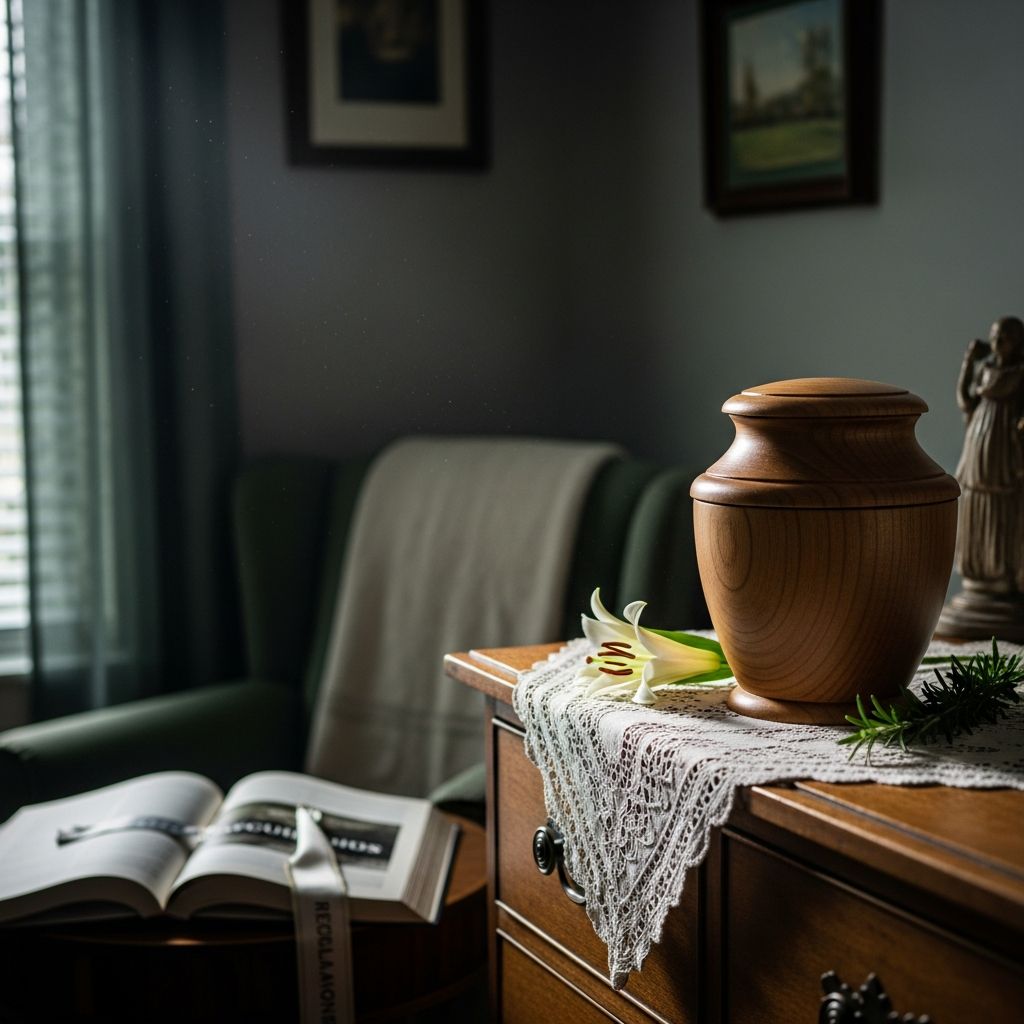
Conducting a home funeral in Michigan allows families to personally manage the care and farewell of a loved one, offering intimacy and cost savings while adhering to state regulations. This practice, supported by law, empowers next-of-kin without requiring professional funeral services for all steps.
Understanding Home Funerals in Michigan
A home funeral involves family members caring for the deceased at home after death, including washing, dressing, and holding vigils, before final disposition. Michigan law permits this, emphasizing family control over traditional funeral homes, though certain oversight remains mandatory.
Key benefits include personalized rituals, reduced expenses, and emotional closure through hands-on involvement. State statutes recognize next-of-kin’s authority in arrangements, as outlined in Michigan Public Act 57 of 2016, the Funeral Representative Law, which clarifies decision-making rights.
Legal Foundation for Family-Led Arrangements
Michigan Compiled Laws (MCL) § 333.2844 and § 333.2848 establish requirements for handling remains. Families can retain custody without immediate funeral director involvement, but a licensed professional must eventually secure disposition authorization within 72 hours of death.
The law distinguishes home funerals from commercial services: no embalming is required unless transporting out-of-state or delaying disposition beyond reasonable times. Refrigeration or dry ice suffices for preservation if needed, avoiding chemical processes for natural approaches.
- Next-of-kin hold primary decision rights for disposition methods like burial or cremation.
- Multiple next-of-kin decide by majority vote if priorities conflict.
- Pre-planning via written designation appoints a funeral representative, signed with witnesses or notarized.
Step-by-Step Process After Death Occurs
Upon death at home, families notify authorities if required, typically via 911 for verification, then assume care. Physicians or medical examiners certify cause of death within 48 hours for non-institutional deaths.
- Pronounce and Certify Death: Contact the attending physician; if unavailable, involve the county medical examiner.
- Register the Death: File with local registrar; a funeral director often handles paperwork but families can initiate.
- Care for the Body: Bathe, dress, and place in a suitable container at home.
- Obtain Permits: Secure final disposition permit before burial or cremation.
- Arrange Disposition: Transport to cemetery or crematory under supervision.
Disposition must occur reasonably promptly, ideally within days, using embalming only for specific contagious cases or extended transport.
Body Preparation and Preservation Options
Families freely prepare bodies without licensing, using gentle methods like cooling pads or dry ice. Michigan Administrative Code R 325.2 permits non-embalmed bodies if refrigerated below 45°F after 30 hours, or embalming for communicable diseases.
| Method | Requirements | Time Limit |
|---|---|---|
| Refrigeration | Below 45°F | After 30 hours; up to 6 days max |
| Dry Ice | Proper ventilation | Limited to 4 days |
| Embalming | Licensed embalmer | Required for transport >48 hours or infections |
These options support eco-friendly practices, aligning with green burial interests.
Transportation Rules for Remains
Families transport bodies in personal vehicles without special licensing, provided permits are obtained. A funeral director who assumes ‘custody’—often just for paperwork—must authorize within 72 hours, but physical handling stays familial.
For cremation, county medical examiner approval prevents evidence destruction. Burial transit permits are unnecessary for intra-state moves if direct to site. Out-of-state requires embalming or approved shipping.
- Secure body in leak-proof pouch.
- Avoid public roads if infectious; notify health officers.
- Funeral director may inspect at destination.
Disposition Methods: Burial and Cremation
Home or Private Burials: Possible on private land with local zoning and health department approval. Restrictions include minimum acreage, distance from wells (typically 100-200 feet), and no nuisance to neighbors.
Cemeteries: Standard graves require permits; green options emerging without vaults in select areas.
Cremation: Needs medical examiner sign-off; 48-hour wait not mandatory for families but recommended. Written next-of-kin authorization essential.
Costs and Financial Considerations
Home funerals slash expenses by bypassing embalming ($500+), caskets ($2,000+), and facilities ($1,000+). Core costs: death certificates ($30 each), permits ($50-100), simple shroud ($100), dry ice ($50/day), cemetery plot ($1,000+).
| Item | Typical Cost |
|---|---|
| Death Certificate Filing | $30 |
| Disposition Permit | $50-100 |
| Refrigeration/Dry Ice | $50-200 |
| Basic Container | $100-500 |
| Cemetery Plot | $800-3,000 |
Prepaid plans with funeral homes must be itemized; Michigan enforces honoring them.
Health and Safety Guidelines
Report communicable diseases to health officers. Isolated individuals need separate transport and viewing spaces. Public gatherings require local health permission, ensuring separation.
Fetal remains follow similar rules, with parental choice for interment or cremation, no religious service mandated.
Pre-Planning for Control and Peace
Designate a funeral representative in writing to guide arrangements. Include preferences for home care, no embalming, or donation. Estate attorneys draft these for validity.
Michigan Funeral Directors Association notes next-of-kin’s empowered role, aiding smooth processes.
Frequently Asked Questions
Can families handle all aspects of a home funeral without a funeral director?
Partially: Families manage care and transport, but a director must file certificates and permits.
Is embalming required in Michigan home funerals?
No, unless for delayed disposition, transport, or infectious cases; refrigeration alternatives allowed.
How soon must disposition happen?
Within reasonable time; practically 3-10 days with preservation.
Can I bury on my property?
Yes, with zoning and health permits; check local rules on setbacks.
What if death is suspicious?
Medical examiner investigates; no movement until cleared.
References
- Michigan Compiled Laws Service § 333.2844 and § 333.2848 — State of Michigan. 2023. https://www.legislature.mi.gov
- Michigan – National Home Funeral Alliance — National Home Funeral Alliance. 2024-01-15. https://www.homefuneralalliance.org/michigan.html
- Arranging a Funeral or Cremation Service in Michigan — US Funerals Online. 2024. https://www.us-funerals.com/funeral-guide/michigan/
- Funeral Directors (Mortuary Science) — Michigan Department of Licensing and Regulatory Affairs. 2025-09-01. https://www.michigan.gov/lara/bureau-list/cscl/licensing/prof/mortuary
- Quick Guide to Legal Requirements for Home Funerals by State — National Home Funeral Alliance. 2023. https://www.nhfuneral.org/uploads/1/1/7/5/117550115/quick_guide_to_home_funerals_by_state.pdf
Similar Articles








Read full bio of Sneha Tete


